Artwork
Portinari Triptych
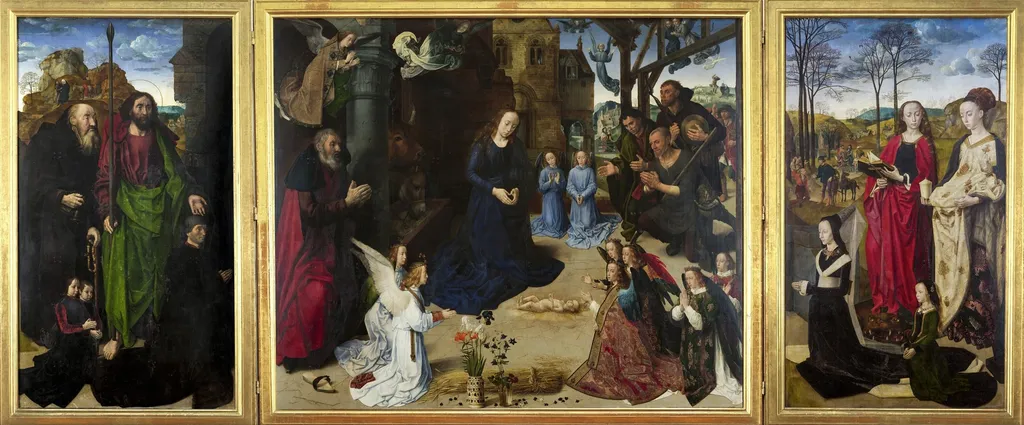
Portinari Triptych is an oil painting by the Northern Renaissance artist Hugo Van der Goes. It dates from 1475 and is held in the collection of the Uffizi Gallery.
About this work
Subject & Meaning
The sheaf of wheat in the foreground alludes both to Bethlehem, "House of Bread" in Hebrew, and to the Eucharist as the Bread of Life.
The Portinari Triptych centers on the Adoration of the Shepherds, with the Virgin Mary, Joseph, and three shepherds kneeling before the Christ Child, who lies naked on the ground within an aureole of golden rays rather than in a manger. This unusual iconography derives from the visions of Saint Bridget of Sweden, mediated through Pseudo-Bonaventure, in which the painless birth occurs in an instant and the newborn radiates heavenly light. The sheaf of wheat in the foreground alludes both to Bethlehem, "House of Bread" in Hebrew, and to the Eucharist as the Bread of Life.
A nature still life of flowers reinforces Eucharistic devotion: red lilies and carnations evoke the blood and Passion of Christ, white irises signify Mary's purity, blue irises her sorrow, columbines the Holy Spirit, and violets humility. Joseph's removed sandal recalls Exodus 3:5 and the holiness of the ground.
Nine kneeling angels in liturgical vestments represent the nine angelic choirs and enact the roles of deacon, subdeacon, and cantor, with Christ himself serving as both celebrant and host. A harp above the stable doorway symbolizes David and Joseph's lineage. The wings portray the Portinari family with their patron saints, Thomas with his spear, Anthony the Great with his T-cross and bell, Mary Magdalene with her ointment jar, and Margaret with book and dragon, while background scenes use continuous narrative to show Mary and Joseph traveling to Bethlehem, the Annunciation to the Shepherds, and the Magi en route.
Technique & Style
The Portinari Triptych is executed in oil paint on oak panels, a medium typical of Early Netherlandish practice of the late fifteenth century. The central panel measures 253 by 304 cm, with each wing 253 by 141 cm, all carved from Baltic oak and prepared with traditional chalk and glue grounds.
Stylistically, the composition integrates a continuous narrative across the three panels: the left wing shows Joseph and the pregnant Virgin on the road to Bethlehem; the central panel presents the Adoration of the Shepherds with the Christ Child lying on a radiant ground; the right wing depicts the Three Magi approaching. Figures are rendered with pronounced realism, especially the kneeling shepherds whose individualized features and expressive gestures contrast with the hieratic Virgin and angels. The exterior wings feature grisaille Annunciation scenes in shallow niches, adhering to a medieval convention that simulated sculptural niches in paint.
Symbolic still-life elements, the sheaf of wheat, vases of lilies, irises, and carnations, are meticulously detailed, embedding Eucharistic and biblical references within the scene.
History & Provenance
The Portinari Triptych was commissioned by Florentine banker Tommaso Portinari, then based in Bruges, for the church of Sant'Egidio attached to the hospital Santa Maria Nuova in Florence. Records indicate the work was created between 1473 and 1477 in the Southern Netherlands, executed in oil on Baltic oak panel and delivered to Florence in May 1483, where it was installed in the Portinari family chapel and later entered the Uffizi collection. The altarpiece, measuring 253 × 304 cm, depicts the Adoration of the Shepherds and includes donor portraits of Portinari, his wife and children, each paired with their patron saints. Its size and iconography signal the patron’s wealth and influence.
The Portinari Triptych has been held in the Uffizi Gallery in Florence since the late nineteenth century. It was originally commissioned for the church of Sant’Egidio at the hospital of Santa Maria Nuova, where it arrived on 28 May 1483 and was installed above the high altar.
The Uffizi’s inventory assigns it the accession number 1120. Before its transfer to the museum, the triptych remained in situ at Sant’Egidio, where it exerted a profound influence on Florentine artists such as Domenico Ghirlandaio and Piero di Cosimo.
Context
The Portinari Triptych is widely considered one of the most significant works of Early Netherlandish painting and the most studied Flemish artwork from the late fifteenth century. Its arrival in Florence in 1483 caused a profound impact on Italian artists, who deeply admired its naturalism and sought to emulate its style. This influence is notably evident in Domenico Ghirlandaio's Adoration of the Shepherds (1485) for the Sassetti Chapel, as well as in the works of Piero di Cosimo and Piero della Francesca.
The altarpiece represents a synthesis of Northern and Italian traditions, utilizing continuous narrative and a unified composition across its three panels while maintaining the distinct oil-on-oak technique of the Southern Netherlands. Art historians regard it as a monumental piece that rivals the scale and ambition of the Ghent Altarpiece by the Van Eyck brothers.
Legacy
Upon its arrival in Florence in May 1483, the Portinari Triptych profoundly influenced Italian Renaissance art. The work was deeply admired by local artists who sought to emulate its style, particularly the naturalistic depiction of the shepherds. This impact is evident in Domenico Ghirlandaio's Adoration of the Shepherds (1485) for the Sassetti Chapel.
The altarpiece also inspired other prominent figures, including Piero di Cosimo and Piero della Francesca. Its ambitious scale and emotional intensity allowed it to rival the Ghent Altarpiece by the Van Eyck brothers in the eyes of contemporaries. In modern times, the work's significance remains high; it is cited as one of the most studied late-fifteenth-century Flemish artworks.
Furthermore, the French writer Michel Butor included the triptych in his list of the 105 decisive works of Western painting.
Overview
The Portinari Triptych, completed around 1475 by the Flemish artist Hugo van der Goes, is a large oil painting on wood panels. This altarpiece depicts the Adoration of the Shepherds, a central Christian narrative. Measuring 253 by 304 centimeters, the work is a significant example of Northern Renaissance art and is currently housed in the Galleria degli Uffizi in Florence, Italy.
Artist & collection
Artist
Hugo van der Goes (c. 1430/1440 – 1482) was a Flemish painter who was one of the most significant and original Early Netherlandish painters of the late 15th century. Van der Goes was an important painter of altarpieces…

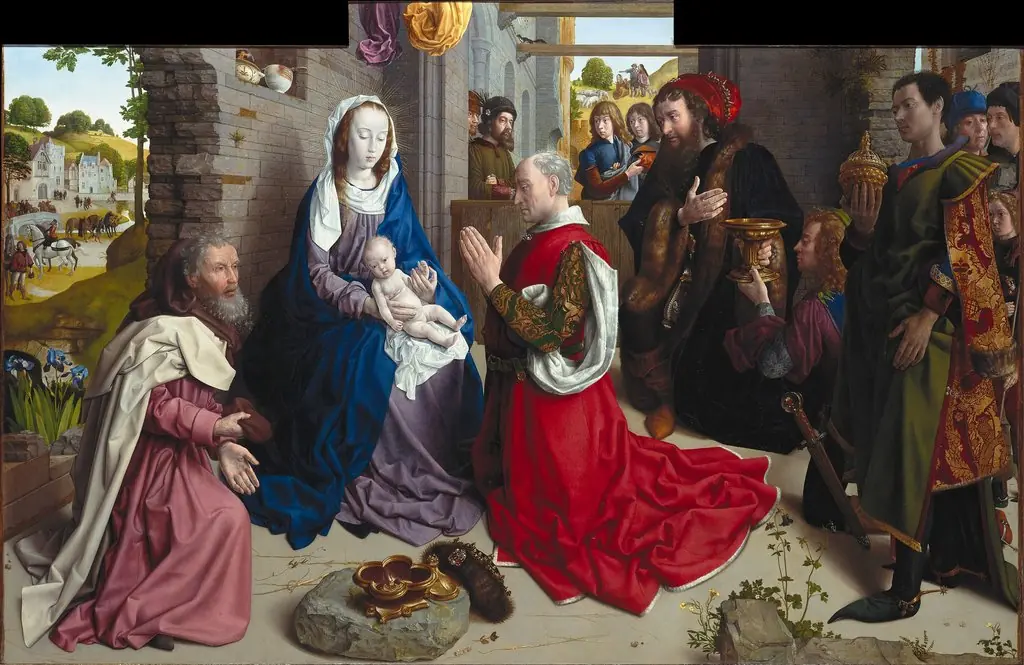
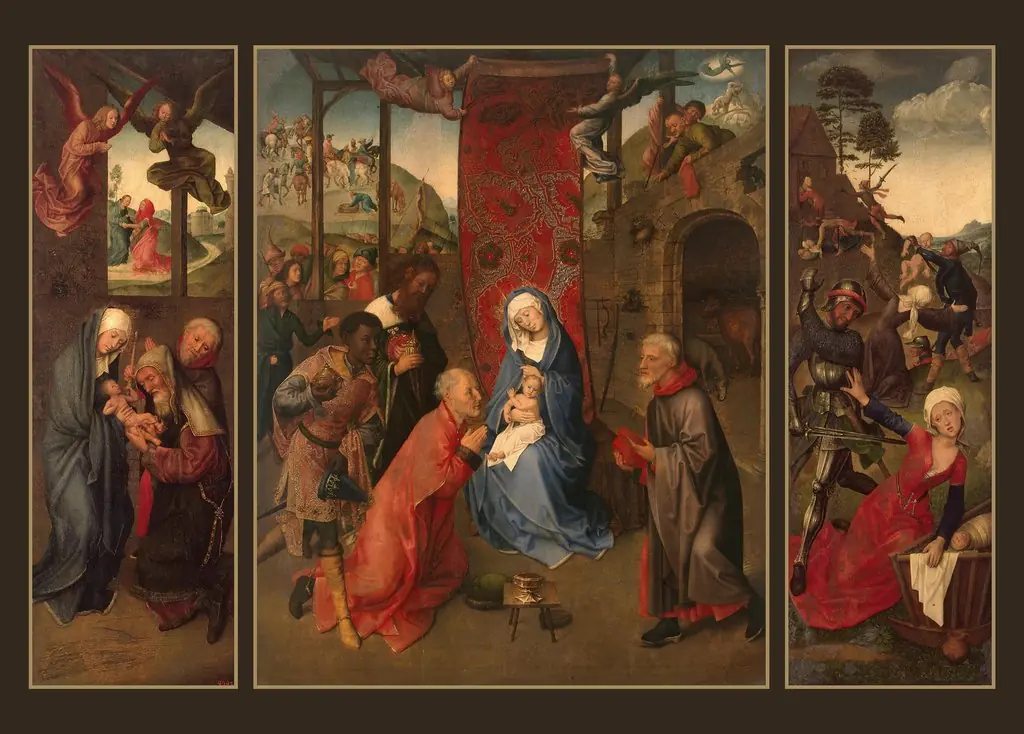
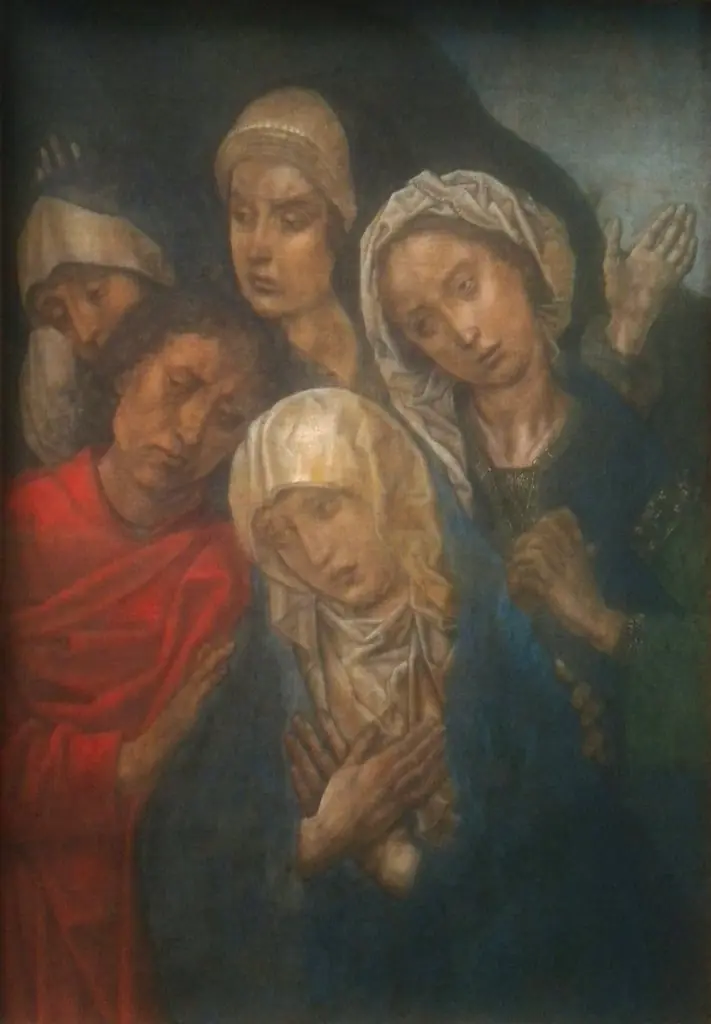
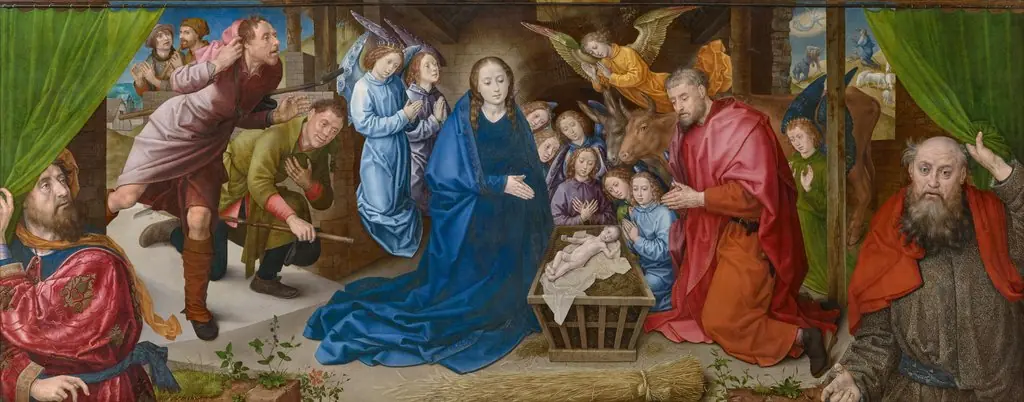
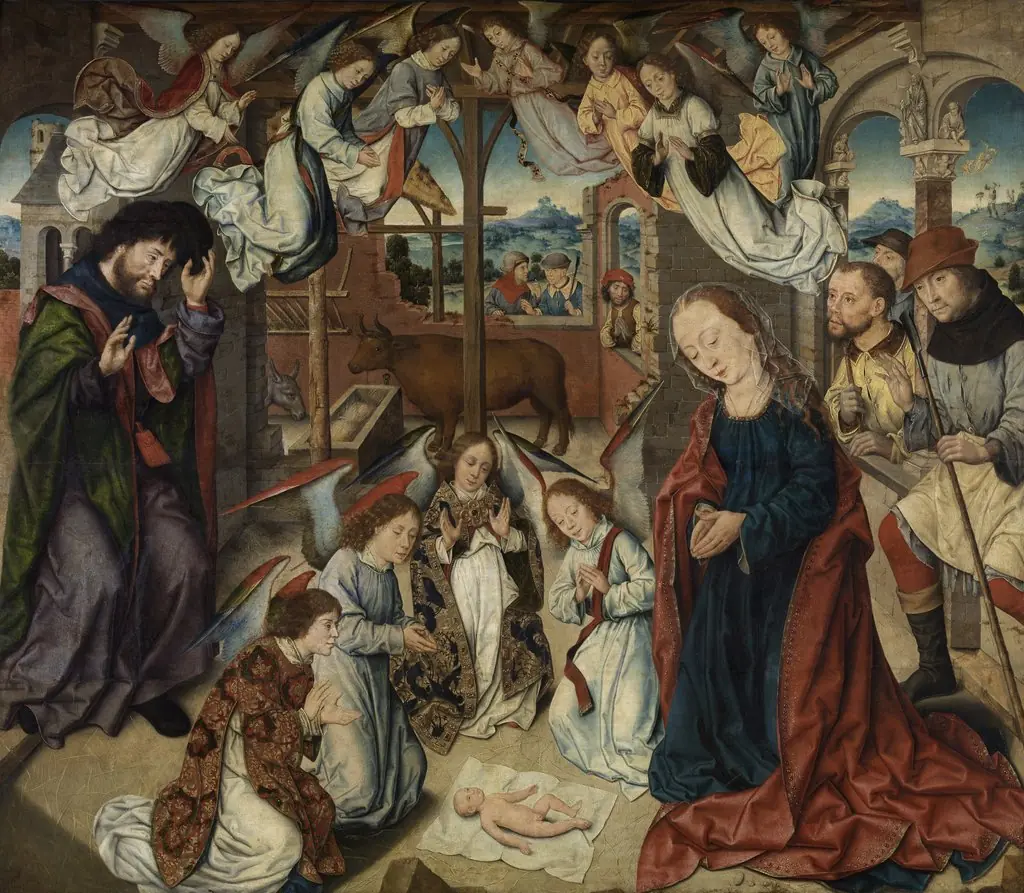 The Adoration of the Shepherds
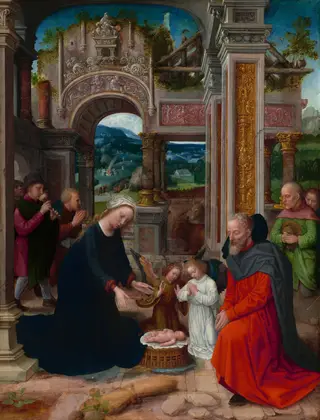 The Adoration of the Shepherds
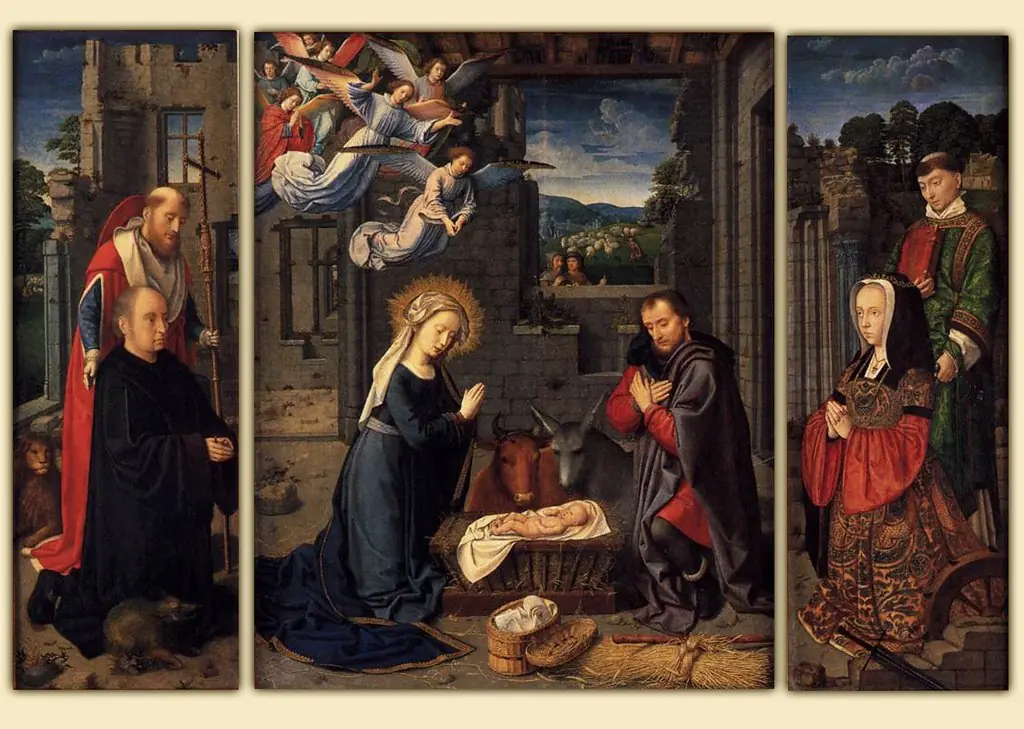 The Nativity with Donors and Saints Jerome and Leonard
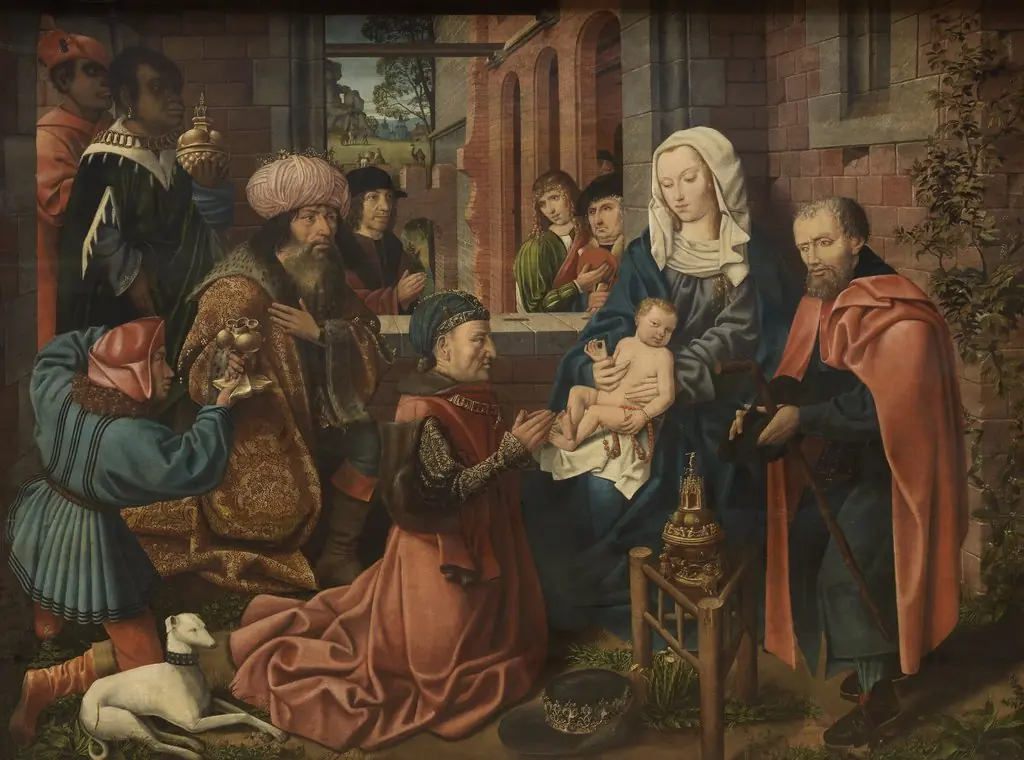 The Adoration of the Magi
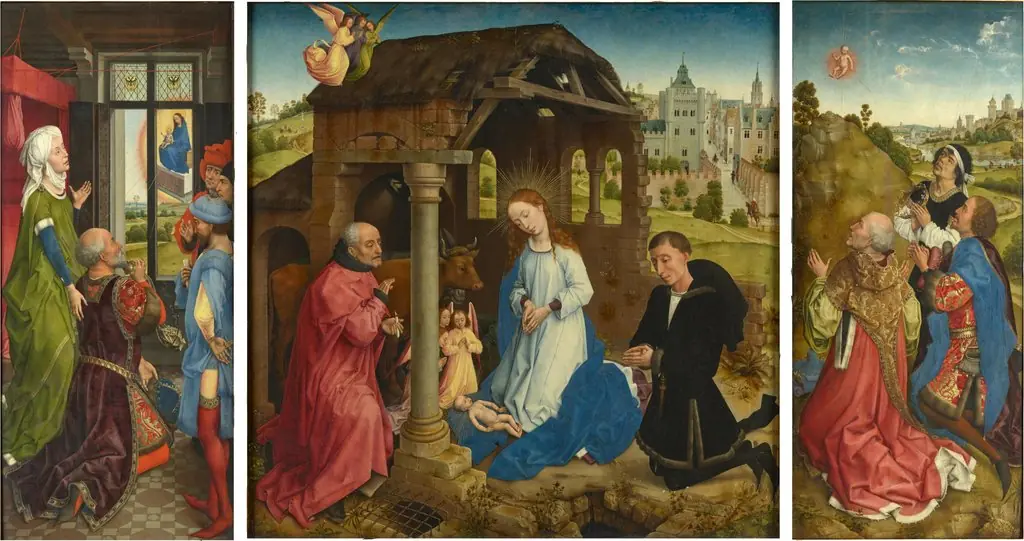 Bladelin Triptych
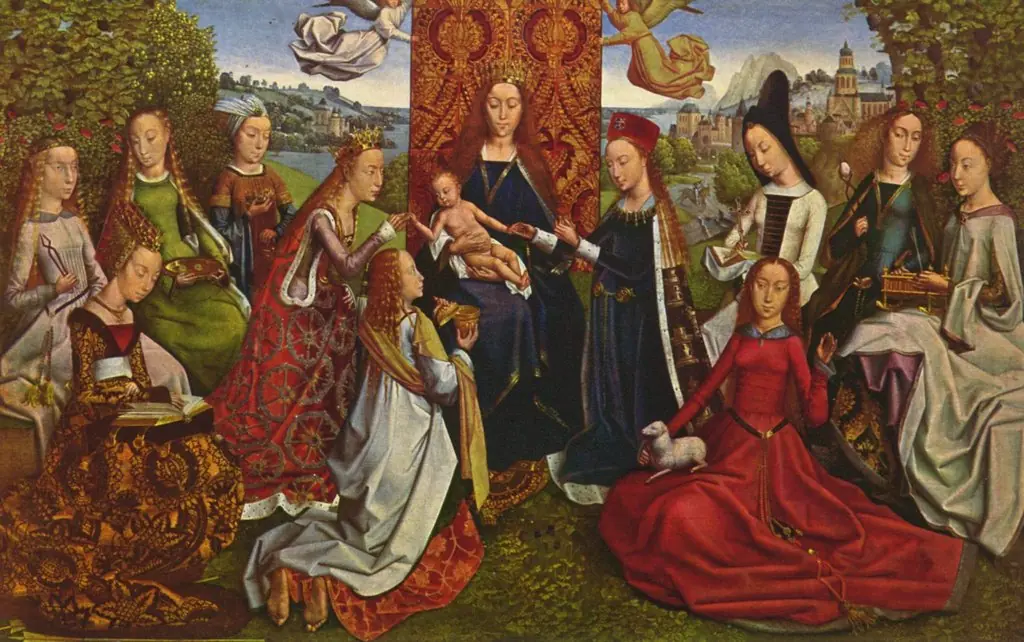 Virgo inter Virgines
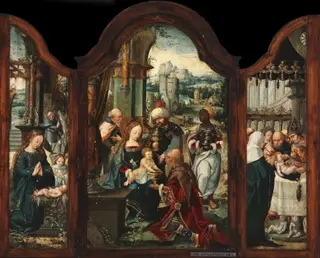 Triptych. Central panel: The Adoration of the Magi; left wing: The Nativity; right wing: The Circumcision
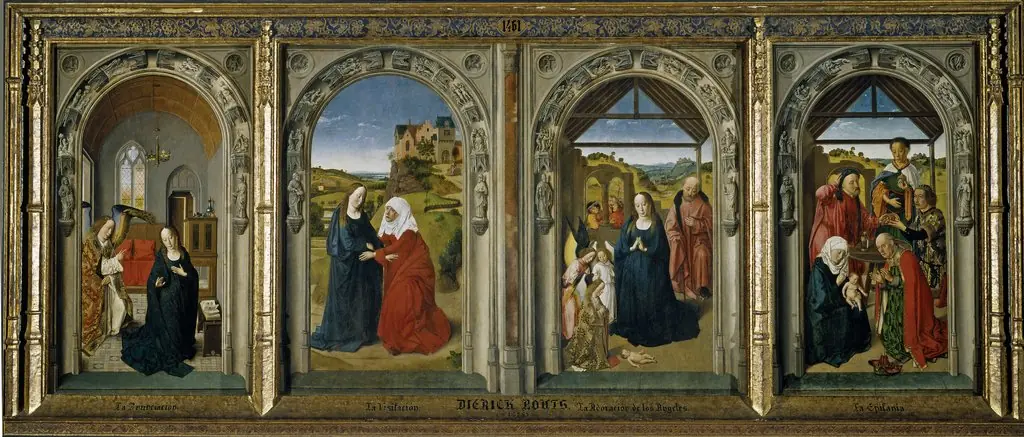 Triptych with Scenes from the Life of the Virgin