Artwork
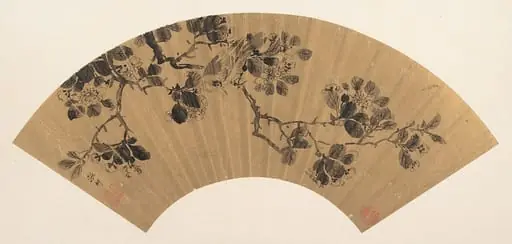
清 王武 牡丹圖 扇面|Peony
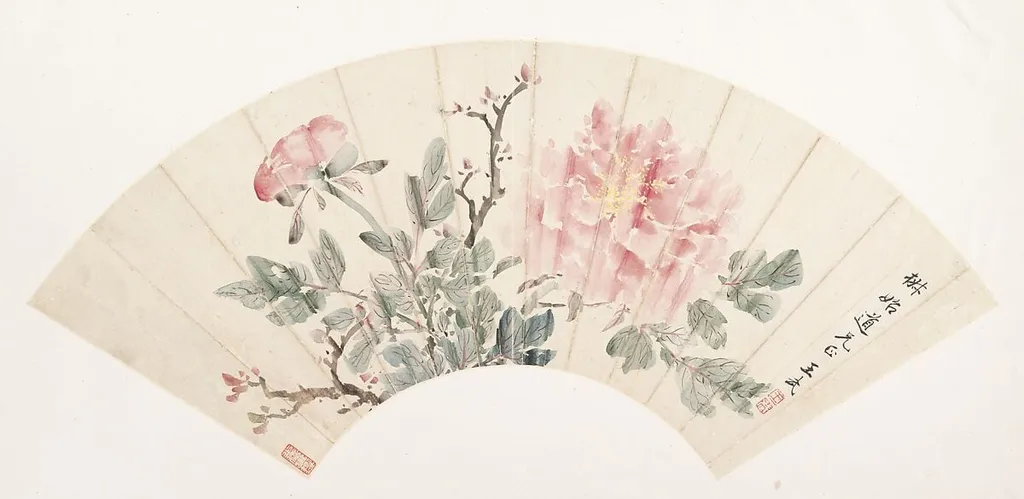
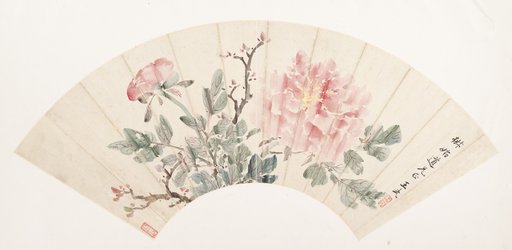
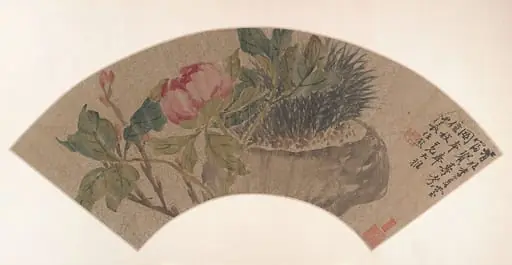
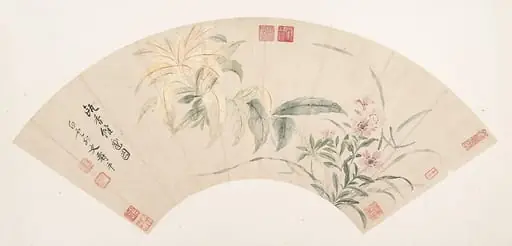
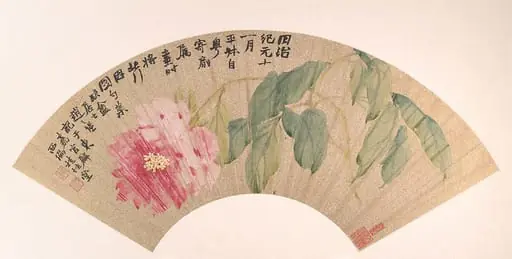
清 王武 牡丹圖 扇面|Peony is an ink painting by the Baroque artist Wang Wu. It dates from 1661 and is held in the collection of the Metropolitan Museum of Art.
- Accession no.
- 1989.363.140
- Credit line
- Bequest of John M. Crawford Jr., 1988
About this work
Subject & Meaning
Originally executed as a folding fan and later mounted as an album leaf, the painting focuses exclusively on the floral subject within the still-life genre.
Created in 1661 by the Qing dynasty artist Wang Wu, this work depicts a peony (Paeonia), rendered in ink and color on paper. Originally executed as a folding fan and later mounted as an album leaf, the painting focuses exclusively on the floral subject within the still-life genre. The composition highlights the botanical features of the peony, a flower traditionally associated with wealth, honor, and prosperity in Chinese culture.
While the specific iconographic arrangement serves as a decorative study of nature, the choice of the peony as the sole subject underscores its status as a symbol of high rank and beauty. The artwork represents a focused observation of this specific bloom, characteristic of Wang Wu's approach to flower-and-bird painting during the early Qing period.
Technique & Style
Wang Wu's Peony is executed in ink and color on paper. The artwork was originally created as a folding fan, but it has since been mounted as an album leaf. The composition conforms to the horizontal, elongated format typical of fan paintings, measuring 17.1 centimetres in height and 51.1 centimetres in width.
Stylistically, the work falls within the still life genre, focusing on the depiction of a peony (Paeonia). The application of ink and color on the arched paper support reflects the traditional Chinese fan painting technique, balancing pigment and wash to render the floral subject within the constrained spatial parameters of the fan format.
History & Provenance
Created in 1661 by the Qing dynasty artist Wang Wu, this Peony fan leaf was executed in ink and color on paper. The work depicts Paeonia flowers and is classified as a still-life painting. Originally a folding fan, the object was later remounted as an album leaf.
It was produced in China and is currently held in the collection of the Metropolitan Museum of Art. The piece measures 17.1 cm in height and 51.1 cm in width. While the specific commissioning patron or detailed ownership chain prior to its museum acquisition is not recorded, the work's inception is firmly dated to 1661.
Overview
This painting, titled Peony, was created by the artist Wang Wu in 1661. Rendered with ink and color on paper, it originally formed part of a folding fan before being mounted as an album leaf. The work presents a still life composition, focusing on a single branch of the flowering plant.
Context
Originally conceived as a folding fan, this painting was intended for close appreciation, likely by a scholar at their desk, rather than for display on a wall. This intimate format required the artist to complete the work efficiently before the ink could dry, influencing the directness of the brushwork. Its eventual mounting as an album leaf preserved it for continued study.
Artist & collection