Artwork
Singerie: The Painter
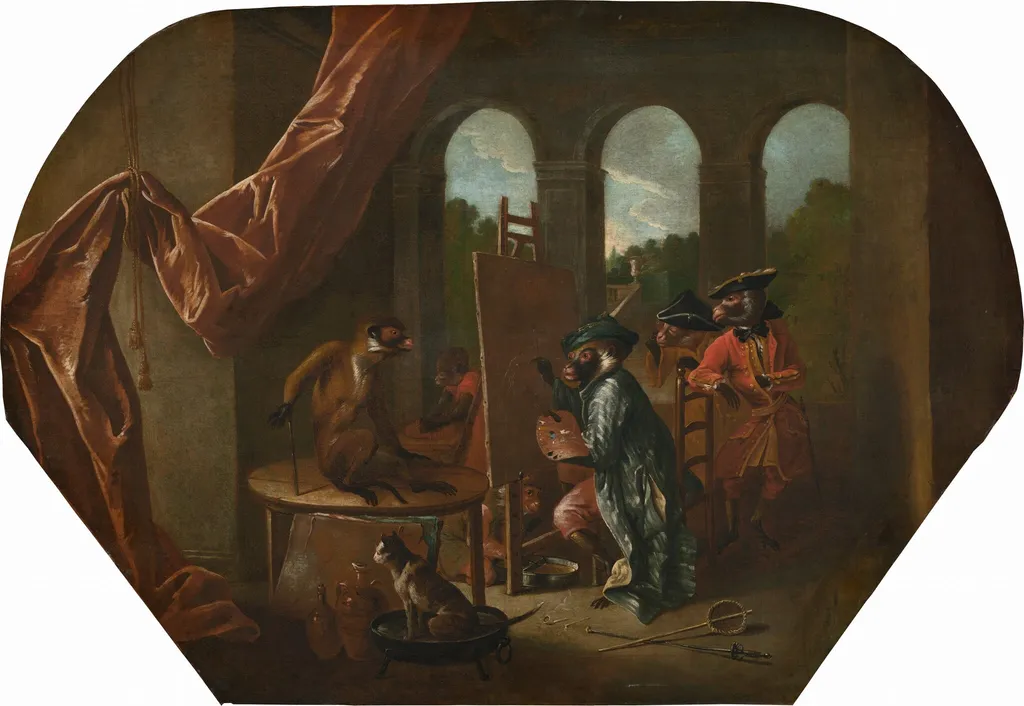
Singerie: The Painter is an oil painting by the Baroque artist Christophe Huet. It dates from 1739 and is held in the collection of the National Gallery of Art.
About this work
Subject & Meaning
Alexander Hamilton Rice in 1922, followed by inheritance through the Widener family and eventual gift to the National Gallery of Art in 1957.
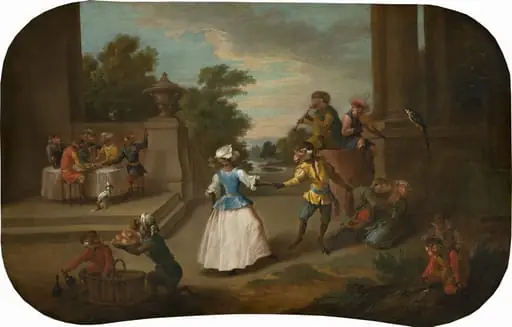
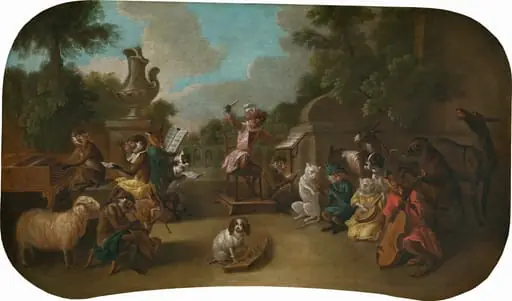
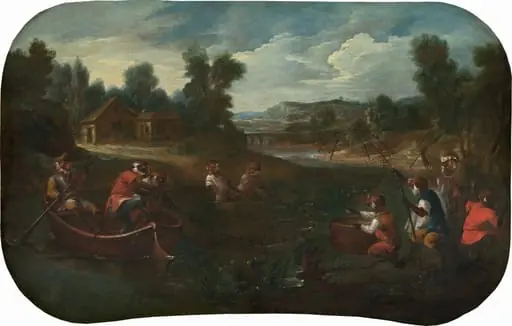
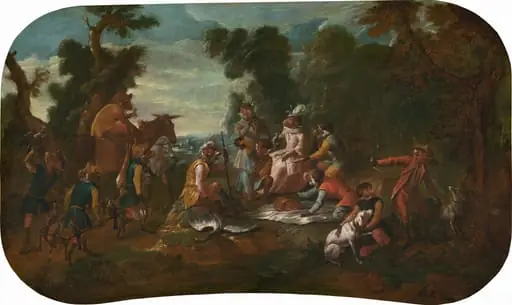
The painting depicts a painter surrounded by monkeys engaged in artistic activities, a scene that satirizes the pretensions of artists and the chaos of creative labor. This subject reflects the broader 18th-century French fascination with singerie, a decorative genre portraying monkeys in human roles to comment on artistic practice and moral folly. The work’s iconography draws from earlier emblematic traditions while offering a contemporary critique of artistic vanity, resonating with Enlightenment-era anxieties about genius and virtue.
Its layered symbolism underscores themes of artistic ambition and the absurdities inherent in creative pursuit, aligning with the decorative sensibilities of the French Rococo period.
The painting’s provenance traces its journey from a salon commission for the Château de La Norville in France to its acquisition by Dr. Alexander Hamilton Rice in 1922, followed by inheritance through the Widener family and eventual gift to the National Gallery of Art in 1957.
Technique & Style
The work is an oil painting executed on canvas, reflecting 18th‑century French decorative technique. Huet applied oil paint to a stretched canvas support, creating a composition that blends illusionistic architectural framing with a whimsical scene of a painter at work. The surface shows fine brushwork and subtle tonal modeling characteristic of Rococo decorative painting, while the composition’s spatial depth and decorative patterning emphasize the decorative rather than narrative intent of the piece.
Formal analysis highlights the balanced spatial arrangement and the use of pastel hues to create a luminous atmosphere, while the handling of the medium demonstrates a controlled application that preserves the delicate surface texture. The painting’s condition remains stable, with no significant deterioration noted in the canvas or paint layers.
History & Provenance
Christophe Huet painted Singerie: The Painter in 1739 as part of a decorative commission for François Jules Duvaucel. The work was originally installed in a salon at the Château de La Norville in France, where it remained through various ownership transitions until sometime between 1901 and 1906. By 1907, the painting was held by the Paris dealer Fauché before being sold in 1922 through André Carlhian to Dr. Alexander Hamilton Rice and his wife, Eleanor Elkins Widener Rice, for their Fifth Avenue residence in New York.
Following Dr. Rice's death in 1956, the painting passed by inheritance to the couple's children, George D. Widener, Jr., and Eleanor Widener Dixon. The work was subsequently gifted to the National Gallery of Art in Washington, D.C., in 1957, where it remains part of the collection.
Commissioned in 1739 for the Château de La Norville, this painting remained there until the early twentieth century. It entered the Parisian market by 1907 and was acquired in 1922 by Dr. Alexander Hamilton Rice and Eleanor Elkins Widener Rice for their New York residence. Following Dr. Rice's death, the work passed to the couple's children before being gifted to the National Gallery of Art in Washington, D.C., in 1957. The museum holds the piece in its permanent collection.
Context
Christophe Huet painted Singerie: The Painter in 1739 as a decorative panel for the Château de La Norville in France, commissioned by François Jules Duvaucel. The work remained in the château until the early 20th century, then entered the collection of Dr. Alexander Hamilton Rice and Eleanor Elkins Widener Rice, who installed it in their New York residence in 1922. The panel later passed by inheritance to their children and was gifted to the National Gallery of Art in 1957. It is now part of the museum's permanent collection in Washington, D.C.
Scholarly discussion of the painting situates it within the French Rococo tradition of animal genre scenes, particularly the 'singe' or monkey motif favored by artists such as Huet and his contemporaries. Its stylistic analysis contributes to broader understandings of mid-18th-century decorative painting and the patronage practices of aristocratic interiors.
The work is cataloged in major art historical references, including the National Gallery of Art's collection records and documented in studies of French decorative cycles, such as those by Bruno Pons on the furnishings of the Château de La Norville.
Overview
Christophe Huet’s oil on canvas, dated around 1739, presents a whimsical interior scene populated by anthropomorphic monkeys. The composition centers on a primate artist at work on an easel, surrounded by similarly attired companions and a cat perched on a metal pan. The setting is defined by arched windows that admit light into the studio‑like space.
Own this work as a print
Artist & collection