Artwork
Singerie: The Sculptor
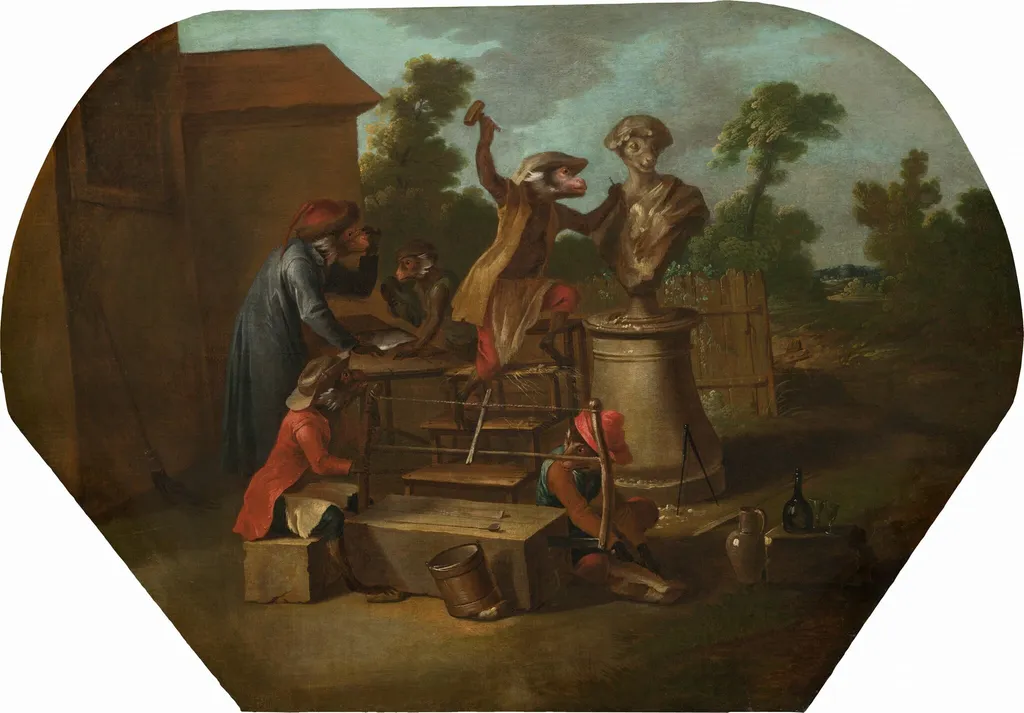
Singerie: The Sculptor is an oil painting by the Baroque artist Christophe Huet. It dates from 1739 and is held in the collection of the National Gallery of Art.
About this work
Subject & Meaning
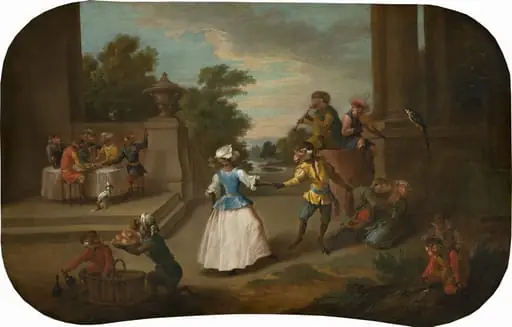
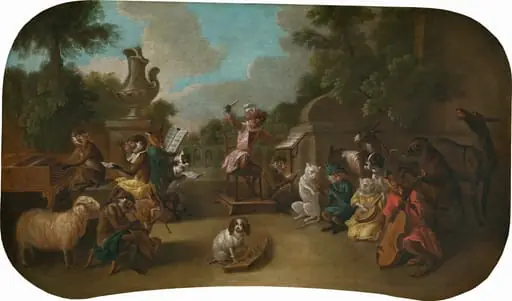
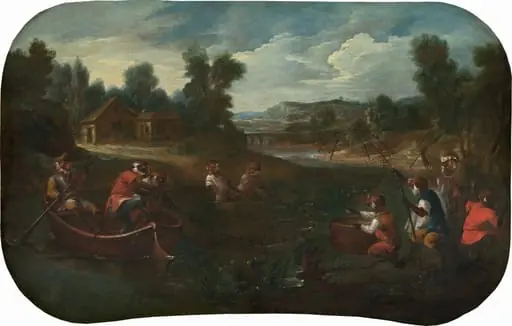
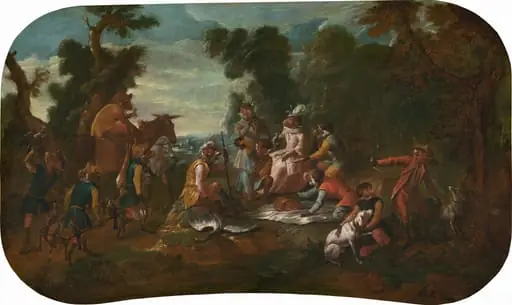
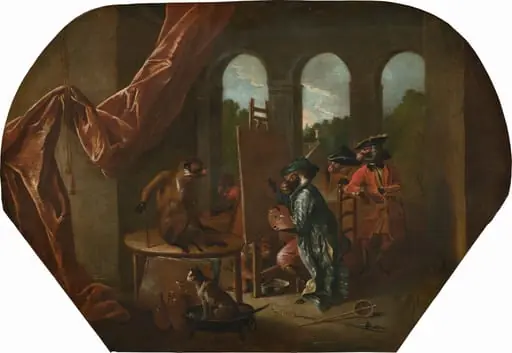
The painting belongs to the singerie genre, in which monkeys are depicted parodying human pursuits, here a monkey shown as a sculptor at work, an embodiment of artistic creation. The subject reflects the eighteenth-century French taste for decorative cycles that used such playful animal figures to comment lightly on human activity and the arts.
Originally part of an integrated decorative ensemble for a salon, the image situates the sculptor's craft within the broader fashion for singerie in Rococo interior decoration, a mode in which monkeys stood in for human figures to convey gently satirical or allegorical meaning to contemporary audiences.
Technique & Style
The work belongs to Huet's singerie genre, in which monkeys are depicted parodying human activities and artistic pursuits.
Singerie: The Sculptor is executed in oil on canvas, a medium consistent with Christophe Huet's decorative practice. The canvas measures 83 cm in height by 119.5 cm in width, giving it a horizontal orientation suited to its original placement within a paneled salon. The work belongs to Huet's singerie genre, in which monkeys are depicted parodying human activities and artistic pursuits.
Its classification as a painting reflects its function as part of an integrated decorative ensemble, originally commissioned for a specific architectural setting in the Château de La Norville.
History & Provenance
The work was commissioned in 1739 by François Jules Duvaucel for a salon in the Château de La Norville, France, where it remained with the château's successive owners until it was removed between 1901 and 1906. By 1907 it was handled by the Parisian dealer Fauché and later entered the stock of André Carlhian, who sold it in 1922 to Dr. Alexander Hamilton Rice and his wife, Eleanor Elkins Widener Rice, for their New York residence. Eleanor's first husband had died in the Titanic disaster in 1912, before her 1915 marriage to Rice; the painting adorned their Fifth Avenue mansion until it passed by inheritance in 1956 to their children, George D. Widener, Jr., and Eleanor Widener Dixon.
In 1957 they donated it to the National Gallery of Art, Washington, D.C. The source material does not provide a specific inventory or accession number, nor an exhibition history for the piece.
Overview
Christophe Huet’s oil on canvas, dated around 1739, presents a whimsical workshop populated by anthropomorphic monkeys. The figures are arranged around a central pedestal that supports a sculptural work, creating a tableau that blends humor with a subtle commentary on artistic practice.
Context
Singerie, the genre of depicting monkeys imitating human behavior, flourished in 18th‑century French decorative arts. Huet’s work aligns with this trend, using the playful motif to comment on the pretensions of artistic labor during a period when the French court favored elaborate, theatrical visual narratives.
Legacy
While not as widely reproduced as other Baroque works, the painting exemplifies the intersection of satire and fine art that characterized the later phases of the movement. It continues to be cited in studies of genre painting for its nuanced blend of humor, allegory, and technical skill.
Own this work as a print
Artist & collection