Artwork
Portrait of a Lady
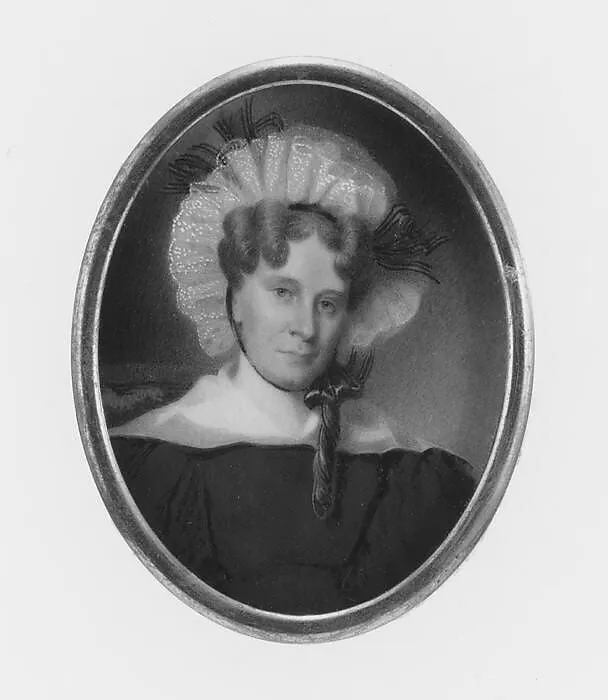
Portrait of a Lady is a watercolor painting by the British Romanticist artist Hugh Bridport. It dates from 1835 and is held in the collection of the Metropolitan Museum of Art.
About this work
Subject & Meaning
No additional iconographic elements or specific symbolic meanings beyond the representation of the woman herself are detailed in the current records.
Hugh Bridport's 1835 watercolor on ivory, titled Portrait of a Lady, depicts an unidentified woman serving as the primary subject. Created during the early nineteenth century, the work functions as a conventional portrait within the American Wing collection of the Metropolitan Museum of Art. While the specific identity of the sitter remains unrecorded in the available documentation, the composition focuses entirely on the female figure, emphasizing her presence through the intimate scale of the miniature format.
The piece represents a standard example of portrait art from this period, prioritizing the faithful rendering of the subject's likeness over complex allegorical symbolism or narrative storytelling. No additional iconographic elements or specific symbolic meanings beyond the representation of the woman herself are detailed in the current records.
Technique & Style
Created in 1835 by Hugh Bridport, this portrait is executed in watercolor on an ivory support, a medium characteristic of miniature painting traditions. The work measures 7.2 centimeters in height and 5.5 centimeters in width, reflecting the intimate scale typical of the genre. As a portrait of a woman, the piece relies on the translucency of watercolor to render delicate facial features against the smooth, luminous surface of the ivory.
The classification within the American Wing highlights its status as a distinct example of mid-19th-century American portraiture. The handling of the medium demonstrates the artist's ability to capture likeness within a confined format, utilizing the unique properties of ivory to enhance the visual depth of the sitter's depiction.
History & Provenance
Portrait of a Lady was created by Hugh Bridport in 1835 as a watercolor on ivory and is held in the Metropolitan Museum of Art, classified within the museum's American Wing. The work depicts a woman and measures 7.2 by 5.5 centimeters. While the sources confirm the artist, date, medium, and current institutional location, they do not provide details of any original commission, earlier owners, or subsequent transfers, nor a specific accession number or exhibition history for the work.
Overview
Hugh Bridport's Portrait of a Lady, created around 1835, is a watercolor on ivory. This intimate depiction of an unidentified woman exemplifies the miniature portraiture popular in the early 19th century. Its small scale suggests it was intended for personal display or as a cherished keepsake, reflecting the era's approach to capturing individual likenesses.
Context
Miniature portraits, like this example, served a similar function to modern photographs during the 19th century. They were often carried by individuals or kept in homes as cherished reminders of family members or friends. The practice allowed for the widespread dissemination of personal images, offering a portable and enduring record of individual appearance before the advent of photography.
Artist & collection

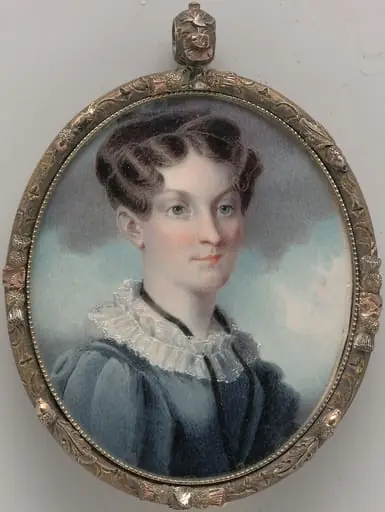
- Portrait of a Lady
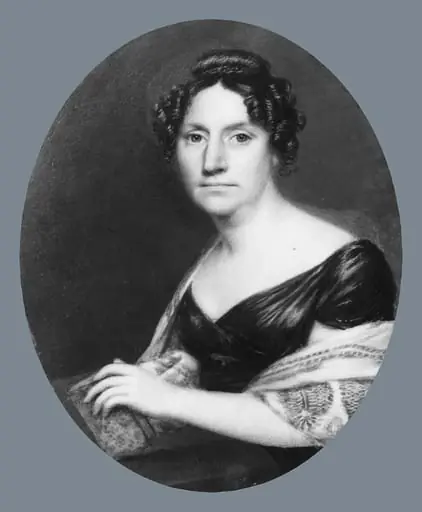 Portrait of a Lady
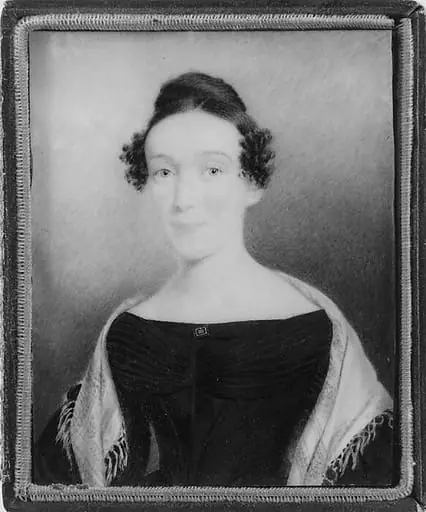 Portrait of a Lady
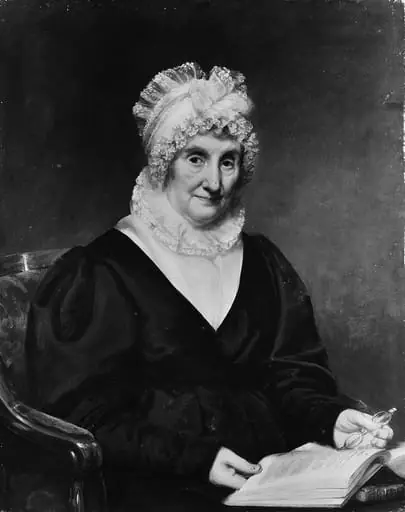 Portrait of a Lady (Possibly of the Buloid Family)
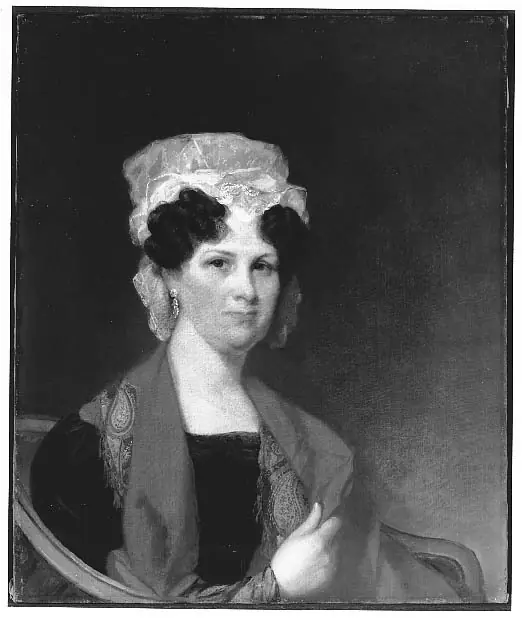 Mrs. Robert Waterston (Hephzibah Lord)
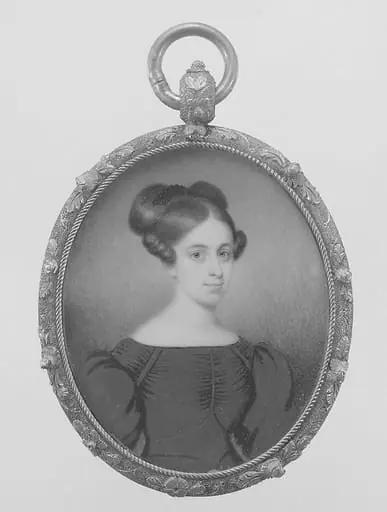 Portrait of a Lady
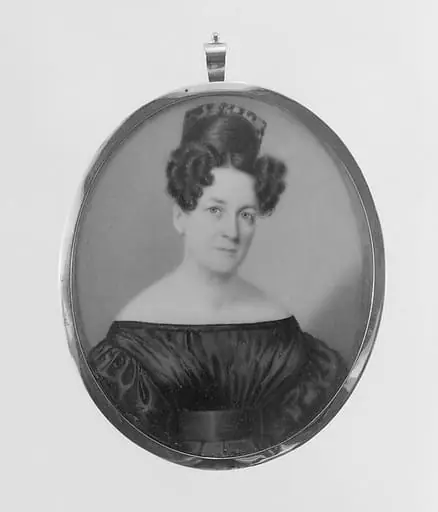 Portrait of a Lady
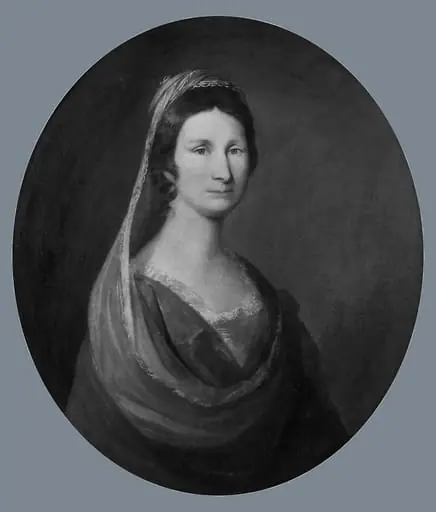 Mrs. Peter De Lancey
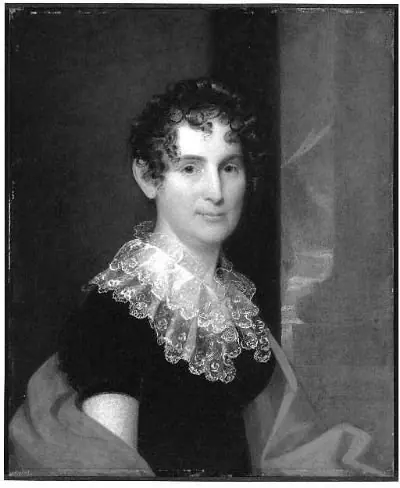 Mrs. Peter Gilman Robbins (Polly Williams)
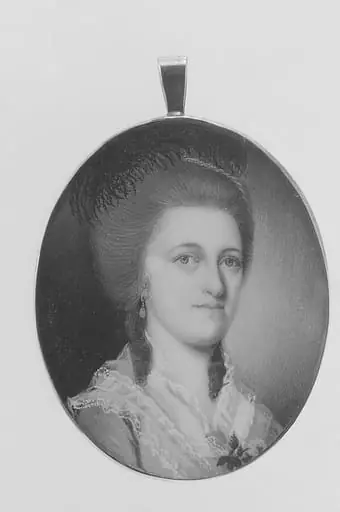 Portrait of a Lady
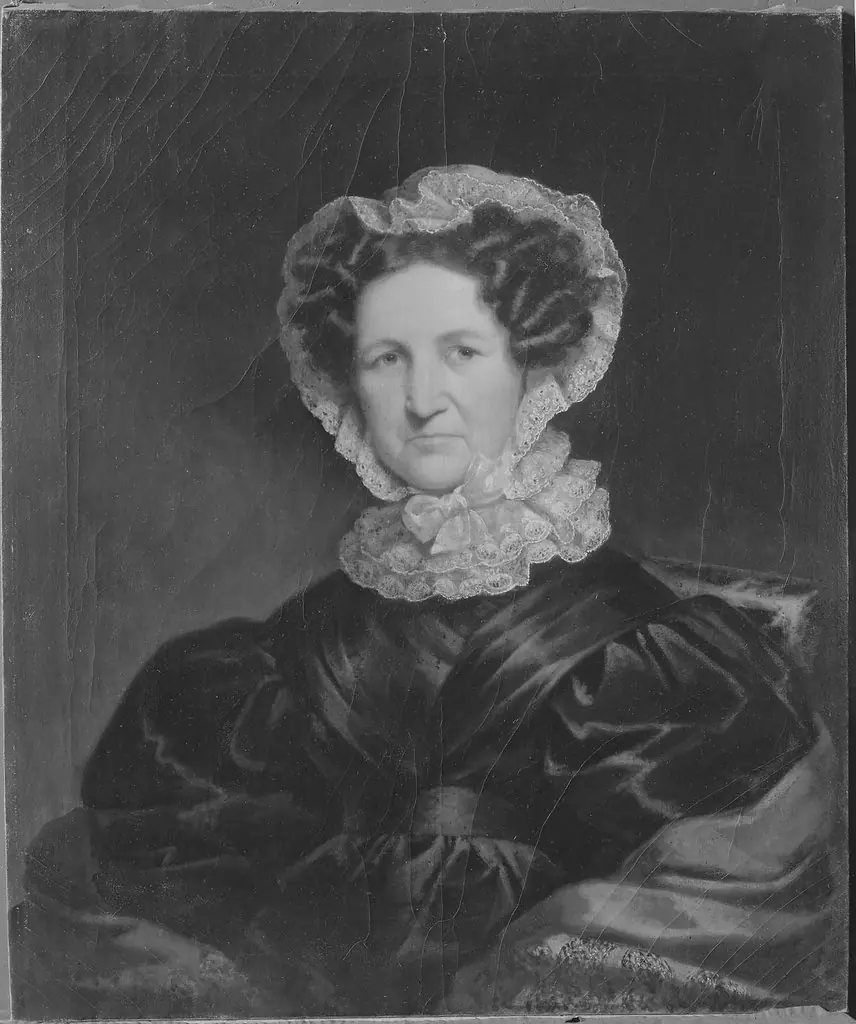 Mrs. Isaac Green (Ann Barrett)
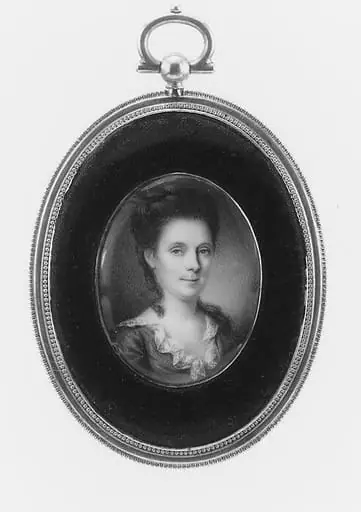 Mrs. John Cox (Esther Bowes)