Artwork
Sequences from the Village Museum, naive painting by Petru Mihuțe - Avram Iancu and Romania (1988)
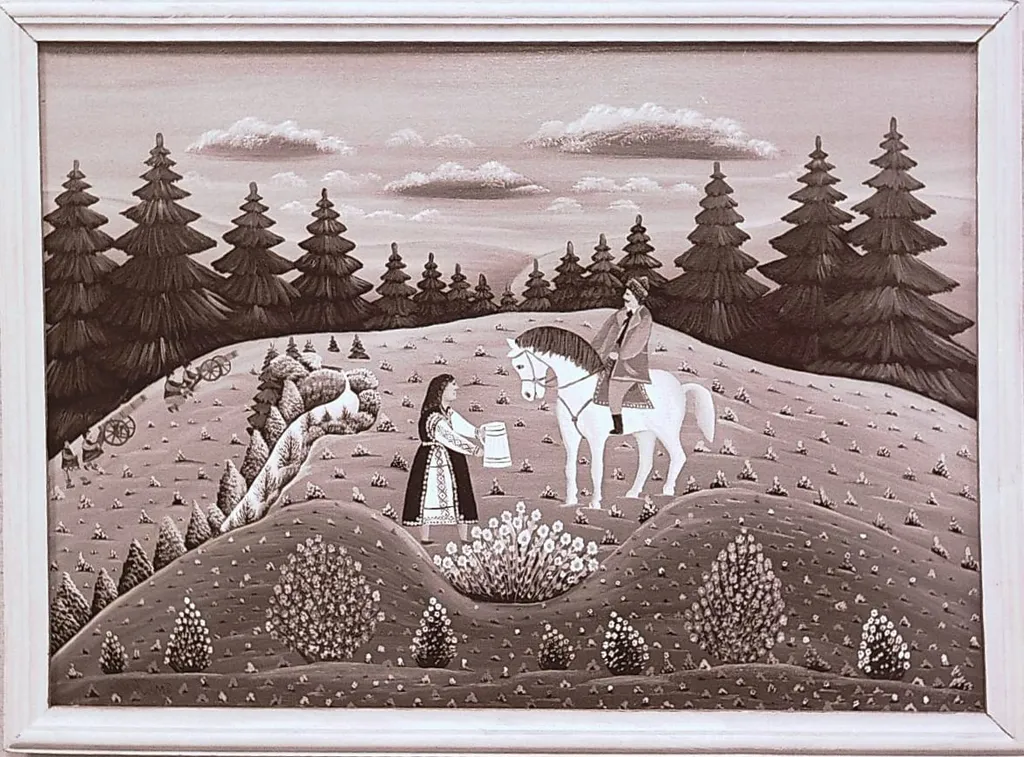
Sequences from the Village Museum, naive painting by Petru Mihuțe - Avram Iancu and Romania (1988) is an unspecified painting by the Naïve art artist Ioan George Andron. It dates from 1988 and is held in the collection of the "Dimitrie Gusti" National Village Museum. Petru Mihuțe’s 1988 painting 'Avram Iancu and Romania' is a work of Romanian naive art, characterized by its untrained, expressive style.
About this work
Overview
The composition avoids perspective and realism, favoring flattened forms and vivid hues to evoke memory and folklore rather than literal representation.
Petru Mihuțe’s 1988 painting 'Avram Iancu and Romania' is a work of Romanian naive art, characterized by its untrained, expressive style. Created in the tradition of rural self-taught painting, it presents a vision of national identity through everyday village life. The composition avoids perspective and realism, favoring flattened forms and vivid hues to evoke memory and folklore rather than literal representation.
Subject & Meaning
The painting centers on Avram Iancu, a 19th-century Transylvanian leader, woven into a tapestry of village scenes. Rather than depicting him in historical dress or battle, Mihuțe integrates him among farmers, children, and communal gatherings, suggesting his enduring symbolic presence in rural consciousness. The work blends local legend with daily life, framing national history as lived experience rather than monument.
Technique & Style
Mihuțe employs flat planes of unmodulated color, simplified figures, and a lack of linear perspective, typical of naive art. Brushwork is direct and unrefined, with no shading or depth. Patterns in clothing and landscape are rendered with rhythmic repetition, lending a decorative quality.
The result is a dreamlike stillness where time feels suspended, and the ordinary is elevated through color and arrangement.
History & Provenance
Born in 1927 in Brusturi, Arad County, Petru Mihuțe began painting later in life, drawing from his rural upbringing and local traditions. His works, including this one, were collected by regional ethnographic institutions. 'Avram Iancu and Romania' was produced during a period of renewed interest in folk expression under Ceaușescu’s cultural policies, though Mihuțe’s focus remained personal and communal rather than political.
Context
This painting emerged within Romania’s broader naive art movement, which flourished in the 20th century as rural artists documented their surroundings without formal training. It aligns with the ethos of village museums, where folk memory and material culture were preserved. Mihuțe’s work reflects a quiet resistance to urban modernity, anchoring identity in the rhythms of agricultural life and oral tradition.
Legacy
Petru Mihuțe’s oeuvre remains influential in Romanian naive art circles, with his works held in regional museums and private collections. His ability to convey emotional depth through simplicity has inspired later generations of self-taught artists. Though never part of the mainstream art world, his paintings continue to be studied for their authentic portrayal of rural Romania’s visual culture.
Artist & collection
Artist
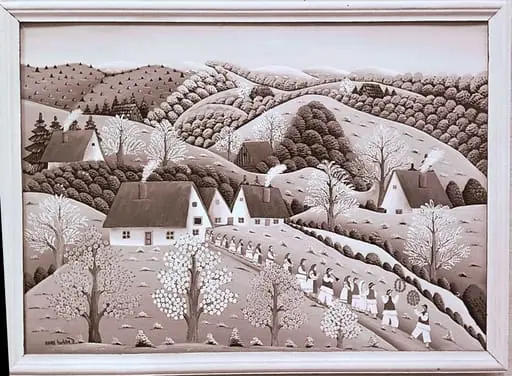
Naïve painters from the 1980s like Petru Mihuțe recorded village life in bold colors straight from tubes.
Museum
"Dimitrie Gusti" National Village Museum
Continue through works from the same source collection.
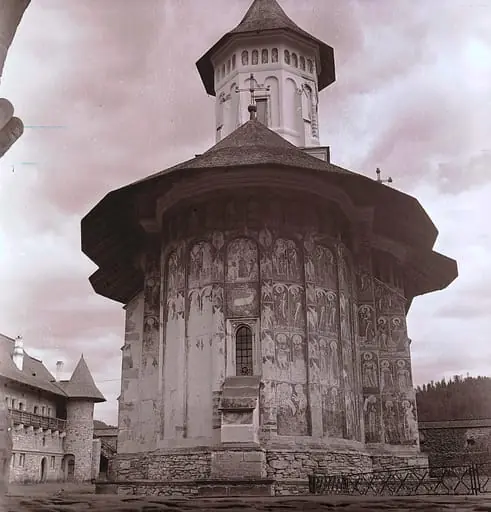 Research Bucovina, Vatra Moldovița. The Monastery And The Church - View With The Absida And The Turla Of The Church (1980)
- Sequences from the Village Museum, naive painting by Petru Mihuțe - Spring Wedding (1988)
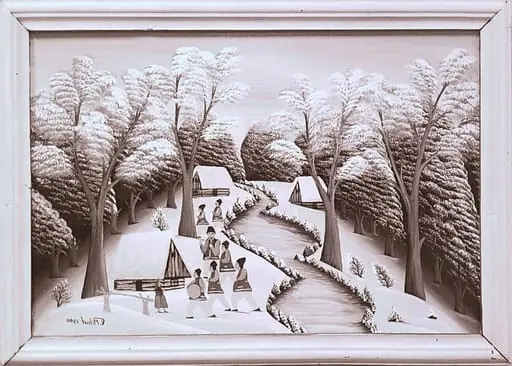 Sequences from the Village Museum, naive painting by Petru Mihuțe - Winter with van (1988)
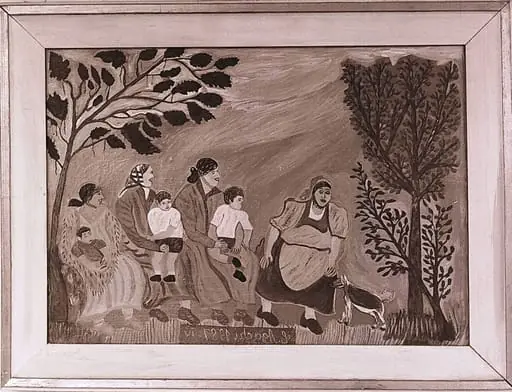 Sequences from the Village Museum, Naive painting by Costache Agachi - The gossip (1988)
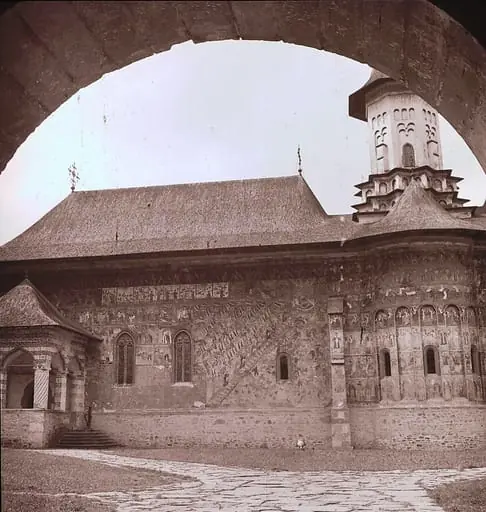 Research Bucovina. Sucevița Church - overview with exterior painting from one of the longitudinal walls (1980)
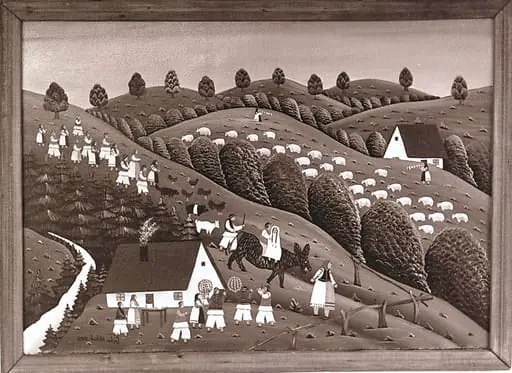 Sequences from the Village Museum, naive painting by Petru Mihuțe - The wedding of the poor boy (1988)
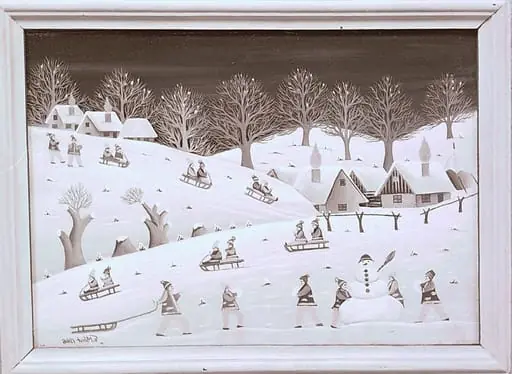 Sequences from the Village Museum, naive painting by Petru Mihuțe - Children at sling (1988)
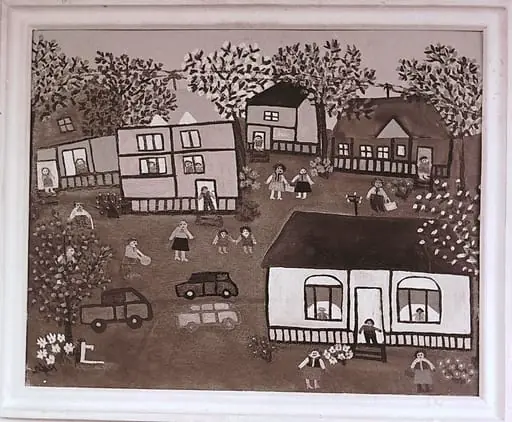 Sequences from the Village Museum, naive painting by Aurora Năfornițe - New houses (1988)
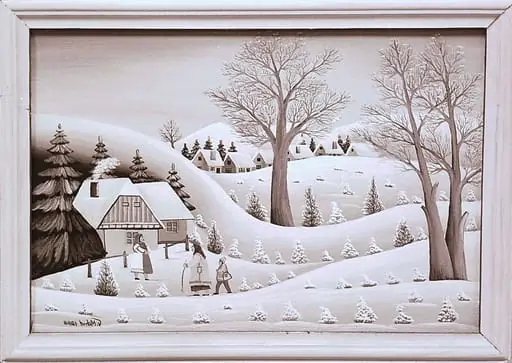 Sequences from the Village Museum, naive painting by Petru Mihuțe - The beggar (1988)
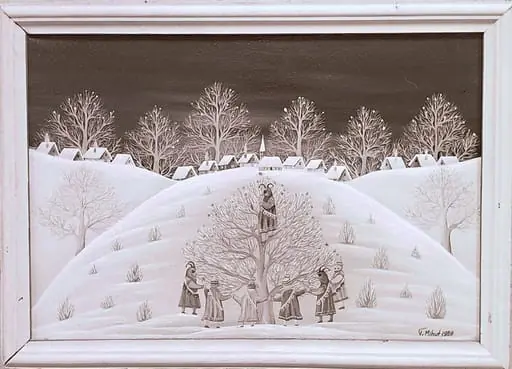 Sequences from the Village Museum, naive painting by Petru Mihuțe - New Year’s Habit (1988)
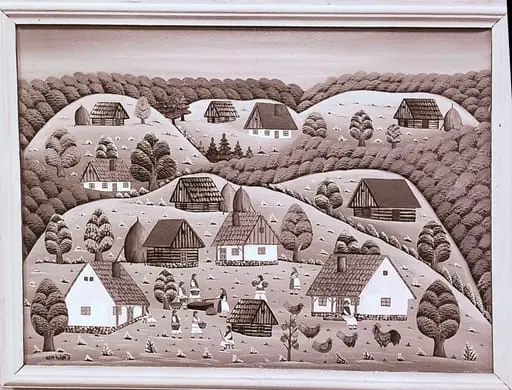 Sequences from the Village Museum, naive painting by Petru Mihuțe - The Magiunul’s Fate (1988)
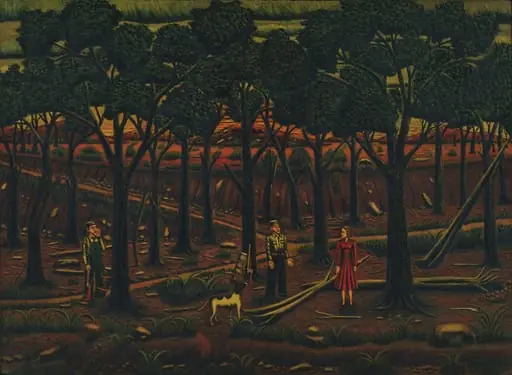 Untitled
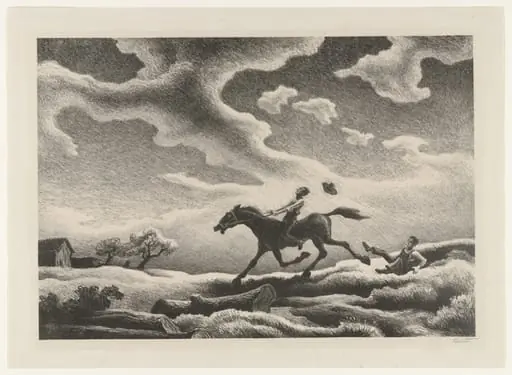 Untitled
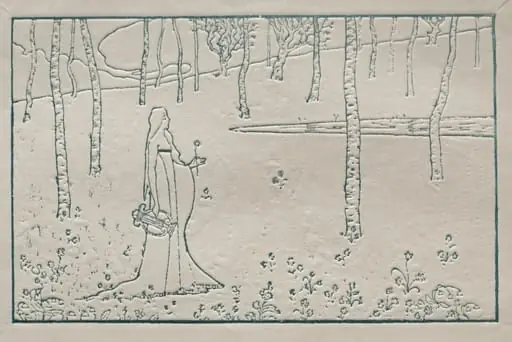 Sappho
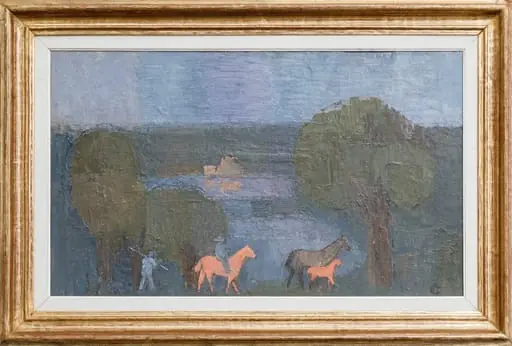 Peisaj cu cai