Artwork
City–Shtetl
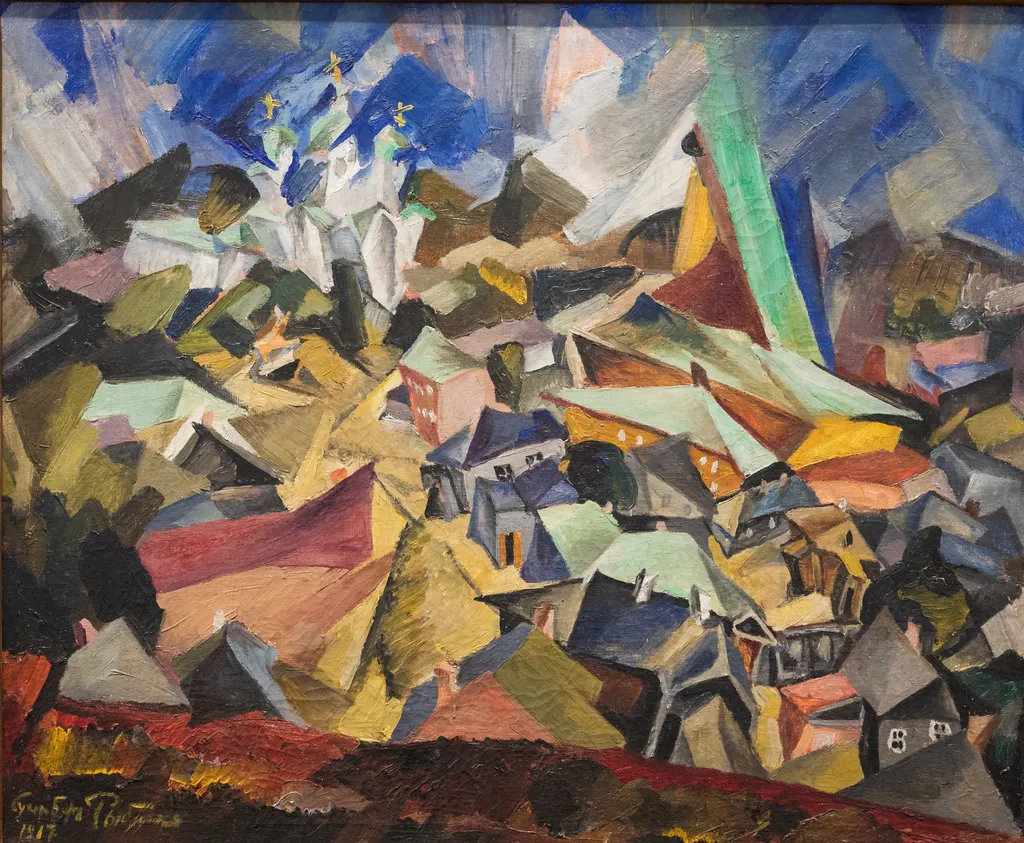
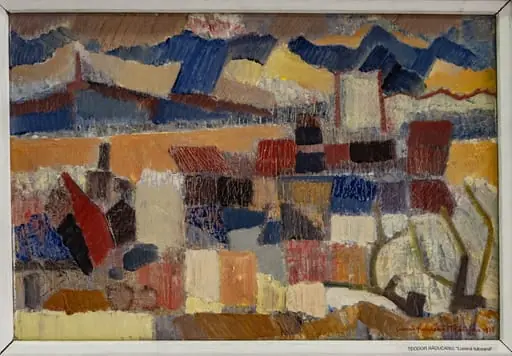
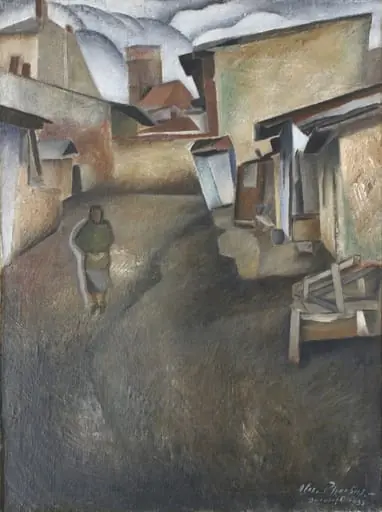
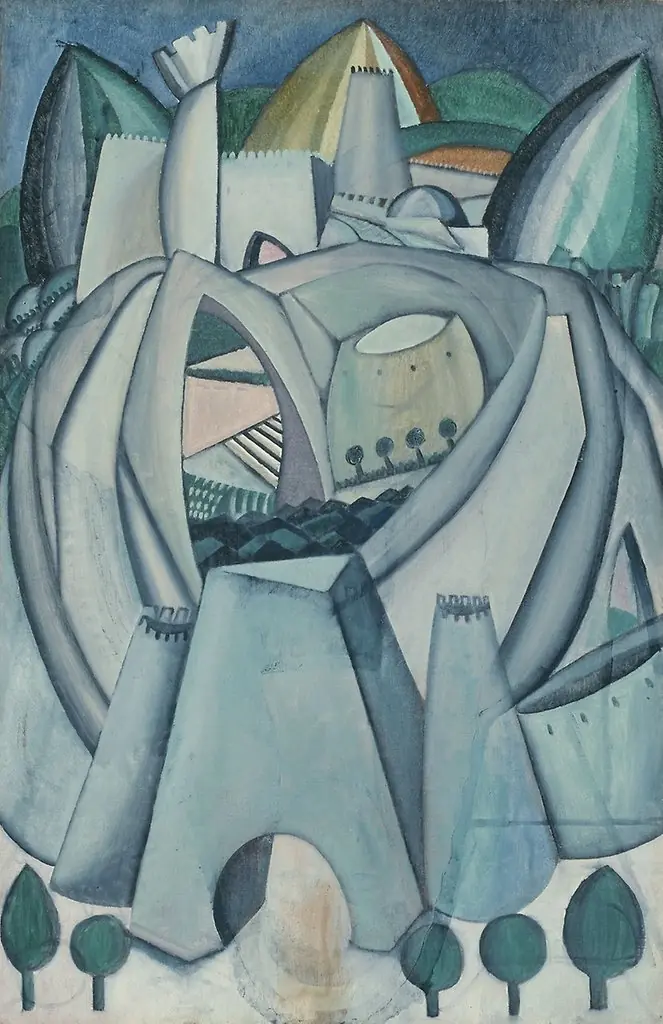
City–Shtetl is an oil painting by the Cubism Synthetic artist Issachar Ber Ryback. It dates from 1917 and is held in the collection of the National Art Museum of Ukraine.
About this work
Overview
Issachar Ber Ryback painted City–Shtetl in 1917 using oil on canvas, capturing the visual rhythm of Jewish urban and rural life in Eastern Europe. The work emerged during a period of intense cultural redefinition among Jewish artists in the Russian Empire. It is now part of the National Art Museum of Ukraine’s collection, representing a key moment in early 20th-century Jewish artistic expression.
Subject & Meaning
Ryback does not idealize either setting but presents them as coexisting realities shaped by daily life, migration, and tradition.
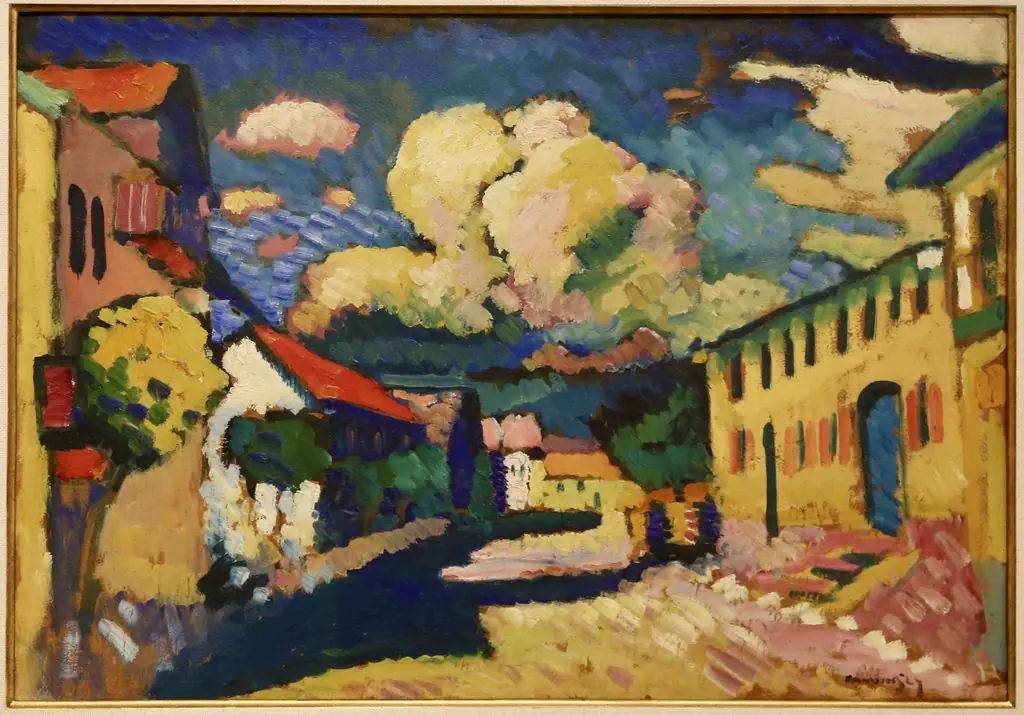
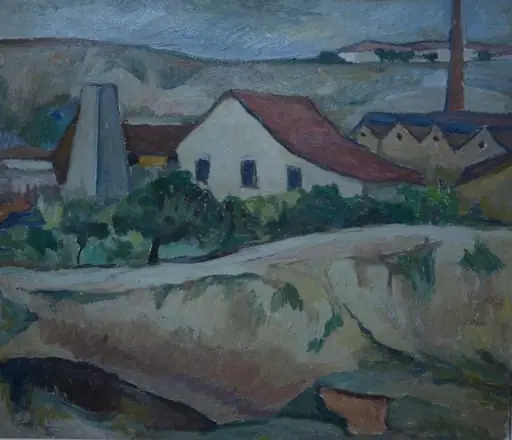
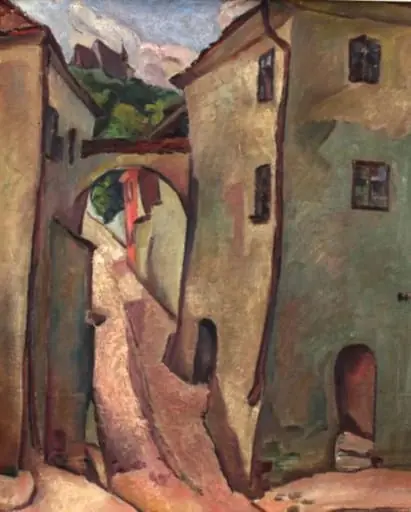
The painting juxtaposes the dense, layered architecture of a city with the simpler, clustered forms of a shtetl. Ryback does not idealize either setting but presents them as coexisting realities shaped by daily life, migration, and tradition. The absence of human figures emphasizes the built environment as a vessel of cultural identity, reflecting the tension between modernization and inherited ways of living.
Technique & Style
Ryback employed a fractured, geometric approach influenced by Synthetic Cubism, breaking structures into angular planes and overlapping facets. Bright, non-naturalistic hues, blue, red, yellow, green, are applied in flat, bold areas, creating visual energy without illusionistic depth. The composition avoids perspective conventions, instead organizing space through color contrast and rhythmic repetition of forms.
History & Provenance
Created in 1917, the painting was made during Ryback’s time in Kiev, amid the upheavals of World War I and the Russian Revolution. It remained in Eastern Europe, eventually entering the collection of the National Art Museum of Ukraine. Its preservation reflects the museum’s commitment to documenting Jewish artistic contributions within the broader context of Ukrainian modernism.
Context
Ryback was part of a generation of Jewish artists seeking to articulate a distinct cultural identity through visual art, separate from both Russian imperial norms and Western European modernism. City–Shtetl responds to the rapid urbanization of Jewish communities and the erosion of traditional shtetl life, aligning with broader efforts to document and preserve a vanishing world.
Legacy
The painting stands as a significant example of how Jewish artists in Eastern Europe reinterpreted modernist styles to express local realities. While Ryback’s broader oeuvre is less widely known than that of his contemporaries, City–Shtetl remains a touchstone in studies of Jewish visual culture, illustrating how form and color could convey social and historical nuance without literal representation.
Own this work as a print
Artist & collection
Artist
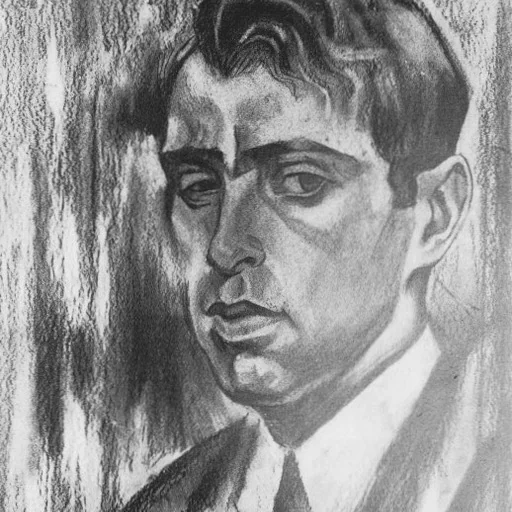
Issachar Ber Ryback, also Riback (Іссахар-Бер Рибак; 2 February 1897, in Yelisavetgrad, Russian Empire (today Kropyvnytskyi, Ukraine) – 22 December 1935, in Paris) was a Jewish-Ukrainian-French painter.