Artwork
Plan of the Cortile Belvedere
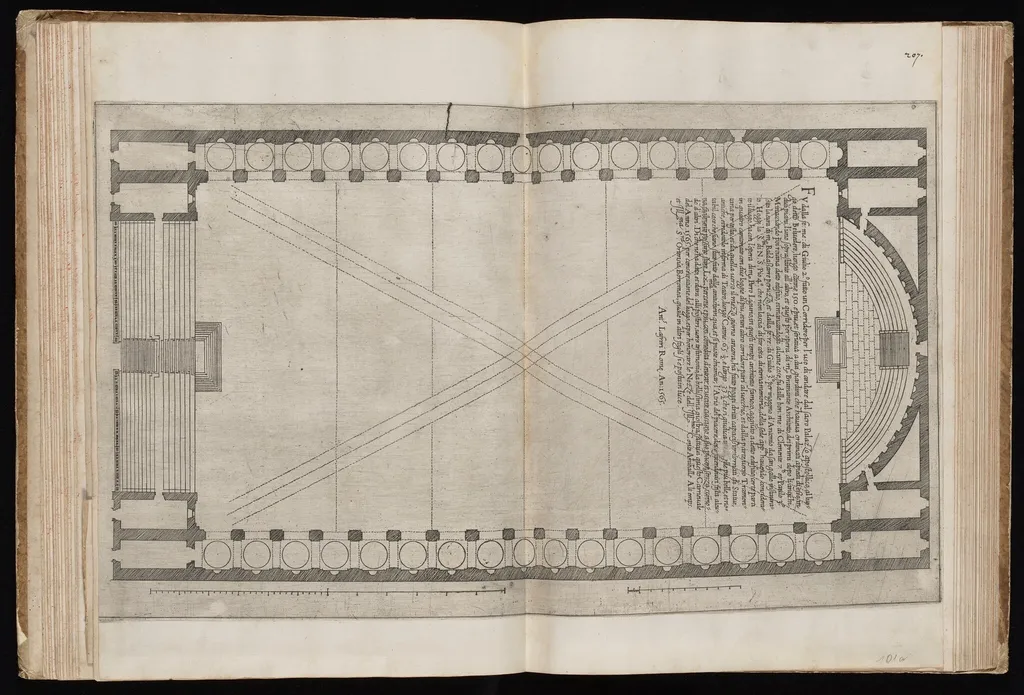
Plan of the Cortile Belvedere is an ink print by the Renaissance artist Italian 16th Century. It dates from 1565 and is held in the collection of the National Gallery of Art.
- Inscription
- Inscribed:Lettered UC: "Fu dalla fe. me. di Giulio 2o fatto un Corridore per l'uso di andare dal sacro Palazzo apostollico al luogo detto Belvedere [...] e dara alli posteri vero testimonio la bellissima giostra fattavi questo Carnevale del Anno 1565 per comsecratione del luogo et per honorare le Nozze dell'Ill.mo Conte Annibale Altemps et Ill.ma S.ra Ortensia Borromea quale in altri fogli si e posta in luce." and "Ant.s Lafreri Romae An. 1565"
About this work
Look up the National Gallery of Art, Washington, to see this plan in person.
This etching shows a bird’s-eye plan of the Vatican’s Cortile Belvedere. Straight lines divide the space into neat rectangles. Staircases zigzag between levels. The print is small, about the size of a sheet of paper.
It was made in 1565 by an Italian artist named Antonio Lafreri. He copied Donato Bramante’s design for Pope Julius II. The plan helped builders follow the layout exactly.
Look up the National Gallery of Art, Washington, to see this plan in person.
Overview
The Plan of the Cortile Belvedere is a 16th‑century etching measuring roughly 53 by 32 centimetres. Executed by the Italian printmaker Antonio Lafreri in 1565, the work presents a bird’s‑eye schematic of the Vatican’s Upper Courtyard, including its stairways and rectangular divisions.
Subject & Meaning
The image reproduces the architectural scheme devised by Donato Bramante for Pope Julius II’s Cortile Belvedere, illustrating how the courtyard and its connecting staircases were intended to be organized within the papal palace complex.
Technique & Style
Lafreri employed the etching process, incising fine lines onto a copper plate to render the plan’s precise geometry. The resulting print displays clean, orthogonal lines that delineate the courtyard’s spaces and the zigzagging staircases with a clarity suited to technical drawing.
History & Provenance
Created in 1565, the etching served as a practical reference for builders executing Bramante’s design. It later entered the collection of the National Gallery of Art in Washington, where it is currently held.
![Ichnographia Templi Divi Petri [Plan of Saint Peter's Basilica in Rome]](https://artifactworldgallery.com/img/etienne-duperac--ichnographia-templi-divi-petri-plan-of-saint-peter-s-basilic--f1844fd1b6664111-w320.webp)
Artist & collection

Artist
An anonymous 16th-century Italian sculptor left a handful of small bronzes in dark brown and gilt.

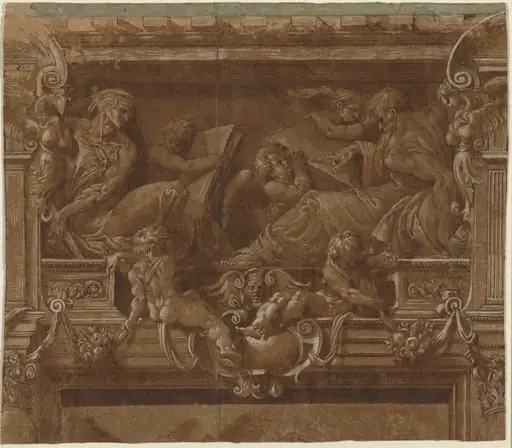
- Ichnographia Templi Divi Petri [Plan of Saint Peter's Basilica in Rome]
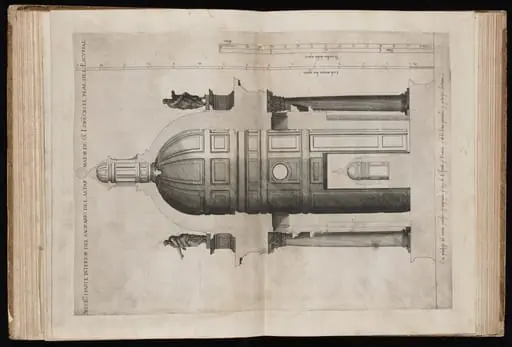 Section and Interior of the Sanctuary of San Lorenzo de El Escorial
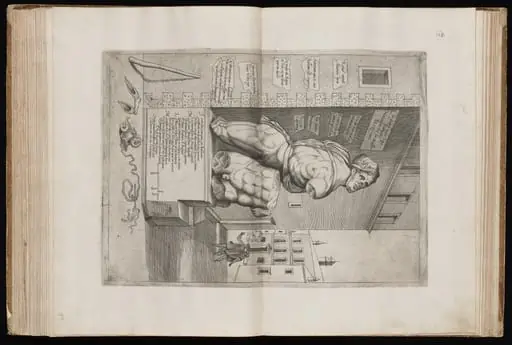 The Statue of Pasquino
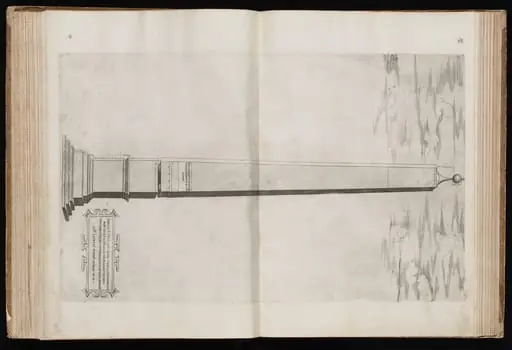 The Vatican Obelisk
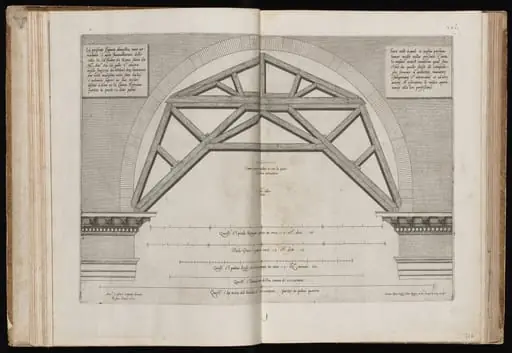 Wooden Falsework Supporting a Vault
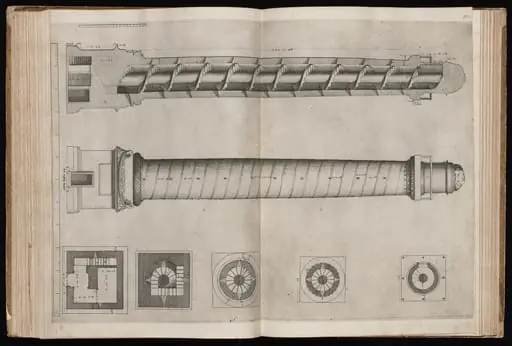 Section and Elevation of Trajan's Column
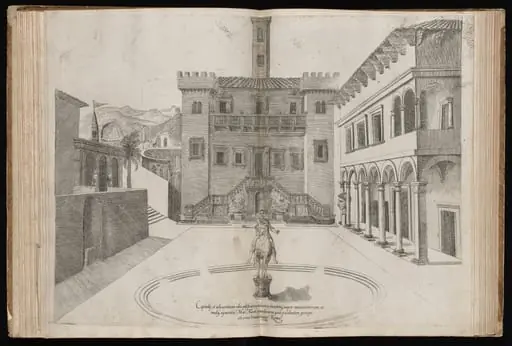 The Roman Capitol
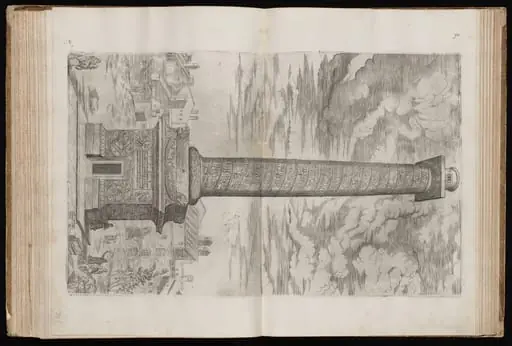 Trajan's Column
![Pantheum Romanum [The Roman Pantheon], by Nicolas Beatrizet](https://artifactworldgallery.com/img/nicolas-beatrizet--pantheum-romanum-the-roman-pantheon--8069db7dd8e6f190-w320.webp) Pantheum Romanum [The Roman Pantheon]
Pantheum Romanum [The Roman Pantheon]