Artwork
The Parable of Lazarus and the Rich Man
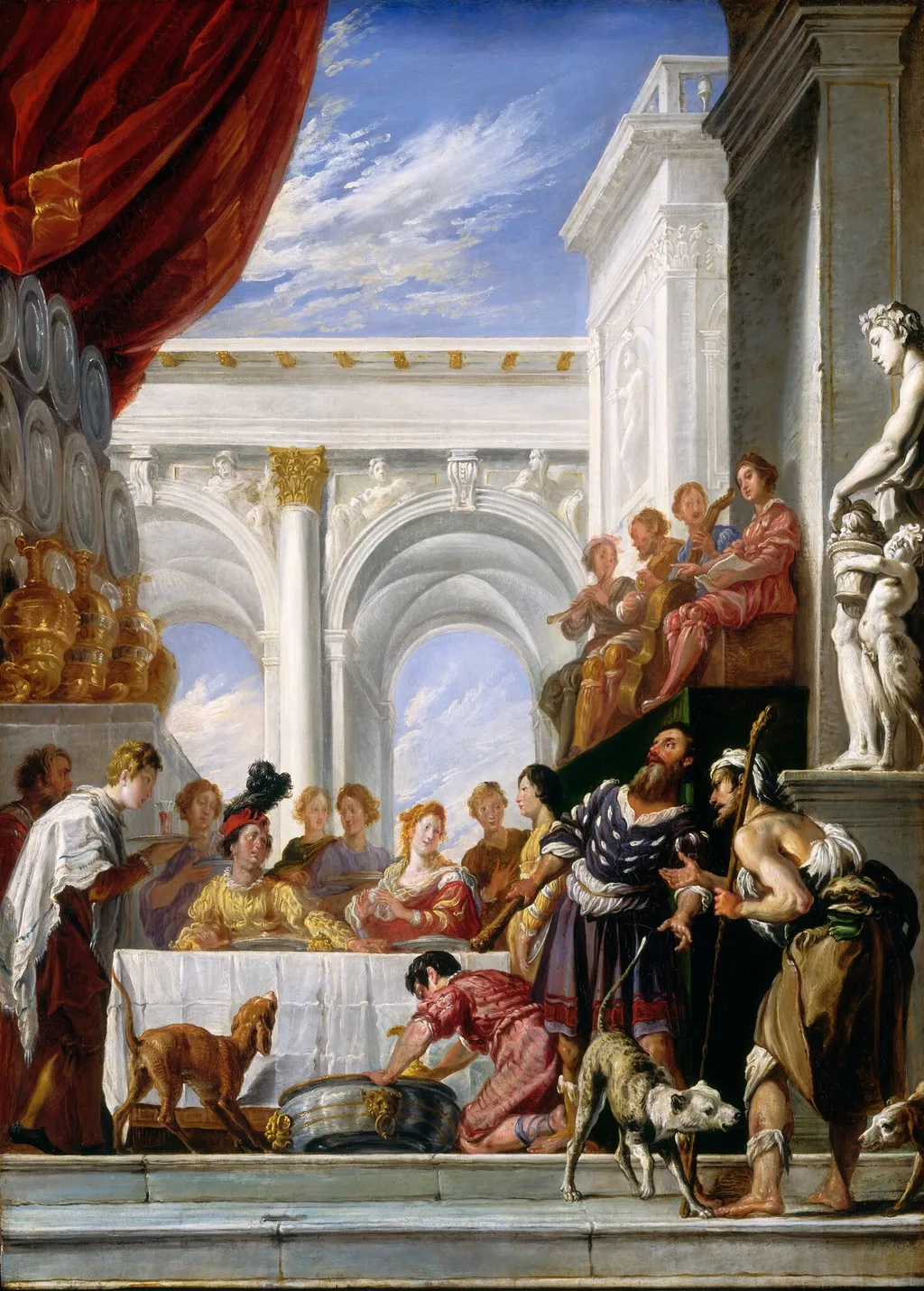
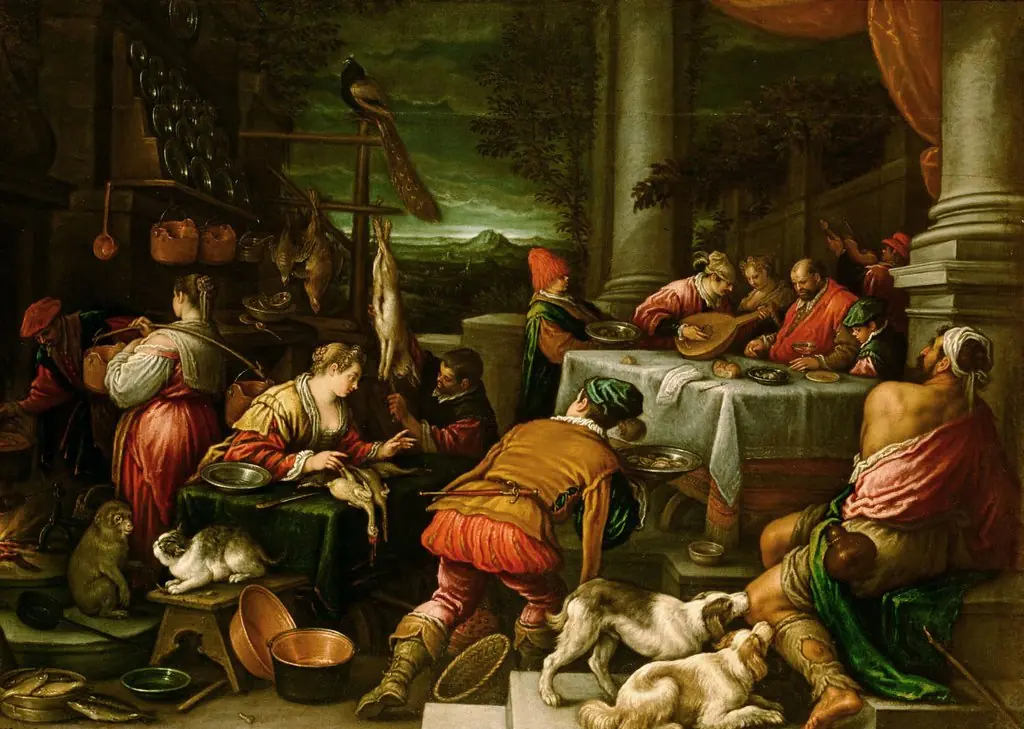
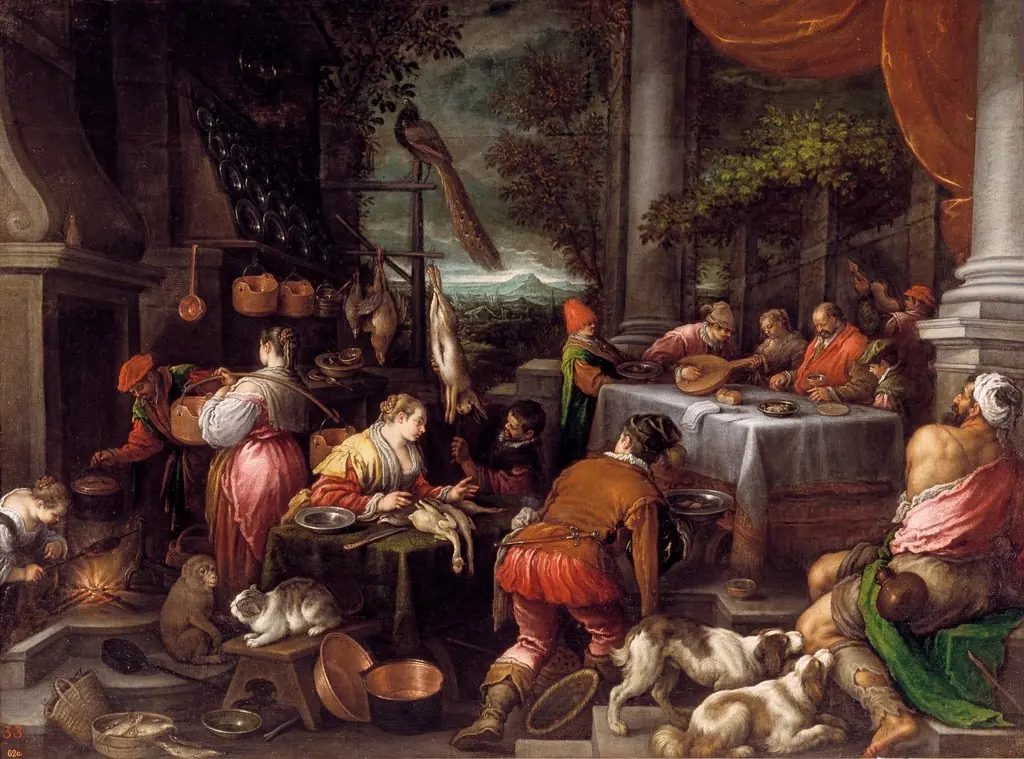
The Parable of Lazarus and the Rich Man is an oil painting. It dates from 1623 and is held in the collection of the National Gallery of Art. The work is an oil painting on panel that depicts an elaborate outdoor banquet.
- Inscription
- Inscribed:lower left, an inventory number: 101
About this work
Subject & Meaning
Kress Foundation and later gifted to the National Gallery of Art in Washington, D.
The painting illustrates the biblical parable in which a destitute beggar, Lazarus, is shown suffering at the gate of a wealthy man who ignores him; after death, Lazarus is comforted in Abraham's bosom while the rich man endures torment, symbolizing divine justice and the moral consequences of neglecting the poor. This subject was a common devotional image in 17th-century Italian art, emphasizing themes of charity, social inequality, and eschatological reward or punishment.
The work was created in 1623 by an Italian painter of the early Baroque period, likely influenced by the style of Domenico Fetti, and was originally part of the Barberini family collection in Rome before being acquired by the Samuel H. Kress Foundation and later gifted to the National Gallery of Art in Washington, D.C.
The iconography typically includes Lazarus at the gate, often depicted as a poor, ulcerated figure, contrasted with the rich man in luxurious attire, reinforcing the moral lesson of the parable.
Technique & Style
Executed in 1623, this work is an oil painting on a wooden panel support. The composition measures 61.6 cm in height and 45.4 cm in width. Attributed to an Italian artist of the seventeenth century, specifically identified in modern records as Domenico Fetti, the piece utilizes standard materials for the period, combining oil pigments with a rigid panel ground.
The physical dimensions indicate a modestly scaled devotional image, consistent with private collecting practices of the Barberini family during the mid-seventeenth century.
History & Provenance
The painting was created in 1623 in oil on panel. Its earliest documented owner was Don Taddeo Barberini (1603–1647) in Rome, where it is recorded by 1645. Taddeo departed Rome for Paris in 1645 and died there two years later; the work appears in his posthumous inventory of 1647–1648.
It then passed to his son, Prince Maffeo Barberini (1631–1685), in whose posthumous inventory of 1686 it is again listed. The painting remained in the Barberini family collection until at least 1922. It subsequently entered the possession of Count Alessandro Contini Bonacossi in Rome.
In 1932 the Samuel H. Kress Foundation purchased the panel in New York, and in 1939 the Foundation gave it to the National Gallery of Art, where it remains as part of the Samuel H. Kress Collection.
The painting has been in the collection of the National Gallery of Art in Washington, D.C., since 1939, when it was given by the Samuel H. Kress Foundation as part of the Samuel H. Kress Collection. The Kress Foundation had purchased the work in 1932 through Count Alessandro Contini Bonacossi in Rome.
The panel's earlier history traces through the Barberini family in Rome. It belonged to Don Taddeo Barberini by 1645, appearing in his posthumous inventory of 1647–1648, and then passed to his son Prince Maffeo Barberini, in whose posthumous inventory of 1686 it is also recorded. The painting remained in the Barberini family collection until at least 1922.
Context
The painting entered the Barberini family collection in Rome by 1645 and remained there until at least 1922, as documented in posthumous inventories of Taddeo Barberini (1647-1648) and his son Maffeo Barberini (1686). It was later acquired by Count Alessandro Contini Bonacossi and purchased in 1932 by the Samuel H. Kress Foundation before being gifted to the National Gallery of Art in 1939. Scholarly discussion of its provenance was clarified by Marilyn Aronberg Lavin's research on Barberini inventories, which resolved earlier misattributions in provenance records.
The work is attributed to an Italian 17th-century artist, specifically Domenico Fetti, and is cataloged in the National Gallery of Art's collection as part of the Samuel H. Kress Collection. It exemplifies Baroque-era religious narrative painting, reflecting the thematic and stylistic conventions of 17th-century Italian art. The painting's subject draws from the biblical Parable of Lazarus and the Rich Man, a theme recurrent in European art of the period.
Critical reception and scholarly analysis of the work are situated within broader studies of Baroque painting and the transmission of religious narratives in 17th-century Europe. Its inclusion in the Kress Collection highlights mid-20th-century efforts to preserve and disseminate significant works of European art in American institutions.
The painting's dimensions measure 61.6 cm in height and 45.4 cm in width, consistent with its classification as an oil-on-panel work from 1623.
Overview
The work is an oil painting on panel that depicts an elaborate outdoor banquet. A long table laden with food and wine stretches across the composition, surrounded by elegantly dressed figures, servants, and dogs. Some guests stand, others sit, while musicians perform from a balcony.
Architectural elements such as tall columns and red drapery frame the scene beneath a clear blue sky dotted with clouds.
Artist & collection

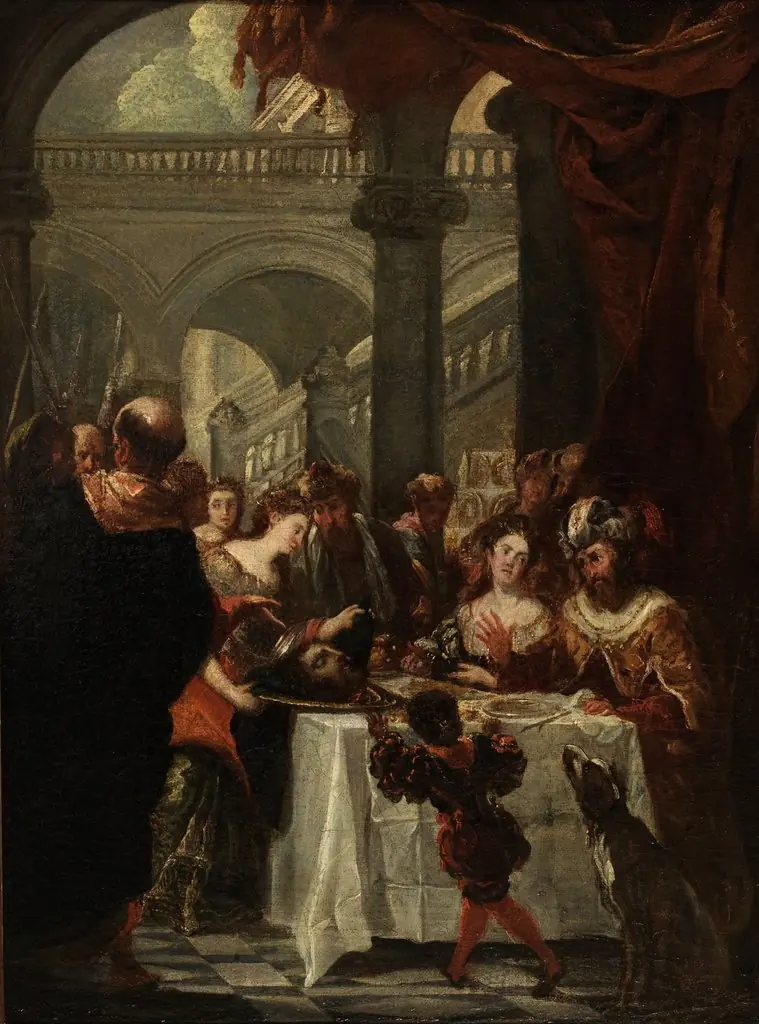
- Herod’s Feast (sketch)
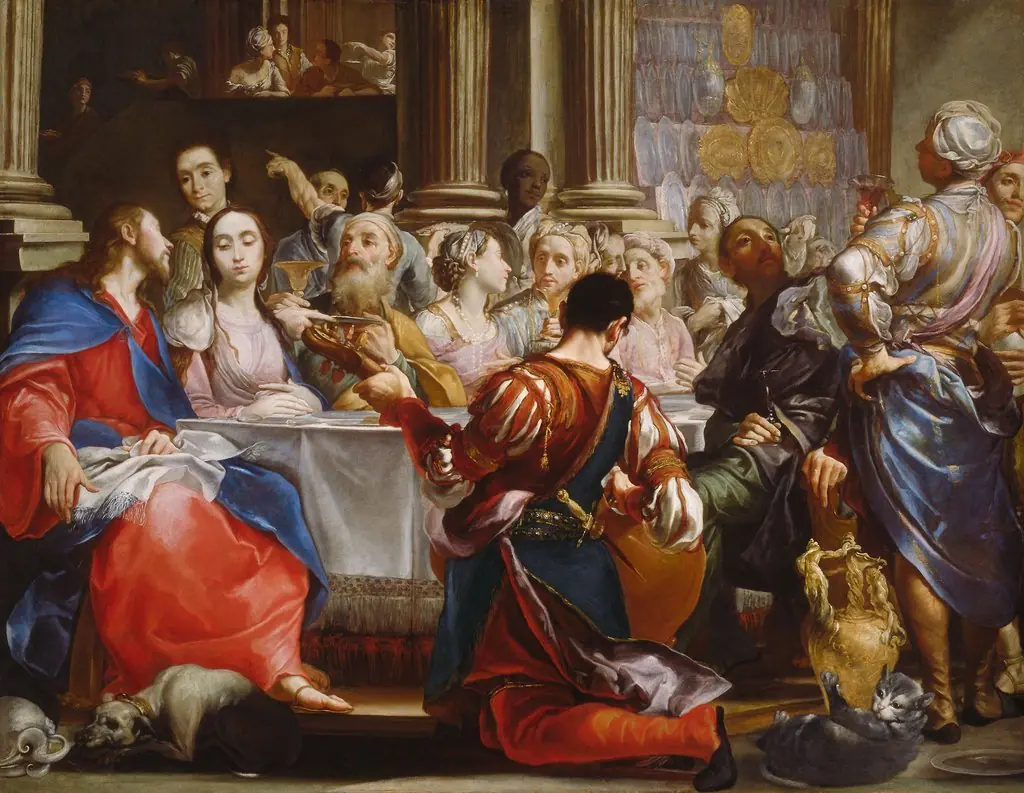 The Wedding at Cana
 The Wedding at Cana
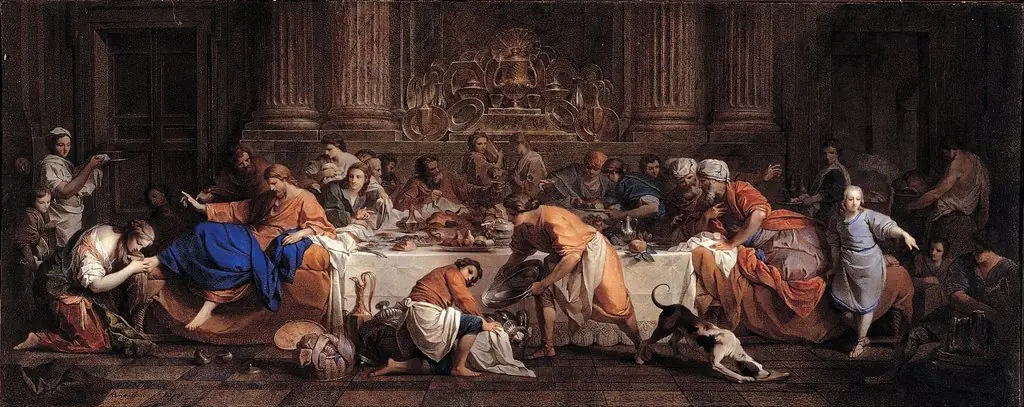 Dinner at the House of the Pharisee
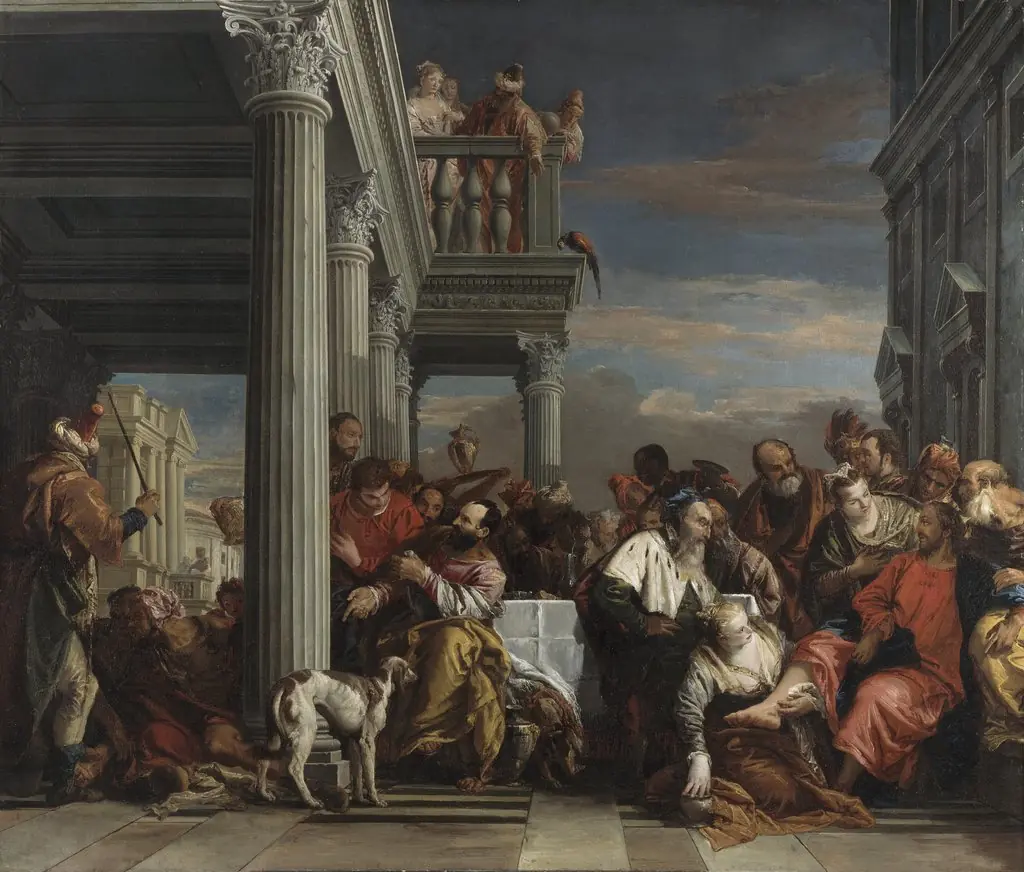 Christ in the House of Simon the Pharisee
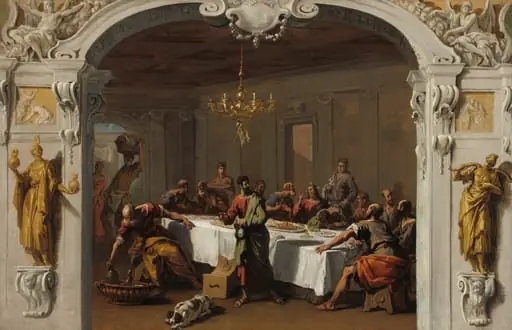 The Last Supper
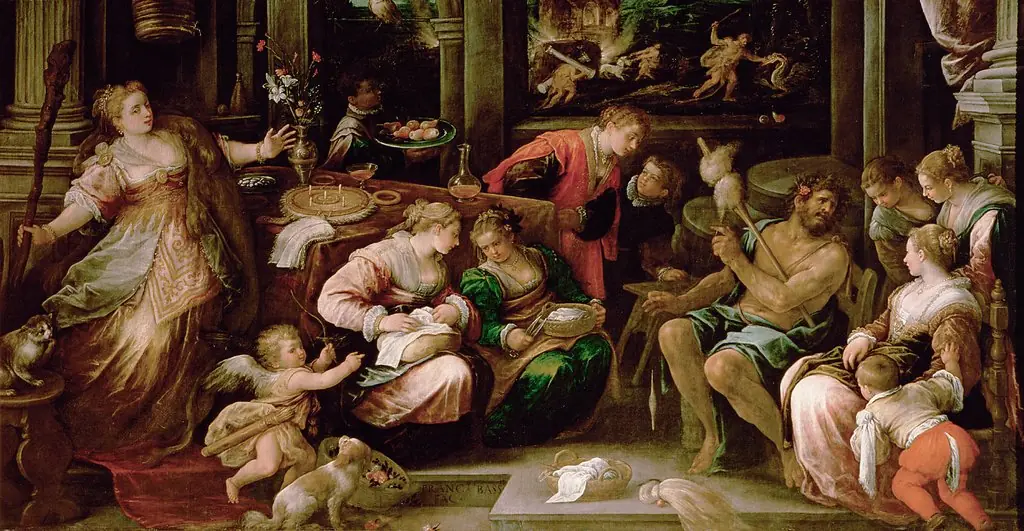 Herkules und Omphale
 Presentation of Jesus in the Temple
 Last Supper
 The Marriage at Cana
 Gleichnis vom reichen Mann und dem armen Lazarus
 Lazarus and Dives