Artwork
Herod’s Feast (sketch)
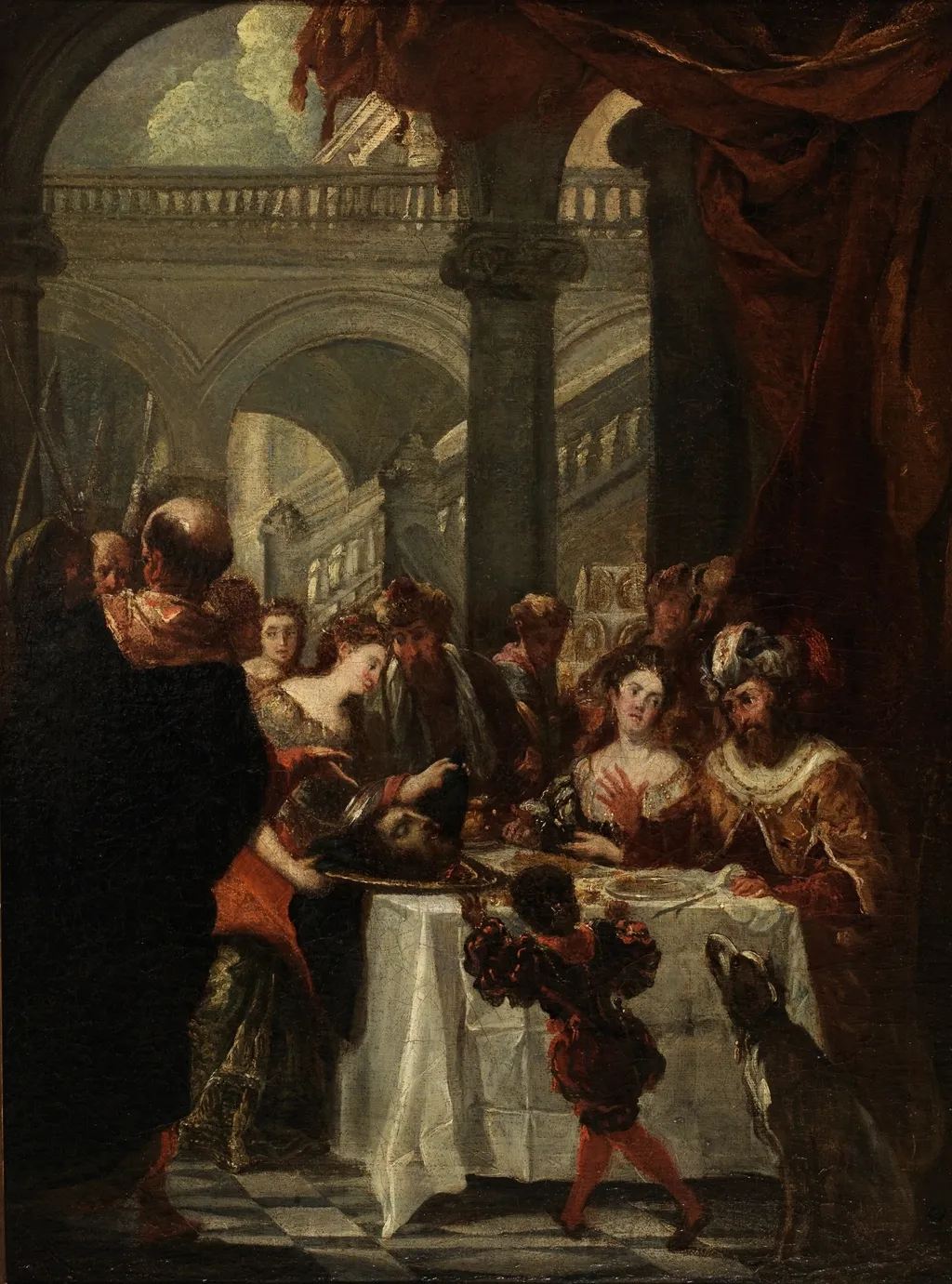
Herod’s Feast (sketch) is an oil painting by the Early Baroque Italian artist Juan Carreño de Miranda. It dates from 1601 and is held in the collection of the Museo del Prado.
About this work
Subject & Meaning
As a piece of religious art, the composition serves as a visual recounting of this scriptural moment, focusing on the key agents involved in the martyrdom.
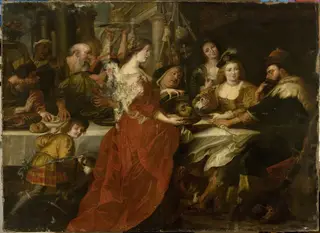
The work portrays the biblical episode of Herod's Feast, featuring the figures of Herod Antipas, Herodias, and Salome. Central to the narrative iconography is the inclusion of a knife, which alludes to the execution of John the Baptist and the subsequent presentation of his head. As a piece of religious art, the composition serves as a visual recounting of this scriptural moment, focusing on the key agents involved in the martyrdom.
Technique & Style
The sketch executed in oil paint on canvas portrays the banquet of Herod with the figures of Herod Antipas, Herodias, and Salome holding a knife. It measures 80 by 59 centimeters and belongs to the religious genre within the oeuvre of Juan Carreno de Miranda. The work is part of the collection at the Museo del Prado in Madrid.
Overview
Juan Carreño de Miranda’s oil sketch titled Herod’s Feast dates from 1601 and is part of the collection at Madrid’s Museo del Prado. The work presents a biblical banquet scene, focusing on the figures of Herod Antipas, his wife Herodias, and their daughter Salome, rendered in a compact, preparatory format.
History & Provenance
Created early in Carreño’s career, the sketch remained in private hands before entering the Prado’s holdings in the 20th century. Its presence in the museum’s collection underscores the artist’s role in Spanish Baroque painting and his engagement with biblical subjects.
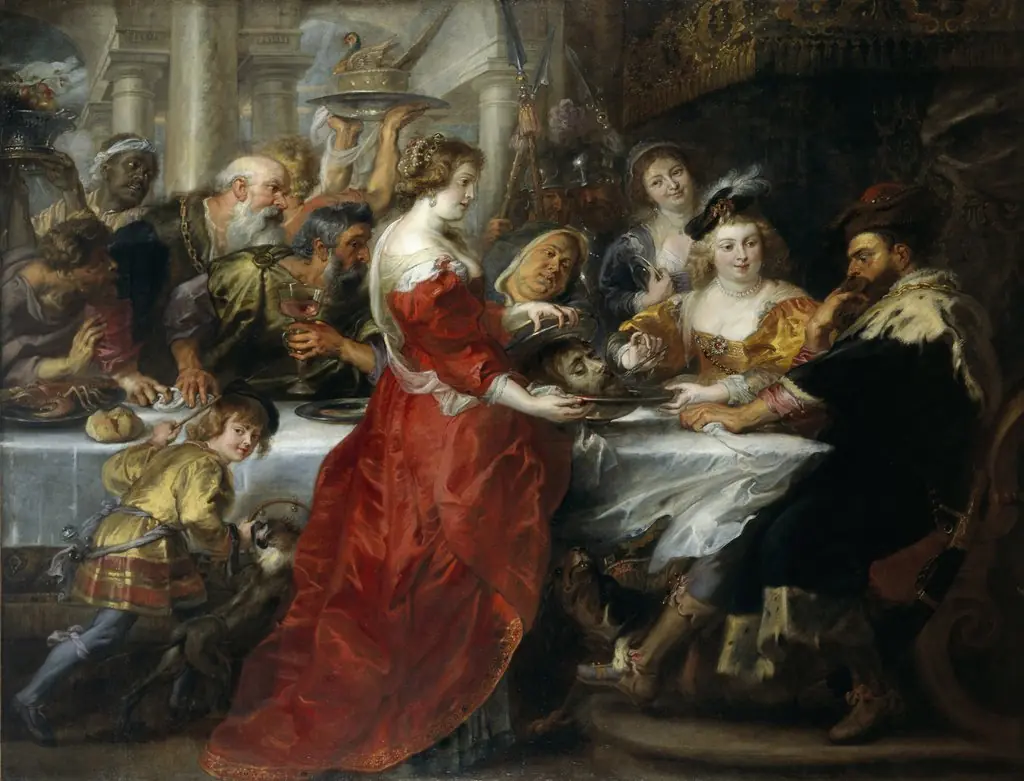
Own this work as a print
Artist & collection

 Alboin   and  Rosamunde
 The Parable of Lazarus and the Rich Man
 The Wedding at Cana
 The Wedding at Cana
 Salome with the head of St. John the Baptist at the banquet (Matthew 14:11; Mark 6:27-28)
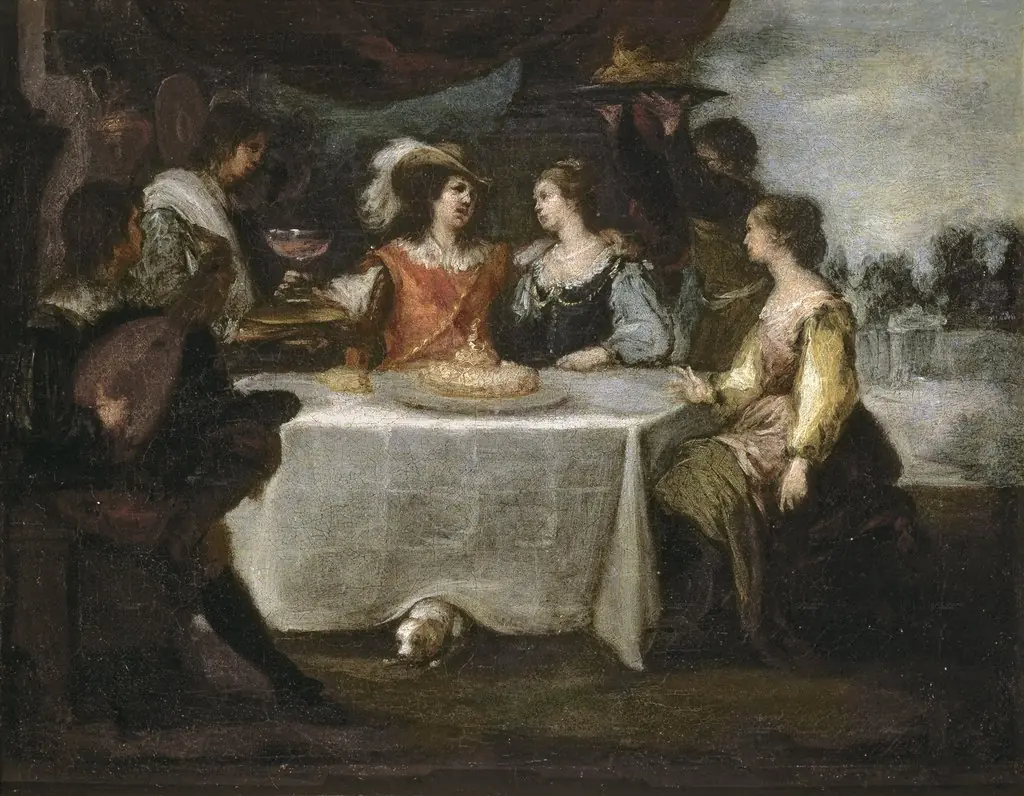 The Prodigal Son squandering his Inheritance
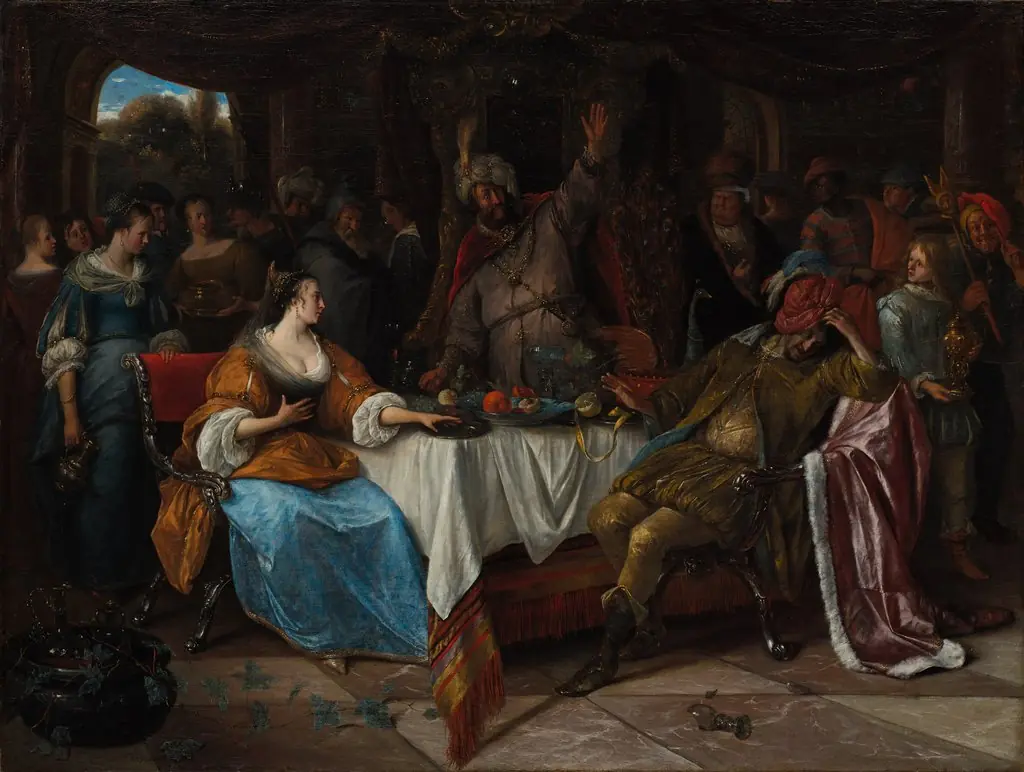 Esther, Ahasuerus, and Haman
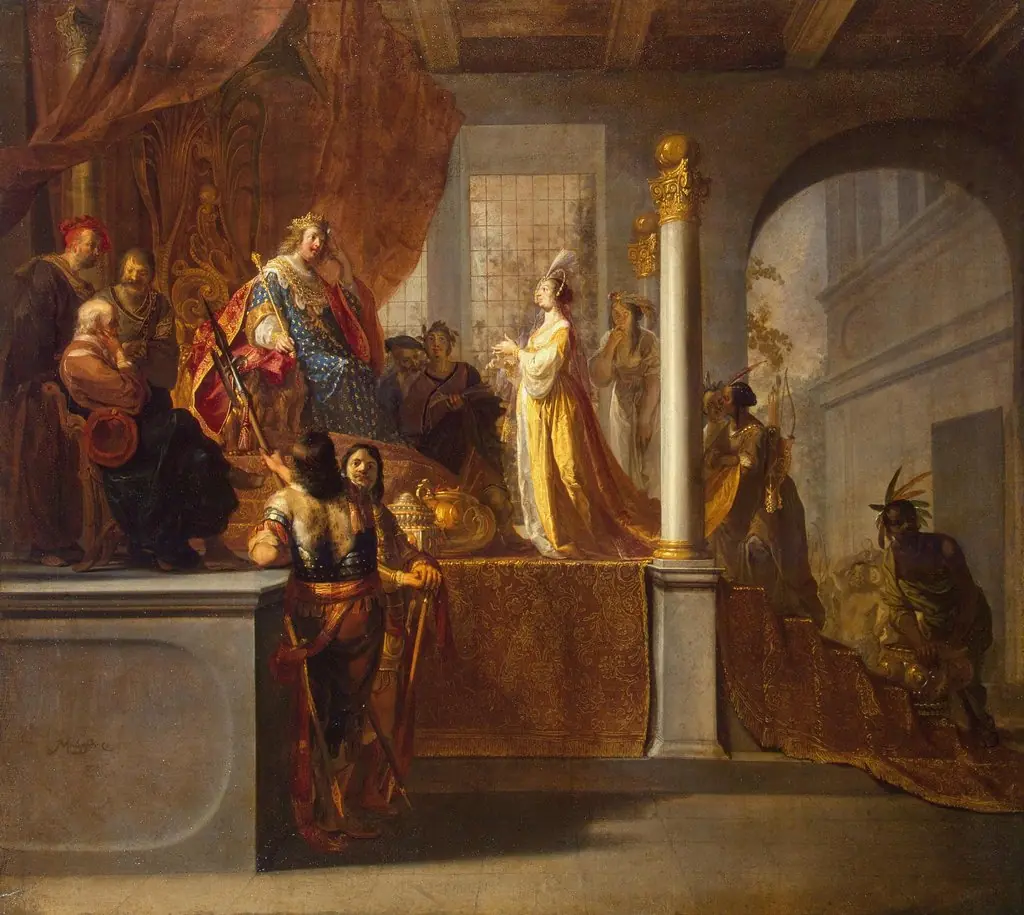 Queen of Sheba before Solomon
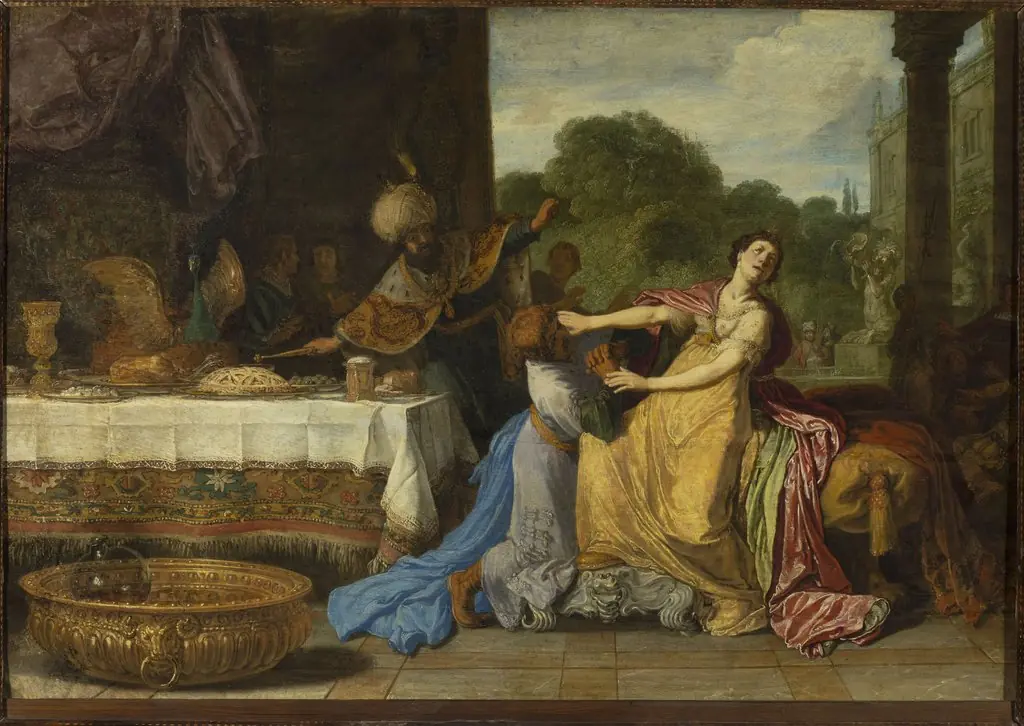 Haman begging the mercy of Esther (Esther 7:6-7)