Artwork
Snow Storm: Steam-Boat off a Harbour's Mouth
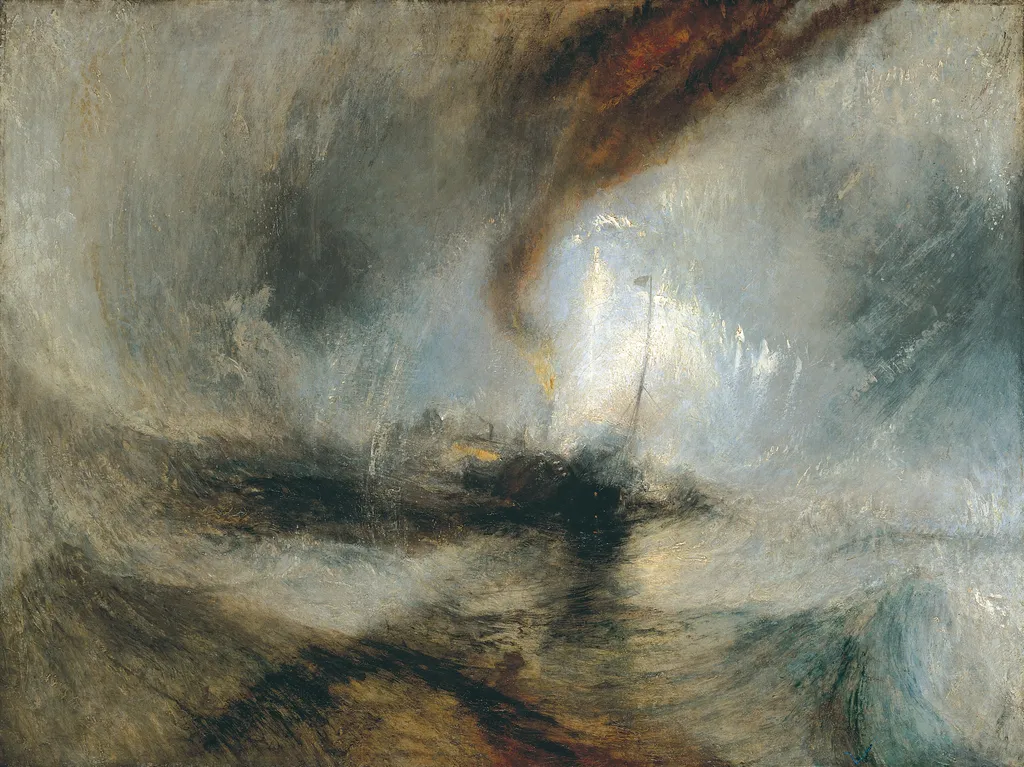
Snow Storm: Steam-Boat off a Harbour's Mouth is an oil painting by the Romanticist artist Joseph Mallord William Turner. It dates from 1842 and is held in the collection of the National Gallery.
About this work
Snow Storm: Steam-Boat off a Harbour's Mouth is an oil painting by J.M.W. Turner, made in 1842.
Turner was an English painter known for his powerful weather studies. He painted this late in his career, exploring light and atmosphere. The work shows a dramatic sea scene during a snow storm, with a steam-boat struggling near a harbor entrance.
You can see it at the Museum of Fine Arts Boston.
Subject & Meaning
The painting depicts a paddle steamer, identified as the "Ariel," engulfed in a violent snowstorm off a harbour mouth.
The painting depicts a paddle steamer, identified as the "Ariel," engulfed in a violent snowstorm off a harbour mouth. The composition presents a swirling vortex where snow and sea merge, creating an almost abstract scene with no clear center; the ship's mast is barely visible amidst the chaos. This imagery symbolizes the destructive, sovereign power of nature and humanity's inability to master it, reflecting a key theme in British visual culture of the era. Turner aimed not for literal understanding but to record the sensory experience of such elemental forces, reportedly claiming he lashed himself to a mast to observe the storm firsthand, though the veracity of this account is debated. The work stands as a sublime statement on the conflict between natural elements and emerging industrial technology.
Technique & Style
The painting is executed in oil on canvas, measuring 91.4 by 121.9 cm, and exemplifies Turner's late Romantic style through layered tints and textured brushstrokes that render a monochromatic palette of greys, greens, and browns. A silvery pale light highlights the steamboat, while its smoke disperses into abstract shapes merging with the stormy sea and sky, creating a dynamic, almost abstract composition that conveys the overwhelming force of nature. Turner reportedly lashed himself to a ship's mast to observe the storm firsthand, an anecdote that informs the painting's dramatic intensity, though some scholars regard this account as apocryphal. The work was accepted by the nation as part of the Turner Bequest in 1856 and is held in the Tate Britain collection.
History & Provenance
Snow Storm: Steam-Boat off a Harbour's Mouth was painted by J. M. W. Turner in 1842, when the artist was 67 years old. An inscription on the work records that Turner witnessed the storm on the night the paddle steamer "Ariel" left Harwich, and he later claimed to have had himself lashed to a mast for four hours to observe it firsthand, an account that some later commentators have questioned. The painting was exhibited in 1842 and drew largely hostile reviews, with one critic dismissing it as "soapsuds and whitewash." John Ruskin praised it in 1843 in Modern Painters as "one of the very grandest statements of sea-motion, mist and light, that has ever been put on canvas." The work entered the national collection through the Turner Bequest in 1856, with the accession number N00530. It is held by Tate Britain in London. The painting is held in the collection of Tate Britain in London, where it is cataloged under accession number N00530. It entered the national collection in 1856 when it was accepted as part of the Turner Bequest. The work was first exhibited in 1842. In more recent years, it was displayed at the De Young Museum in San Francisco in 2015.
Context
Upon its exhibition in 1842, J.M.W. Turner's *Snow Storm: Steam-Boat off a Harbour's Mouth* faced severe contemporary criticism, with one reviewer dismissing the work as "soapsuds and whitewash." Turner reportedly found this dismissal hurtful, questioning whether critics understood the sea's true nature. However, the painting's reputation shifted rapidly when John Ruskin championed it in his 1843 treatise *Modern Painters*, praising it as one of the grandest statements of sea-motion, mist, and light ever captured on canvas. Ruskin argued that such ignorance often sits in judgment on genius.
The work is recognized as a definitive example of Romanticism, exploring the sublime power of nature over human technology. It reflects Turner's broader career-long engagement with industry, steam power, and urbanism. While the artist claimed to have been lashed to a ship's mast during a real storm to observe the scene, some modern scholars regard this anecdote as a legend rather than literal fact. The painting remains a celebrated, albeit once obscure, depiction of the sublime in Turner's late style.
Legacy
Initially dismissed by critics as "soapsuds and whitewash," the painting was defended by John Ruskin, who in 1843 described it as "one of the very grandest statements of sea-motion, mist and light, that has ever been put on canvas," framing the broader dispute as "ignorance sit[ting] in judgment on the works of genius." Art historian Alexandra Wettlaufer later characterized it as one of Turner's "most famous, and most obscure, sublime depictions," underscoring its enduring status as a touchstone of his late style and of Romantic marine painting. Its continuing visibility has been reinforced by displays such as the 2015 exhibition at the De Young Museum in San Francisco, and by its appearance in the 2022 film "My Policeman," directed by Michael Grandage. Held by the Tate in London as part of the Turner Bequest accepted by the nation in 1856, the work remains central to discussions of Turner's exploration of nature's unmasterable forces.
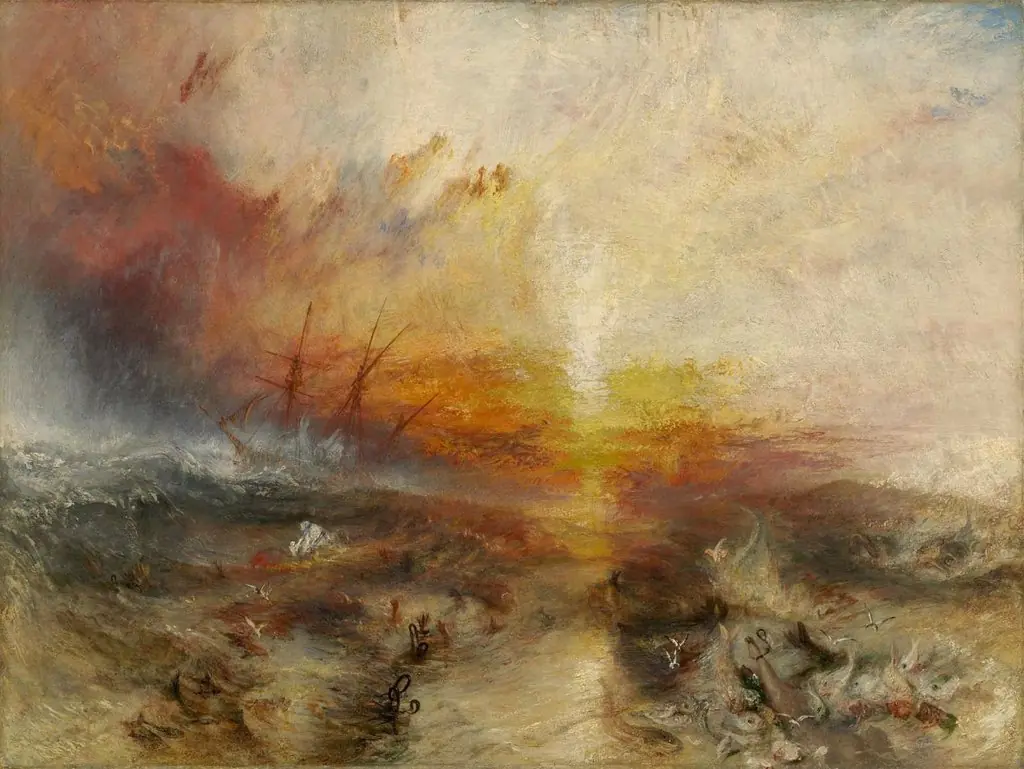
Own this work as a print
Artist & collection
Artist
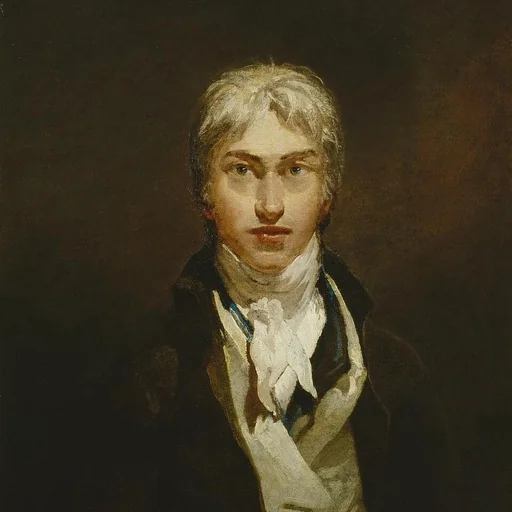
Joseph Mallord William Turner was born in 1775 at Maiden Lane, Covent Garden, where his father kept a barber and wig-making shop.

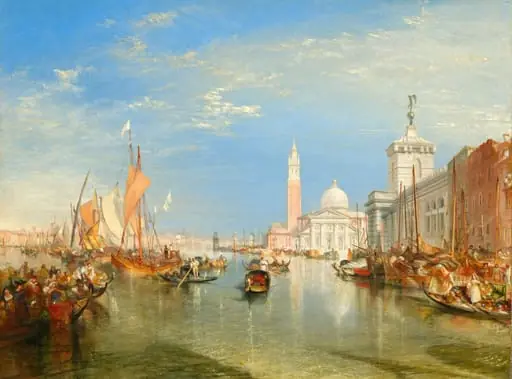
- The Slave Ship
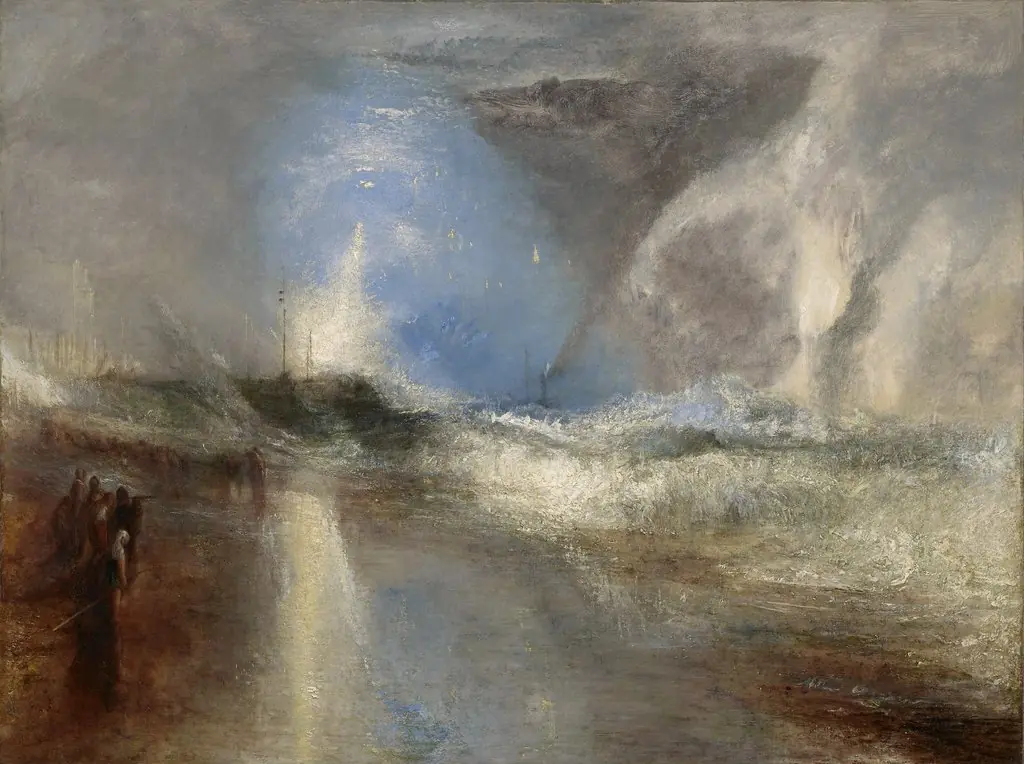 Rockets and Blue Lights (Close at Hand) to Warn Steamboats of Shoal
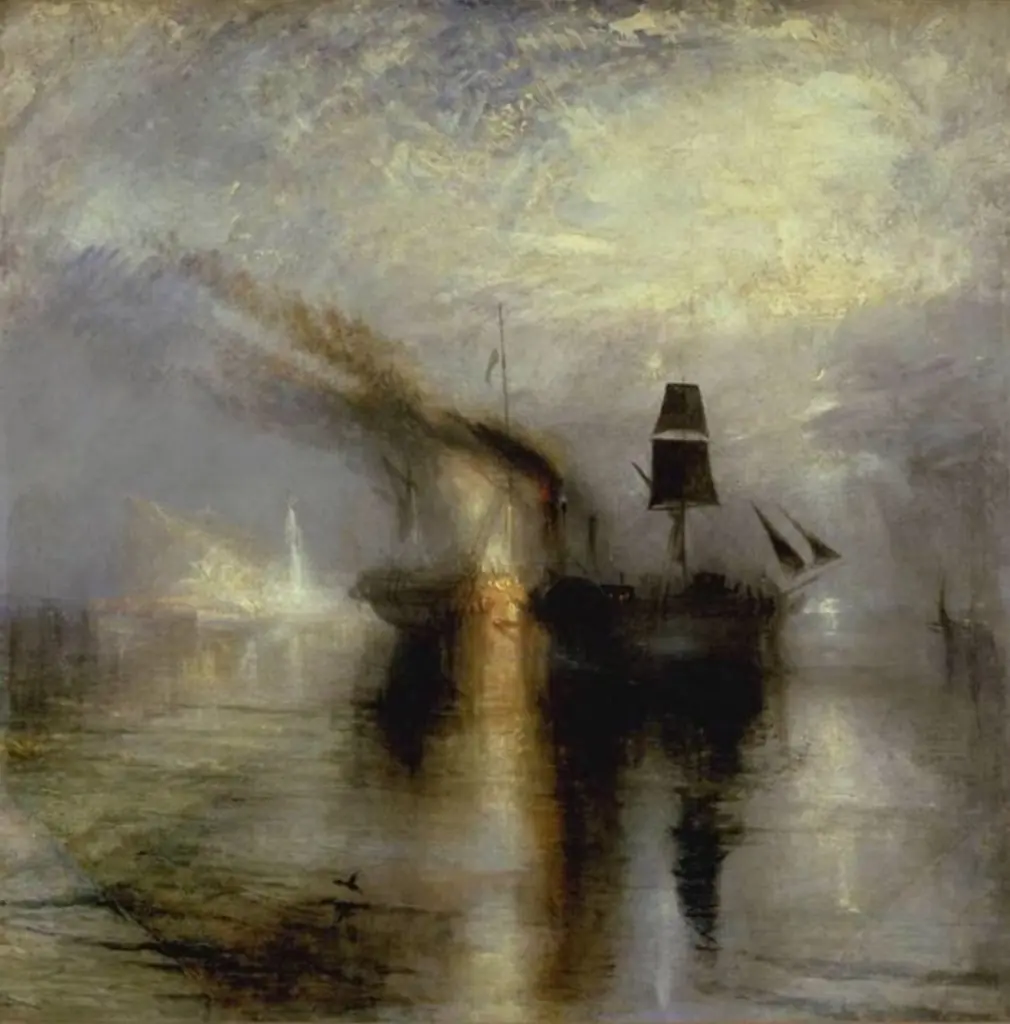 Peace – Burial at Sea
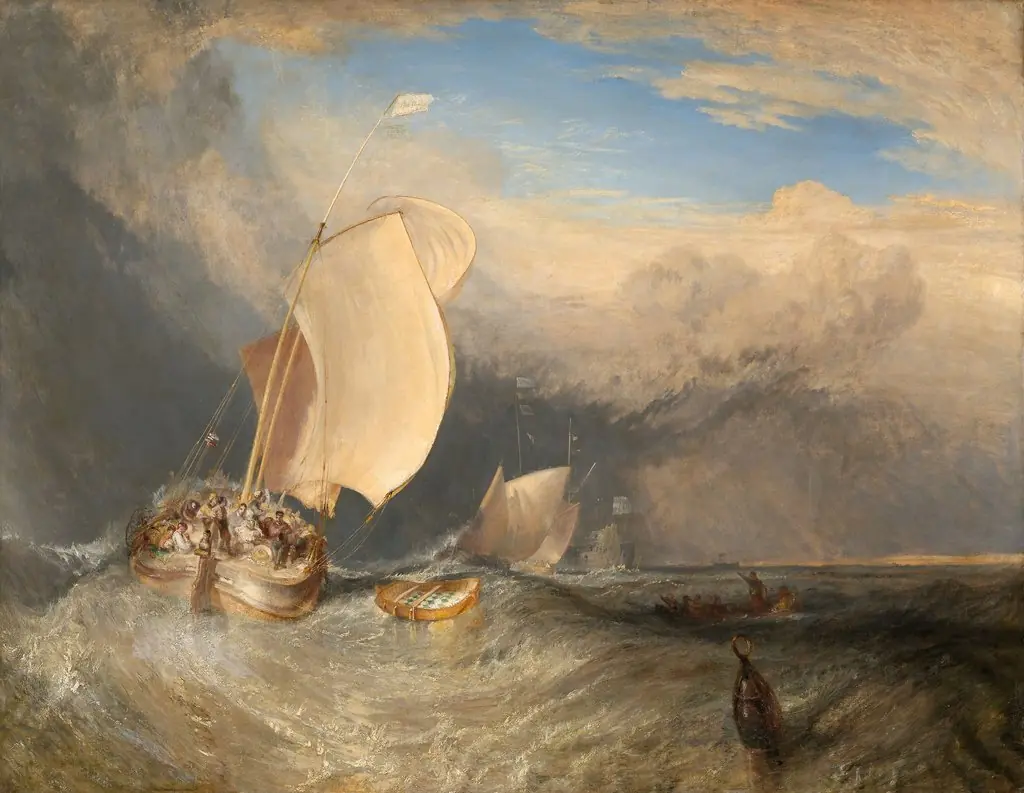 Fishing Boats with Hucksters Bargaining for Fish
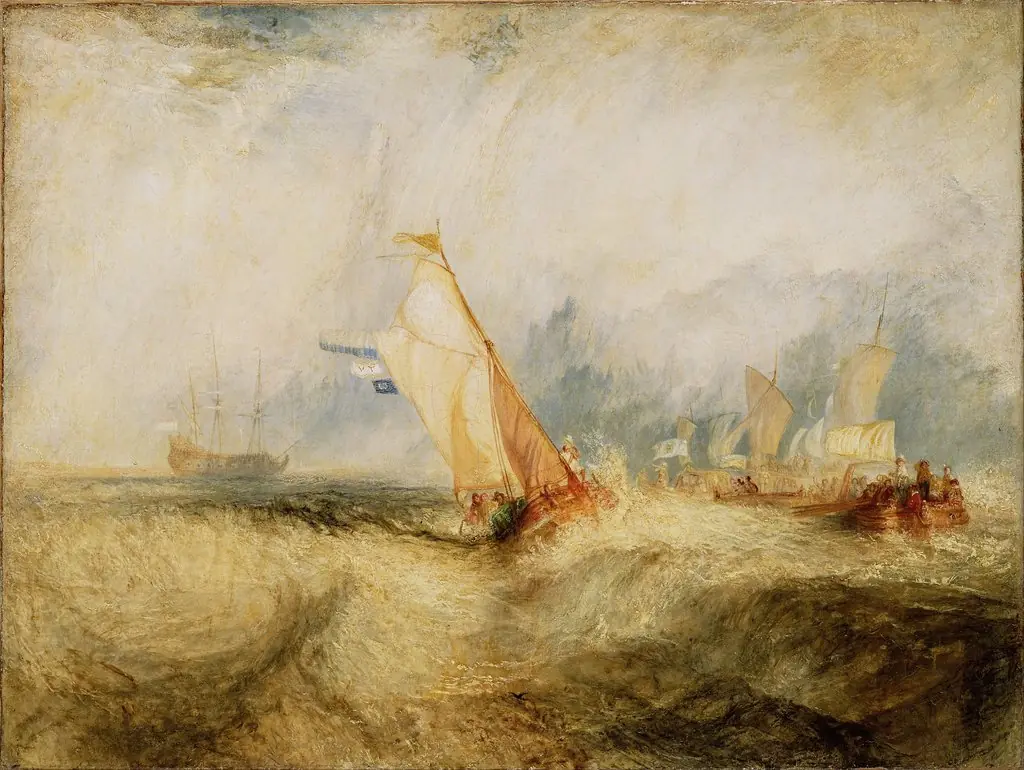 Van Tromp
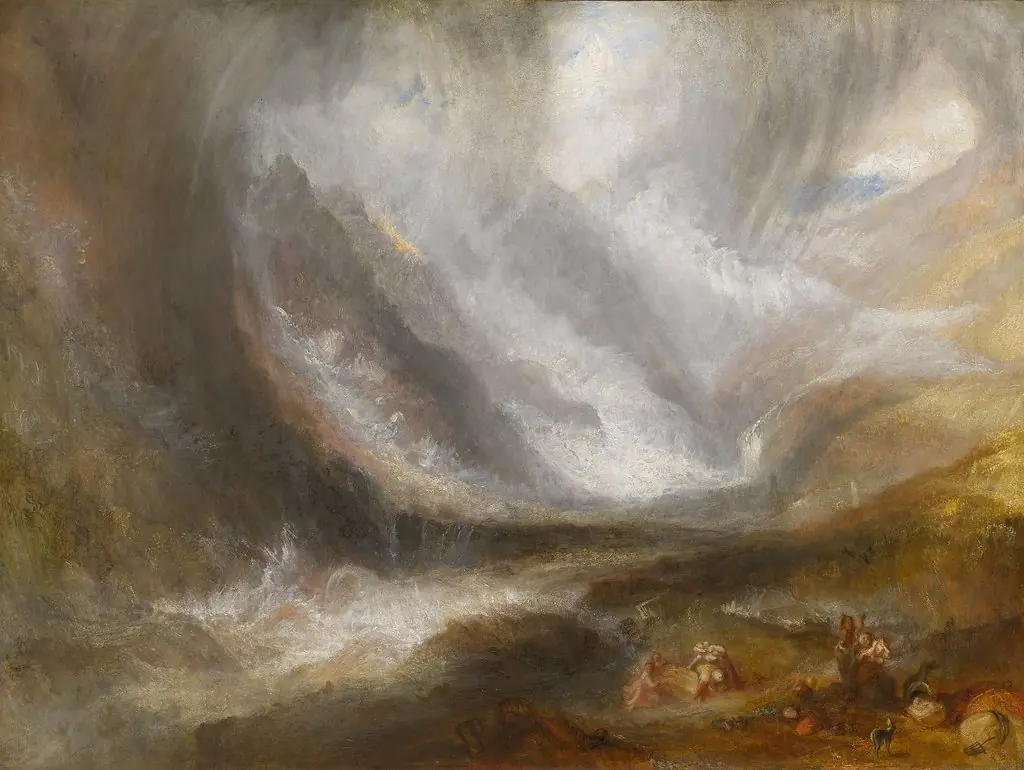 Valley of Aosta: Snowstorm, Avalanche, and Thunderstorm
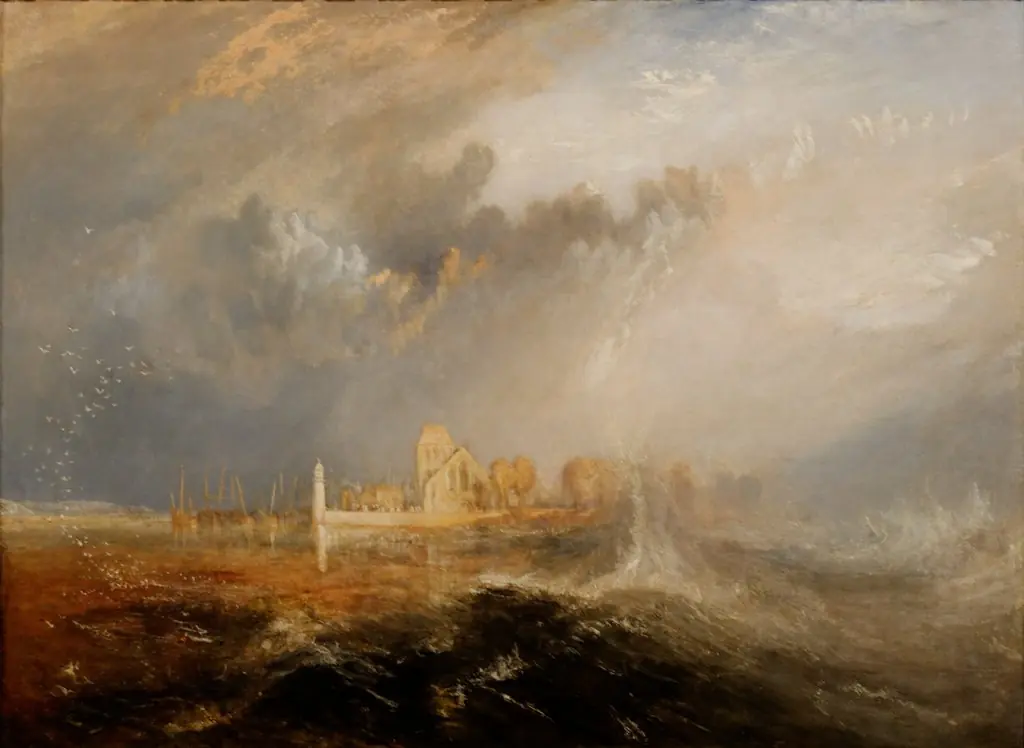 Quillebeuf, Mouth of the Seine
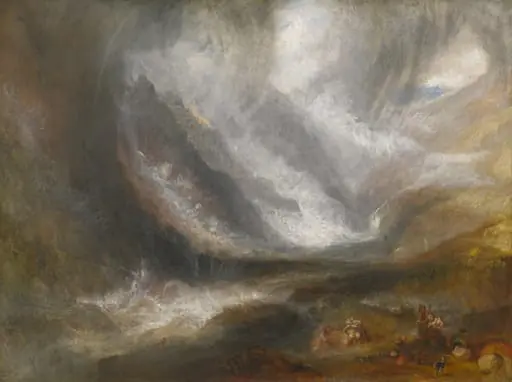 Valley of Aosta: Snowstorm, Avalanche, and Thunderstorm
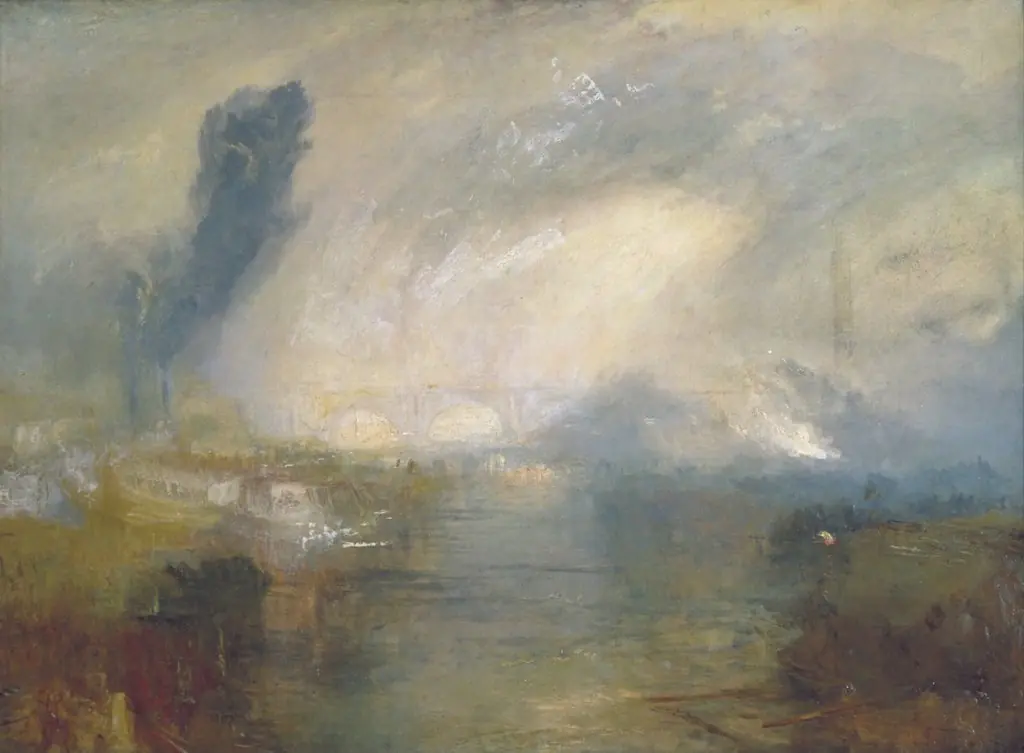 The Thames above Waterloo Bridge
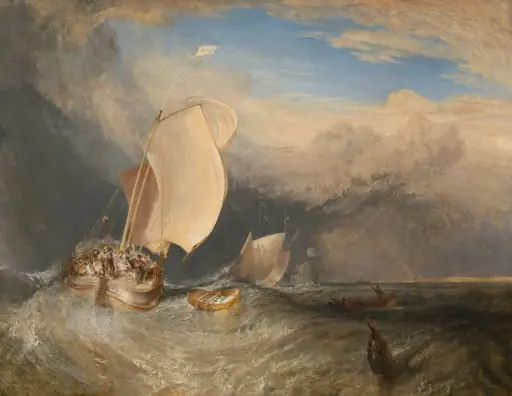 Fishing Boats with Hucksters Bargaining for Fish
 Two Vessels in a Storm