Artwork
The Slave Ship
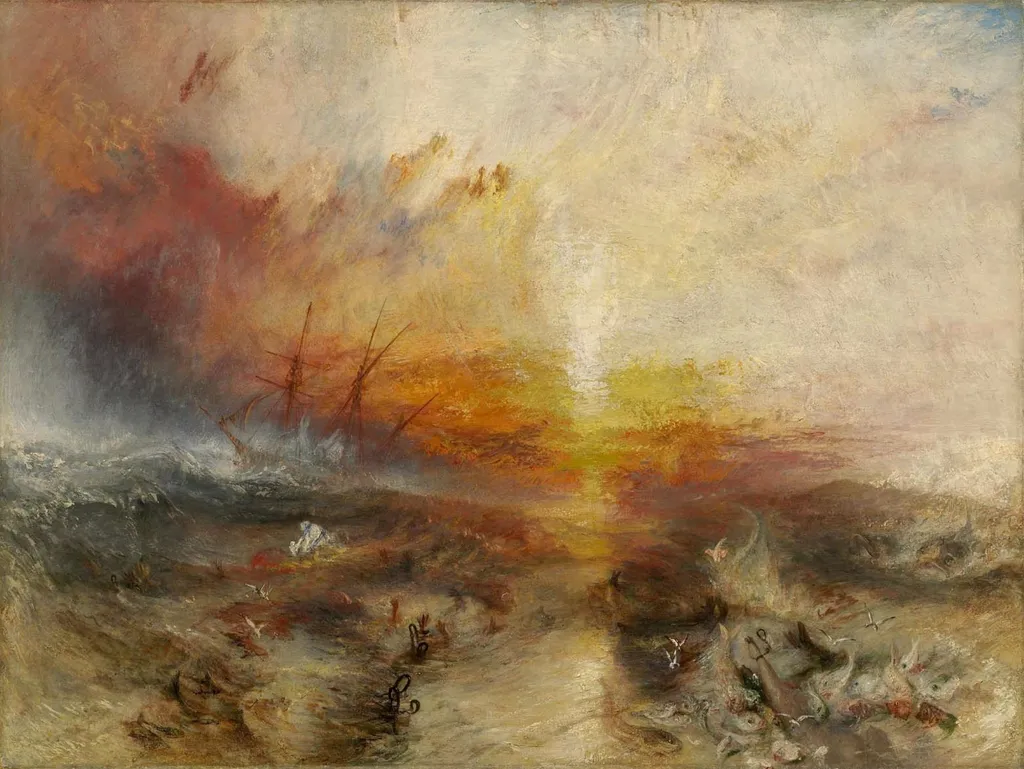
The Slave Ship is an oil painting by the British Romanticist artist Joseph Mallord William Turner. It dates from 1840 and is held in the collection of the Museum of Fine Arts Boston.
About this work
Subject & Meaning
J.M.W. Turner’s The Slave Ship depicts the 1781 Zong massacre, where enslaved people were thrown overboard to claim insurance, set against a tumultuous sea and an approaching typhoon. The painting, originally titled Slavers Throwing overboard the Dead and Dying, Typhon coming on, shows a slave ship in the background sailing away while dismembered human forms, some still shackled, float in the foreground to be consumed by fish and seagulls. Turner uses a blood-red sunset and churning water to symbolize the horror of the trade and the destructive power of nature, evoking the Romantic concept of the sublime.
The work was exhibited in 1840 alongside an excerpt from Turner’s poem Fallacies of Hope, serving as a political call to action during international abolitionist campaigns. The intense red hues and chaotic composition emphasize the suffering of the victims and the moral failure of humanity, contrasting the indifference of the ship with the violent fury of the storm.
Technique & Style
Turner’s technique combines traditional oil handling with impasto passages applied pastos and, according to a contemporary description, with a palette knife.
The Slave Ship is executed in oil paint on a canvas support. Turner’s technique combines traditional oil handling with impasto passages applied pastos and, according to a contemporary description, with a palette knife. His handling is loose and expressive: rapid, frantic brushstrokes create vivid, saturated reds, oranges and yellows that bleed into the sea and sky, while forms remain indistinct and the horizon is blurred.
These atmospheric effects exemplify a Romantic maritime style that emphasizes the sublime power of nature over humanity. The sources do not supply specific information about the painting’s current condition.
History & Provenance
Created in 1840, The Slave Ship (originally titled Slavers Throwing overboard the Dead and Dying, Typhon coming on) is an oil on canvas painting by J.M.W. Turner. The work was inspired by the 1781 Zong massacre and Thomas Clarkson's 1839 publication, The History and Abolition of the Slave Trade. Turner first exhibited the piece at the Royal Academy of Arts in 1840, pairing it with an excerpt from his poem Fallacies of Hope to coincide with international abolitionist conventions.
Regarding ownership, Turner transferred the work to dealer Thomas Griffith, who sold it to John James Ruskin in London in December 1843. After failing to sell at Christie's in 1869, it was acquired by John Taylor Johnston in New York in 1872. Johnston sold it to Alice Sturgis Hooper in December 1876; the painting subsequently passed to her nephew, William Sturgis Hooper Lothrop. Lothrop sold the work to the Museum of Fine Arts, Boston, on February 24, 1899, for $65,000.
The Slave Ship is held in the collection of the Museum of Fine Arts, Boston. Its ownership history traces from the artist to dealer Thomas Griffith, who sold it to John James Ruskin in London in December 1843. After failing to sell at Christie's in April 1869, the painting was acquired by John Taylor Johnston in New York in 1872.
It was subsequently sold to Alice Sturgis Hooper in Boston in December 1876, passed to her nephew William Sturgis Hooper Lothrop, and finally purchased by the museum in February 1899 for $65,000.
Turner first exhibited the work at the Royal Academy of Arts in 1840, timing the display to coincide with international anti-slavery conventions held in London.
Context
The Slave Ship (1840) by J.M.W. Turner stands as a pivotal Romantic maritime painting that confronts the moral violence of the transatlantic slave trade. Turner’s depiction of the 1781 Zong massacre, where enslaved Africans were thrown overboard for insurance claims, was explicitly linked to contemporary abolitionist discourse, as documented in his reading of Thomas Clarkson’s The History and Abolition of the Slave Trade (1839) and aligned with international anti-slavery conventions held in London during the painting’s Royal Academy exhibition. The work’s radical composition, dominated by a blood-red sunset, churning seas, and indistinct human forms chained in the surf, rejected traditional narrative clarity to evoke the sublime terror of nature, a technique praised by John Ruskin as Turner’s “most important sea-piece.”
Its exhibition coincided with abolitionist campaigns, framing the painting as a deliberate political statement against slavery’s continuation despite its legal abolition in 1833. Turner further embedded abolitionist rhetoric through accompanying verses from his unfinished poem Fallacies of Hope, which directly questioned the moral calculus of the slave market. The painting’s provenance, including its acquisition by the Museum of Fine Arts, Boston, reflects its enduring significance as both an artistic masterpiece and a catalyst for ethical reflection on historical injustice.
Legacy
Ruskin hailed the painting as Turner’s most important seascape, while Thackeray noted its innovative technique and symbolic use of colour. Contemporary viewers admired its spectacular atmospheric effects, yet debated how closely its style matched its grim subject. In the twentieth century, scholars read the storm‑tossed ship as an allusion to Noah’s Ark or as an allegory of human life, and some interpreted it as a critique of industrialisation.
The work remains in the Museum of Fine Arts, Boston, where its continued display sustains its reputation as a powerful, contested legacy of Romantic maritime art.
Overview
The Slave Ship, originally titled Slavers Throwing overboard the Dead and Dying, Typhon coming on, is an 1840 oil-on-canvas painting by J. M. W. Turner, measuring 91 cm × 123 cm. It is part of the collection at the Museum of Fine Arts, Boston.
Own this work as a print
Artist & collection
Artist
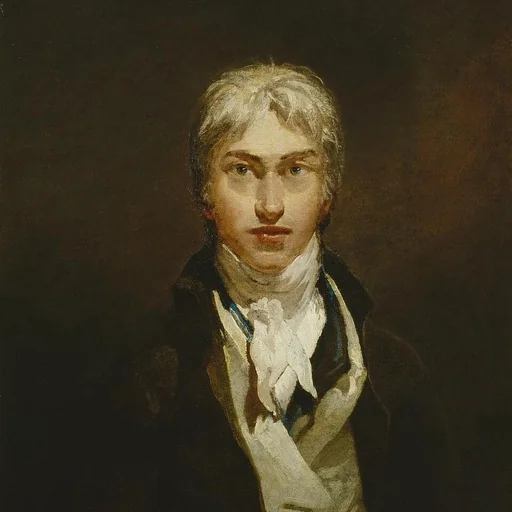
Joseph Mallord William Turner was born in 1775 at Maiden Lane, Covent Garden, where his father kept a barber and wig-making shop.

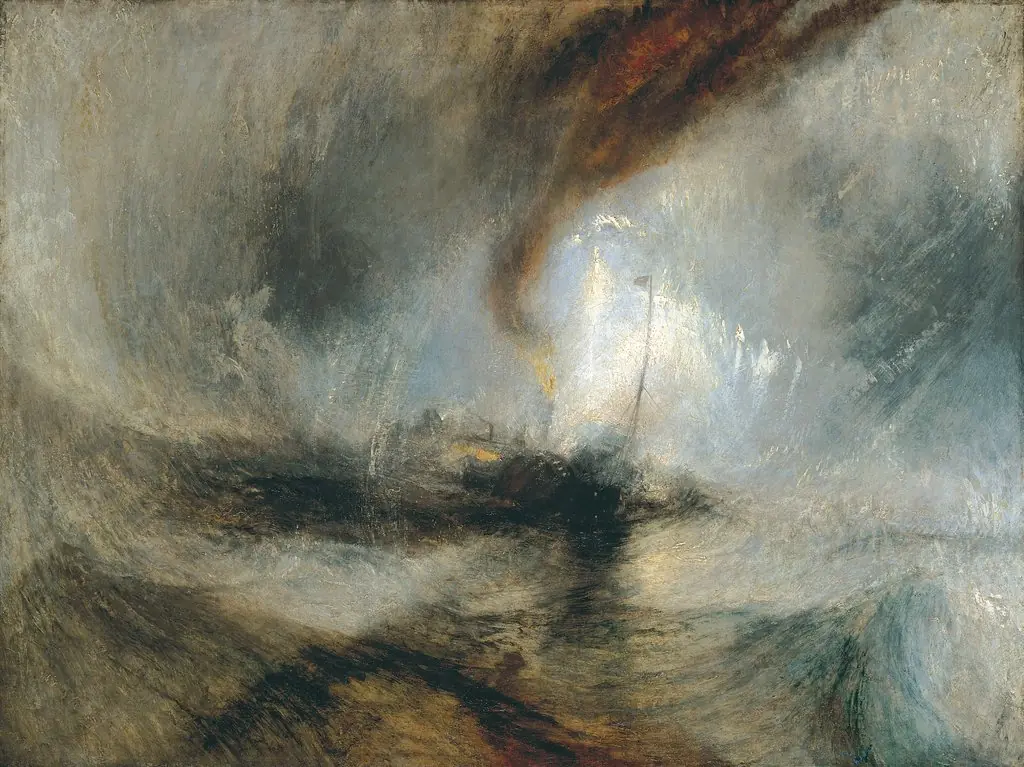 Snow Storm: Steam-Boat off a Harbour's Mouth
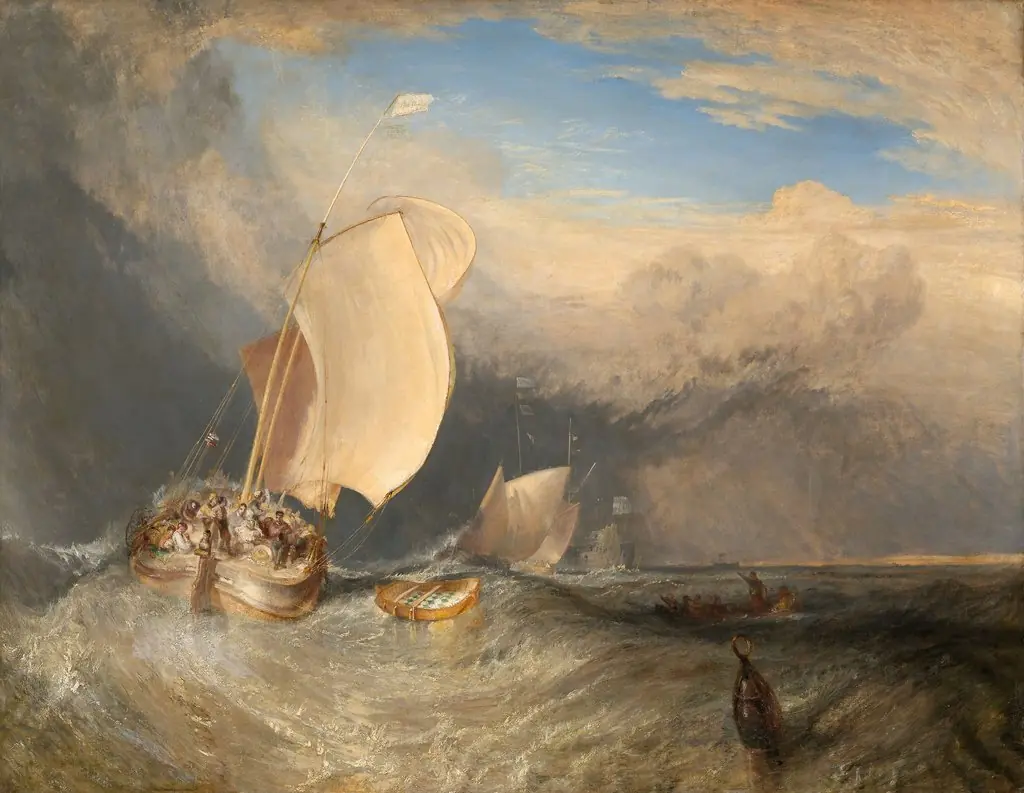 Fishing Boats with Hucksters Bargaining for Fish
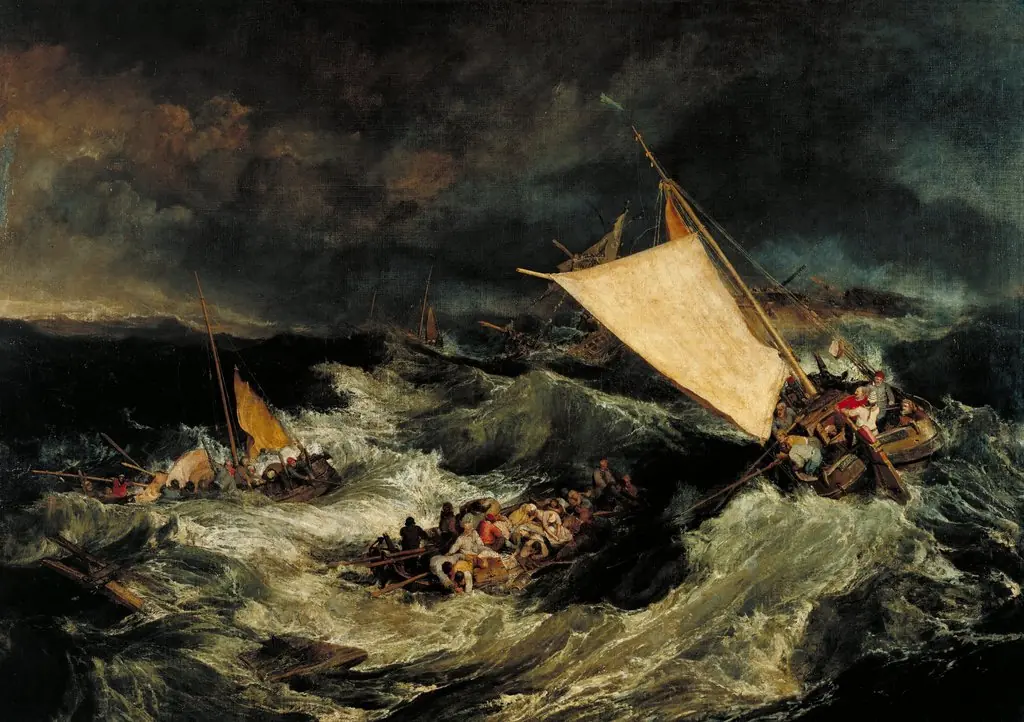 The Shipwreck
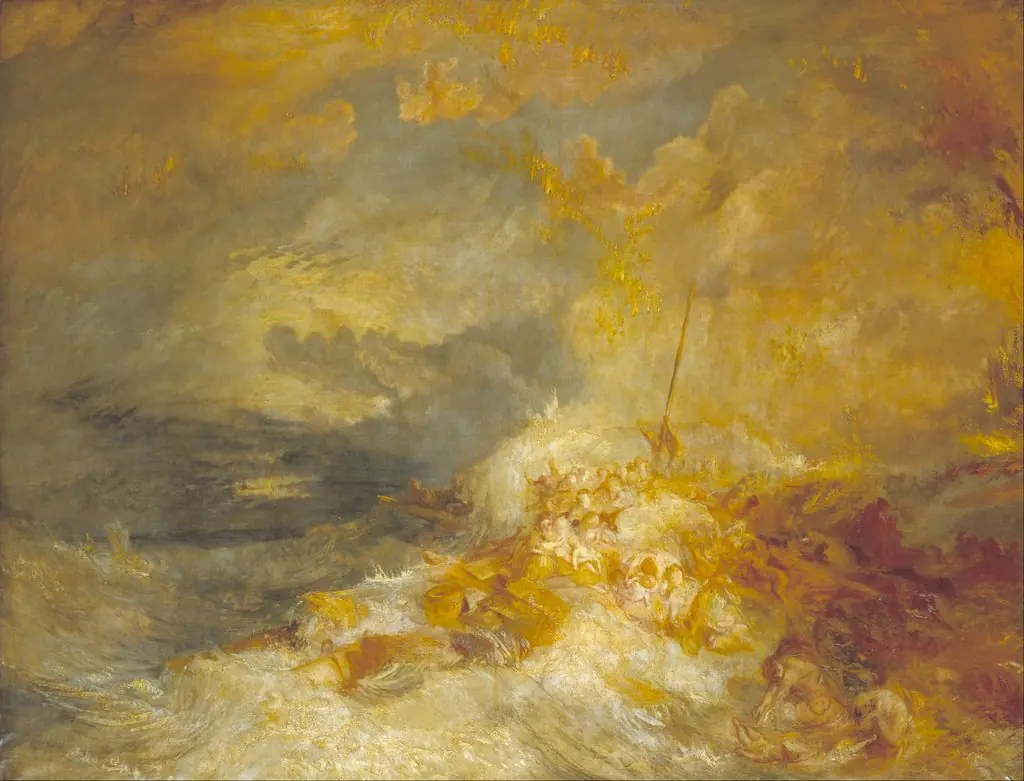 Disaster at Sea
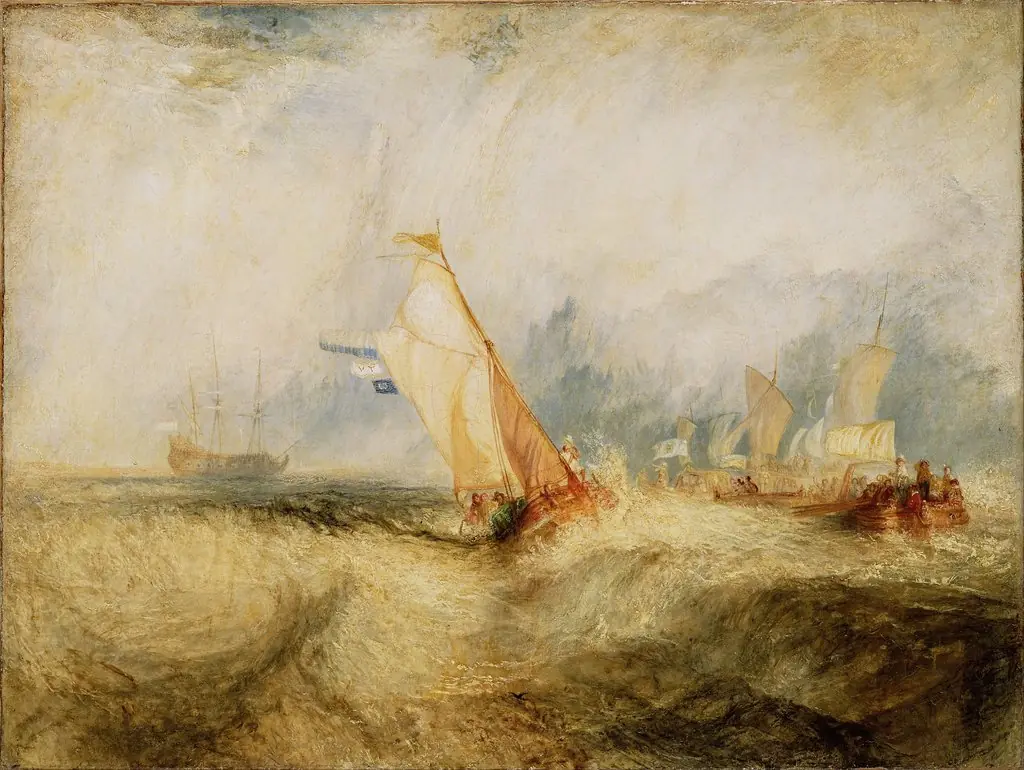 Van Tromp
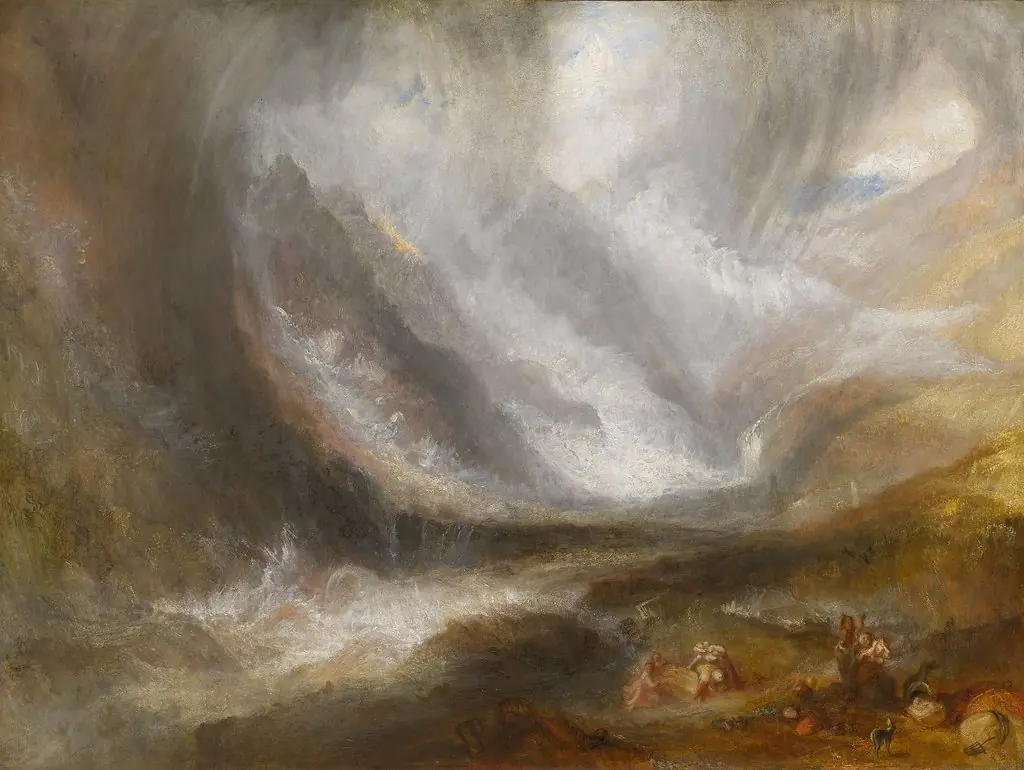 Valley of Aosta: Snowstorm, Avalanche, and Thunderstorm
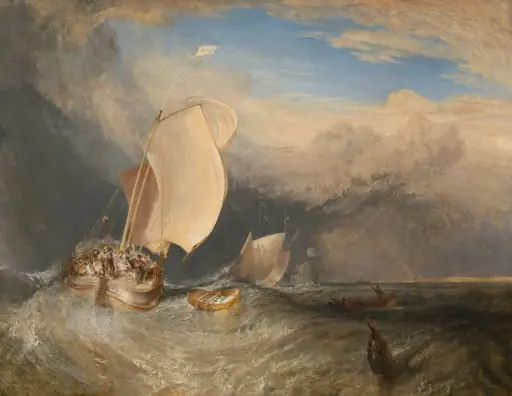 Fishing Boats with Hucksters Bargaining for Fish
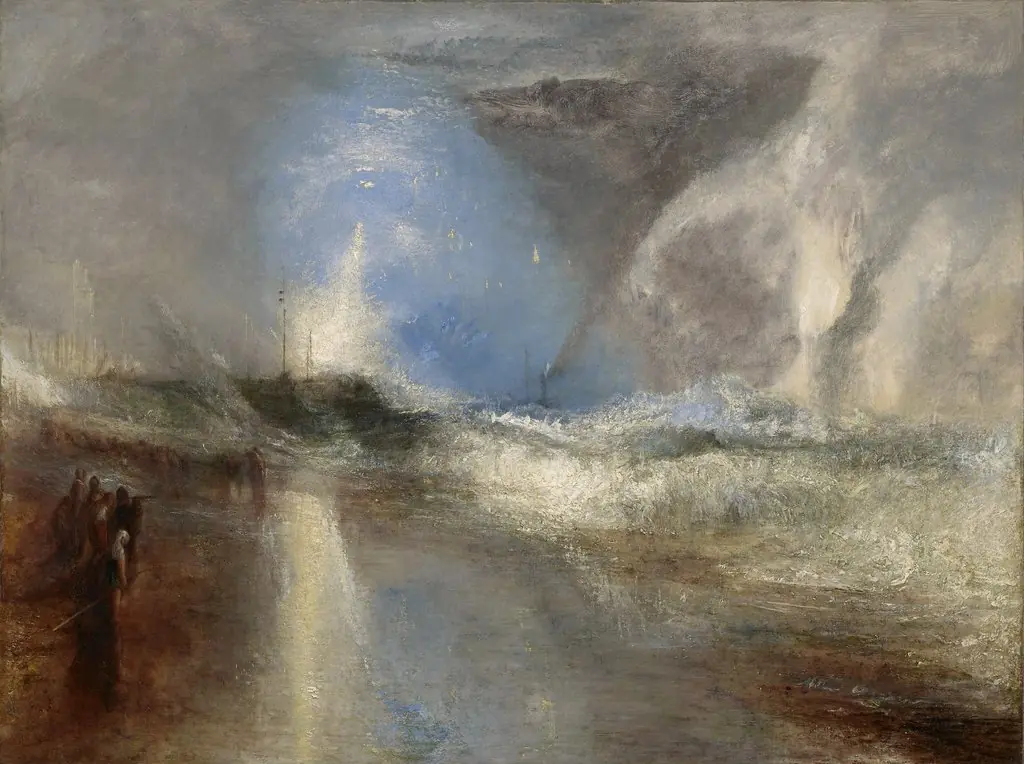 Rockets and Blue Lights (Close at Hand) to Warn Steamboats of Shoal
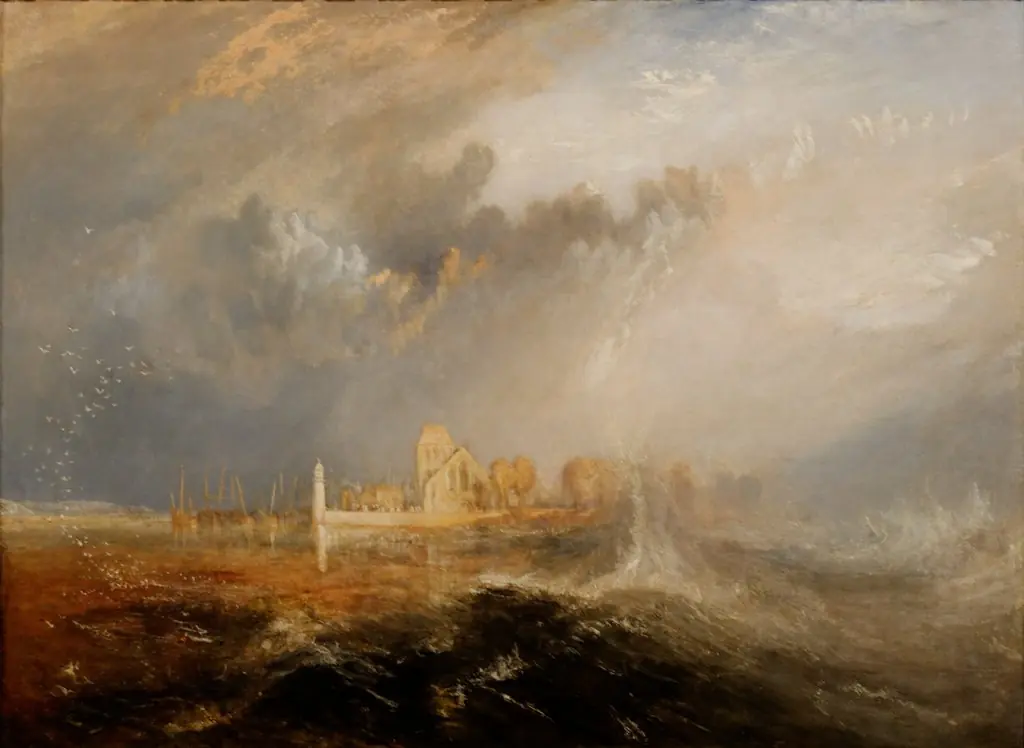 Quillebeuf, Mouth of the Seine