Artwork
Portrait of Ksawery Krasicki (1774–1844)
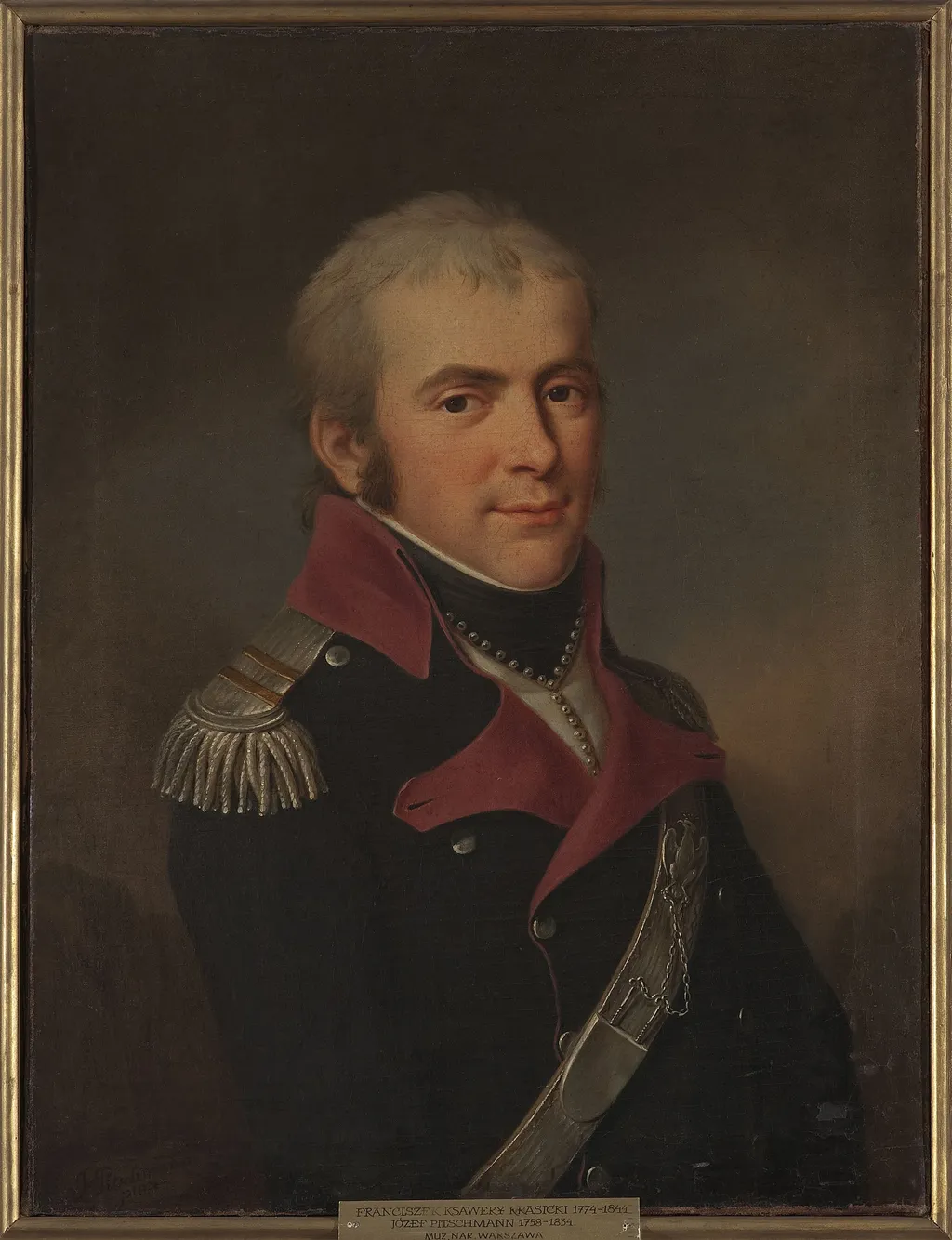
Portrait of Ksawery Krasicki (1774–1844) is an oil painting by the Biedermeier artist Józef Pitschmann. It dates from 1800 and is held in the collection of the National Museum in Warsaw.
About this work
Overview
Portrait of Ksawery Krasicki (1774-1844) is an oil on canvas painting by the Austrian-born Polish portraitist Józef Pitschmann, completed in 1800. The artwork is a vertical, three-quarter length portrait depicting its subject in military dress. Measuring 69 by 52 centimeters, the painting is held in the collection of the National Museum in Warsaw.
Subject & Meaning
A silver-gray sash with chain details crosses his chest from his left shoulder to right hip, signifying his military rank and status.
The painting portrays Ksawery Krasicki, who lived from 1774 to 1844. He is shown slightly off-center, turned toward the viewer with his head at a slight angle. His light gray or white hair is styled close to the head with longer strands at the sides, and he has a smooth, pale complexion. Krasicki wears a dark navy or black military-style coat with a prominent red collar and wide red lapels, silver buttons down the front and on the collar, and a silver epaulette with dangling fringe on his right shoulder. A black stock or high collar with small silver studs wraps his neck, over a white undergarment visible at the throat. A silver-gray sash with chain details crosses his chest from his left shoulder to right hip, signifying his military rank and status.
Technique & Style
Executed in oil paint on canvas, the portrait demonstrates Pitschmann's smooth and controlled brushwork, with fine detail in the facial features and fabric textures, resulting in a polished, finished surface throughout. The palette is restrained, dominated by dark blues, blacks, and grays, with the red collar providing the main color contrast. Light falls softly from the left, illuminating the face, hair, and metallic elements of the uniform, while the muted, dark gray-brown background remains in shadow. A small inscription is visible in the lower left corner, and a brass nameplate is affixed to the bottom of the frame.
History & Provenance
Created in 1800, the painting was produced during Pitschmann's time in Lwów, where he lived and worked from 1794 to 1806. The artwork is currently housed in the National Museum in Warsaw, located on Aleje Jerozolimskie in the Masovian Voivodeship, Poland. An engraving of the portrait was published in 1851 in Edward Rastawiecki's Słownik malarzów polskich tudzież obcych w Polsce osiadłych lub czasowo w niej przebywających, volume two, issued in Warsaw by the author and printed by S. Orgelbrand.
Context
Józef Franciszek Jan Pitschmann, also known as Franz Joseph Pitschmann, began his artistic studies at the Academy of Fine Arts in Vienna under Heinrich Carl Brandt. In 1787, he won a gold medal for his depiction of Hercules returning Admetus to Alcestis and became a member of the Academy. Moving to Poland in 1788 at the invitation of Józef Klemens Czartoryski, he worked in Korzec before living in Warsaw from 1789 to 1794, painting for the nobility and bourgeoisie, including several portraits of King Stanisław II August, for which he received a diamond ring. During his Lwów period, when this portrait was likely made, he produced over 300 portraits, including ones of Emperor Francis I and his wife. In 1806, Tadeusz Czacki offered him a position at the Krzemieniec Lyceum as a drawing teacher, where he painted an additional 150 portraits of professors and local nobility, received awards from the Emperor, and taught Jan Ksawery Kaniewski. He remained in Krzemieniec until his death.
Own this work as a print
Artist & collection
Artist
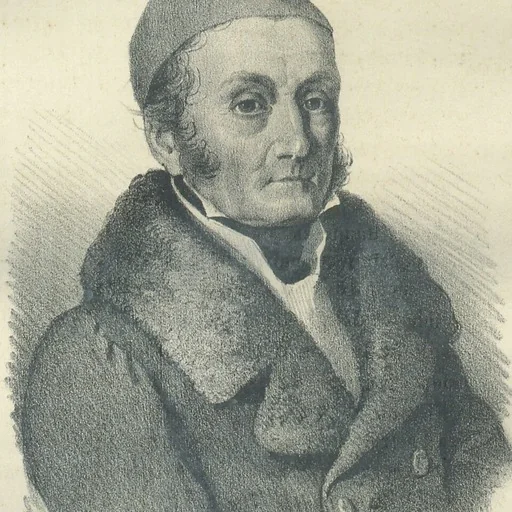
Józef Franciszek Jan Pitschmann, or Franz Joseph Pitschmann (1758 – 1 September 1834) was an Austrian-born Polish portrait painter.

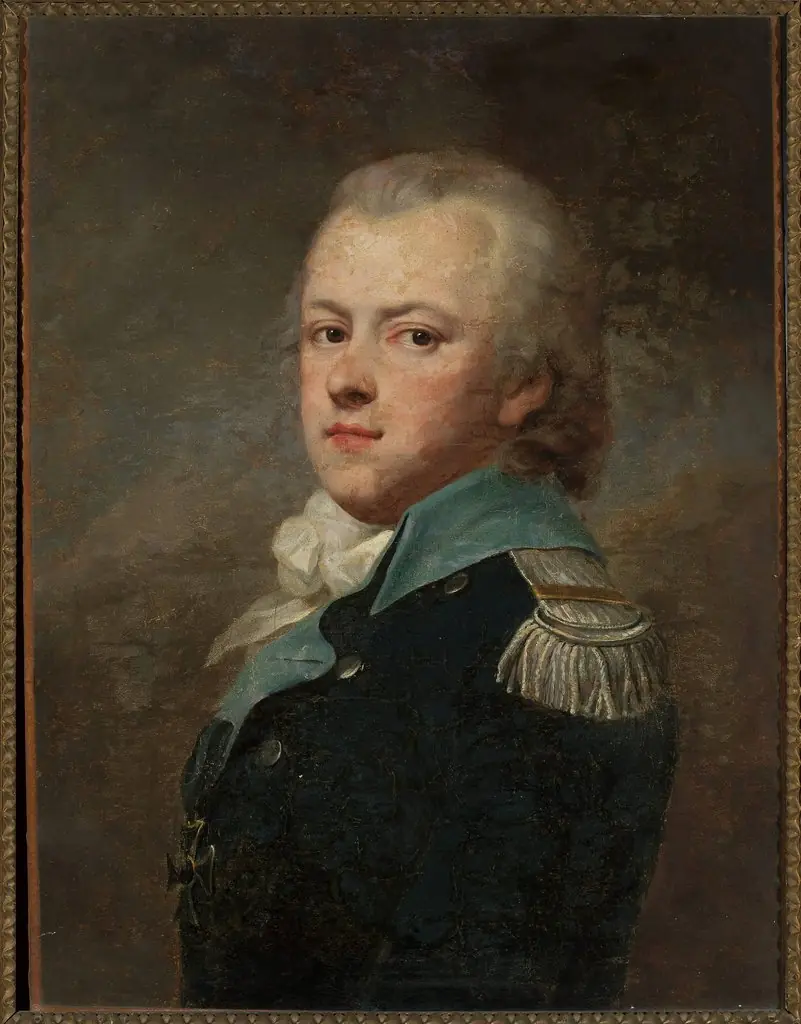 Portrait of Jan Krasicki, Rogala coat of arms (ca. 1764–1831) in a dark blue uniform jacket of the 14th Potocki Infantry Regiment
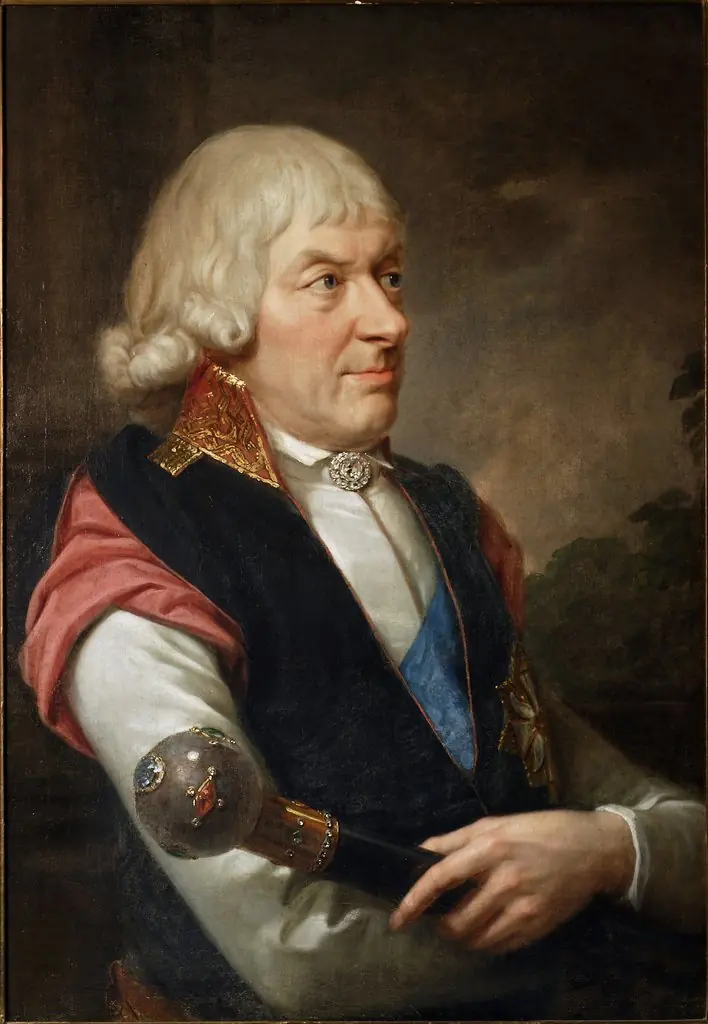 Portrait of Michał Kazimierz Ogiński (1728–1800), hetman of the Duchy of Lithuania
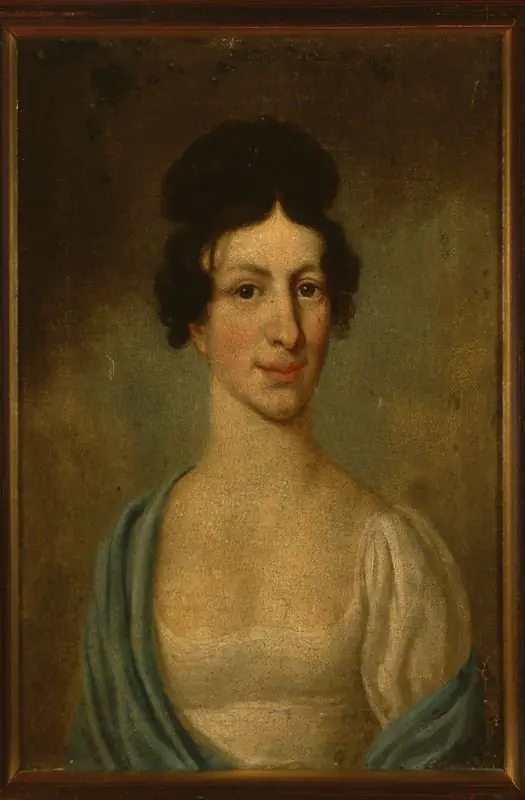 Portrait of Salomea Bécu
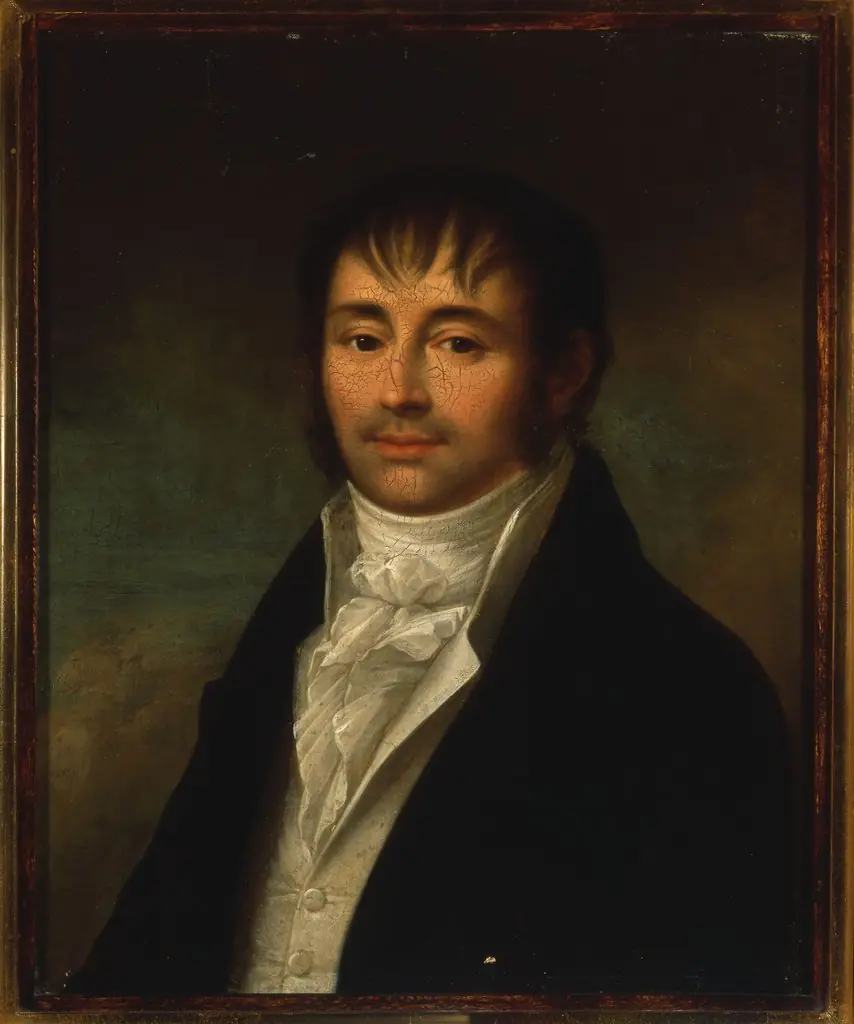 Portrait of Euzebiusz Słowacki
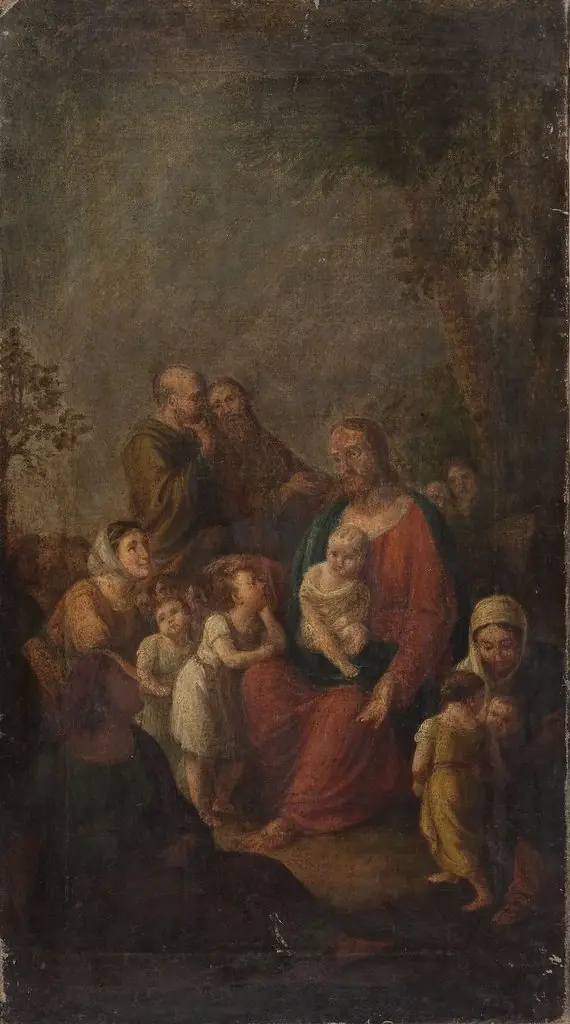 Christ blesses children
 Portrait of Urszuli Tarnowskiej
 Portrait of Joanna Dzierzbicka
 Portrait of Semyon Kh. Stavrakov (1763/64-1819)
 Portrait of Major General I.I. Sabir
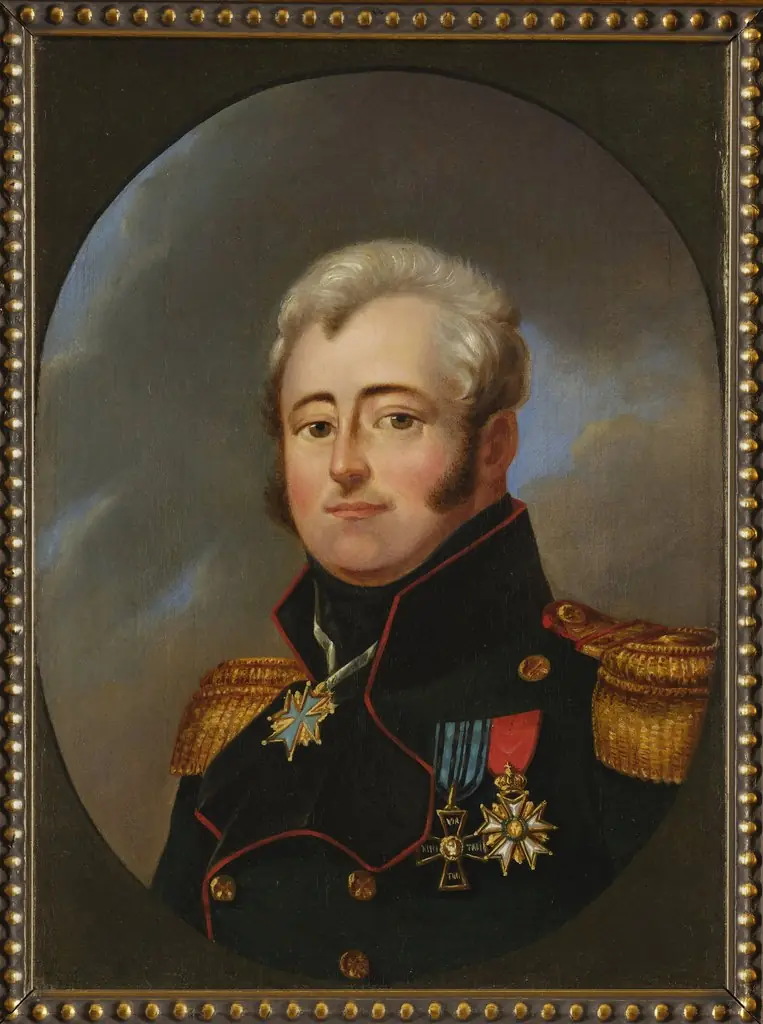 Portrait of general Józef Sowiński
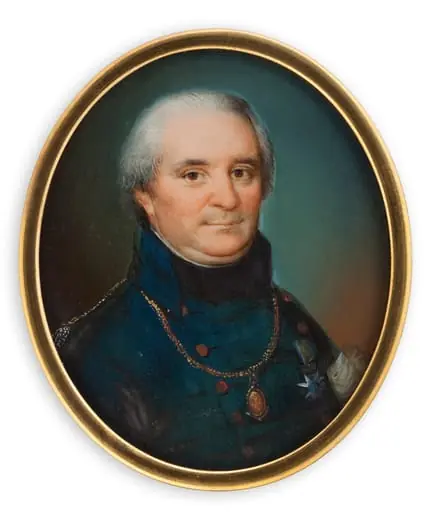 Luotsipäällikkö G. A. Lejonancker
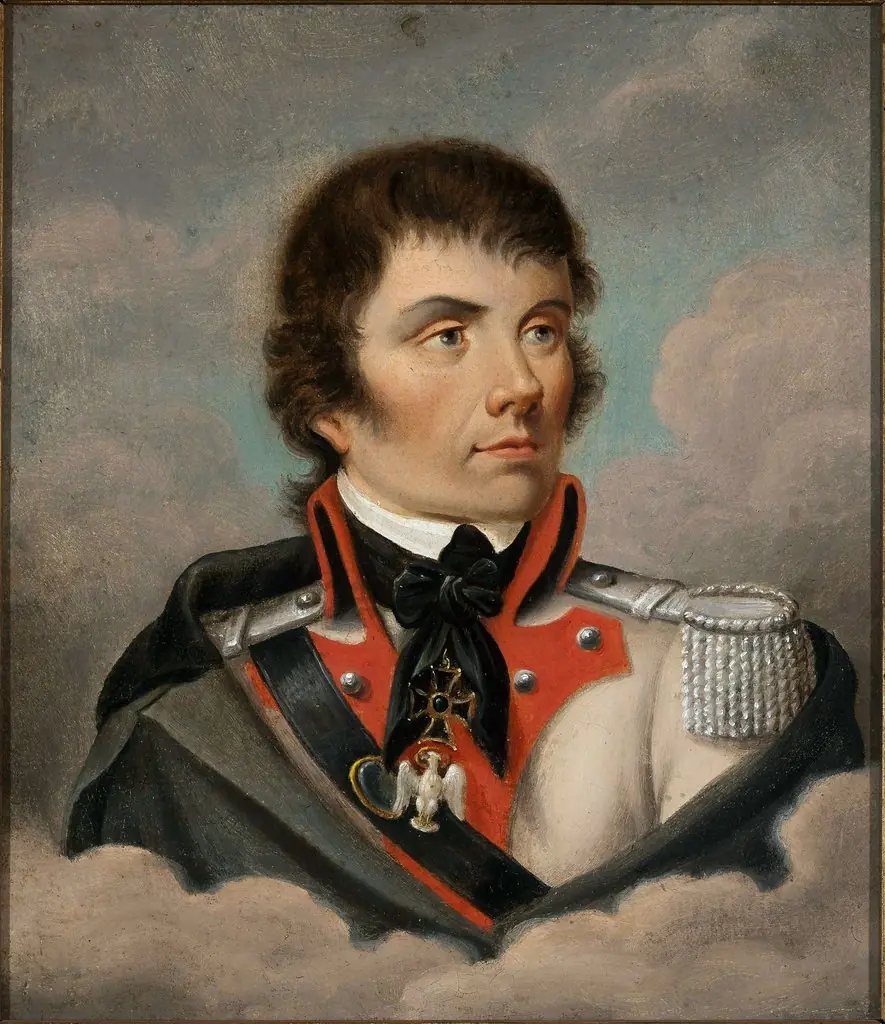 Portrait of Tadeusz Kościuszko
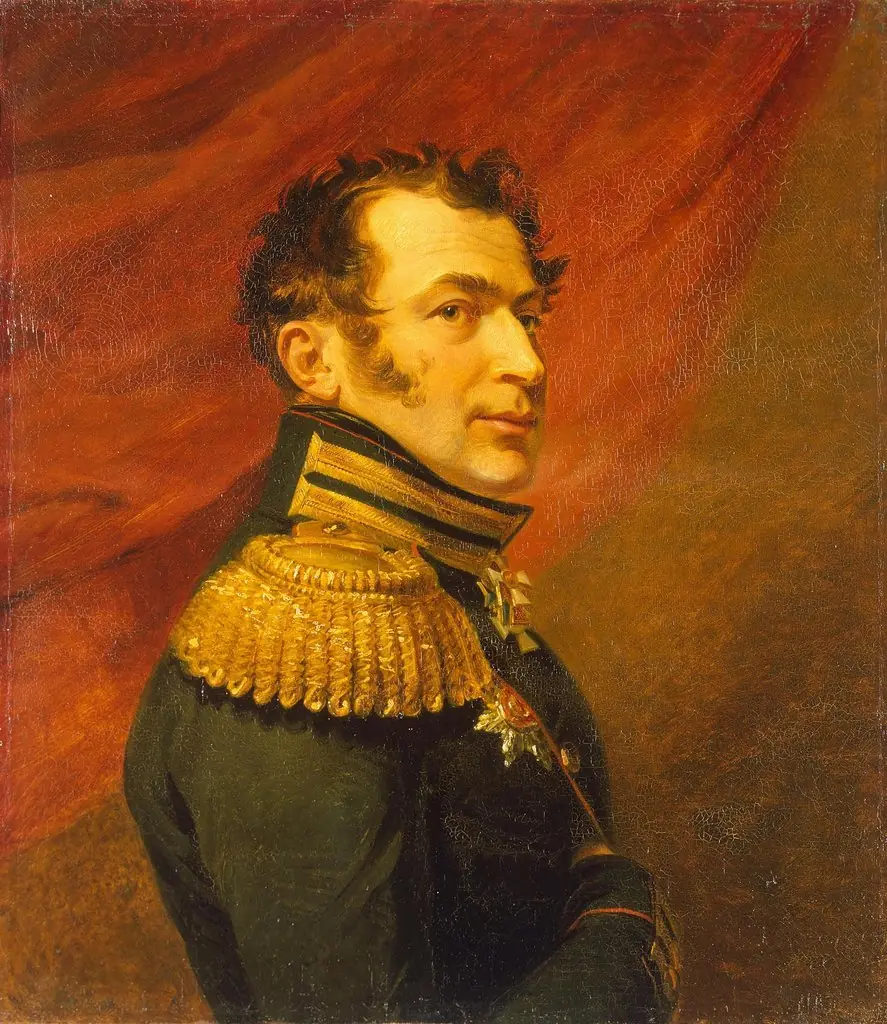 Portrait of Vasily N. Shenshin (1784-1831)
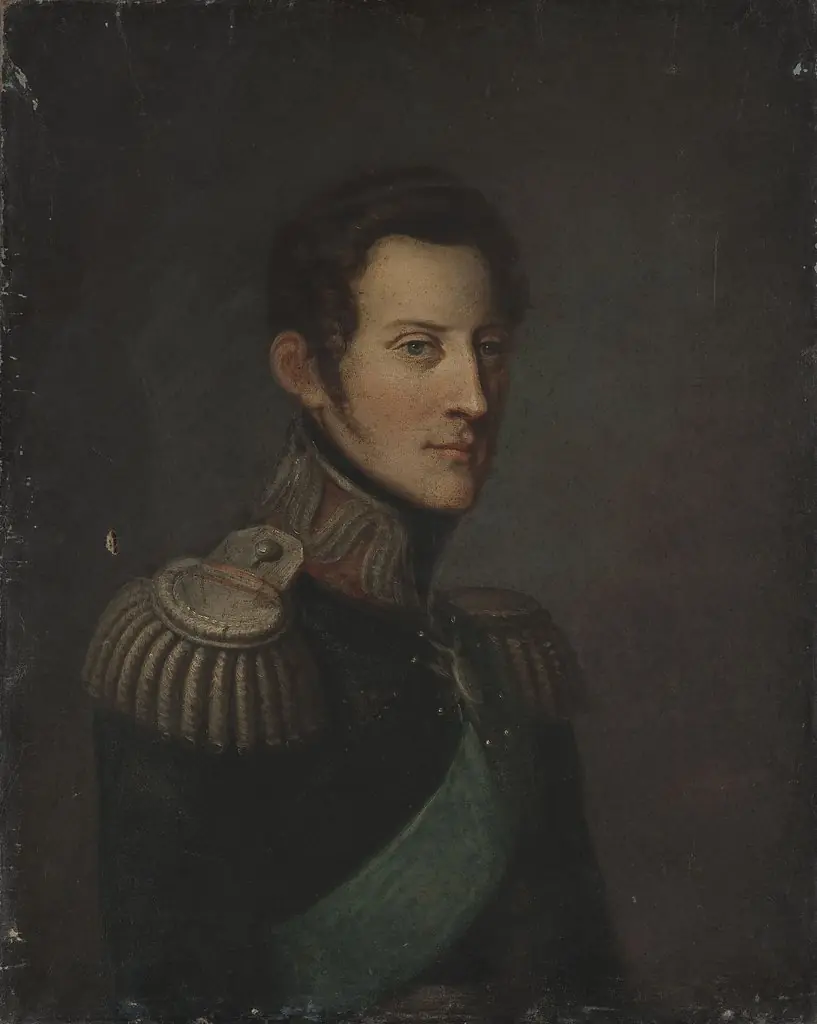 Portrait of Tsar Nicholas I in the Polish general’s uniform
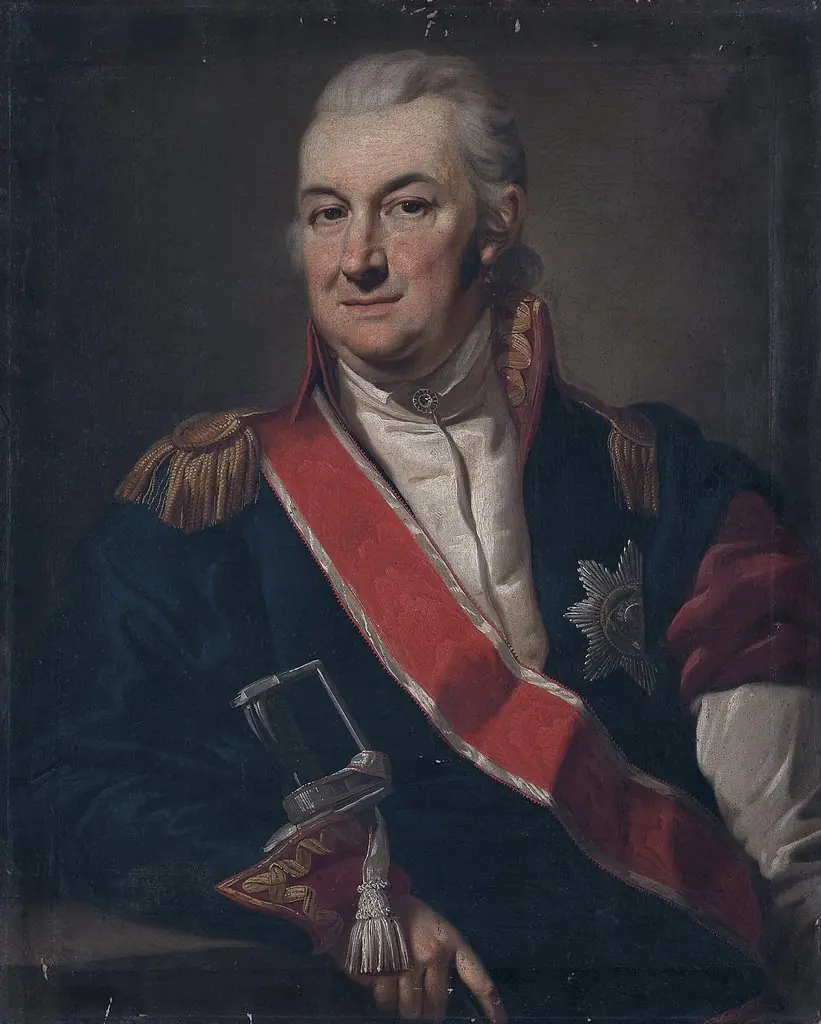 Portrait of general Mikołaj Morawski
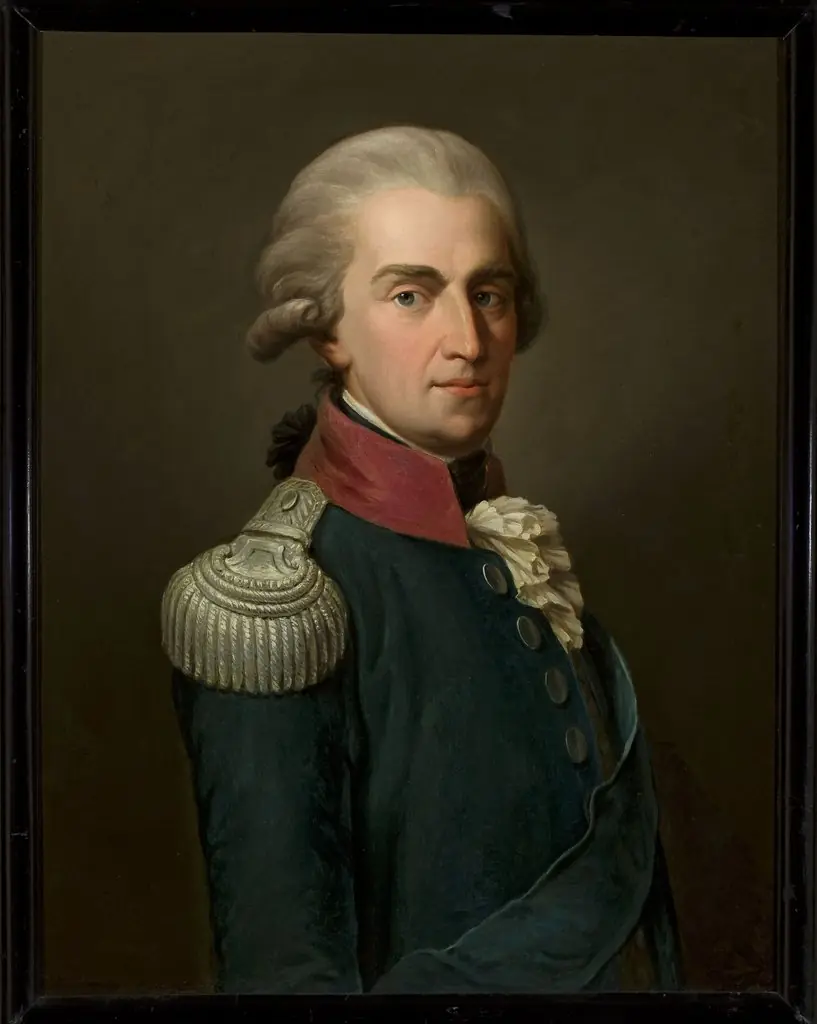 Portrait of Frederick Augustus, Duke of Warsaw