Artwork
Cleopatra's Feast
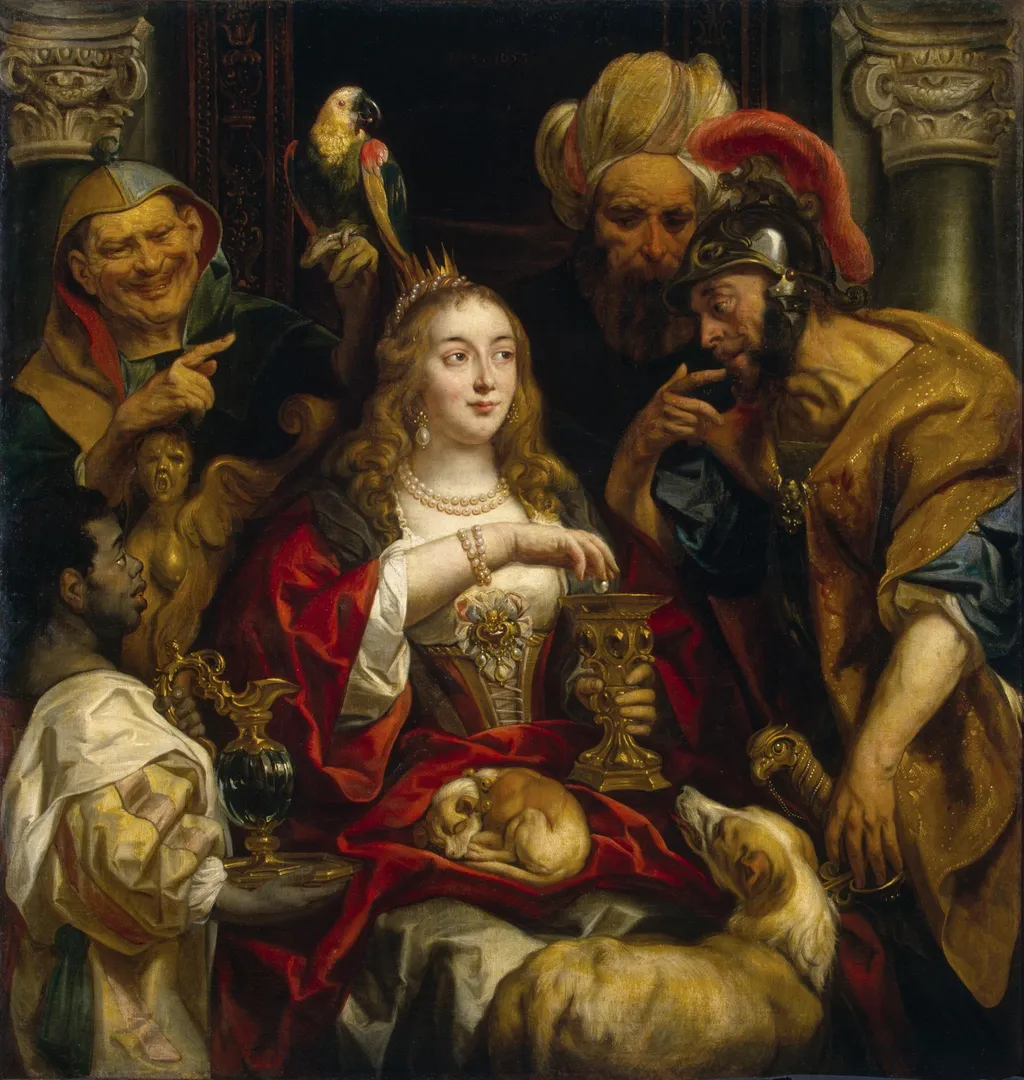
Cleopatra's Feast is an oil painting by the Flemish Baroque painting artist Jacob Jordaens. It dates from 1653 and is held in the collection of the Hermitage Museum.
About this work
Jacob Jordaens painted an allegory called Cleopatra’s Feast in 1653. It’s an oil painting now at the State Hermitage Museum. The scene shows Cleopatra hosting Mark Antony on her barge.
The work is one of four Jordaens pieces in the Hermitage’s collection. He painted it during the Flemish Baroque era, known for bold scenes and rich colors.
Look up Jacob Jordaens next.
Overview
It is one of only four paintings by Jordaens held by the Hermitage Museum in Saint Petersburg, where it resides today.
Cleopatra's Feast is an oil-on-canvas painting by the Flemish Baroque artist Jacob Jordaens, dated 1653. Measuring 156.4 by 149.3 centimetres, the work depicts the legendary Egyptian queen in a dramatic scene of extravagance and moral warning. It is one of only four paintings by Jordaens held by the Hermitage Museum in Saint Petersburg, where it resides today. The painting stands as a significant example of Jordaens's late period, combining sumptuous visual spectacle with layered allegorical meaning in a manner characteristic of Netherlandish moralising tradition.
Subject & Meaning
The painting illustrates the famous wager described by Pliny the Elder in his Natural History: Cleopatra promised Mark Antony she could consume ten million sestertii in a single meal, then dissolved a injewelled pearl in vinegar and drank it. At the composition's centre, Cleopatra appears as a seated woman with long curly auburn hair, crowned with pearls and wearing a pearl necklace and bracelet, a white dress with jewelled bodice, and a crimson draped cloak. She holds a golden goblet in her left hand, while a small skull rests in her lap upon the red fabric, a memento mori underscoring the transience of earthly riches. Five male figures surround her: a helmeted man at upper left points at her while clutching a parrot; a turbaned figure with red and white feathers appears at upper centre; another helmeted man at right leans forward with hand near his mouth in astonishment; a dark-skinned servant at lower left proffers a golden vessel; and a fifth figure emerges partially behind the group. The jester, with his grotesque sneer and pointing gesture, serves as the moral chorus, emphasising the folly of pride and vanity. Two dogs occupy the lower foreground, one gazing up at the queen. The parrot adds exotic atmosphere while reinforcing themes of ostentation.
Technique & Style
Executed in oil on canvas, the painting displays the decorative characteristics of Jordaens's mature style alongside a tendency toward semantic complexity in his late work. The palette is dominated by deep reds, golds, and warm browns set against dark shadows, with dark draped curtains and two fluted columns with ornate capitals providing architectural framing. The brushwork varies across the surface: smooth finish characterises the rendering of Cleopatra's skin, while more textured handling appears in the fabrics and background elements. This differential treatment focuses attention on the central figure while maintaining visual richness throughout. The composition's crowded, theatrical arrangement, with figures pressing forward into the viewer's space, reflects the Flemish Baroque tradition of dramatic narrative painting. The work is signed and dated at top centre: J Jor. 1653.
History & Provenance
The early history of Cleopatra's Feast remains unknown, though scholarly evidence suggests it likely formed part of a series on the history of Cleopatra owned by Giacomo Antonio Carenna, as both this painting and Jordaens's The Death of Cleopatra (now in the Kassel Art Gallery) are mentioned in Carenna's will of 9 March 1669. The painting arrived at the Hermitage Museum in 1937 from the State Museum Fund, which had accumulated and distributed works of art confiscated from private individuals following the October Revolution. It is currently displayed in the New Hermitage building in Room 248. The work was exhibited at the Petit Palais in Paris from September 2013 to January 2014 as part of the first Jordaens retrospective held in France.
Context
Jacob Jordaens (1593-1678) was a leading Flemish Baroque painter who, after the deaths of Rubens and Van Dyck, became the preeminent artist in Antwerp. Cleopatra's Feast belongs to his late period, when his work increasingly incorporated symbolic and allegorical complexity. N. I. Gritsai, head of the thirteenth to eighteenth-century painting section at the Hermitage, observed that this work exemplifies Jordaens's tendency to complicate semantic content through saturation with symbolic elements. The Cleopatra theme was extraordinarily popular throughout the seventeenth and eighteenth centuries, typically employed to depict luxurious court life and often adapted for large decorative works, particularly tapestries. Jordaens's treatment, however, aligns with a specifically Netherlandish moralising tradition stretching back through Pieter Bruegel to Hieronymus Bosch, using the spectacle of wealth to critique the sins it embodies. The subject was treated by numerous artists, including Tiepolo at the Palazzo Labia.
Legacy
The painting's reputation rests on its successful fusion of moral allegory with visual splendour, making it one of Jordaens's most discussed late works. Its inclusion in the Hermitage's collection places it among the most significant Flemish Baroque paintings in Russia. The 2013-2014 Paris retrospective marked a major moment in Jordaens's modern critical reception, bringing this work before a wider public alongside the artist's Group Portrait of circa 1650. The probable pairing with The Death of Cleopatra in Carenna's collection suggests that seventeenth-century viewers understood these works as a narrative sequence, a relationship that continues to inform scholarly discussion of Jordaens's programmatic ambitions. The painting remains a touchstone for understanding how Flemish artists adapted classical subjects to contemporary moral frameworks, and how the Baroque taste for drama could serve didactic purposes without sacrificing aesthetic pleasure.
Own this work as a print
Artist & collection
Artist
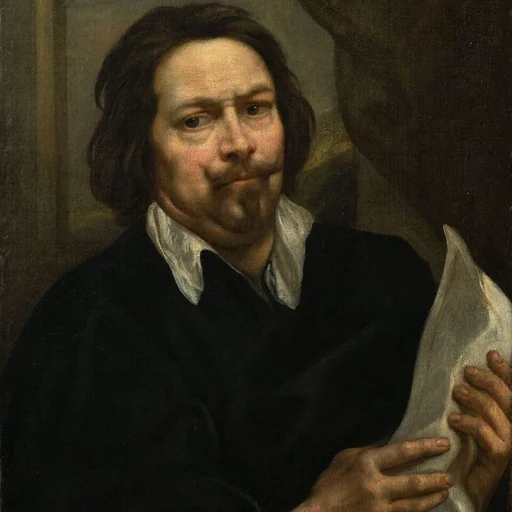
Jacques (Jacob) Jordaens (19 May 1593 – 18 October 1678) was a Flemish painter, draughtsman and a designer of tapestries and prints.

 The Holy Family with Shepherds
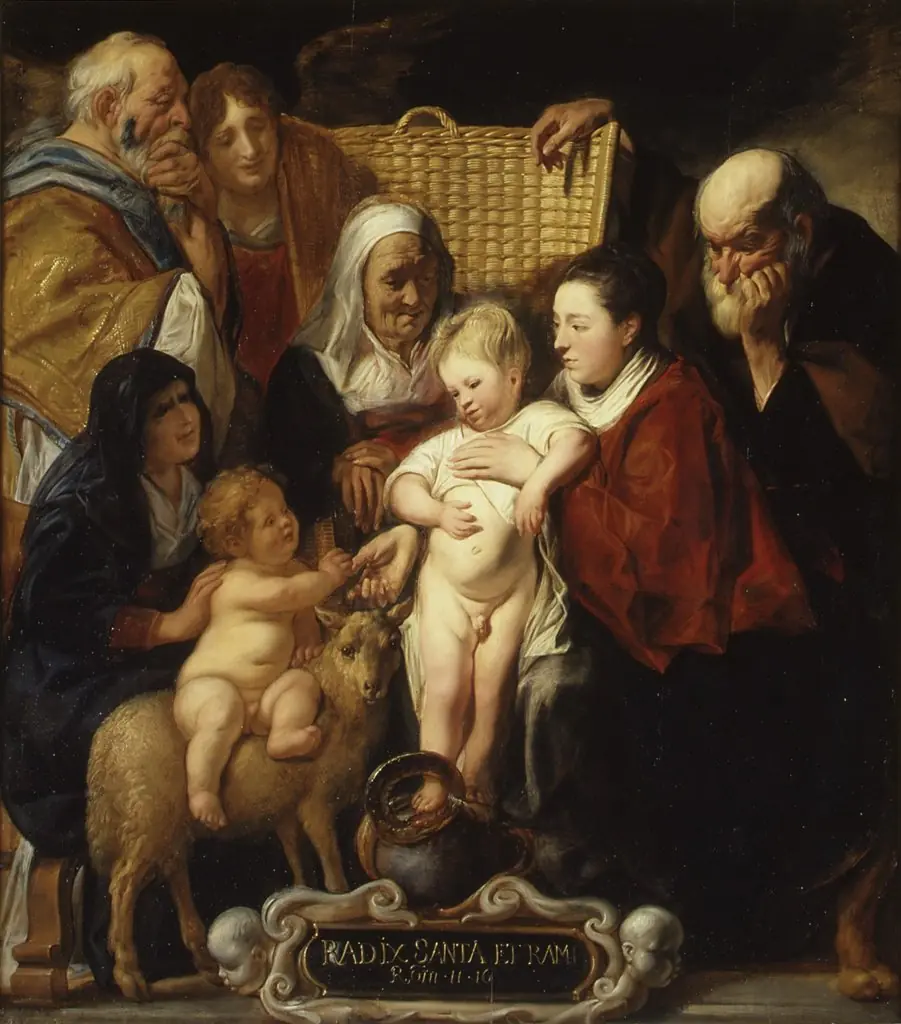 The Holy Family with Saint Anne and the Young Baptist and His Parents
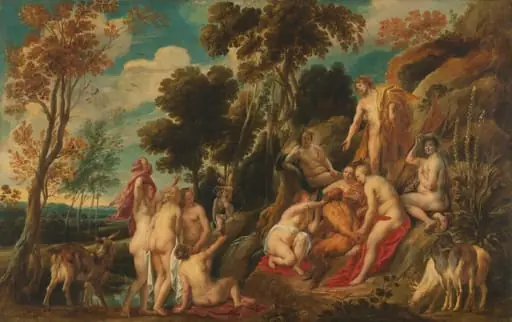 Untitled
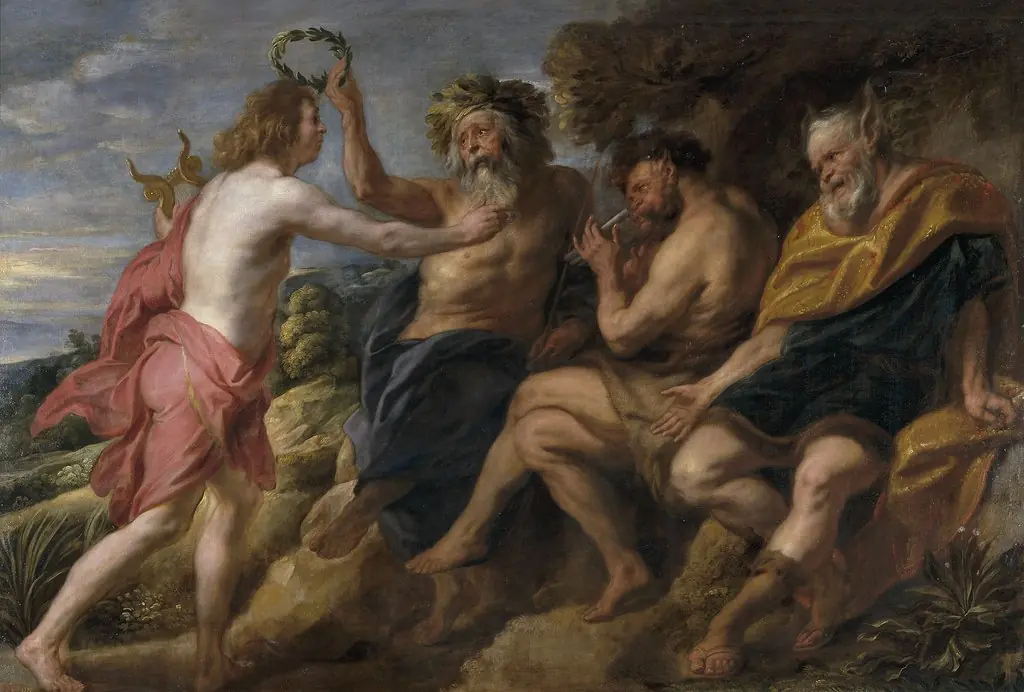 Apollo as Victor over Pan
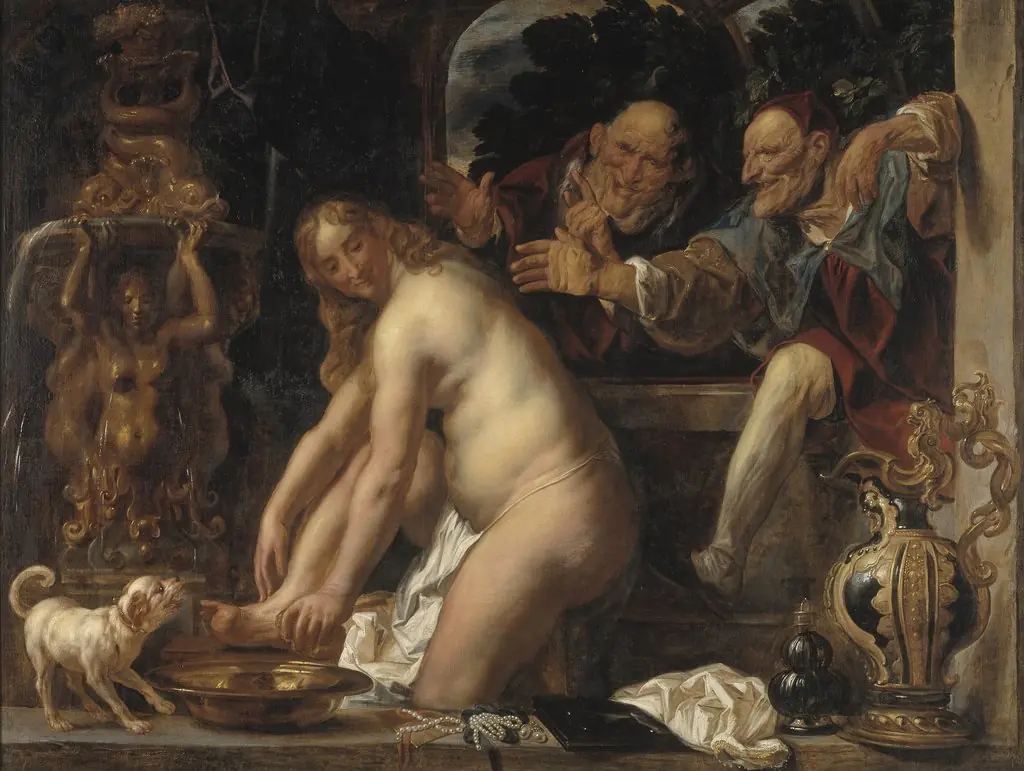 Susanna and the Elders
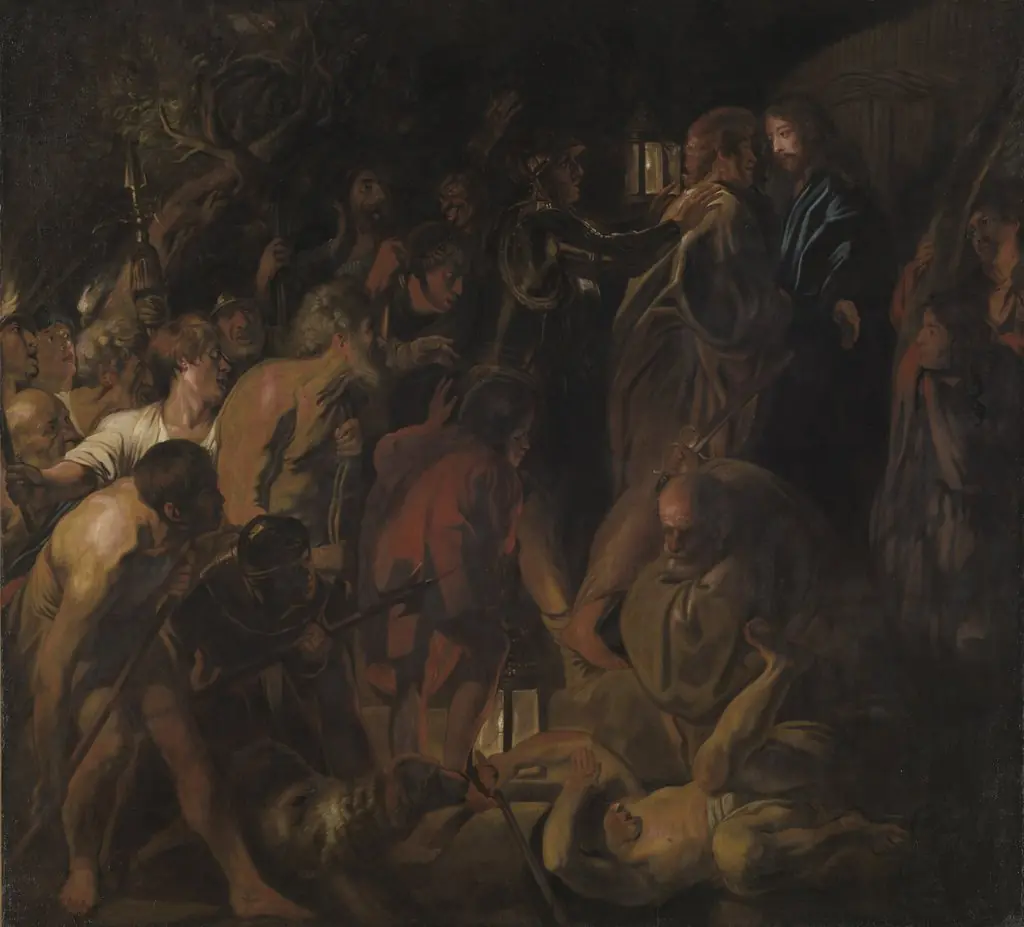 The Betrayal of Christ
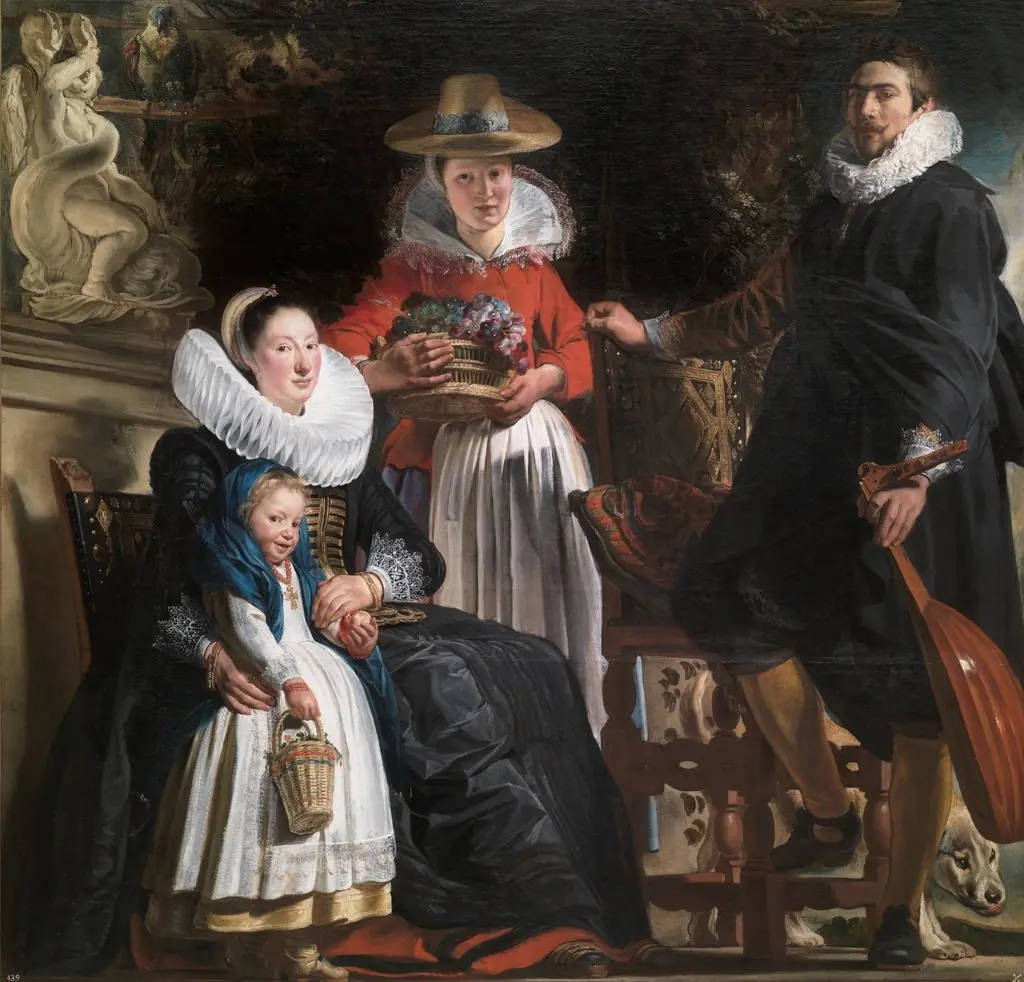 Portrait of the artist with his family
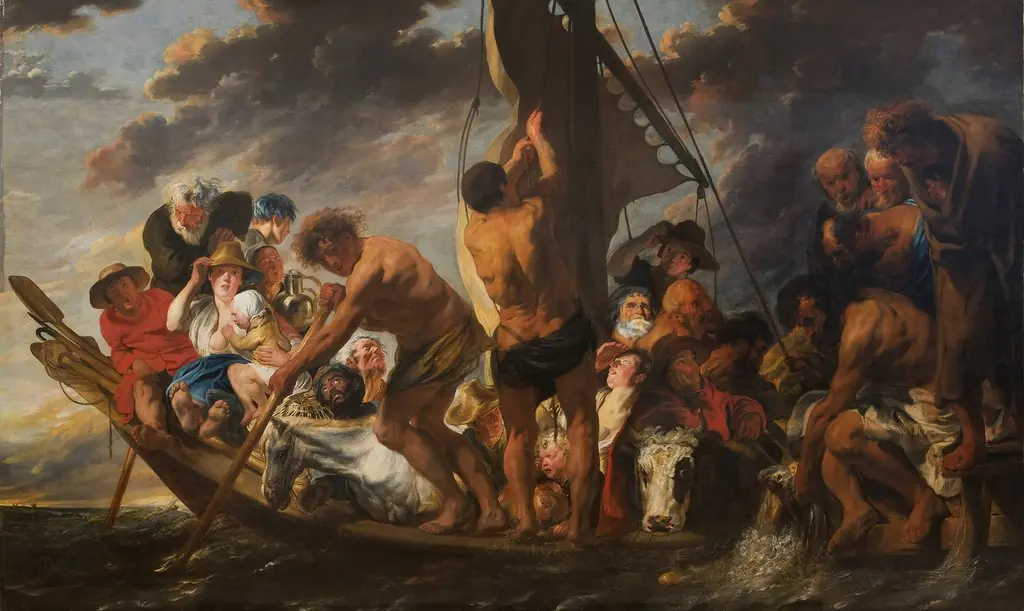 The Tribute Money. Peter Finding the Silver Coin in the Mouth of the Fish. Also called "The Ferry Boat to Antwerp"
- The Feast of Herod
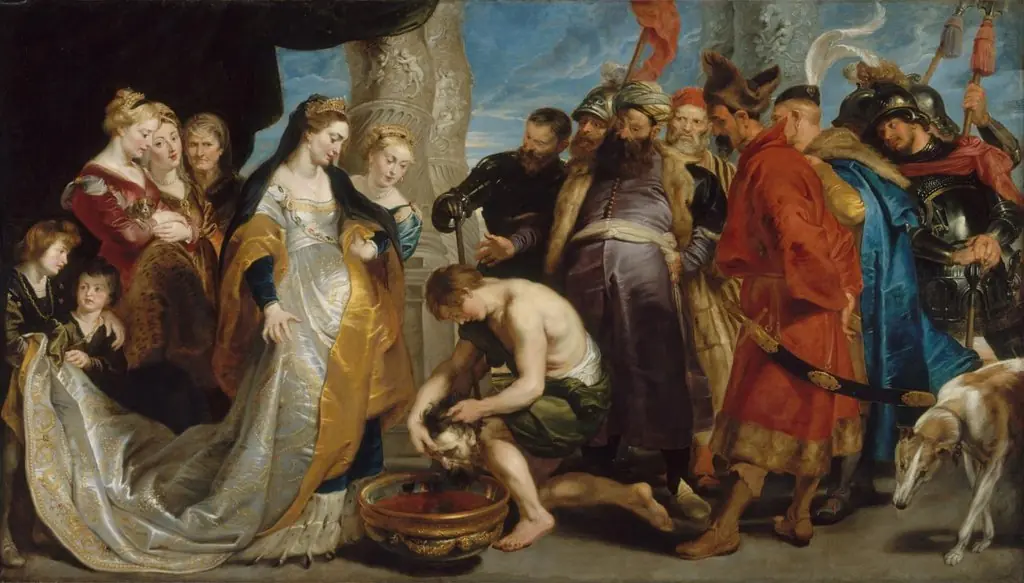 Head of Cyrus Brought to Queen Tomyris
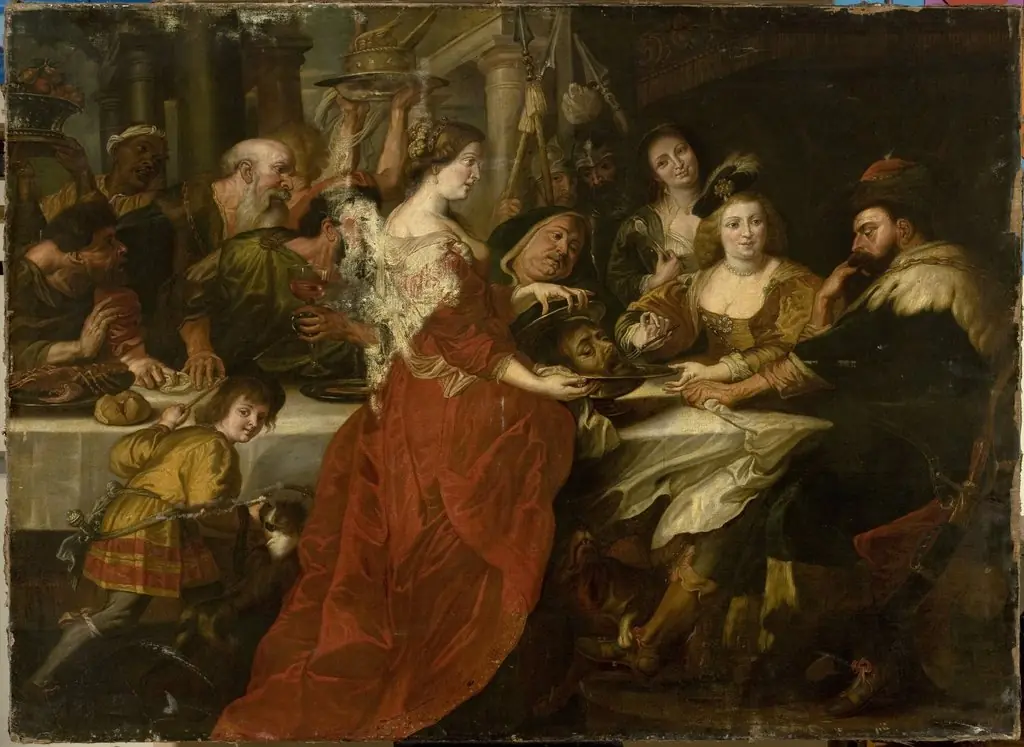 Salome with the head of St. John the Baptist at the banquet (Matthew 14:11; Mark 6:27-28)
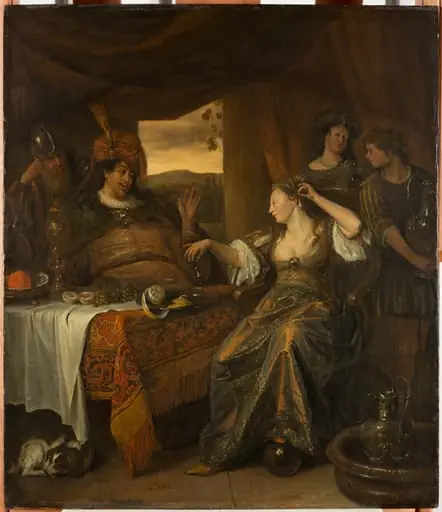 Antonius und Kleopatra
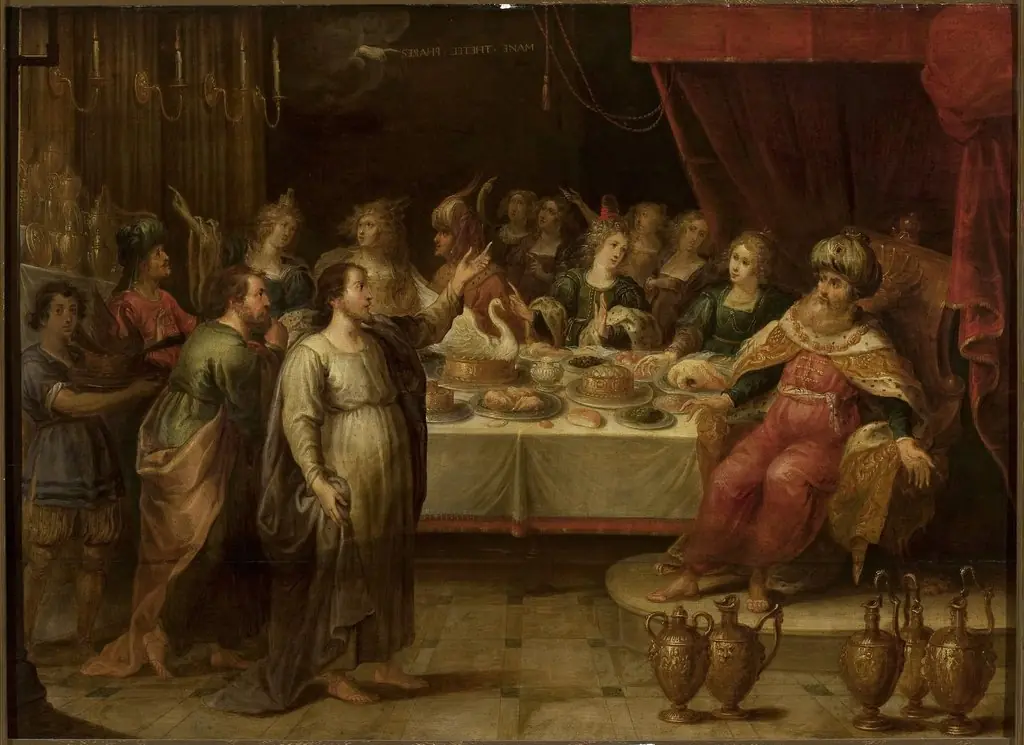 Belshazzar's feast (Daniel 5:1-31)
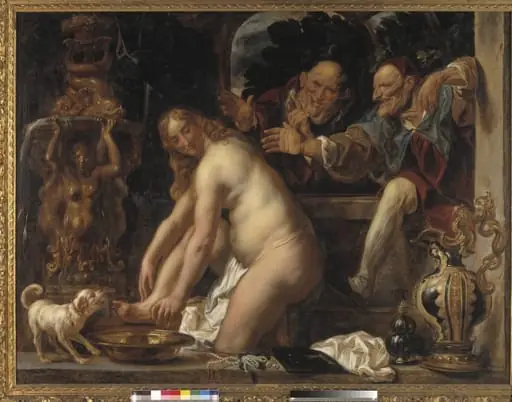 Susanna and the Elders
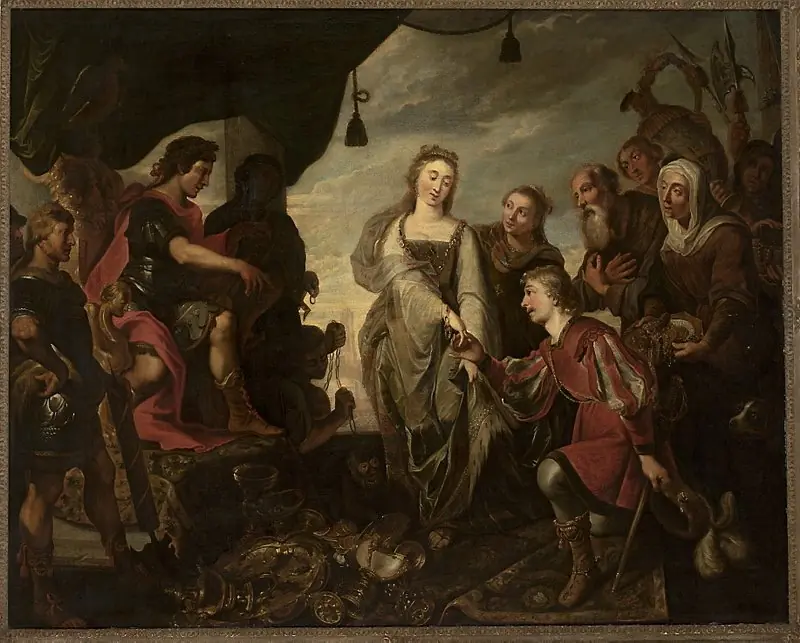 Magnanimity of Scipio (Titus Livius XXVI; 50)
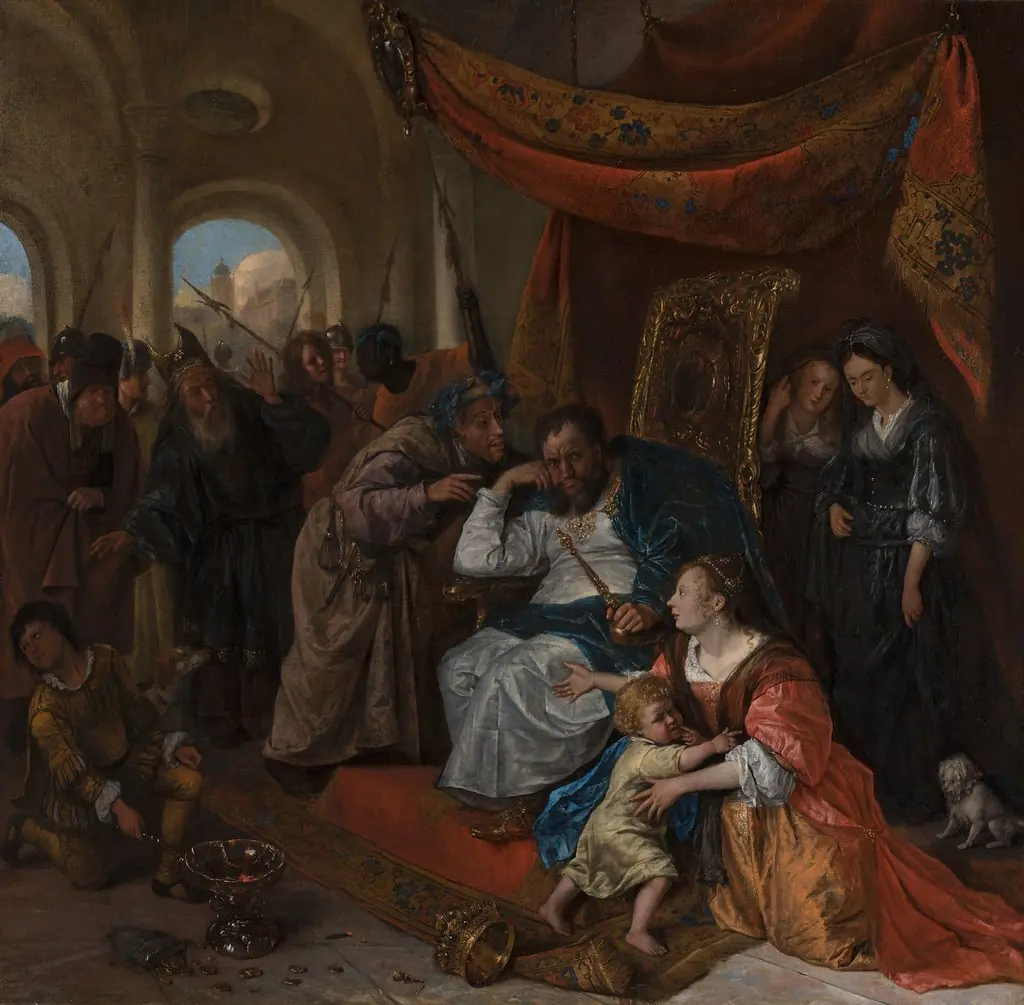 Moses and Pharaoh’s Crown
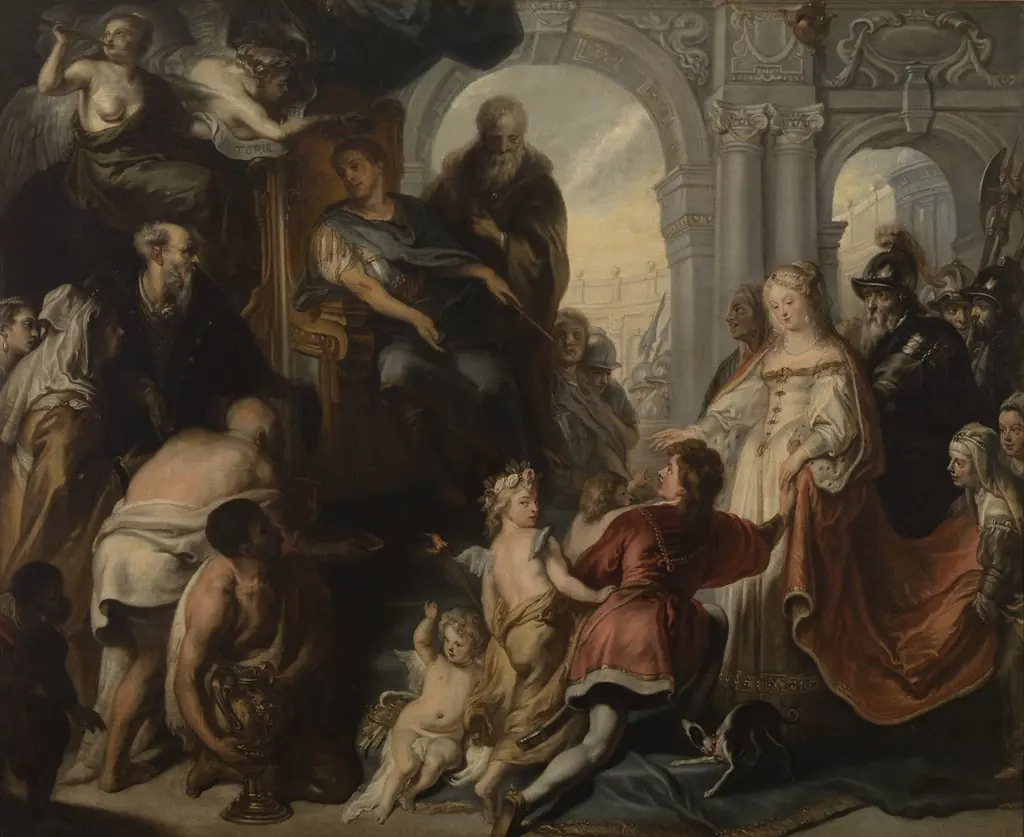 The Continence of Scipio Africanus
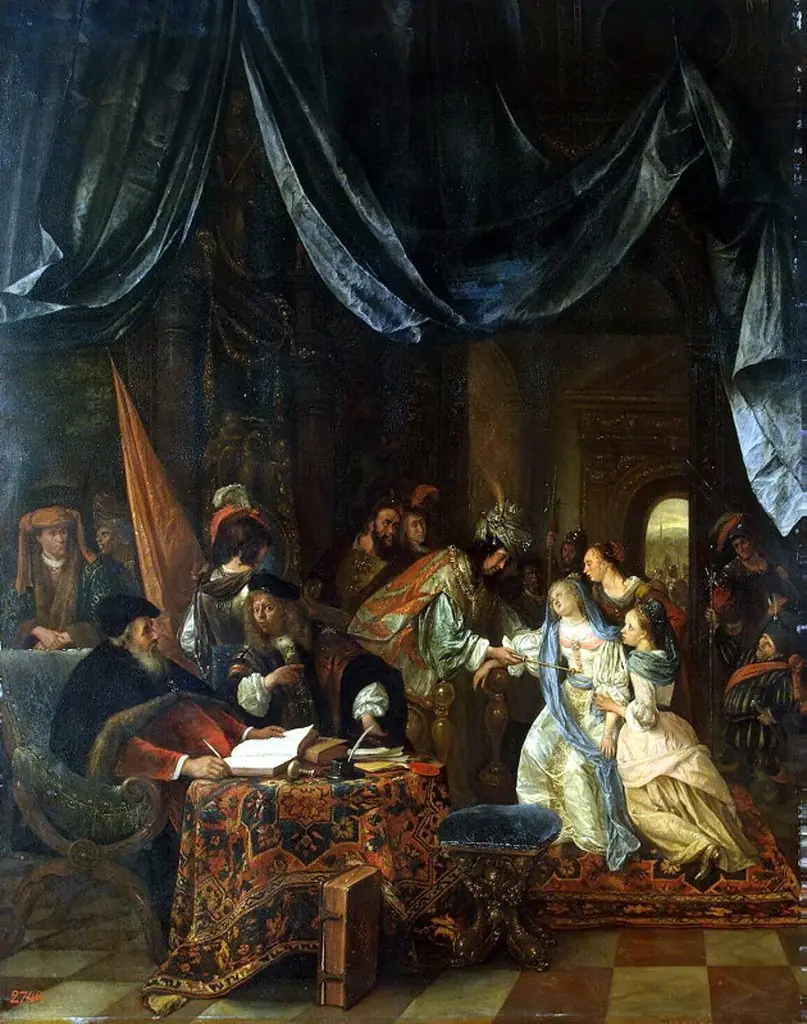 Esther before Ahasuerus
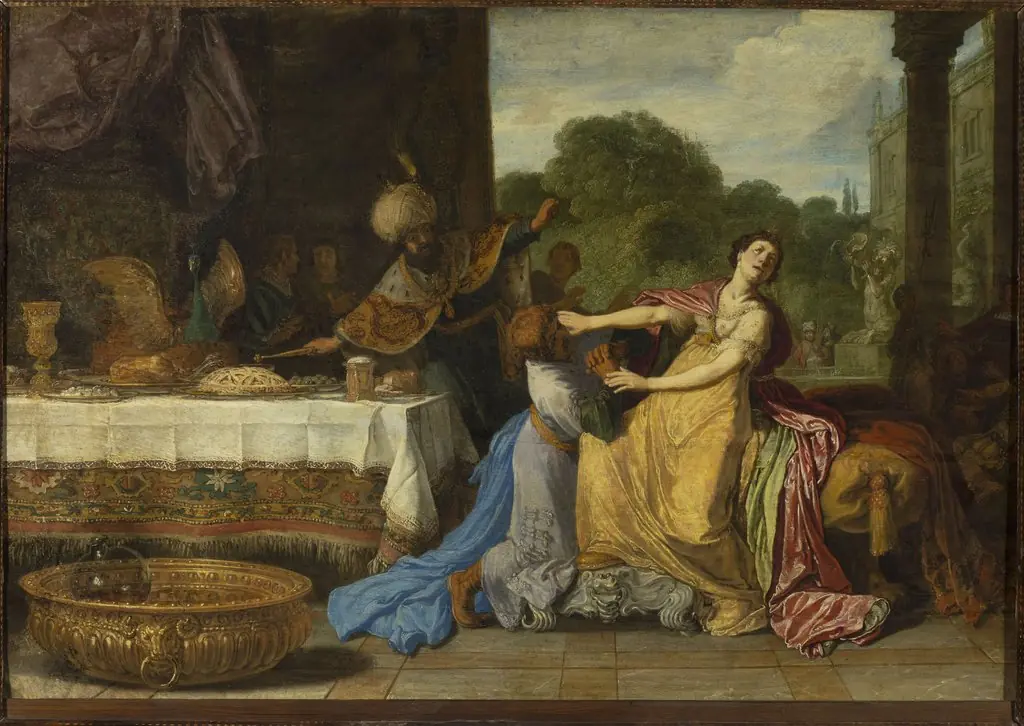 Haman begging the mercy of Esther (Esther 7:6-7)
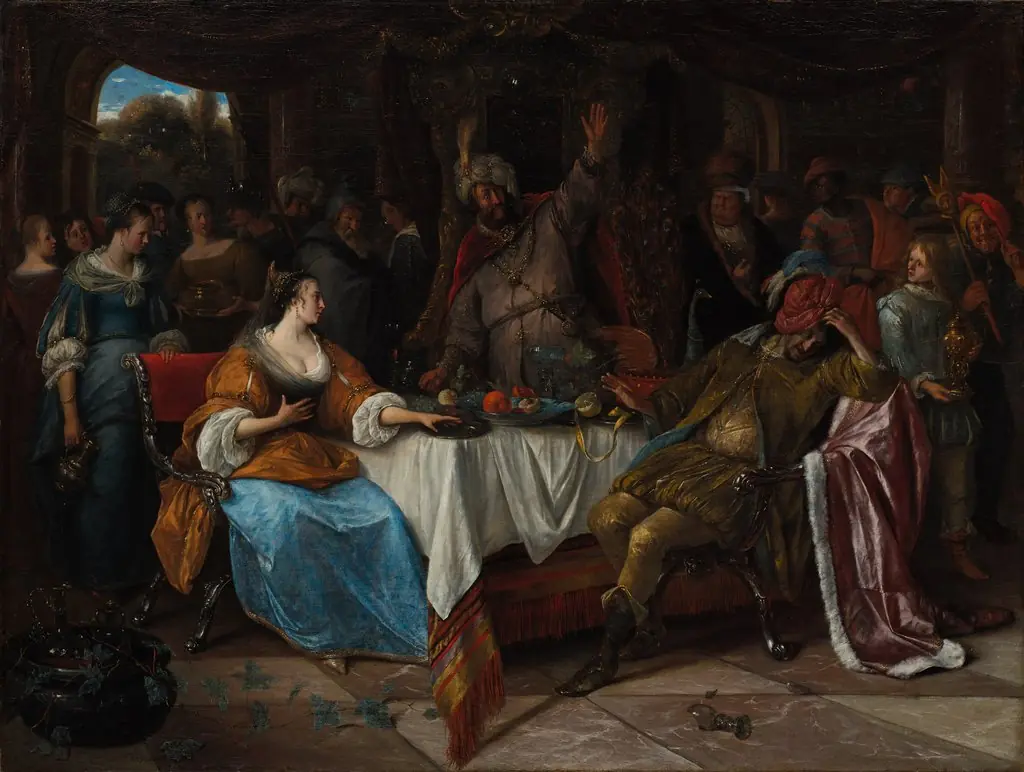 Esther, Ahasuerus, and Haman