Artwork
The Tribute Money. Peter Finding the Silver Coin in the Mouth of the Fish. Also called "The Ferry Boat to Antwerp"
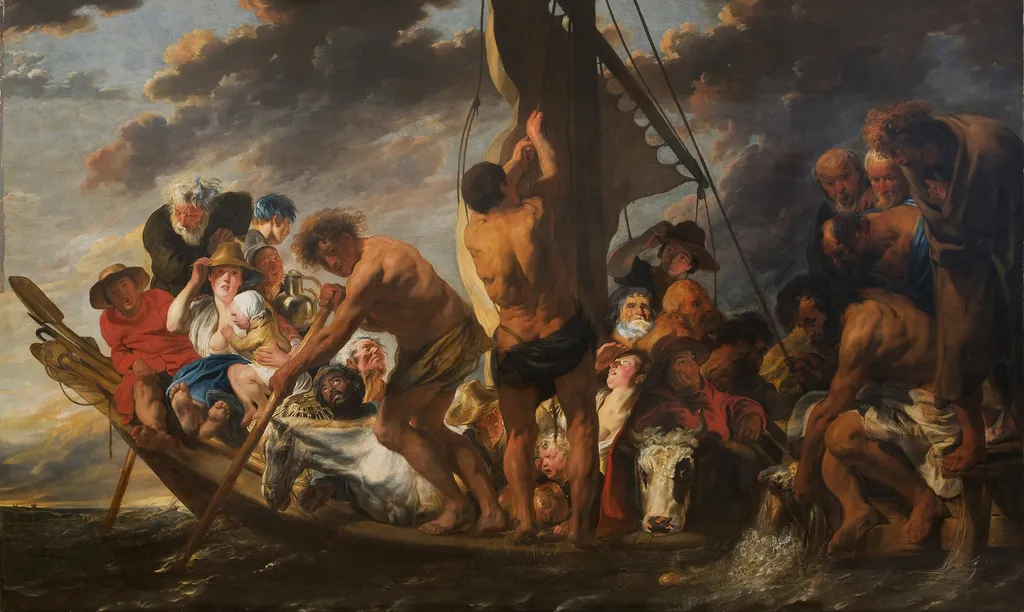
The Tribute Money. Peter Finding the Silver Coin in the Mouth of the Fish. Also called "The Ferry Boat to Antwerp" is an oil painting by the Flemish Baroque painting artist Jacob Jordaens. It dates from 1620 and is held in the collection of the Statens Museum for Kunst.
About this work
Peter Finding the Silver Coin in the Mouth of the Fish, also known as The Ferry Boat to Antwerp, is an oil painting by Jacob Jordaens.
The Tribute Money. Peter Finding the Silver Coin in the Mouth of the Fish, also known as The Ferry Boat to Antwerp, is an oil painting by Jacob Jordaens. It was painted around 1620 and now lives in the Statens Museum for Kunst in Copenhagen.
The work shows the biblical episode where Jesus tells Peter to catch a fish and retrieve a silver coin for the temple tax. A 17th‑century historian called Joachim von Sandrart saw the scene as a genre view of a ferry leaving Antwerp.
You might also explore the subject Saint Peter.
Subject & Meaning
The painting illustrates the biblical episode from Matthew 17 in which Jesus instructs the apostle Peter to retrieve a four‑drachma coin from the mouth of a fish to pay the temple tax. In Jordaens’s composition Saint Peter is shown pulling a fish from the water while holding the coin, and a nearby fisherman displays the discovered money. The scene unfolds on a 17th‑century Flemish ferry boat crowded with varied figures, a child weeping over a lost apple, an African trader in a turban, and a peasant leaning on a cow, while the boat’s gunwale barely clears the water.
The work was later called the “Ferry Boat to Antwerp” by the 17th‑century German historian Joachim von Sandrart, who interpreted the vessel as a genre subject. Together, these elements combine a narrative of divine provision with a lively genre depiction of contemporary river traffic.
Technique & Style
The work is executed in oil paint on canvas, measuring 279.5 cm in height by 467 cm in width. It is classified as a religious painting and is described as a very decorative piece, with figures clearly distinguished in character and posture, and groups that are well composed and connected. The scene is lively and full of movement, while the brushwork is characterized as rather superficial, with varied and harmonious light and palette.
The composition translates a biblical episode into a 17th-century Flemish setting, with sharply differentiated groupings on a heavily loaded ferryboat and on a jetty, set against a stormy sky with dark clouds and high waves.
History & Provenance
The Tribute Money was painted by Jacob Jordaens in Antwerp between 1616 and 1634. According to the Dutch-language source, the arms dealer and banker Louis de Geer (1587–1652), originally from Liège, likely commissioned the work directly from the painter. It remained in the possession of the influential De Geer family through the seventeenth century, hanging in the hall of the Huis met de Hoofden in Amsterdam until 1758, when it was shipped to the family's Swedish castle at Finspång.
The painting was brought to Finspång Castle in 1695 by either Louis de Geer II or Louis de Geer III.
In the early twentieth century, the work entered the private collection of Swedish politician Axel Ekman (1869–1939) in Stockholm/Mogård. The Statens Museum for Kunst in Copenhagen acquired it from Ekman in 1912, and it has since been held there under inventory number KMS3198.
The painting is held by the National Gallery of Denmark in Copenhagen, where it is accessioned under inventory number KMS3198. It entered the museum's collection in 1912 after being owned by Louis de Geer, later passing through the private collection of Axel Ekman in Stockholm. The work was displayed at Finspång Castle in the 17th century before its transfer to Sweden and eventual acquisition by the museum.
Since its acquisition it has been part of the permanent exhibition of the National Gallery of Denmark, periodically featured in special exhibitions of Flemish Baroque art.
Context
The painting’s reception was shaped early by Joachim von Sandrart, who in the seventeenth century misread the biblical scene as a Flemish genre view and dubbed it the “Ferry Boat to Antwerp,” a label that persisted despite its scriptural origin. Modern scholarship has emphasized Jordaens’s transformation of Matthew’s terse account into a crowded, theatrical spectacle of seventeenth-century Flanders, where the miraculous retrieval of the tribute coin is rendered as a moment of collective indifference among ferry passengers. Eva de la Fuente Pedersen’s analyses argue that the artist’s studio practice, expanding the composition to foreground the overloaded boat, shifted the narrative’s center, making the religious episode secondary to a vivid slice-of-life tableau.
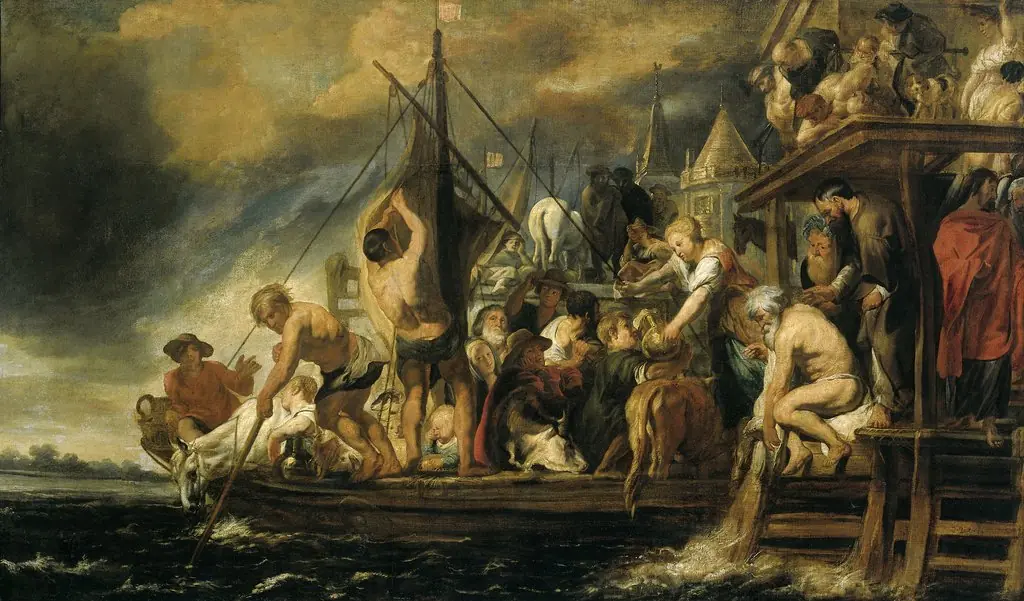
Comparative studies of Jordaens’s other versions, including the smaller works in Amsterdam and Maastricht, show how he adapted the same subject across decades, varying light, color, and urban backdrops while retaining core motifs such as the crying child and the African trader on the ferry.
Overview
Jacob Jordaens, a Flemish painter, created The Tribute Money. Peter Finding the Silver Coin in the Mouth of the Fish in oil around 1620. This painting, now housed at the Statens Museum for Kunst in Copenhagen, presents a biblical narrative.
Intriguingly, it was also known in the 17th century by the descriptive title The Ferry Boat to Antwerp, reflecting an alternative interpretation of its bustling composition.
Own this work as a print
Artist & collection
Artist
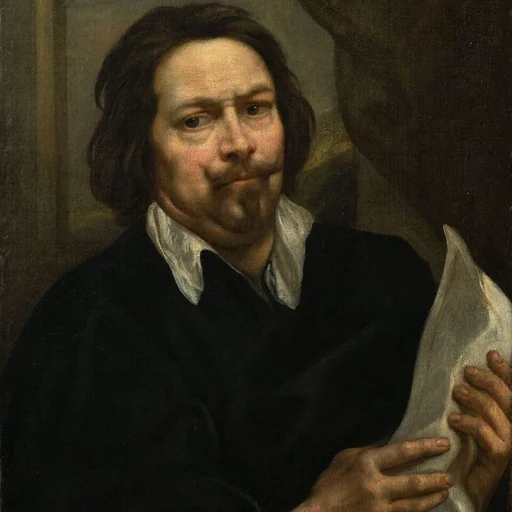
Jacques (Jacob) Jordaens (19 May 1593 – 18 October 1678) was a Flemish painter, draughtsman and a designer of tapestries and prints.

 Miraculous draught of fish
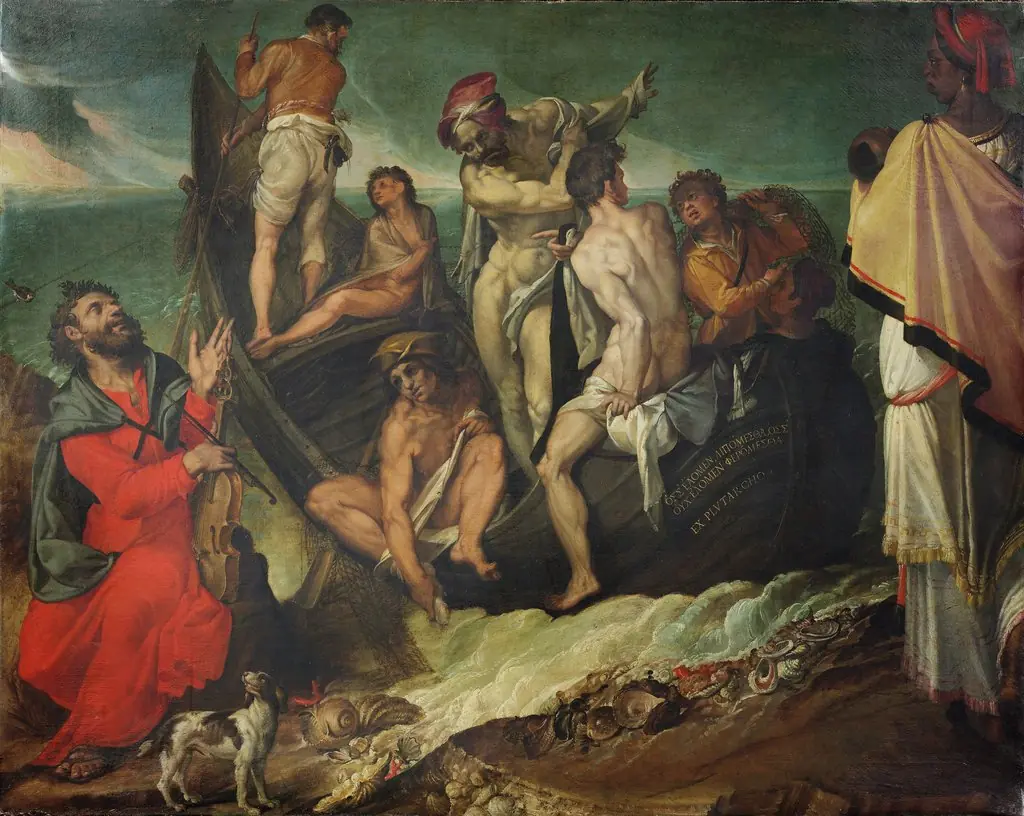 Homer’s Riddle
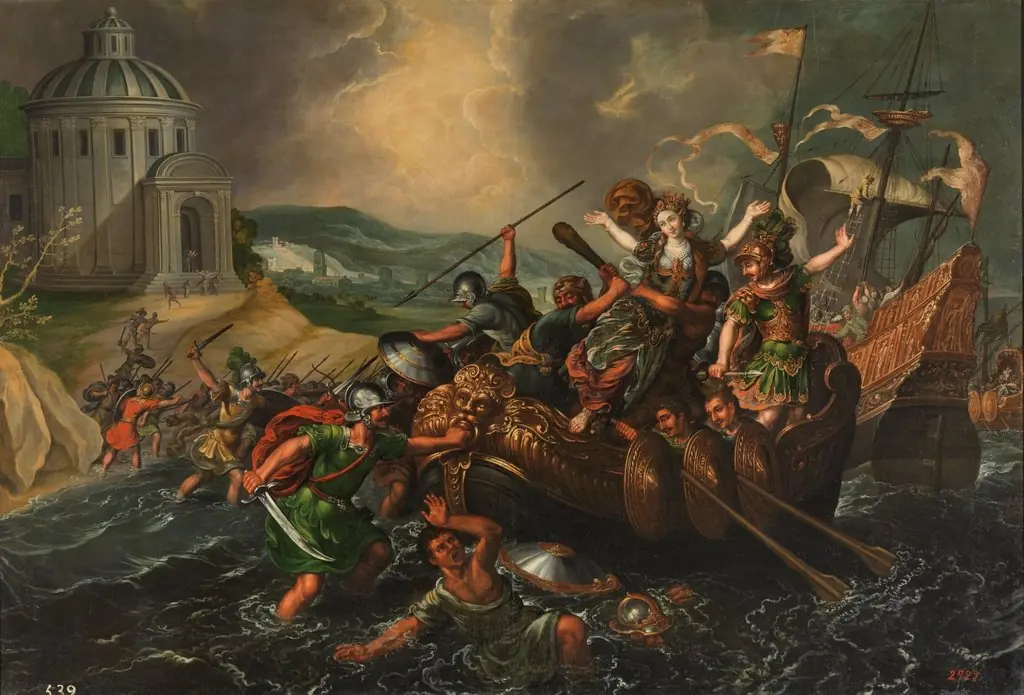 The Rape of Helen by Juan de la Corte
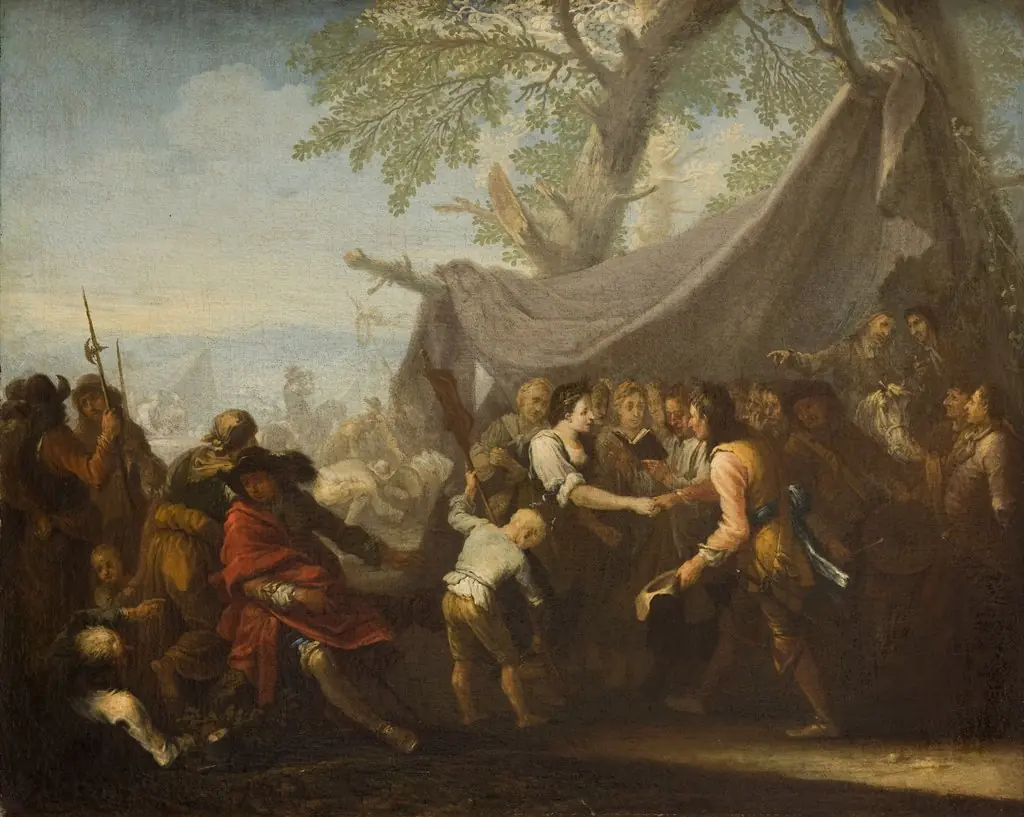 Event at a Military Camp (Wedding at a Military Camp)
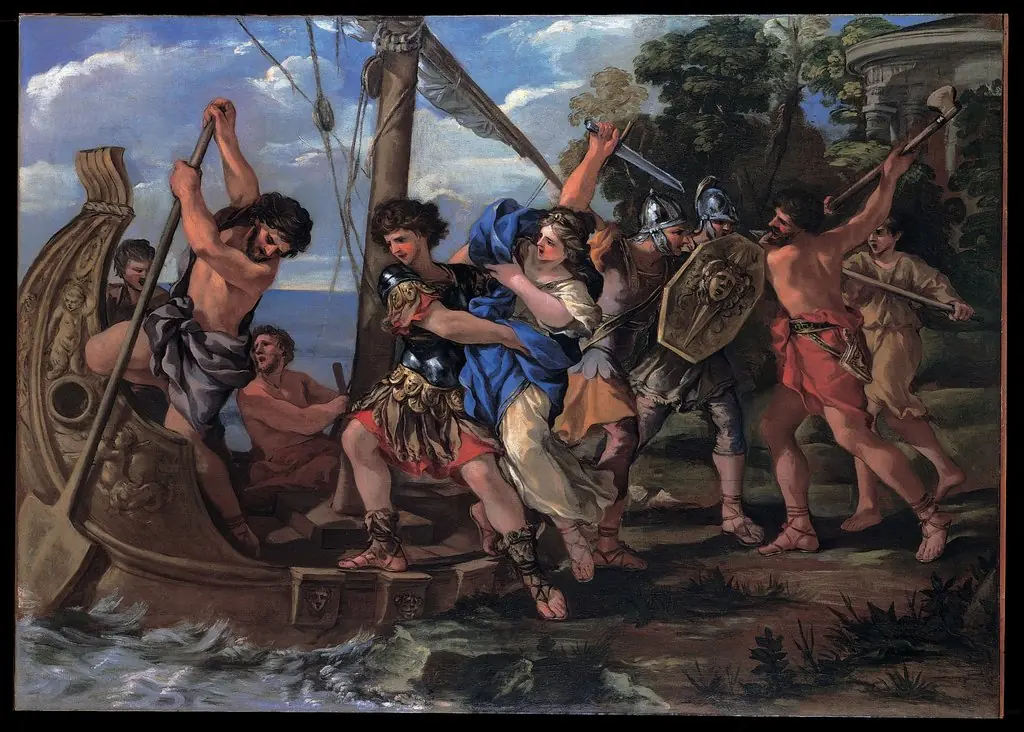 The Elena kidnapping
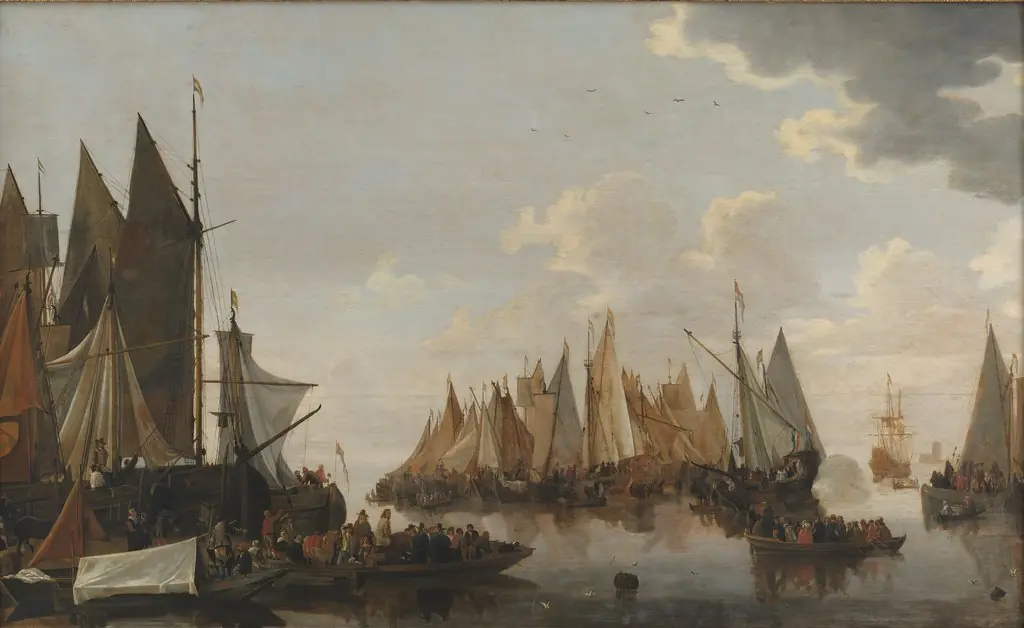 Embarkation of Troops on a Dutch River
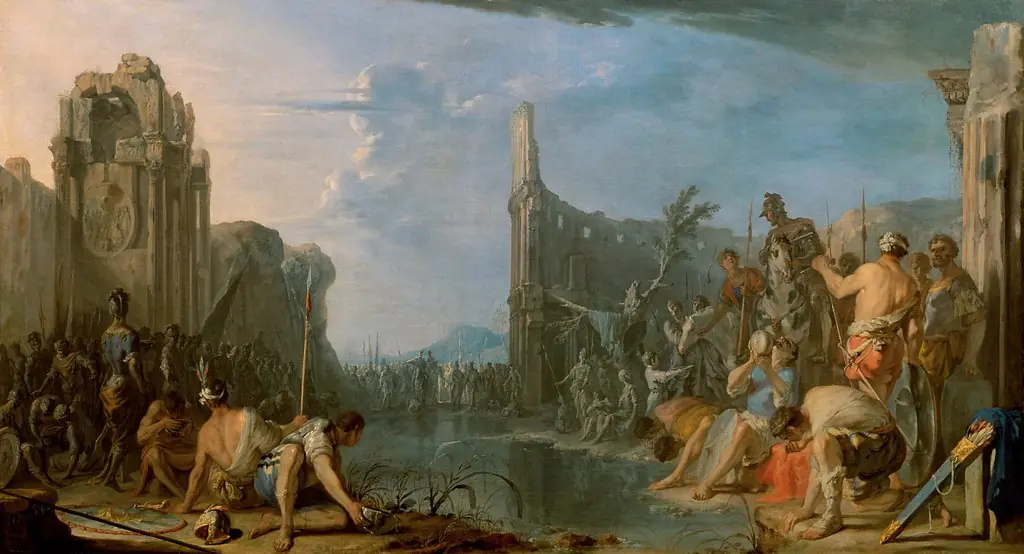 Gideon Checks His Army
 Het kielhalen van de scheepschirurgijn van admiraal Jan van Nes
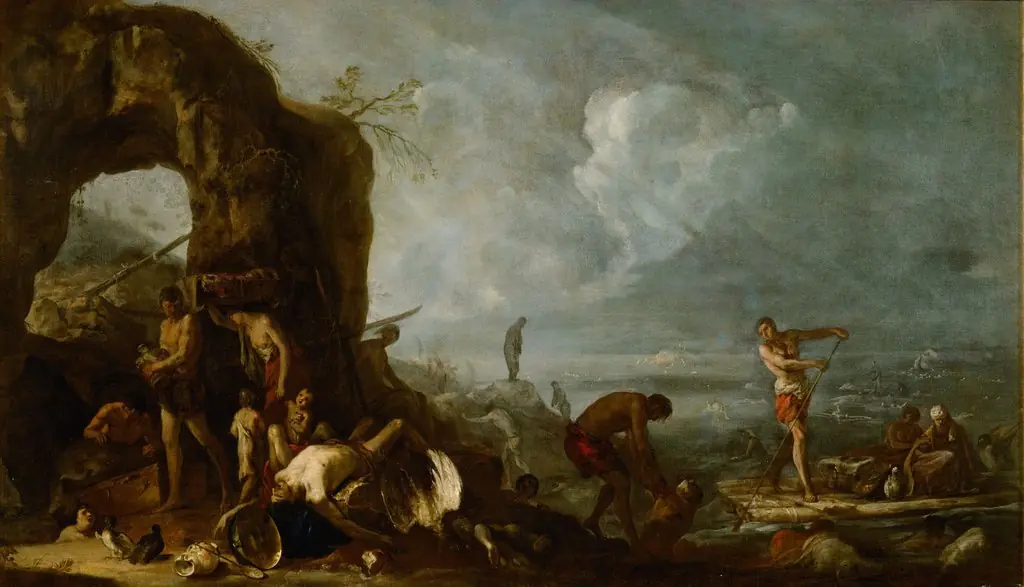 Flood
Flood Galatea and Acis
 Eastern Seaport
- The Tribute Money - Peter Finding the Silver Coin in the Mouth of the Fish