Artwork
Diana and her Nymphs
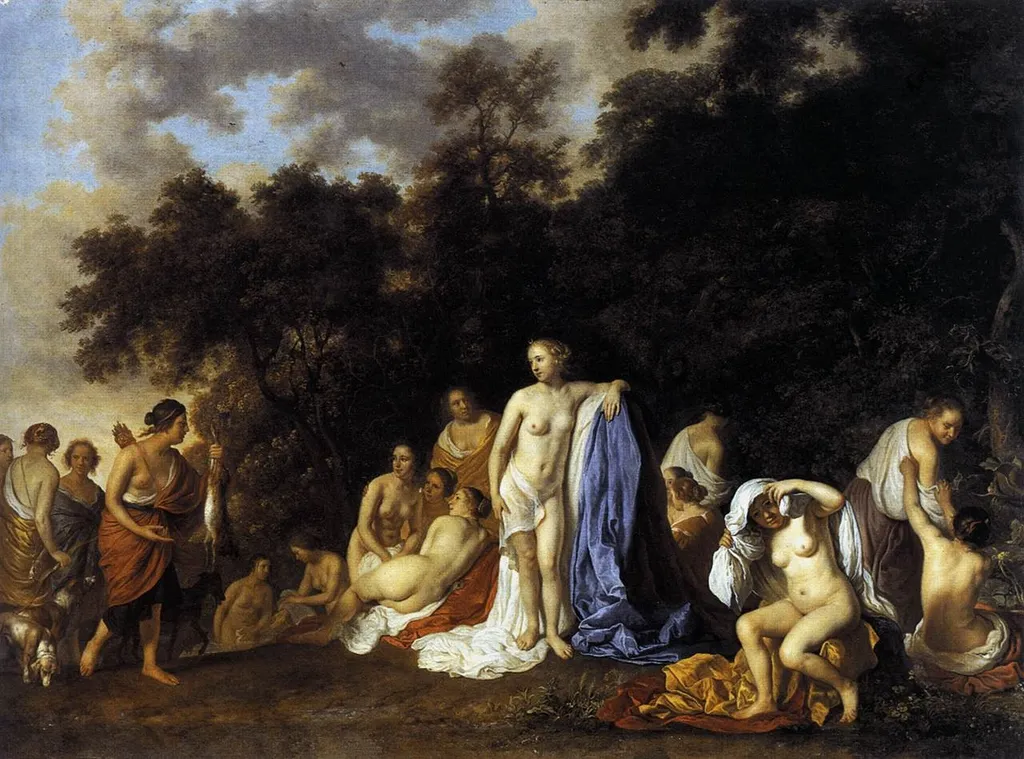
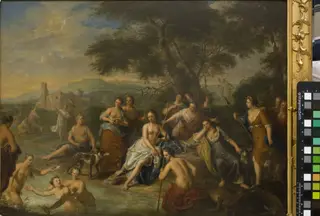
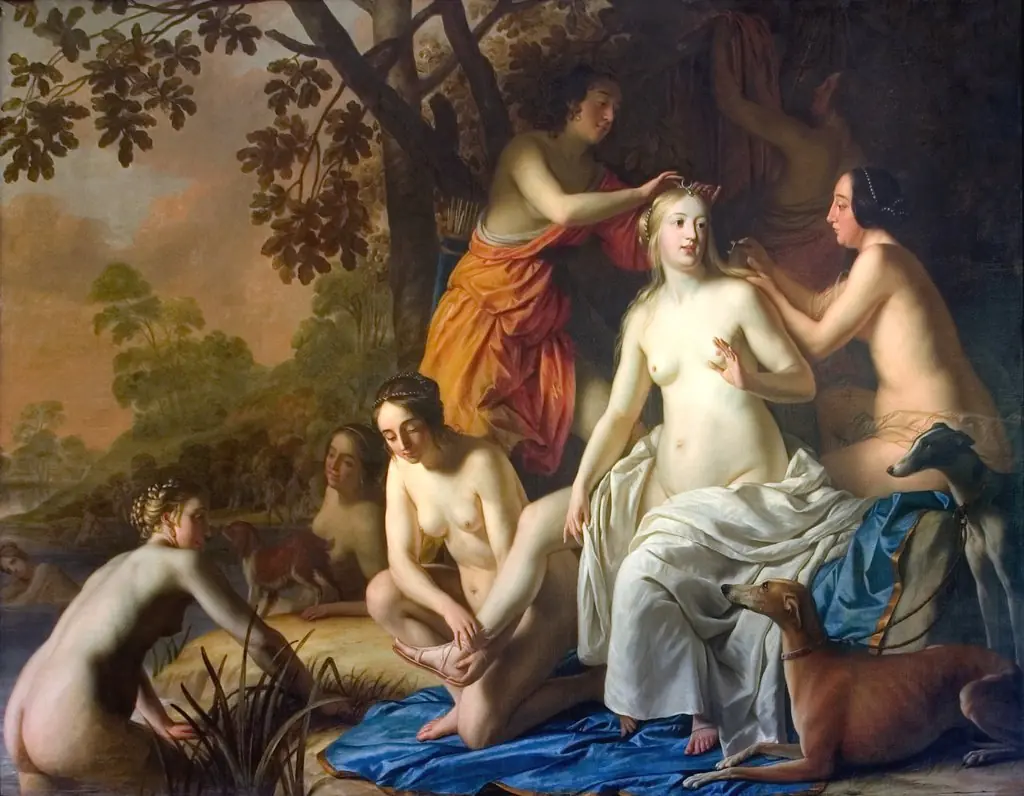
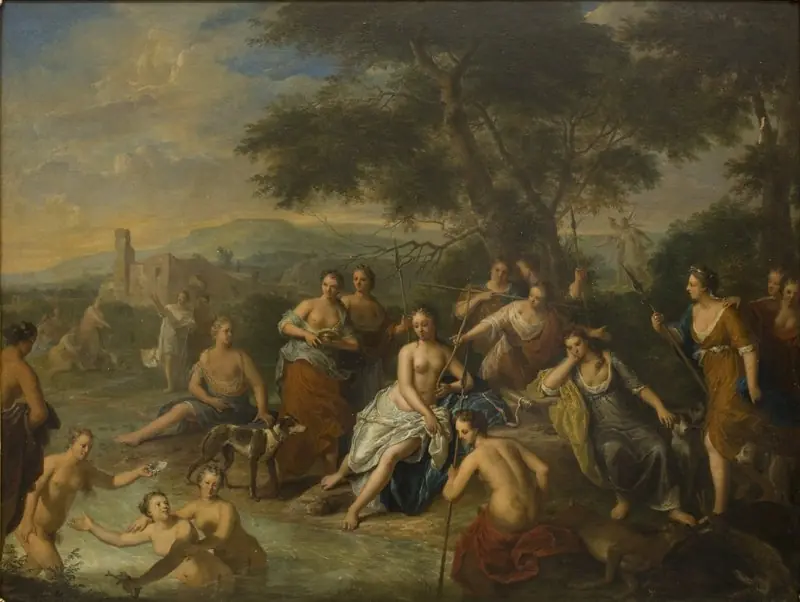
Diana and her Nymphs is an oil painting by the Dutch Golden Age artist Jacob van Loo. It dates from 1654 and is held in the collection of the Statens Museum for Kunst.
About this work
Subject & Meaning
The main subject is drawn from classical mythology, presenting the goddess accompanied by her retinue of woodland nymphs within a wooded landscape.
Jacob van Loo's painting depicts Diana, the Roman goddess of the hunt, bathing with her nymphs in a forest setting. The main subject is drawn from classical mythology, presenting the goddess accompanied by her retinue of woodland nymphs within a wooded landscape. The composition centers on the bathing scene, a recurring theme in mythological painting that emphasized Diana's role as a divine huntress and protector of wild spaces, while the forest backdrop situates the figures within her sacred natural domain.
The work functions as a mythological genre painting, using the bathing Diana motif to evoke themes of feminine divinity, pastoral retreat, and the mythological imagination popular among seventeenth-century Dutch collectors.
Technique & Style
Diana and her Nymphs is an oil painting executed on canvas by Jacob van Loo in 1654. The work measures 100 cm in height and 136 cm in width. As a mythological painting, it depicts the goddess Diana bathing with her nymphs within a forest setting.
The formal composition centers on these figures, utilizing the oil medium to render the scene of the main subject.
History & Provenance
Jacob van Loo created the mythological painting Diana and her Nymphs in 1654. Executed in oil on canvas, the work measures 100 cm in height and 136 cm in width. The composition depicts the Roman goddess Diana bathing within a forest setting accompanied by her nymphs.
The painting is currently held in the collection of the Statens Museum for Kunst, where it remains located. No specific details regarding the original commission or intermediate ownership history prior to its presence in the museum are provided in the available records.
Jacob van Loo painted Diana and her Nymphs in 1654, an oil on canvas work portraying the Roman goddess Diana bathing alongside forest nymphs. Statens Museum for Kunst holds the piece under inventory number KMS1961.12, and has exhibited it in its permanent collection displays.
The painting entered the museum's collection in 1961 and remains part of its ongoing exhibitions of Dutch Golden Age art.
Overview
Jacob van Loo’s 1654 oil painting Diana and her Nymphs presents a mythological tableau set in a shaded woodland. The composition gathers the huntress Diana with a retinue of nymphs, some clothed, others nude, arranged around a central figure holding a blue drape. The scene balances activity and repose, with trees and a cloud‑filled sky forming a muted backdrop.
Context
In the mid‑17th century Dutch art market, van Loo’s mythological works offered an alternative to the more somber religious and genre scenes of contemporaries such as Rembrandt. His emphasis on naturalistic groupings and refined anatomy catered to patrons seeking elegant, classical subject matter.
Artist & collection
Artist
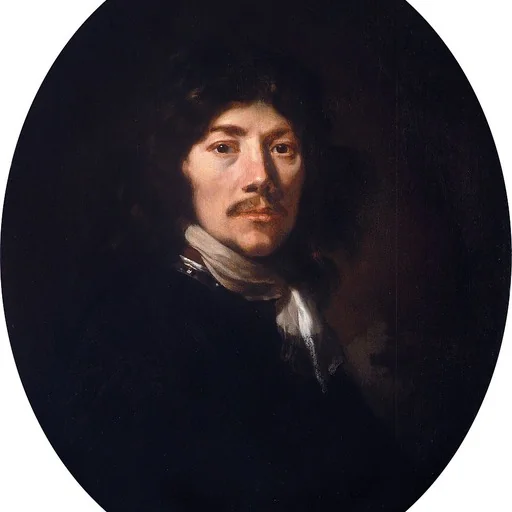
Jacob van Loo (1614 – 26 November 1670) was a painter of the Dutch Golden Age, chiefly active in Amsterdam and, after 1660, in Paris.