Artwork
Diana with her Nymphs
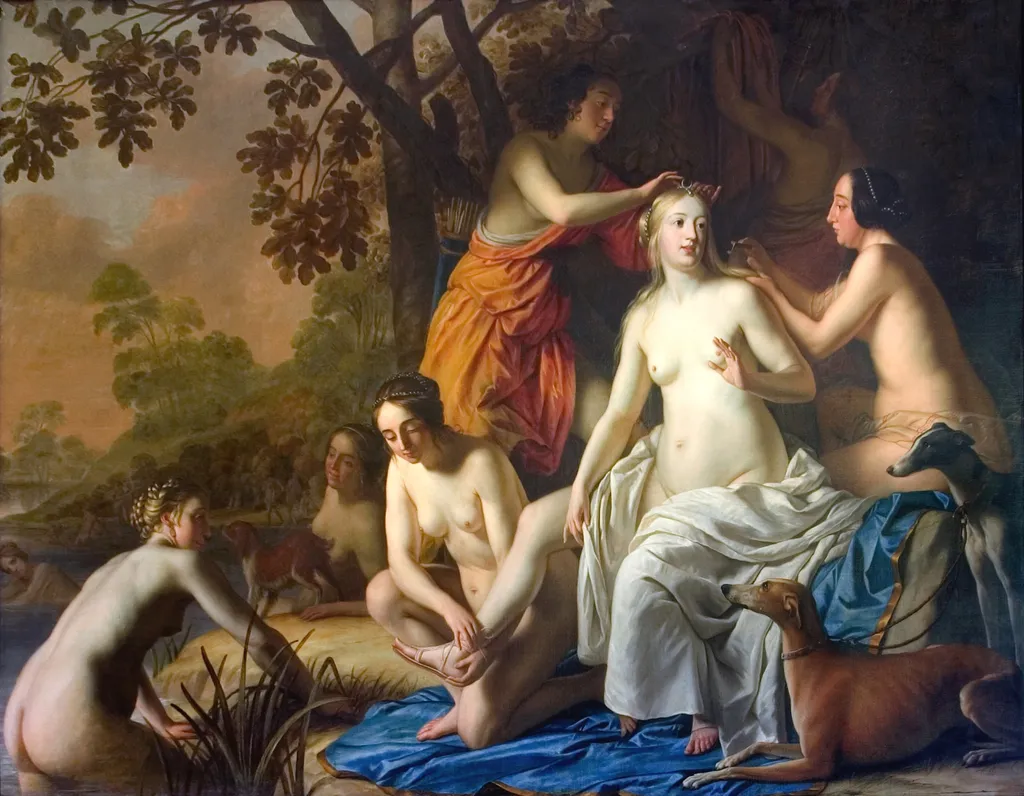
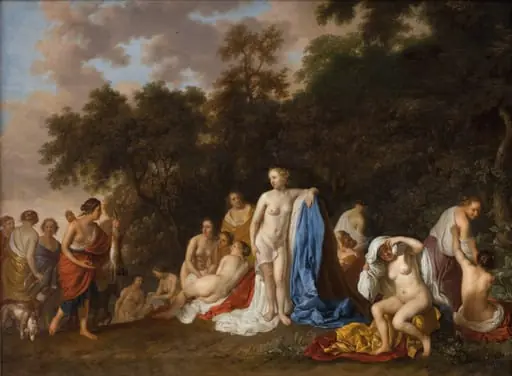
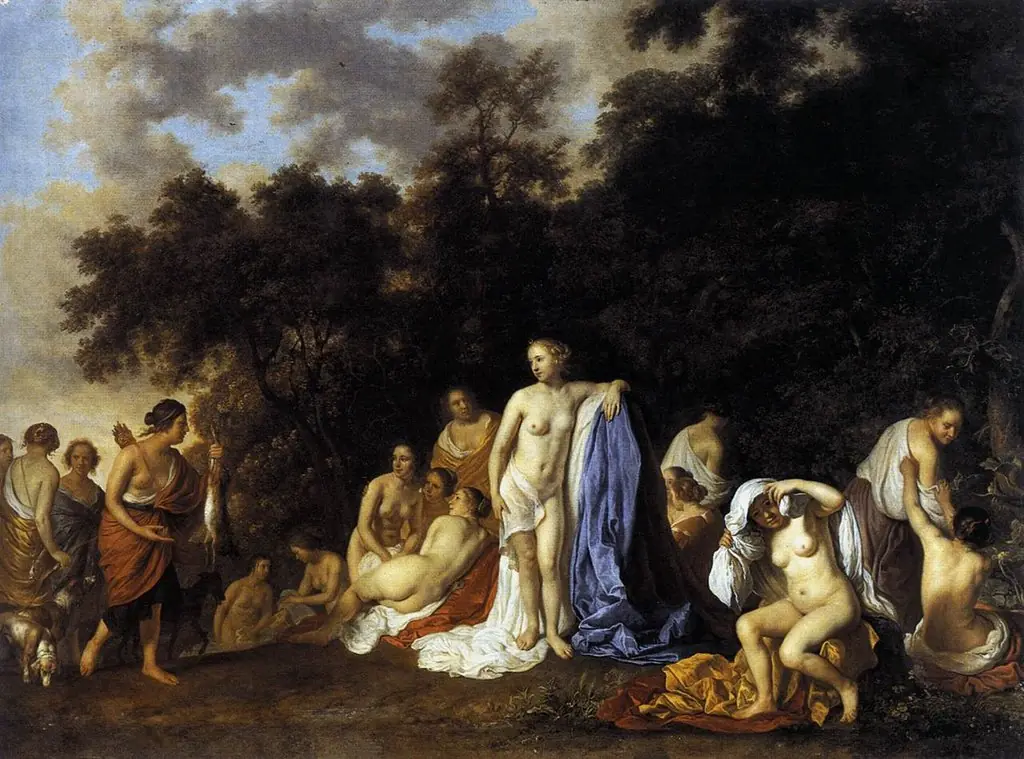
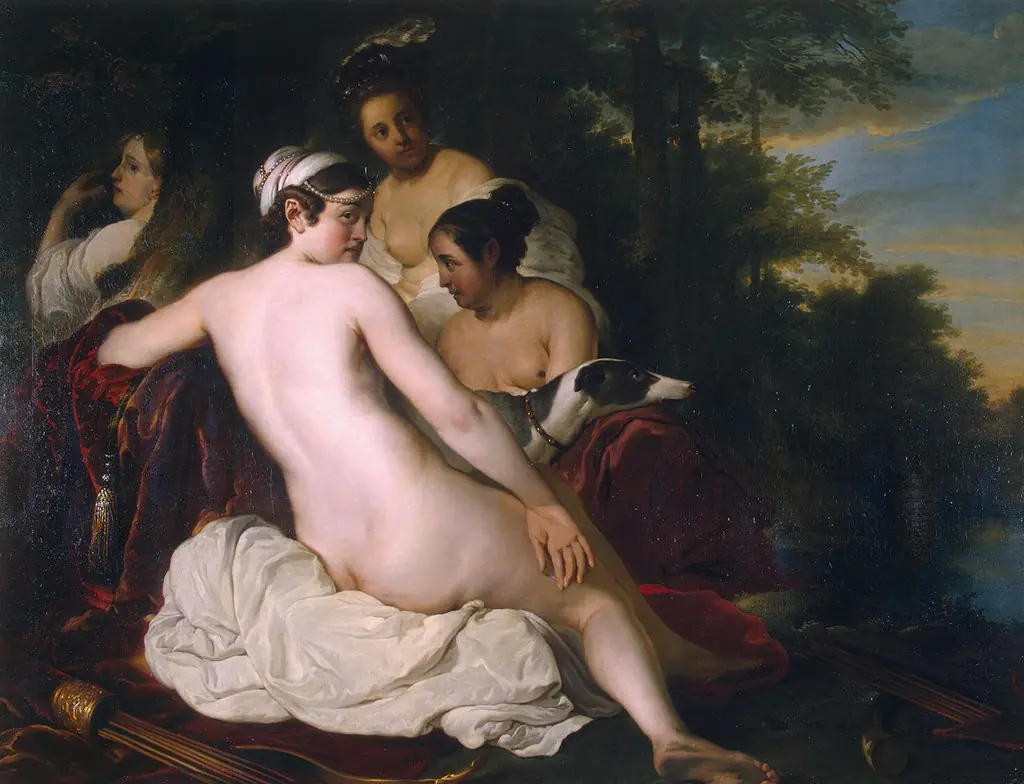
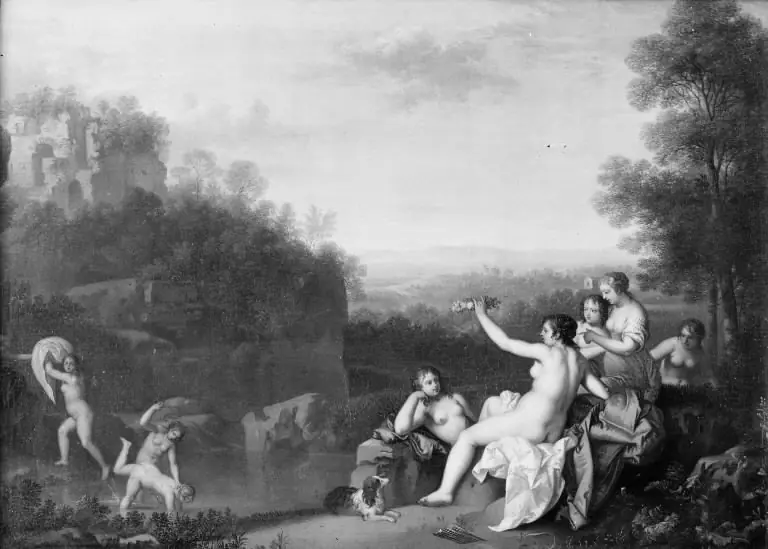
Diana with her Nymphs is an oil painting by the Dutch Golden Age artist Gerard van Honthorst. It dates from 1650 and is held in the collection of the Statens Museum for Kunst.
About this work
Subject & Meaning
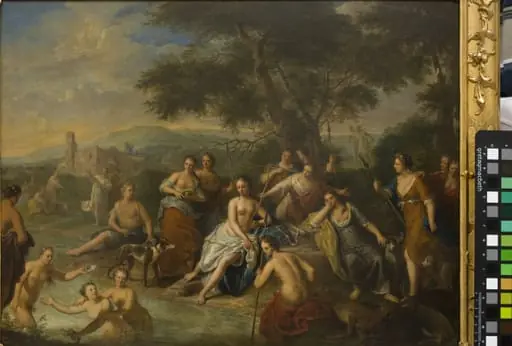
The painting depicts Diana, the Roman goddess of the hunt, accompanied by her nymphs.
The painting depicts Diana, the Roman goddess of the hunt, accompanied by her nymphs. As a mythological work, it draws on classical iconography in which Diana presides over a retinue of female attendants associated with woodlands, hunting, and chastity. The composition gathers these figures together as a thematic group, presenting the goddess at the center of her mythological circle rather than as a solitary figure.
The work's meaning is rooted in this mythological tradition: Diana with her nymphs represents the goddess's role as leader of a divine hunting company, a popular subject in seventeenth-century painting that allowed artists to combine classical narrative with idealized female figures. By portraying Diana among her nymphs, Honthorst situates the scene within the established iconography of the goddess's mythological domain, emphasizing companionship, divine authority, and the pastoral-hunting sphere over which she presides.
Technique & Style
The work is an oil painting executed on canvas, reflecting the Baroque era's emphasis on chiaroscuro and sensual dynamism. Gerard van Honthorst rendered the mythological scene with richly layered pigments, employing delicate brushwork to model the figures and drapery, producing a luminous surface that highlights the sensual interplay of light and flesh. The composition balances narrative clarity with ornamental detail, characteristic of 17th‑century Dutch mythological painting.
History & Provenance
Diana with her Nymphs is an oil painting on canvas created in 1650 by Gerard van Honthorst. The work measures 1990 cm in height and 2690 cm in width. It was commissioned by an unknown patron and depicts the mythological scene of Diana accompanied by her nymphs. The painting entered the collection of the Statens Museum for Kunst, where it remains on display.
The artwork was first recorded in the museum's collection in 1650, and its provenance indicates continuous ownership by the institution since its acquisition. Its creation history is documented through the artist's dated output in 1650, aligning with stylistic analysis of van Honthorst's mythological subjects.
Overview
Created circa 1650, Diana with her Nymphs is an oil painting by Dutch artist Gerard van Honthorst. The work presents a nocturnal tableau in which the goddess Diana is surrounded by her attendants within a wooded landscape. The composition balances illuminated figures against a darker background, emphasizing the intimate moment among the mythological characters.
Context
Van Honthorst worked alongside Utrecht Caravaggisti such as Hendrick ter Brugghen and Dirck van Baburen, sharing an interest in artificial lighting and mythological subjects. Diana with her Nymphs reflects this artistic milieu, merging Dutch genre sensibilities with the dramatic illumination that characterized the broader European Baroque movement.
Own this work as a print
Artist & collection
Artist
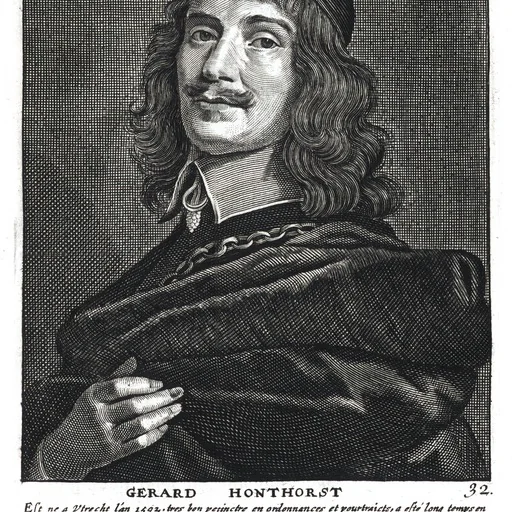
Gerard "Gerrit" van Honthorst (4 November 1592 – 27 April 1656) was a Dutch Golden Age painter who became known for his depiction of artificially lit scenes, eventually receiving the Italian nickname Gherardo delle Notti ("Gerard of the…

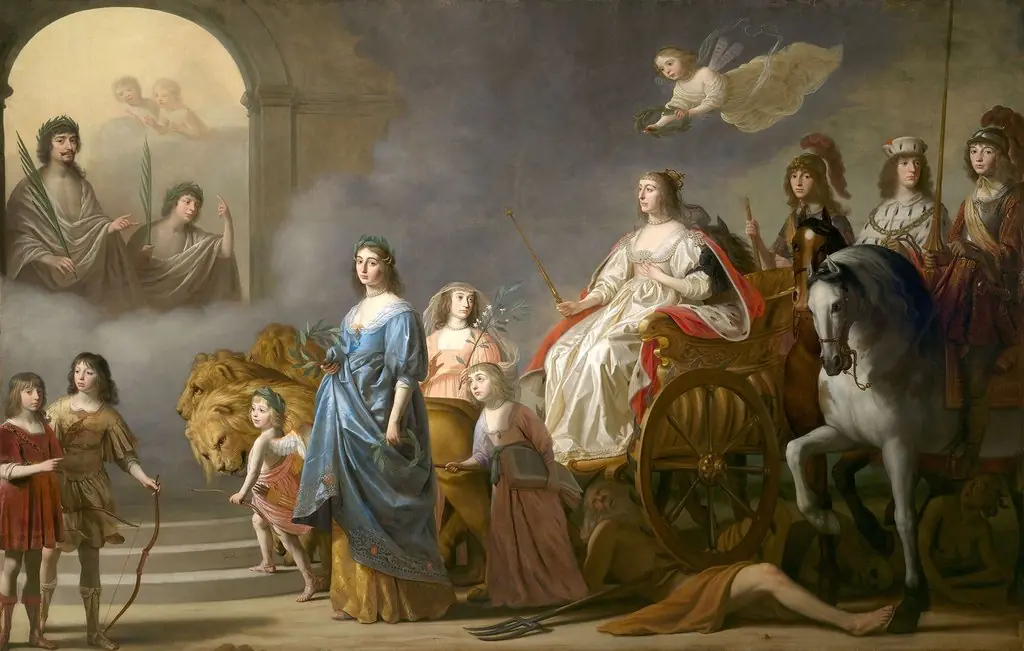 The Triumph of the Winter Queen: Allegory of the Just
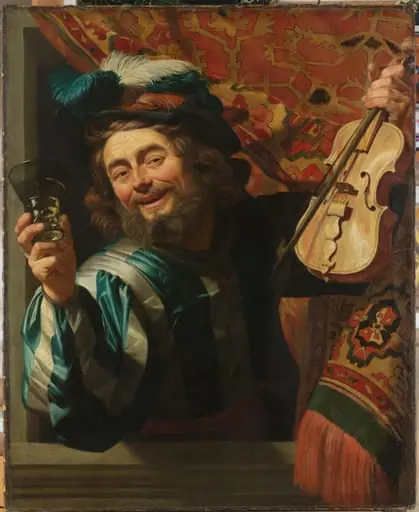 Een vrolijke vioolspeler
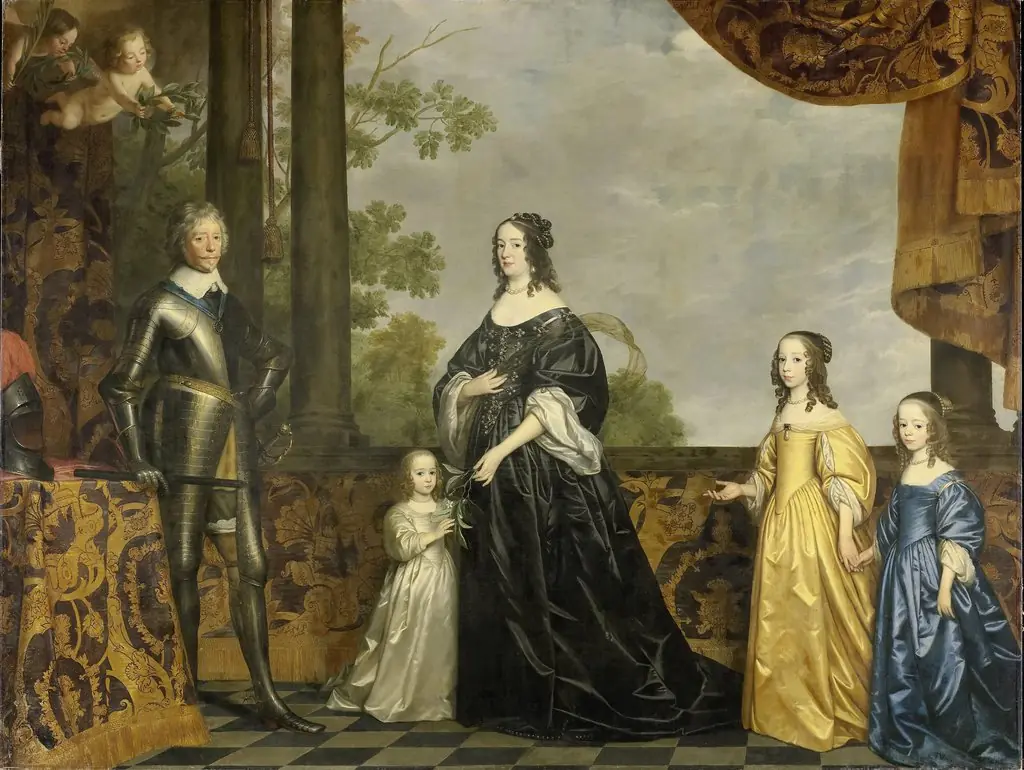 Frederik Hendrik (1584-1647), Prince of Orange, his wife Amalia van Solms (1602-75) and their three youngest daughters, Albertina Agnes (1634-96), Henrietta Catharina (1637-1708) and Maria (1642-88)
 The Concert
 Samson and Delilah
 Satyr and Nymph
 Young Woman with a Candlestick, Old Woman and a Violin Player
 Willem II (1626-50), Prince of Orange, and his wife Maria Stuart (1631-60)