Artwork
Dunes by the Sea
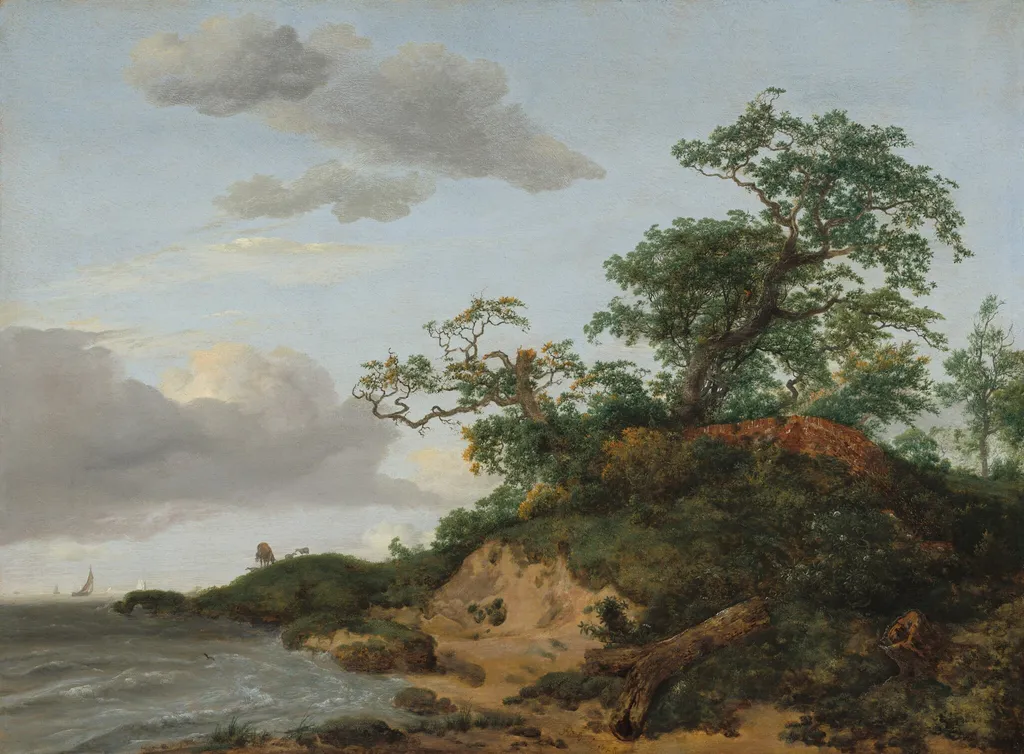
Dunes by the Sea is an oil painting by the Baroque artist Jacob van Ruisdael. It dates from 1648 and is held in the collection of the National Gallery of Art.
- Inscription
- Inscribed:lower center: J Ruisdael . 1648
About this work
Subject & Meaning
These motifs are characteristic of Dutch Golden Age landscape art, where meticulous observation of terrain conveyed a sense of ordered nature.
The painting shows a coastal dune landscape featuring a gently rising sand hill, a narrow footpath, and a solitary leaf-bearing tree. These motifs are characteristic of Dutch Golden Age landscape art, where meticulous observation of terrain conveyed a sense of ordered nature. The inclusion of a path suggests a journey, while the tree reinforces the theme of stability within a mutable environment. Together they embody the 17th-century Dutch preoccupation with the moral and aesthetic resonance of the natural world.
Technique & Style
Created in 1648, Dunes by the Sea is executed in oil paint on a wooden panel support, measuring 45 by 61 centimeters. The work depicts a landscape featuring dunes, a path, and trees, characteristic of the artist's focus on the Haarlem region. Historical records from the nineteenth century describe the piece as possessing exceptional execution and preservation.
The reverse of the panel features a cradle with a small wooden insert bearing the red monogram of King George V of Hanover, surmounted by a crown. Stylistically, the painting falls within the Dutch Golden Age landscape genre.
History & Provenance
Jacob van Ruisdael painted Dunes by the Sea in 1648 while working in Haarlem. The work entered the collection of Bremen dealer Richter Oelrich around 1820 and was acquired by Bernhard Hausmann of Hanover in 1828, who praised it as a 'capital painting of the first order'. It was sold circa 1857 to King George V of Hanover, who marked the panel with his monogram, then passed by inheritance to his son Ernest August II, Duke of Cumberland.
A 1925 Lepke auction in Berlin dispersed the work (16,500 Reichsmarks); subsequent owners included a Cologne collector, the Amsterdam firm K. & V. Waterman, and New York dealers before Norman and Suzanne Hascoe acquired it in 1983. The Hascoes sold the work at Christie's New York on 4 June 2014; it subsequently passed through Richard Green Fine Paintings, London, and entered the National Gallery of Art, Washington, D.C., in May 2017.
Context
Jacob van Ruisdael's Dunes by the Sea (1648) has been consistently recognized as a masterpiece within the artist's oeuvre for its technical precision and atmospheric depth. Nineteenth-century collector Bernhard Hausmann prized the work, describing it in 1828 as a 'capital painting of the first order'. This high regard persisted through subsequent ownerships, including King George V of Hanover, whose monogram (GR with a crown) remains visible on the panel's reverse.
The painting's acquisition by the National Gallery of Art, Washington, underscores its enduring status in Dutch Golden Age landscape painting and exemplifies the Haarlem school's focus on natural grandeur and atmospheric mood.
Legacy
Jacob van Ruisdael's Dunes by the Sea has long been recognized as a work of exceptional quality. Bernhard Hausmann's 19th-century description as a 'capital painting of the first order' set the tone for its subsequent reputation, sustained through ownership by King George V of Hanover and the House of Cumberland. Its acquisition by the National Gallery of Art, Washington, D.C., in 2017 following a significant Christie's sale confirms its standing as a distinguished example of Dutch landscape painting from 1648.
Overview
Dunes by the Sea is an oil painting on a wooden panel, depicting a stark coastal scene. A broad dune dominates the foreground, sloping towards a calm, flat expanse of sea beneath an overcast sky. The composition emphasizes the elemental forces of nature, devoid of human or animal presence, focusing instead on the landscape itself.
Own this work as a print
Artist & collection
Artist
Jacob Isaackszoon van Ruisdael was a Dutch painter, draughtsman, and etcher. He is generally considered the pre-eminent landscape painter of the Dutch Golden Age, a period of great wealth and cultural achievement when…

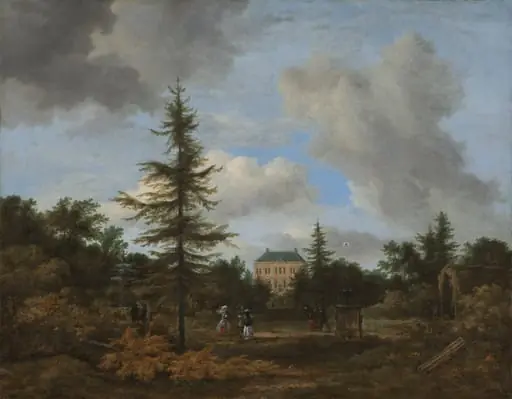
 Entrance to a Forest
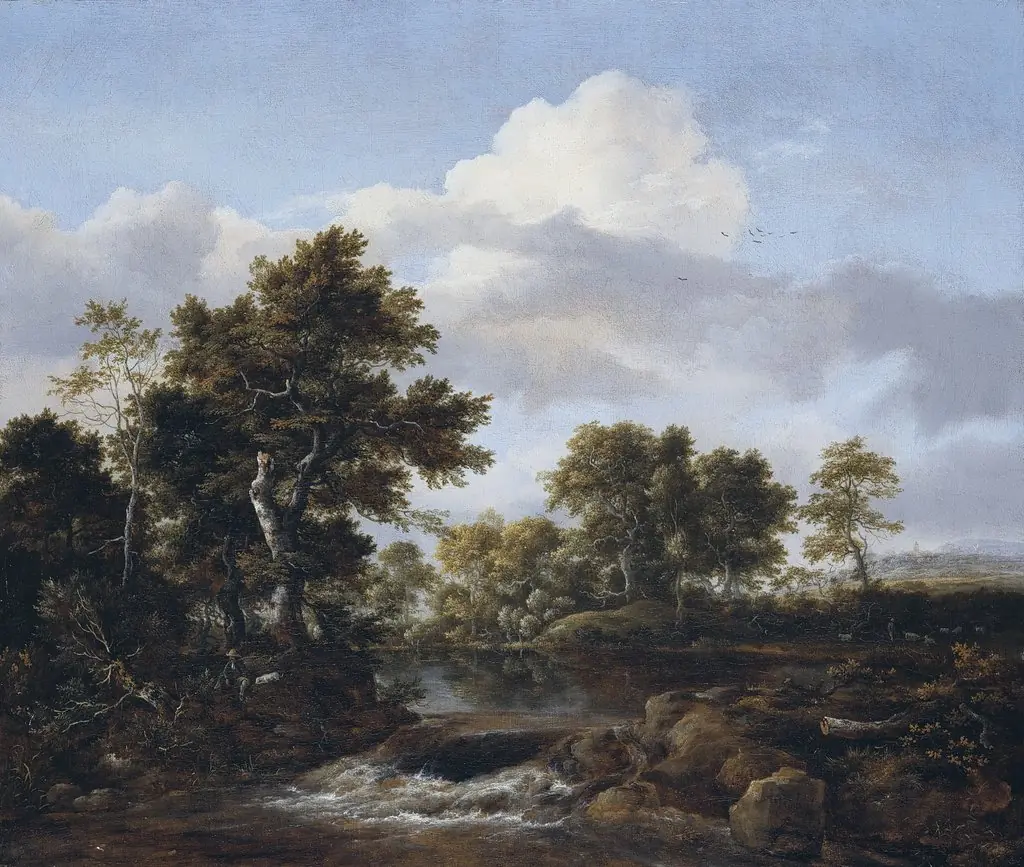 Wooded Landscape with a Stream
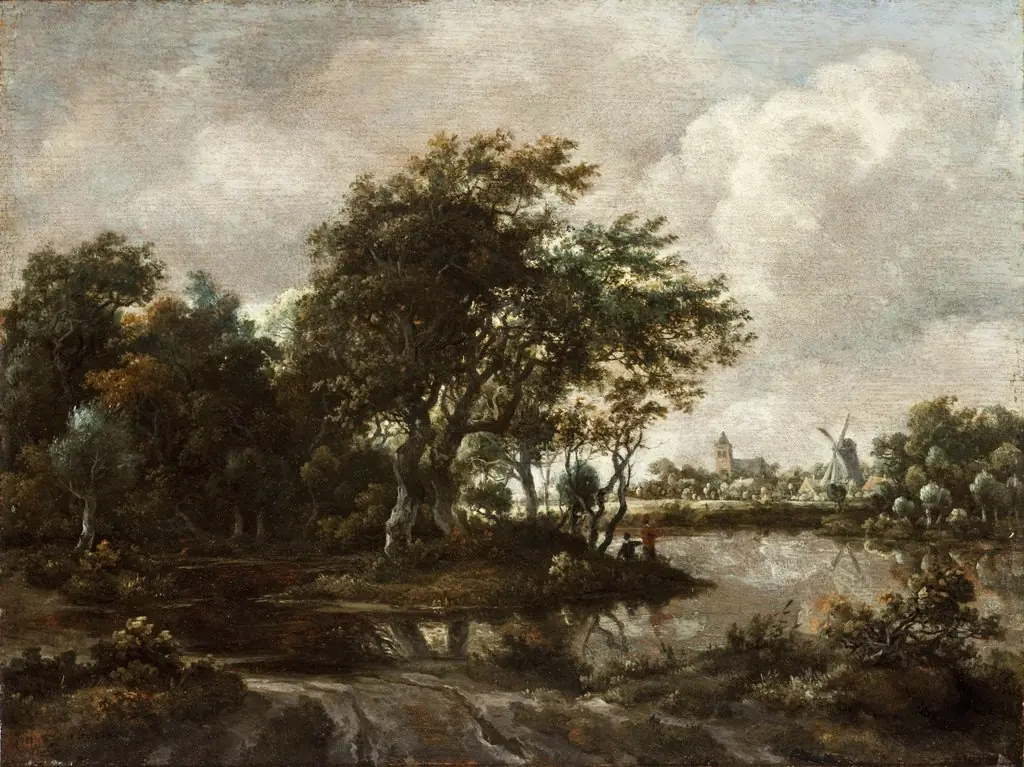 Landscape with Anglers and a Distant Town
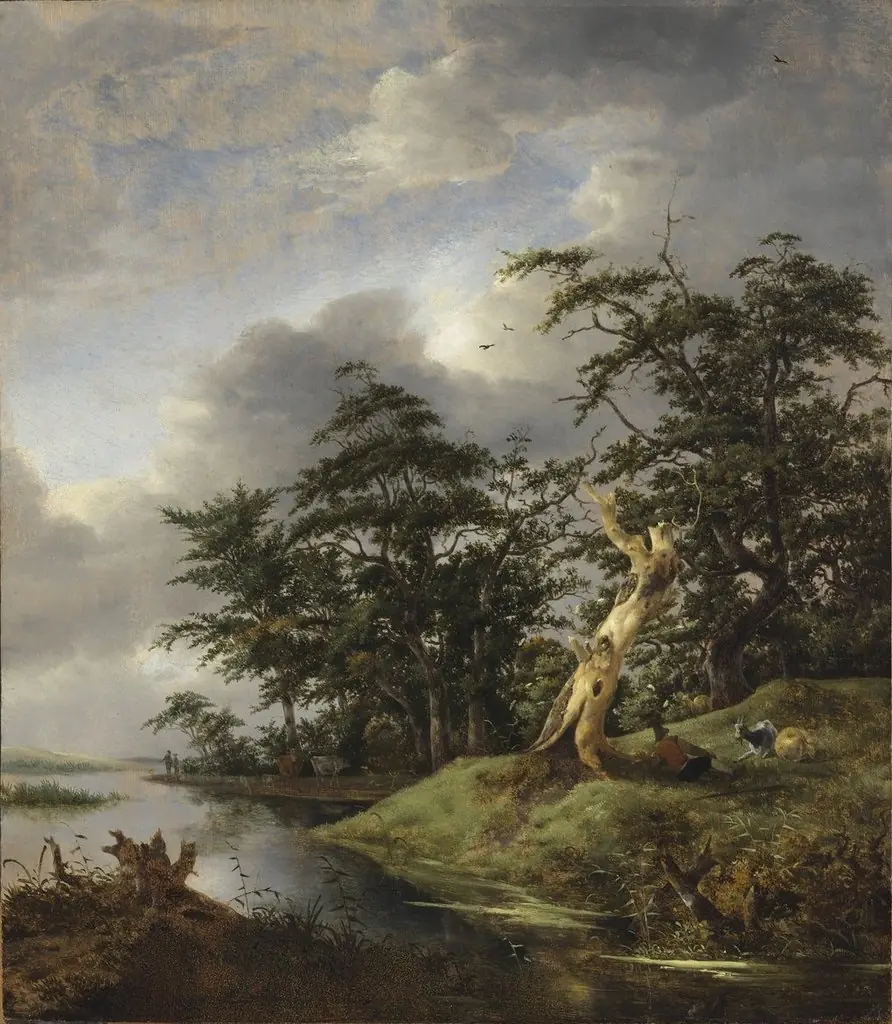 Wooded Landscape with a River
 Wooded landscape
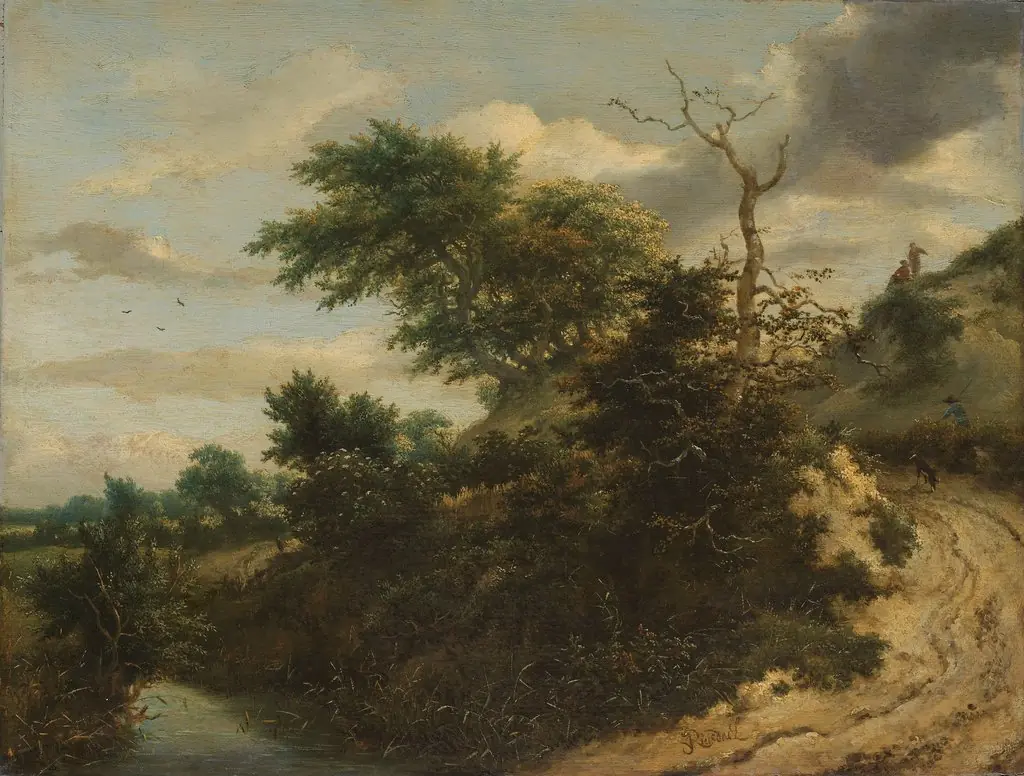 Sandy Track in the Dunes
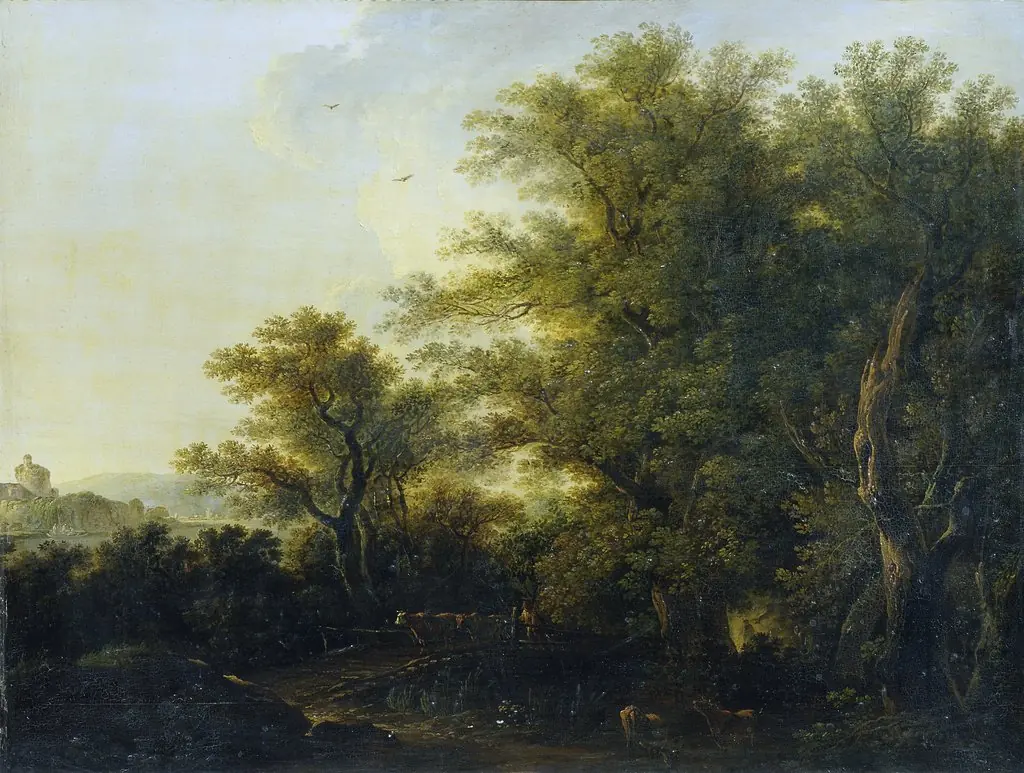 Waldausgang
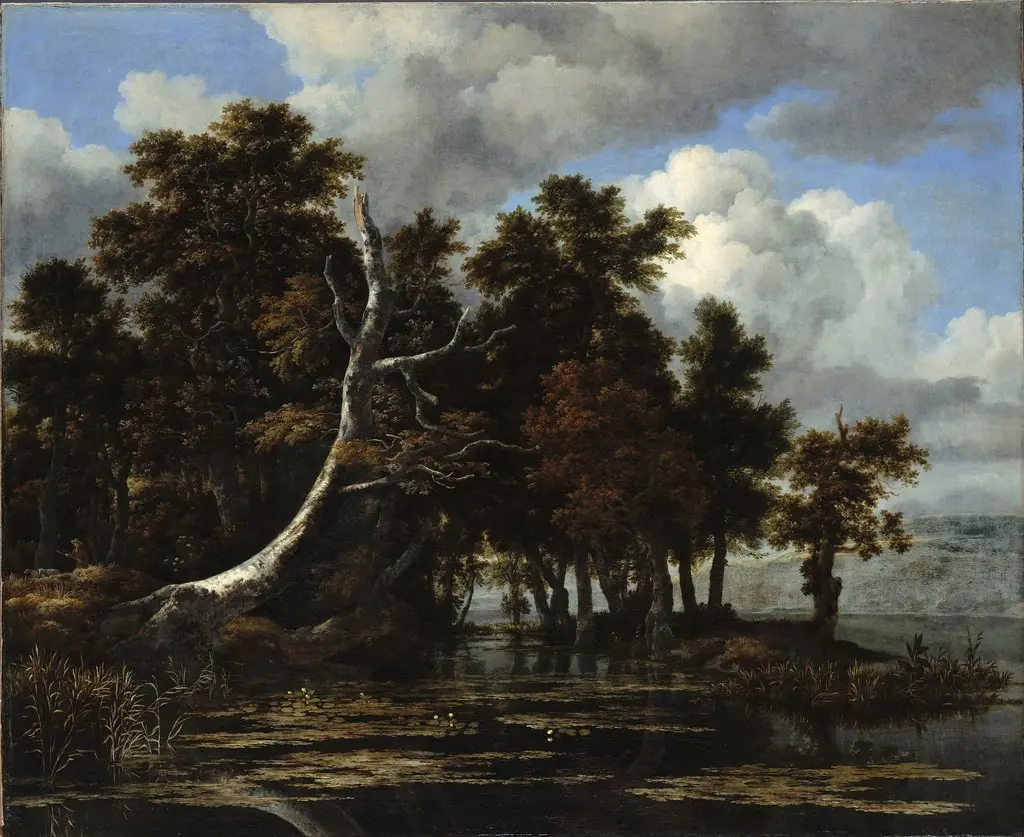 Oaks at a lake with Water Lilies
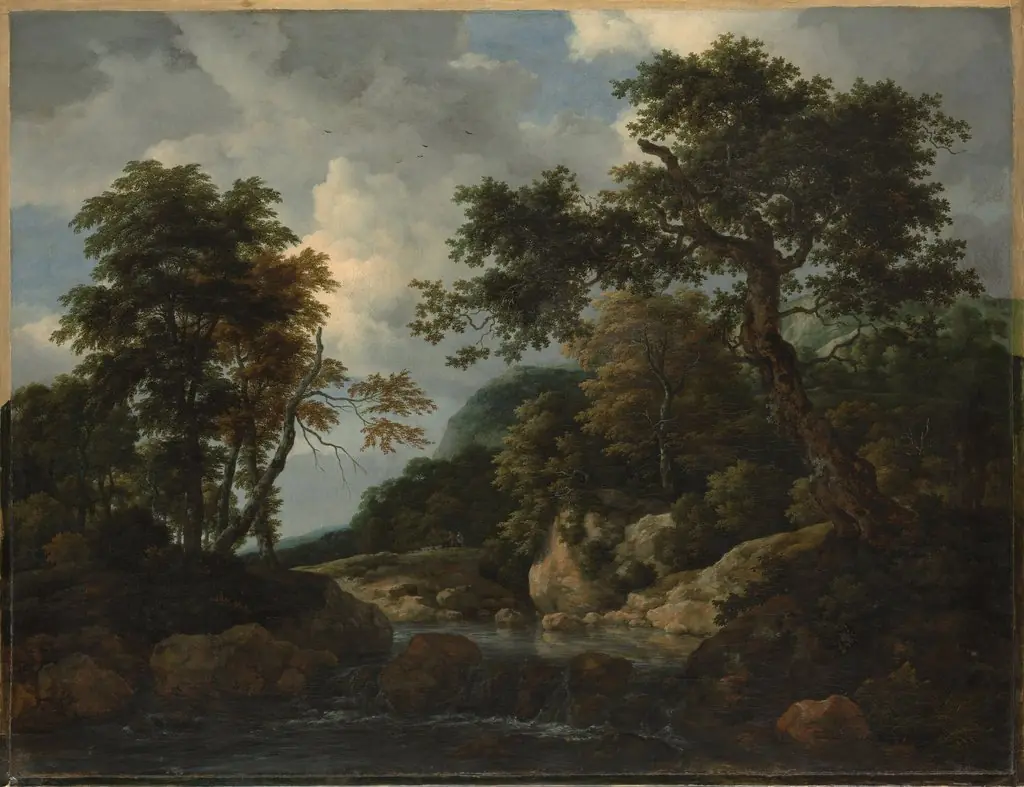 The Forest Stream
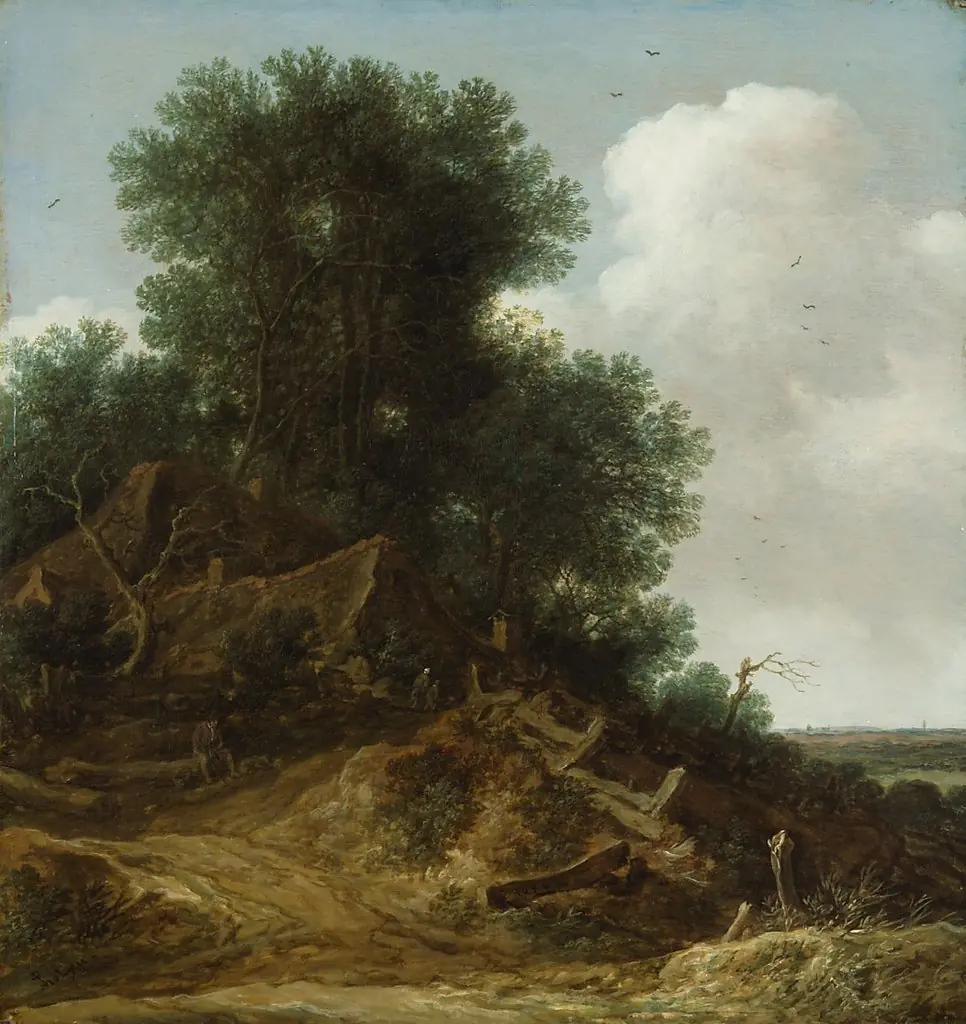 Baumreiche Dünenlandschaft
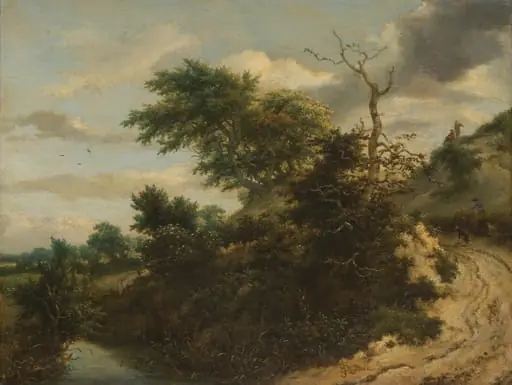 Sandy Track in the Dunes
- Landscape on the Edge of the Dunes