Artwork
Peasant Cottage in a Landscape
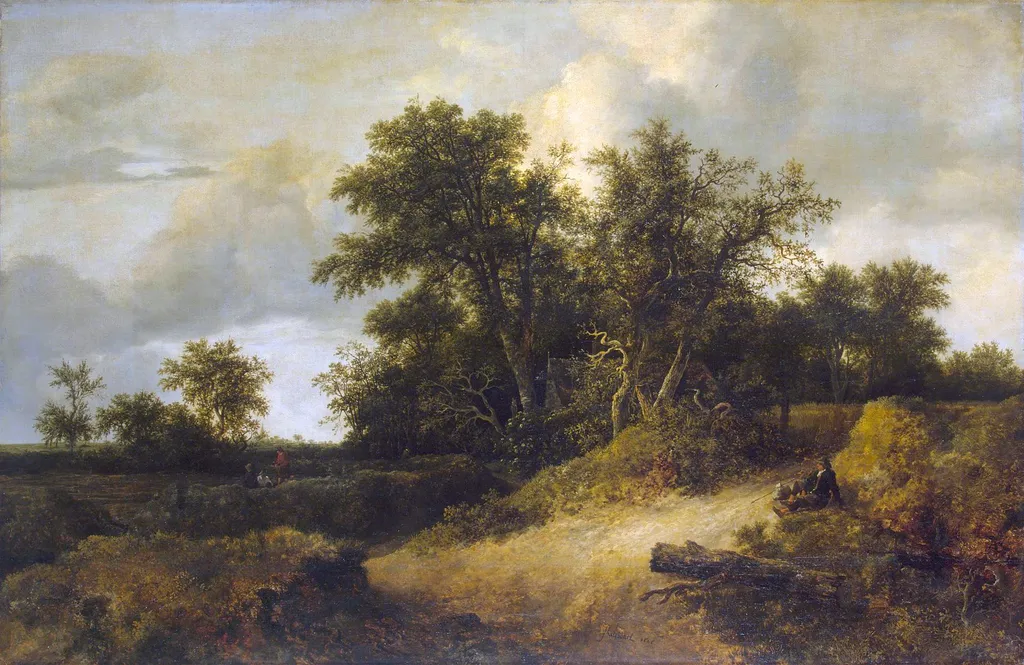
Peasant Cottage in a Landscape is an oil painting by the Dutch Golden Age artist Jacob van Ruisdael. It dates from 1646 and is held in the collection of the Hermitage Museum. Created in 1646, this oil-on-panel work measures roughly 105 by 163 centimeters and is part of the Hermitage Museum’s collection in St.
About this work
Subject & Meaning
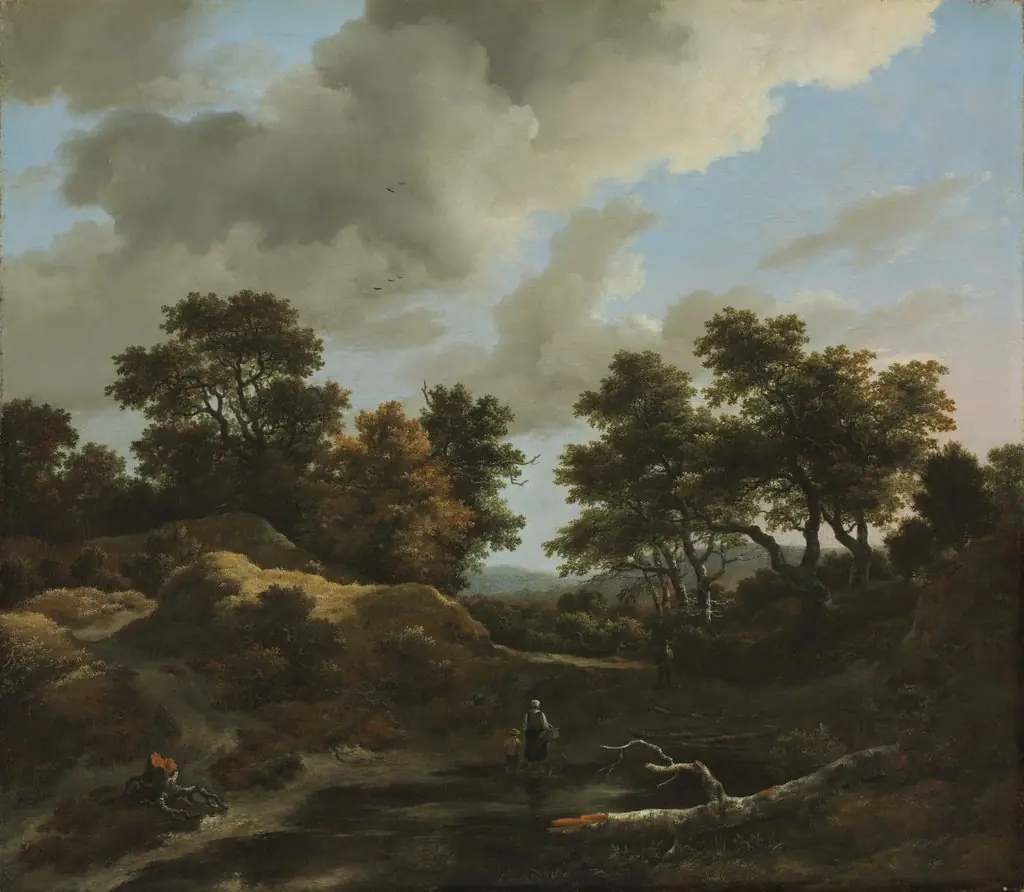
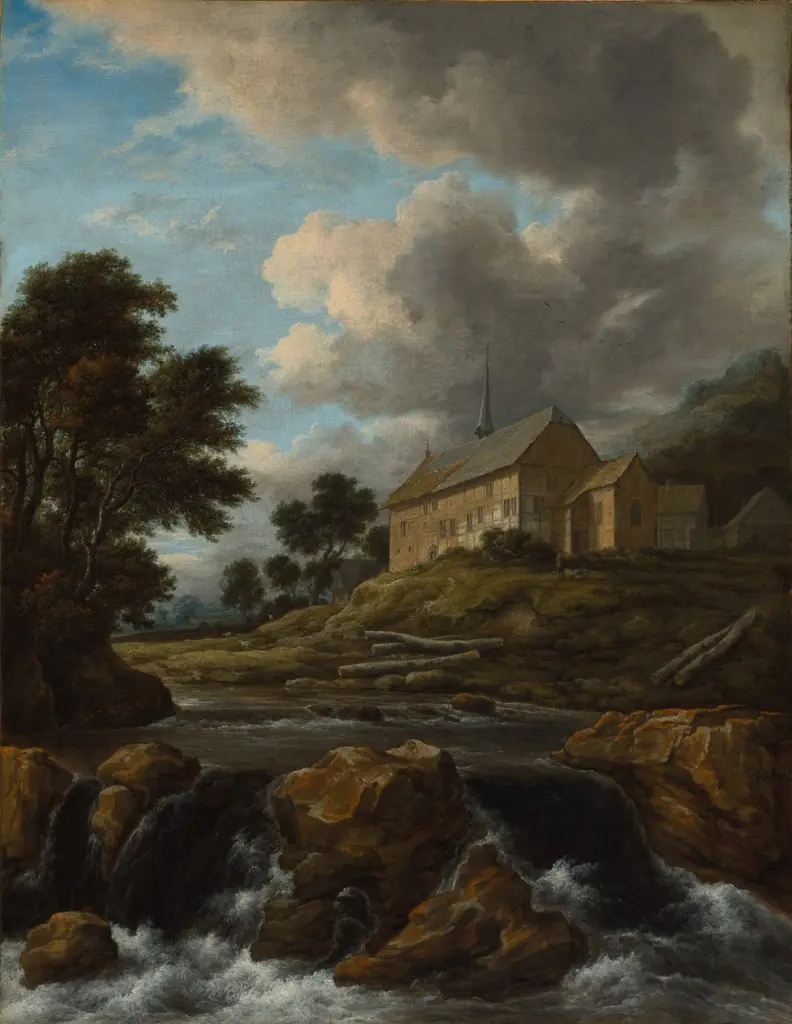
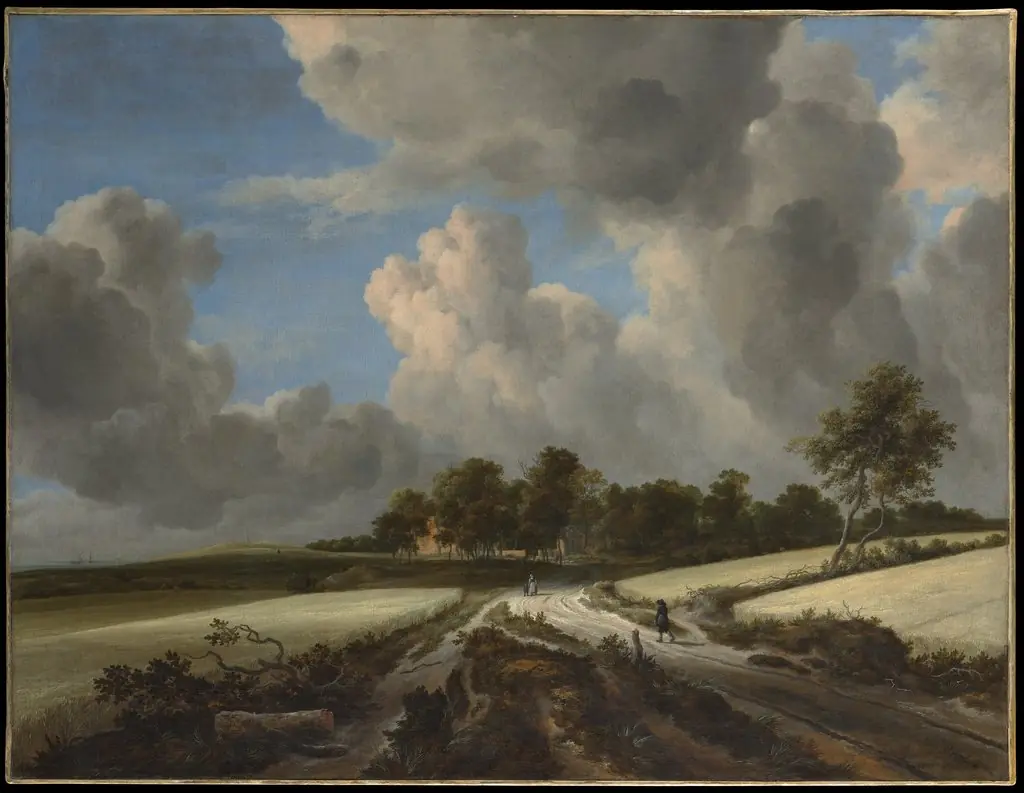
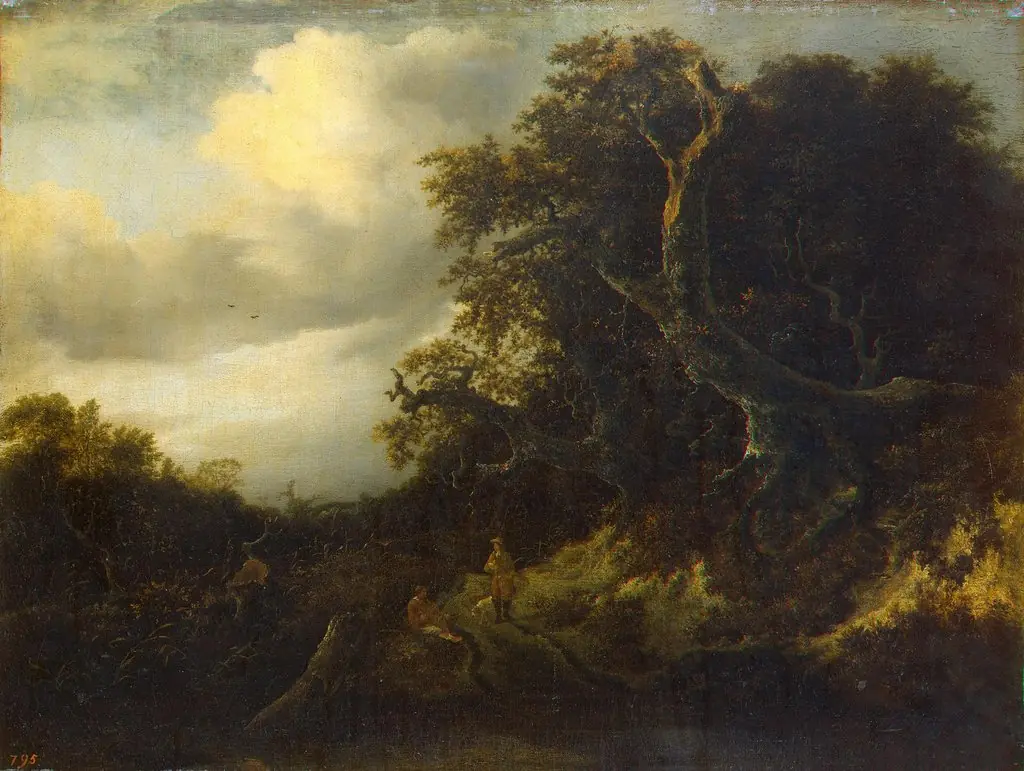
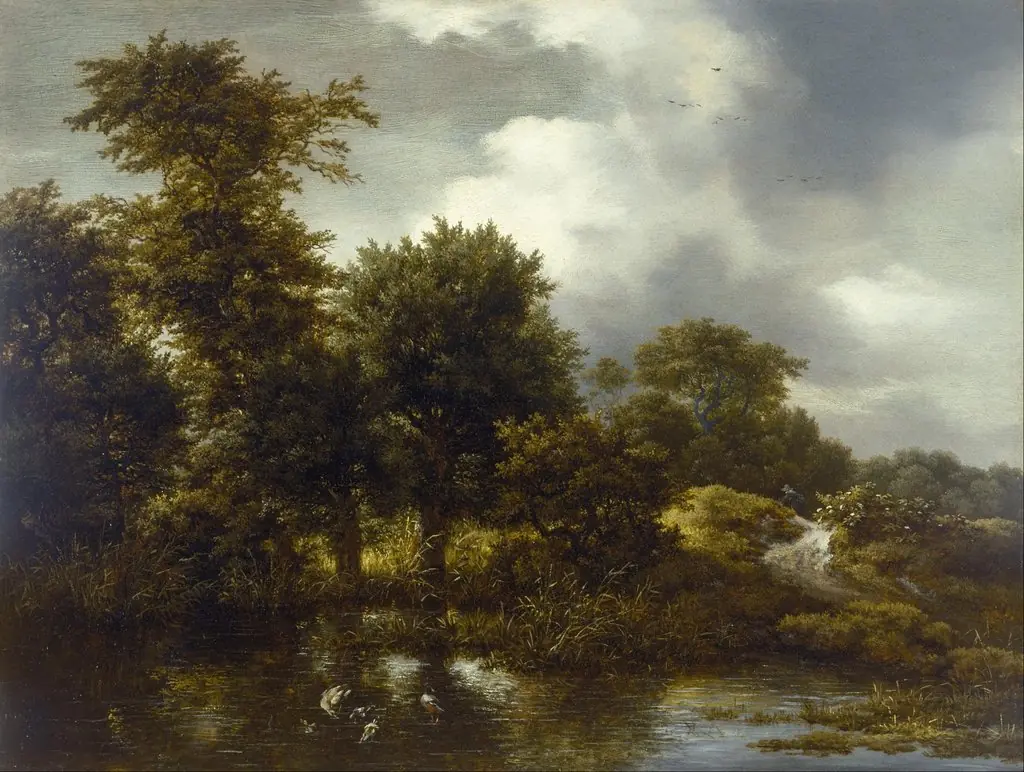
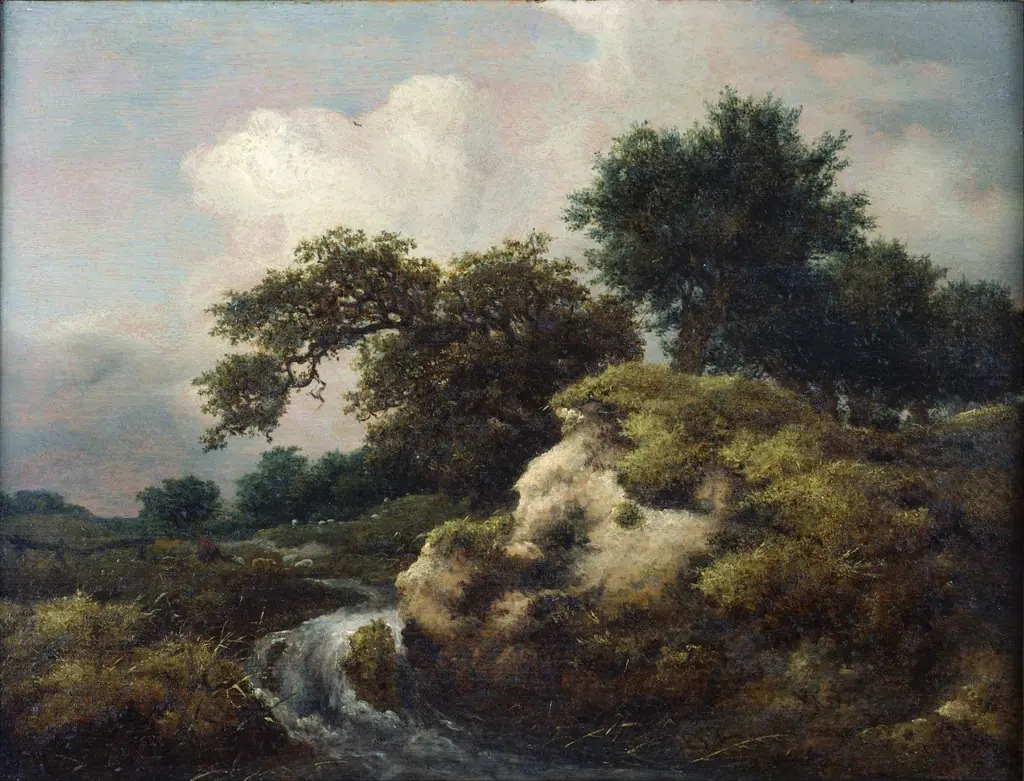
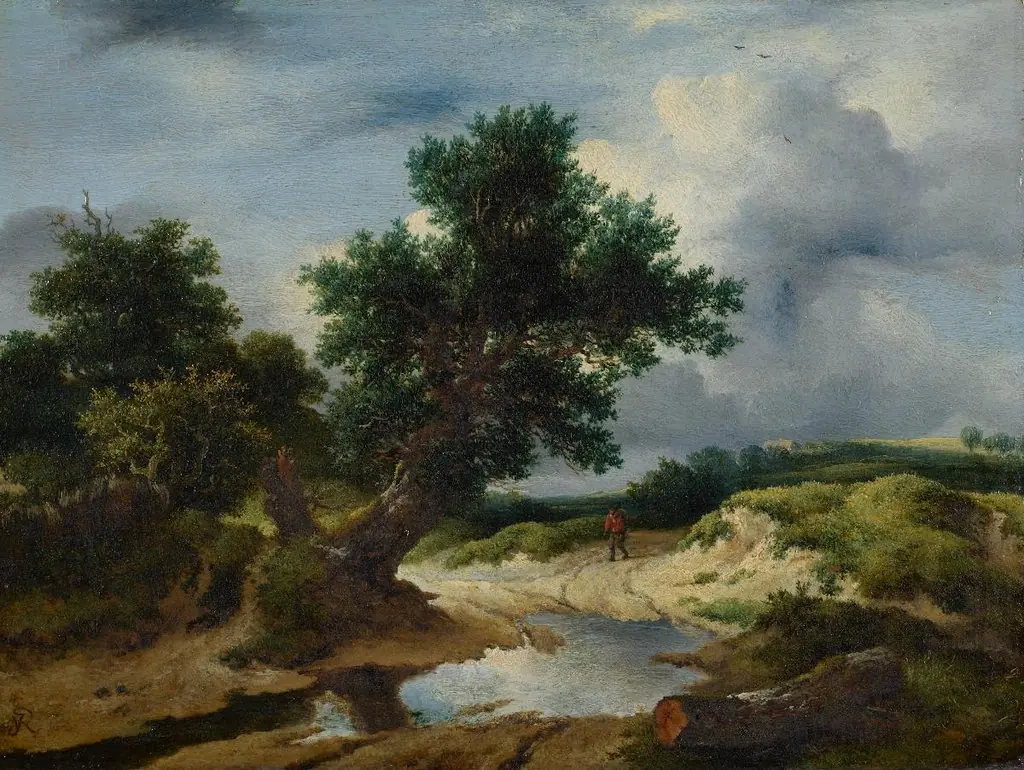
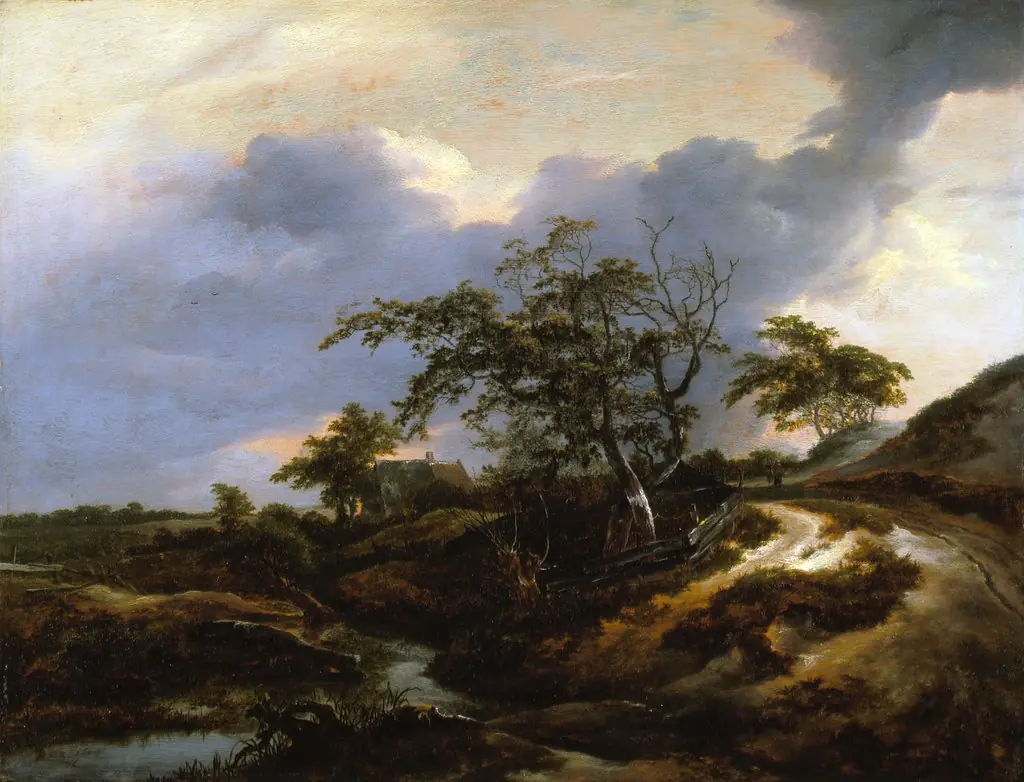
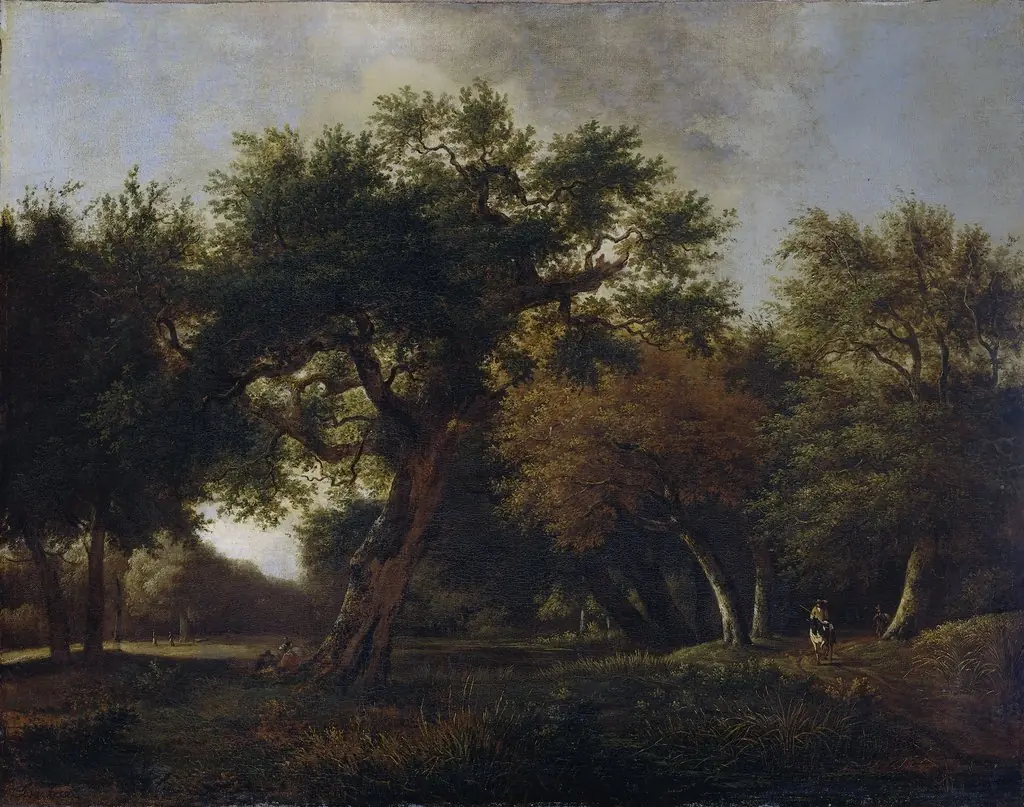
The painting depicts a lowland dune landscape with a peasant resting beside a road, his bundle and staff at his feet, while a laborer converses with seated figures by a small pool framed by sparse, worked foliage.
Scholars note the restricted green palette and the unfinished appearance of the foreground, which may reflect an early stage in Ruisdael’s development rather than intentional stylization. The figures, whose authorship remains uncertain, do not decisively indicate allegorical or moral content, leaving the scene’s meaning open to interpretation as a quiet evocation of rural life in the Dutch Republic.
Technique & Style
The foreground is described as unfinished, and the handling suggests the artist’s youthful ambition in scaling such a large panel early in his career.
Executed in oil paint on panel, the work measures 105 × 163 cm. Stylistically, the composition balances an expansive dune landscape with a central peasant figure and scattered staffage, while the foliage exhibits little green and shows extensive reworking with a mahlstick. The foreground is described as unfinished, and the handling suggests the artist’s youthful ambition in scaling such a large panel early in his career.
History & Provenance
Painted in 1646, Peasant Cottage in a Landscape is one of Ruisdael’s earliest known works; it is signed and dated lower left on the panel.
The painting entered the collection of the Hermitage Museum, where it remains with inventory number 939. The canvas depicts a dune landscape with a peasant on the roadside, a pool, trees, and staffage figures whose attribution remains unresolved. A smaller 1646 version of the composition is recorded at the Goeverneurshuis in Paramaribo, Suriname.
Jacob van Ruisdael's *Peasant Cottage in a Landscape* is held in the collection of the Hermitage Museum in St. Petersburg. The museum assigns this work the inventory number 939 on its official website. While the painting is known by various titles in scholarly literature, such as *Wooded Dunes* or *Dune Landscape*, the Hermitage specifically designates it as *Peasant Cottage in a Landscape*. The work has been featured in the exhibition titled *Dutch masters from the Hermitage*. A smaller version of the same composition, also dated 1646, is located at the Goeverneurshuis in Paramaribo, Suriname, but the primary 1646 oil-on-panel measuring 105 x 163 cm remains in the Russian institution.
Context
Created in 1646 when the artist was still a teenager, this work represents one of Jacob van Ruisdael's earliest known paintings. Art historians note the remarkably large dimensions of 105 by 163 cm for a starting artist. Scholarship regarding the piece focuses on its execution and authorship; the foreground appears unfinished, and the foliage shows extensive use of a mahl-stick. The identity of the painter responsible for the staffage figures remains unknown, with Seymour Slive expressing doubt that they were executed by Ruisdael's father, Isaack van Ruisdael.
The painting holds a specific place in catalogues raisonnés under varying titles, including Dune Landscape in Slive's 2001 survey and Wooded Dunes in Hofstede de Groot's 1911 volume. A smaller version dated to the same year is held in Suriname. The work is currently preserved in the Hermitage Museum, where it has been exhibited as part of collections highlighting Dutch masters.
Own this work as a print
Artist & collection
Artist
Jacob Isaackszoon van Ruisdael was a Dutch painter, draughtsman, and etcher. He is generally considered the pre-eminent landscape painter of the Dutch Golden Age, a period of great wealth and cultural achievement when…