Artwork
Madonna and Child
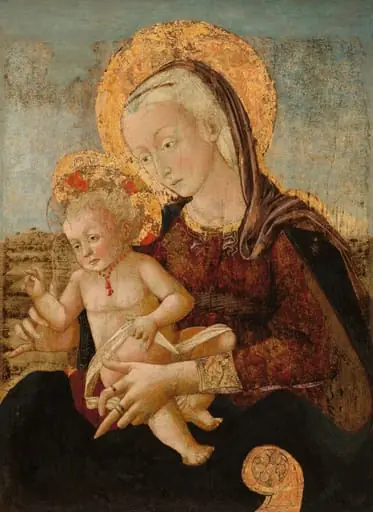
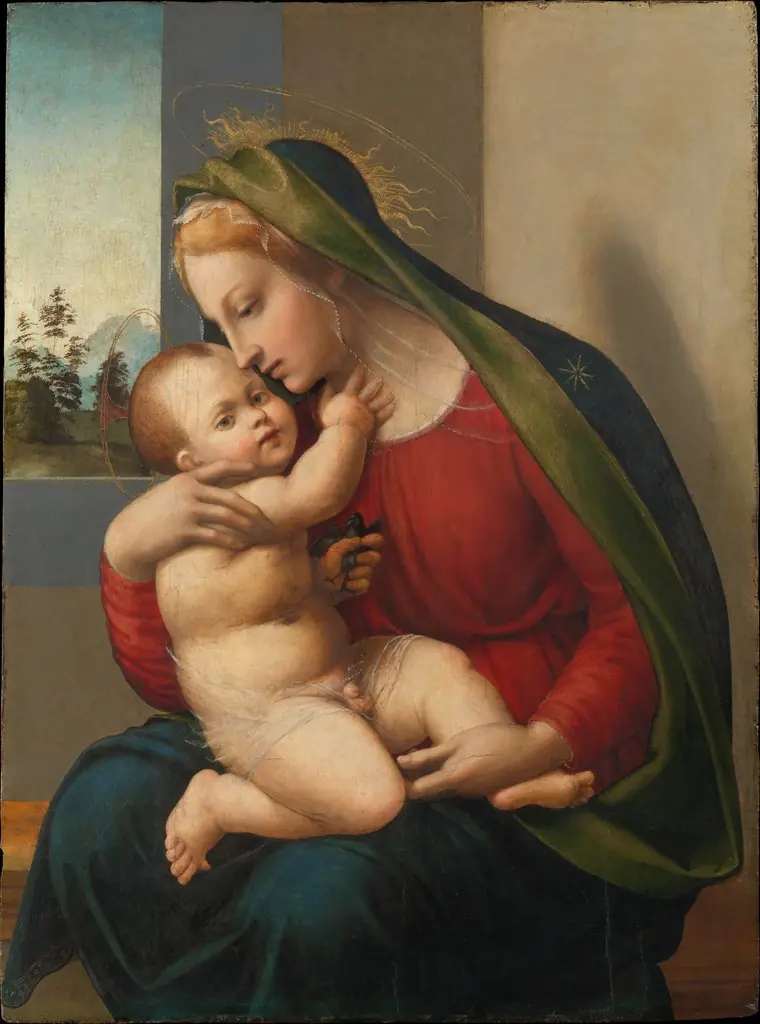
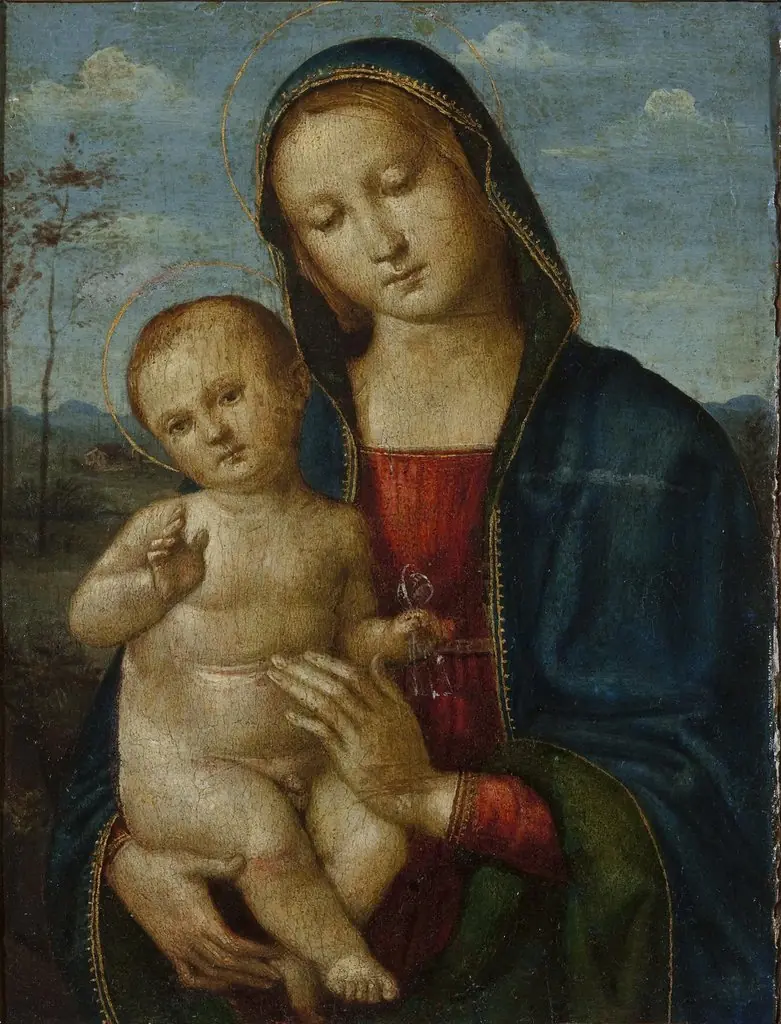
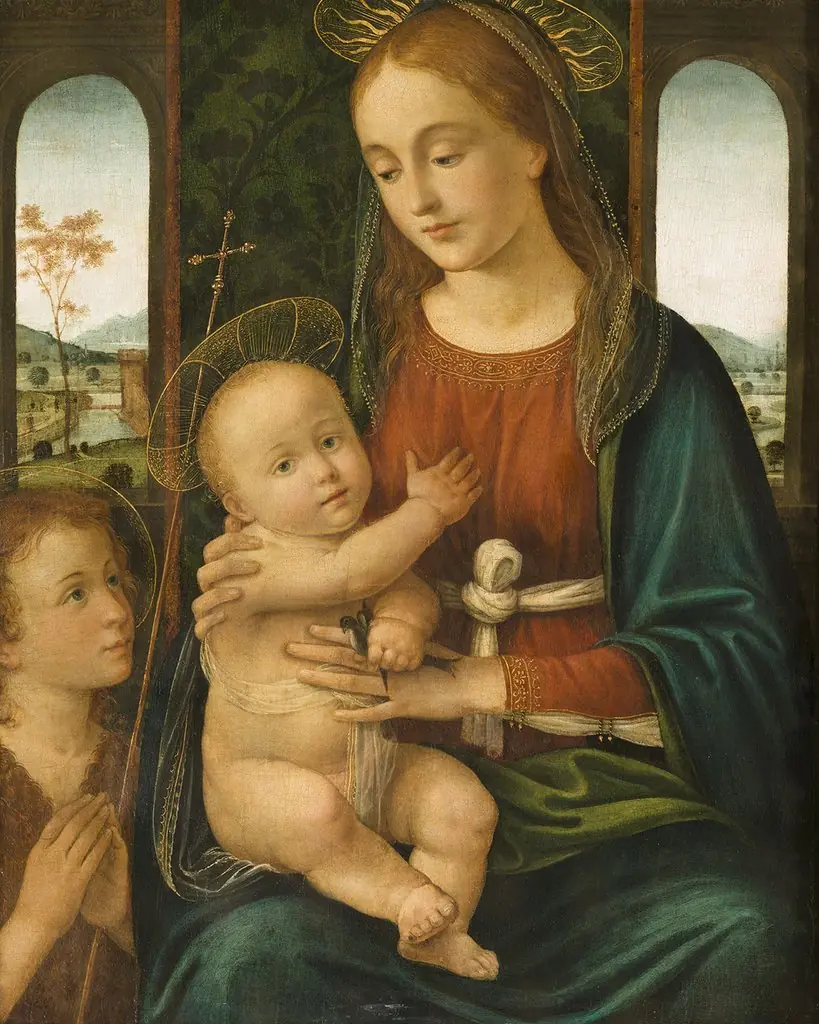
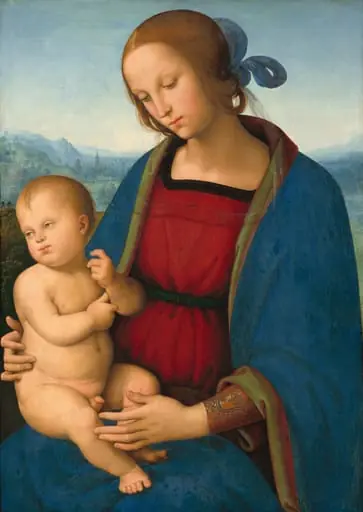
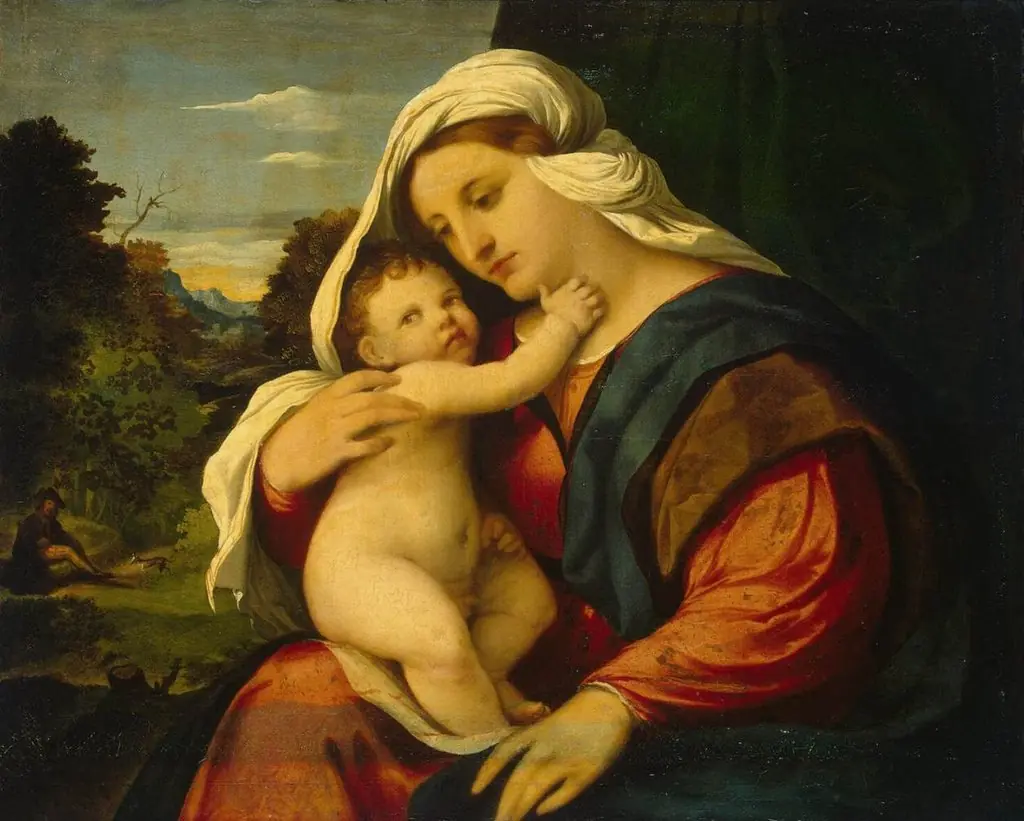
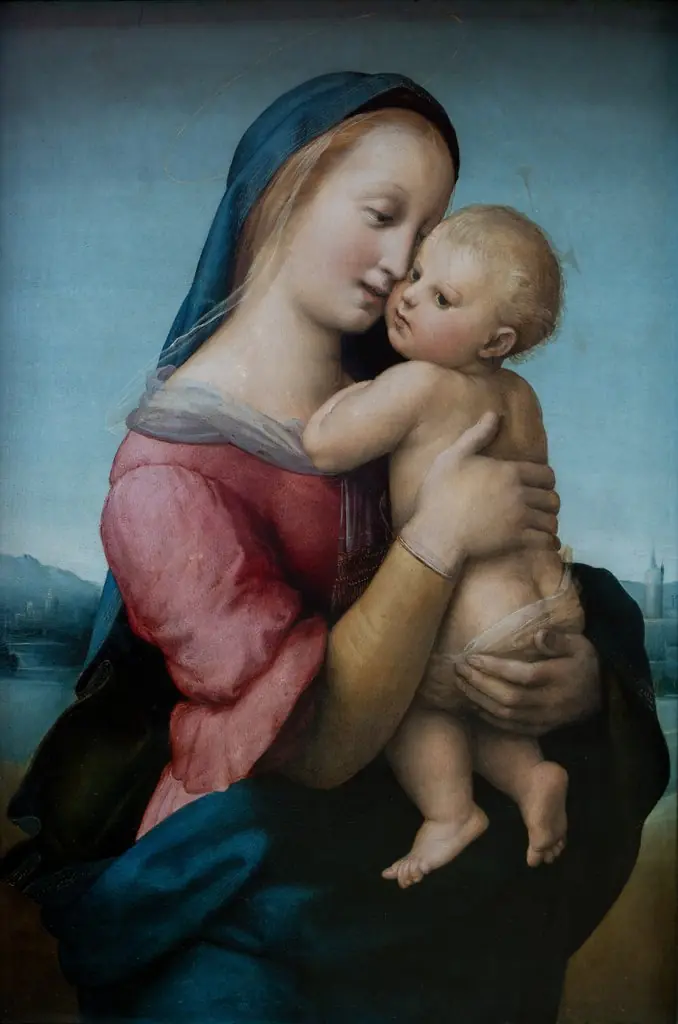
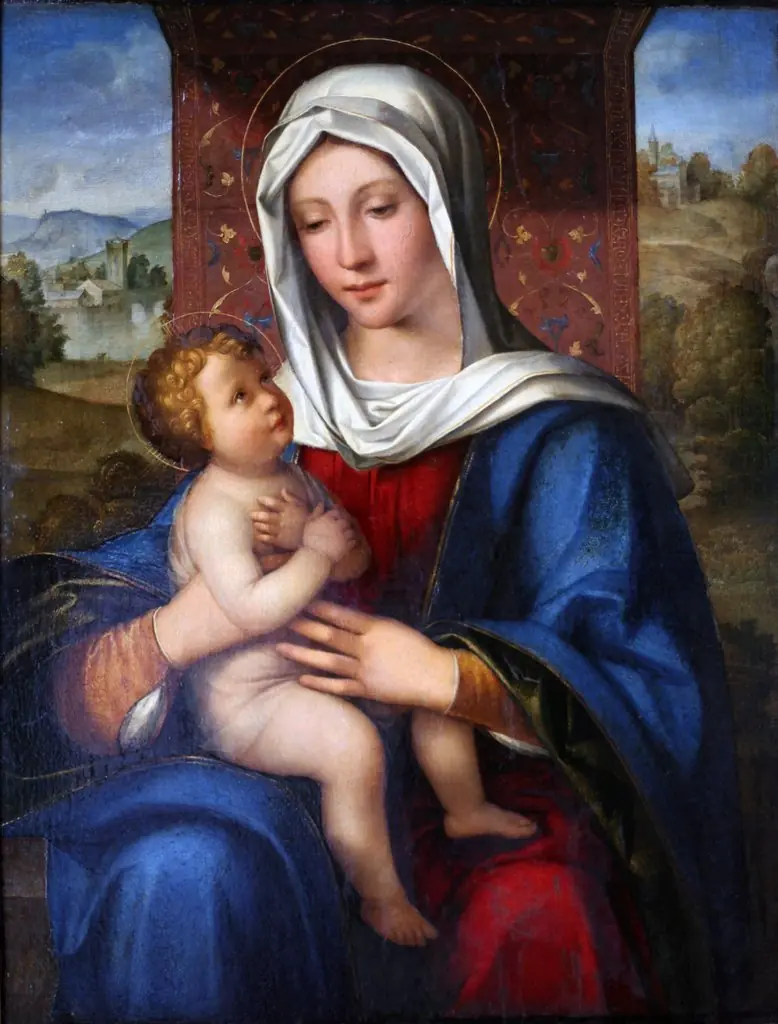
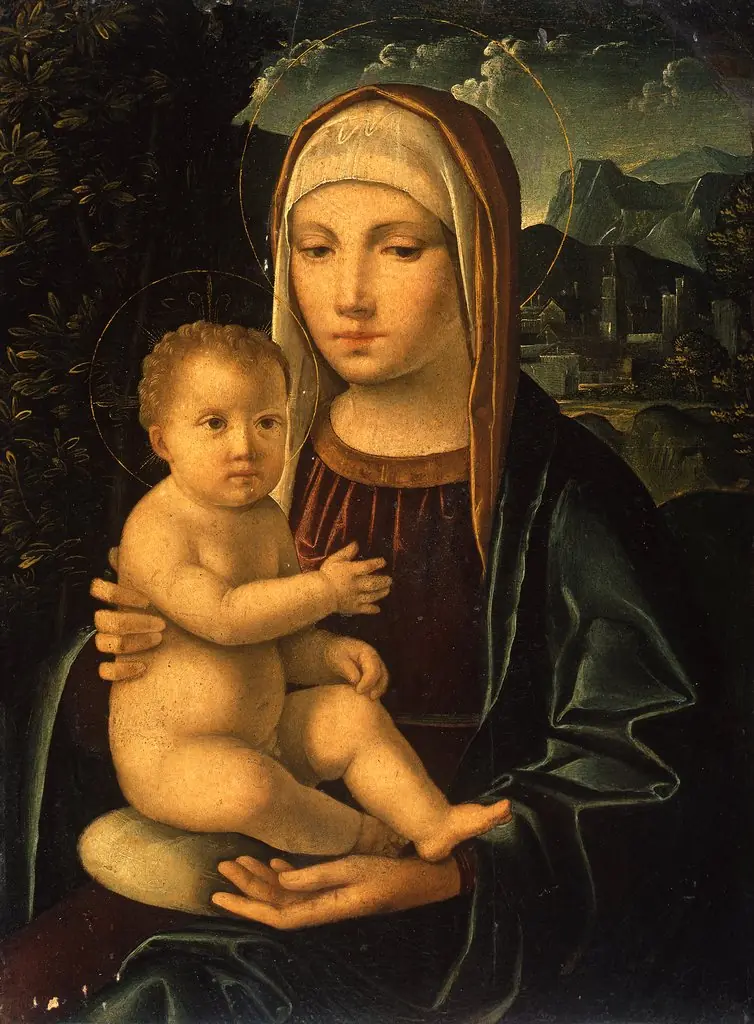
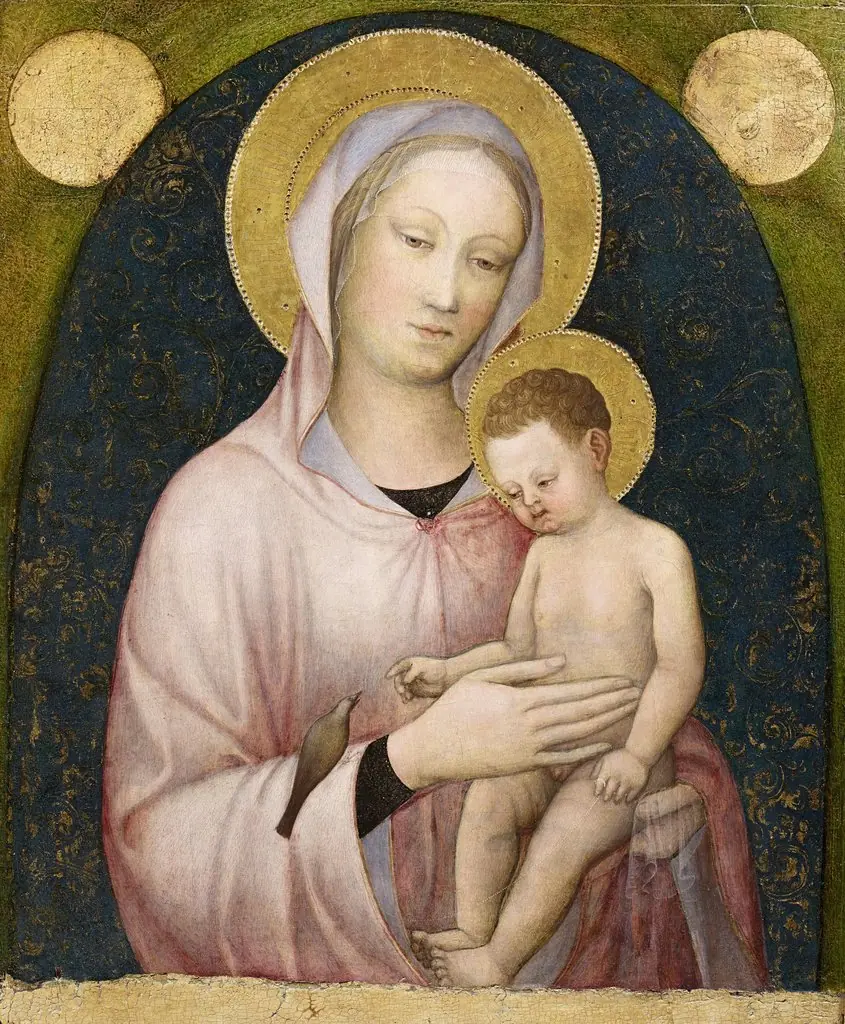
Madonna and Child is an oil painting by the Early Renaissance artist Timoteo Viti. It dates from 1494 and is held in the collection of the Hermitage Museum.
About this work
Subject & Meaning
The painting portrays Mary holding the infant Christ, embodying the sacred bond between mother and child within a Christian devotional context.
The painting portrays Mary holding the infant Christ, embodying the sacred bond between mother and child within a Christian devotional context. The Virgin’s protective gesture and the Child’s blessing gesture function as visual symbols of divine grace and maternal care, central to the Madonna and Child iconography. This composition reflects the theological emphasis on incarnation and intercession, serving as an object of veneration in liturgical settings.
The work originates from the workshop of Timoteo Viti, an Italian Renaissance painter active in the late 15th century, and was created in 1488. It measures 25 cm in height and 21 cm in width, executed on a wooden panel using oil paint. The painting is housed in the Hermitage Museum in Saint Petersburg, where it remains part of the museum’s collection of religious artworks.
The symbolic attributes associated with the figures align with traditional representations of the Virgin Mary as the Queen of Heaven and the infant Christ as the Savior, reinforcing themes of protection, purity, and redemption.
Technique & Style
The Madonna and Child is executed in oil paint on a wooden panel, a technique characteristic of late fifteenth-century Italian devotional painting. The work is small in scale, measuring 25 cm in height by 21 cm in width, a format suited to private devotion. Its classification as a religious painting reflects the sacred subject matter of the Virgin Mary with the Christ Child.
History & Provenance
The painting titled Madonna and Child was created by Timoteo Viti in 1488 as a religious work executed in oil on panel. It was produced in Italy and measures 25 cm by 21 cm. The work entered the collection of the Hermitage Museum, where it remains housed. Its provenance and creation history are documented through its commission and dating to 1488, with no further ownership chain detailed in the sources.
The panel painting Madonna and Child by Timoteo Viti is part of the Hermitage Museum's collection, registered under its standard inventory designation for works in the Hermitage's Old Masters holdings. It has been exhibited in the museum's permanent display of Italian Renaissance religious art, specifically within galleries dedicated to 15th-century Central Italian painting, allowing public access to the work within the institution's curated exhibition spaces.
Overview
Timoteo Viti, an early Renaissance painter from Urbino, completed a panel work titled Madonna and Child in 1494. The composition presents the Virgin Mary holding the infant Jesus, rendered in a subdued palette of golds, browns and muted greens. The painting is part of the collection of the State Hermitage Museum in St. Petersburg.
Context
Viti worked in Urbino during a period of artistic flourishing that also produced Raphael, who was fourteen years his junior and later studied Viti's oeuvre. The Madonna and Child exemplifies the transitional aesthetic of the early Renaissance, balancing devotional intimacy with emerging naturalistic representation.
Own this work as a print
Artist & collection
Artist
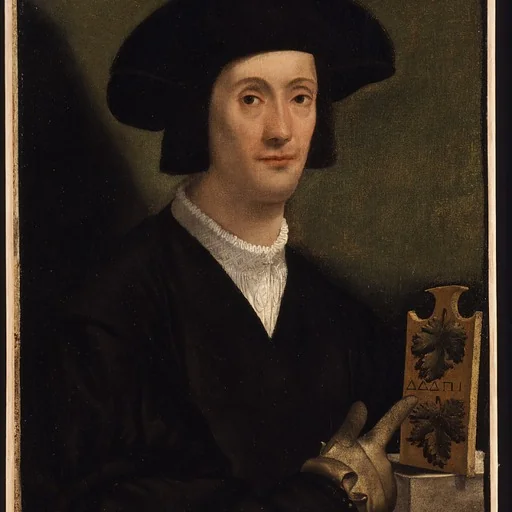
Timoteo Viti (Urbino, 1469 – 1523, Urbino), sometimes called Timoteo della Viti or Timoteo da Urbino, was an Italian Renaissance painter, who was closely associated with Raphael, who was fourteen years his junior.