Artwork
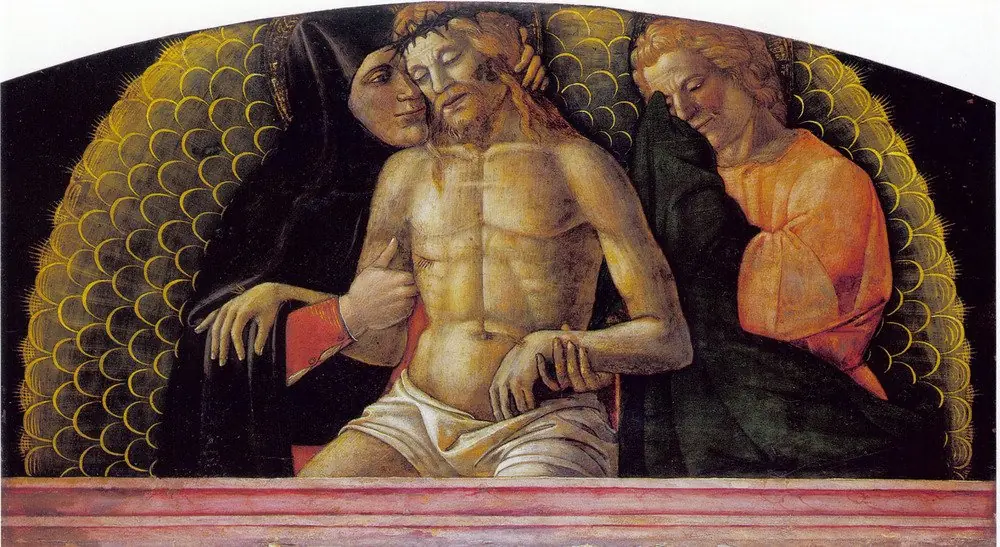
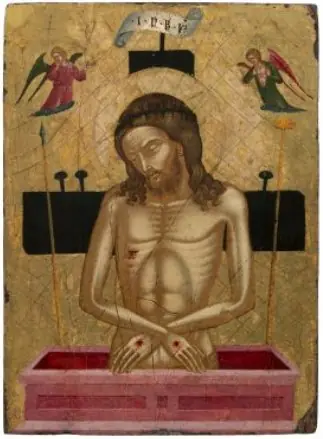
Christ as the Man of Sorrows, with the Archangel Raphael, the Young Tobias and Saint Sebastian
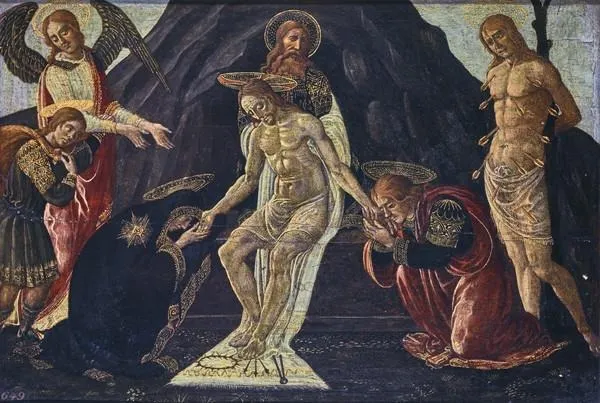
Christ as the Man of Sorrows, with the Archangel Raphael, the Young Tobias and Saint Sebastian is an unspecified painting by the Early Renaissance artist Jacopo da Sellaio. It dates from 1477 and is held in the collection of the National Galleries Scotland.
About this work
Overview
It brings together four distinct sacred figures in a single composition, each associated with themes of suffering, healing, and divine intercession.
Painted around 1477 by Jacopo da Sellaio, this work is a devotional panel from the early Renaissance in Florence. It brings together four distinct sacred figures in a single composition, each associated with themes of suffering, healing, and divine intercession. The painting reflects the period’s blend of spiritual intensity and humanist detail, characteristic of Florentine religious art of the time. It is now held in the Scottish National Gallery.
Subject & Meaning
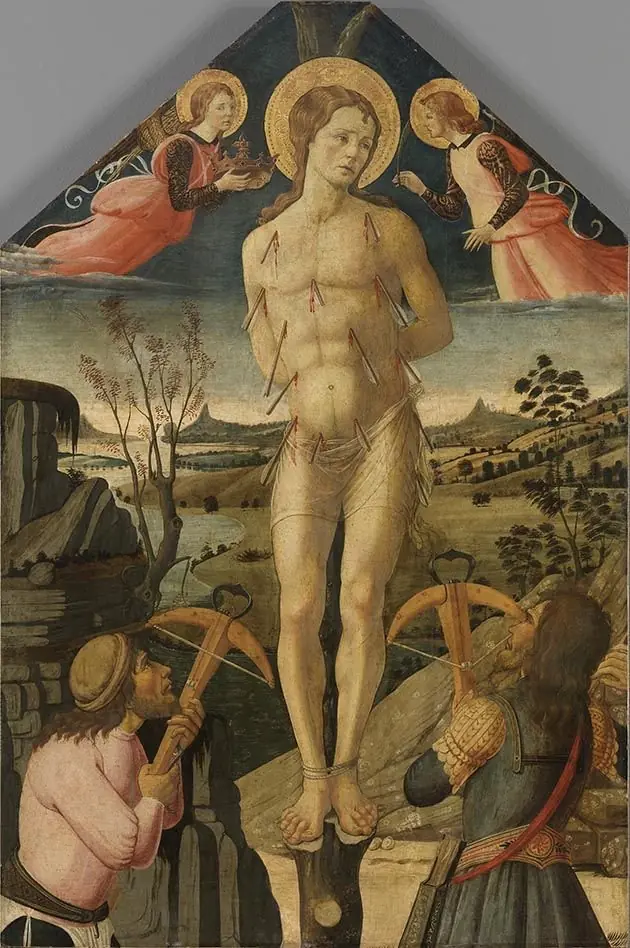
The central figure is Christ as the Man of Sorrows, shown wounded and bare-chested, holding a cloth to his side, symbolizing his Passion. To his left, Saint Sebastian, pierced by arrows, represents endurance; to his right, the Archangel Raphael, with Tobias at his side, signifies healing and guidance. The snake and star allude to divine protection and cosmic order. Together, the figures form a visual prayer for mercy, redemption, and divine care in times of affliction.
Technique & Style
Sellaio employs a restrained palette of muted earth tones and soft modeling to evoke solemnity. Figures are rendered with delicate contours and subtle shading, showing influence from Fra Filippo Lippi and Botticelli. The background’s dark, rocky landscape contrasts with the illuminated figures, drawing focus to their emotional gravity.
The composition is tightly arranged, with each figure positioned to guide the viewer’s gaze toward Christ, reinforcing the painting’s meditative purpose.
History & Provenance
Commissioned likely for private devotion, the painting entered the Scottish National Gallery’s collection in the 19th century. Its early history is undocumented, but its style and iconography align with Florentine devotional panels of the 1470s. Sellaio, trained under Fra Filippo Lippi and active in the city’s painters’ guild from 1460, produced works for both religious institutions and wealthy patrons, though few of his panels survive intact.
Context
In late 15th-century Florence, images of the Man of Sorrows were common in private chapels and homes, serving as aids for personal prayer. The inclusion of Raphael and Tobias reflects growing interest in apocryphal stories and angelic intervention. Saint Sebastian’s presence, popular after plague outbreaks, reinforced the plea for divine protection. Sellaio’s synthesis of these motifs mirrors the era’s blending of theological tradition and human-centered piety.
Legacy
Though less celebrated than his contemporaries, Sellaio’s work exemplifies the quiet, introspective devotional art of mid-Renaissance Florence. This painting preserves a nuanced approach to sacred narrative, where emotional restraint and symbolic detail replace dramatic spectacle. Its survival offers insight into the spiritual habits of non-elite patrons and the enduring appeal of composite religious imagery in domestic settings.
Artist & collection
Artist
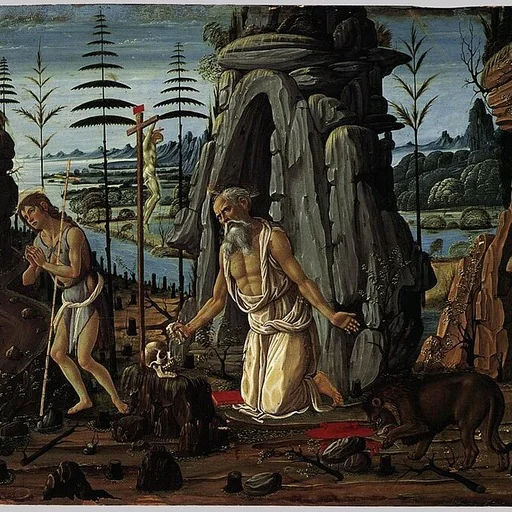
Jacopo del Sellaio (1441/42–1493) was an Italian painter of the early Renaissance, active in his native Florence.