Artwork
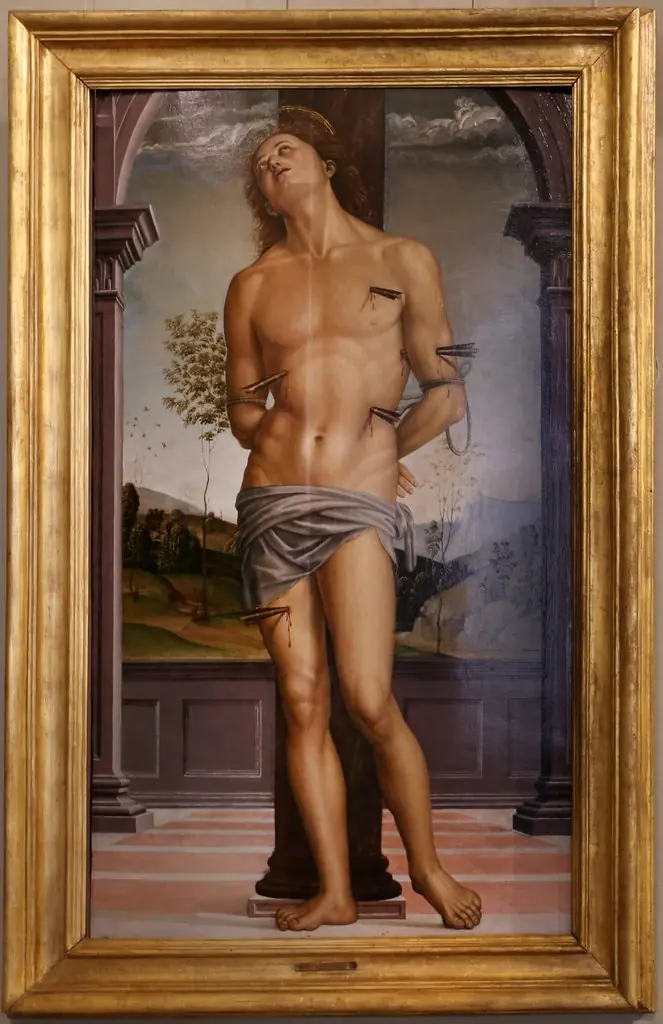
The martyrdom of Saint Sebastian
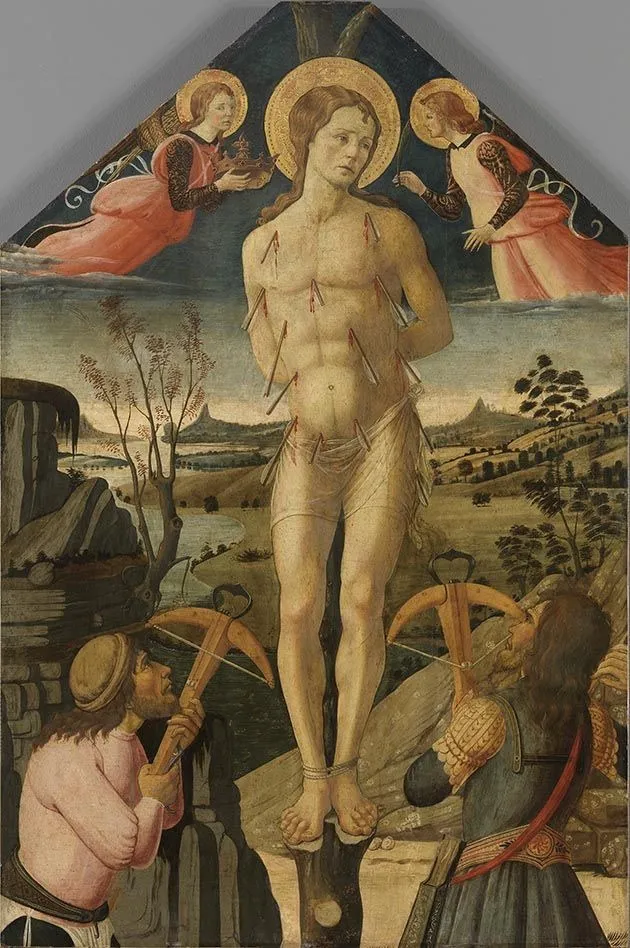
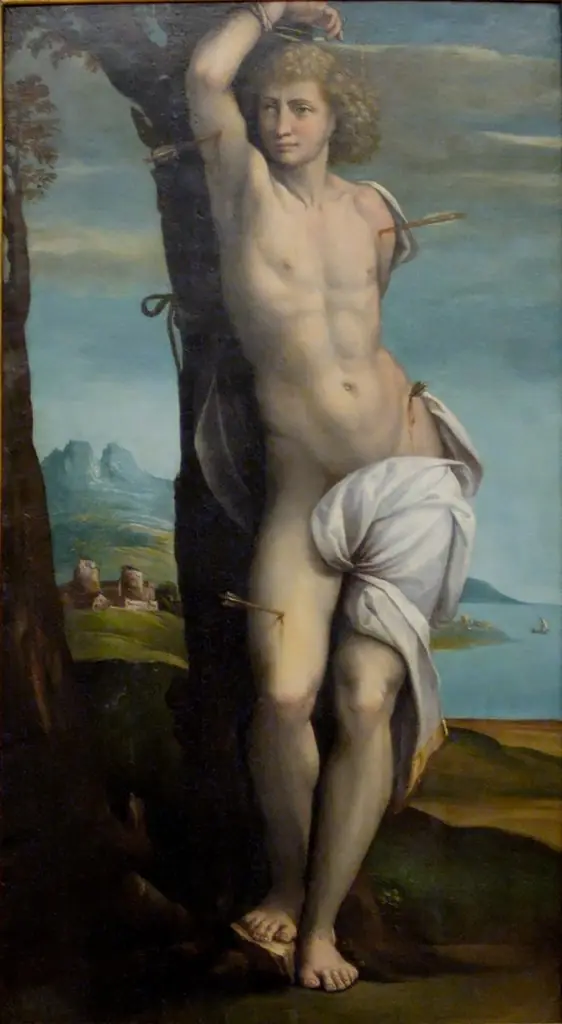
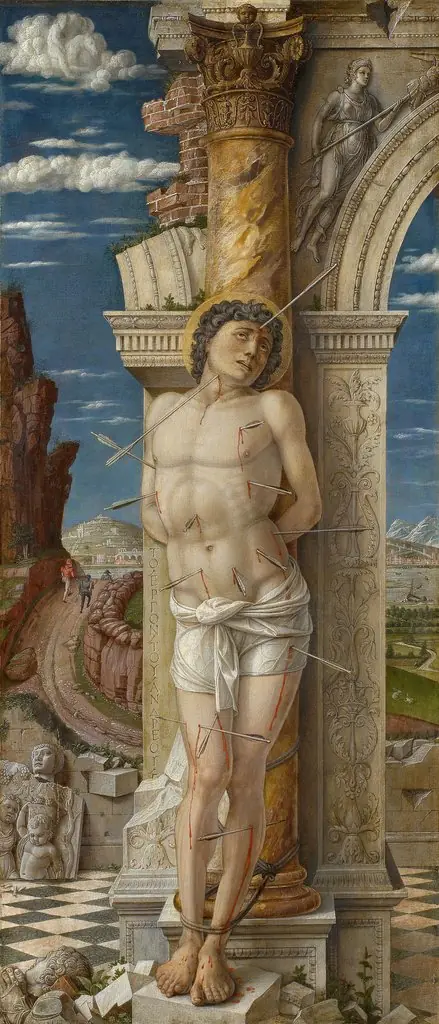
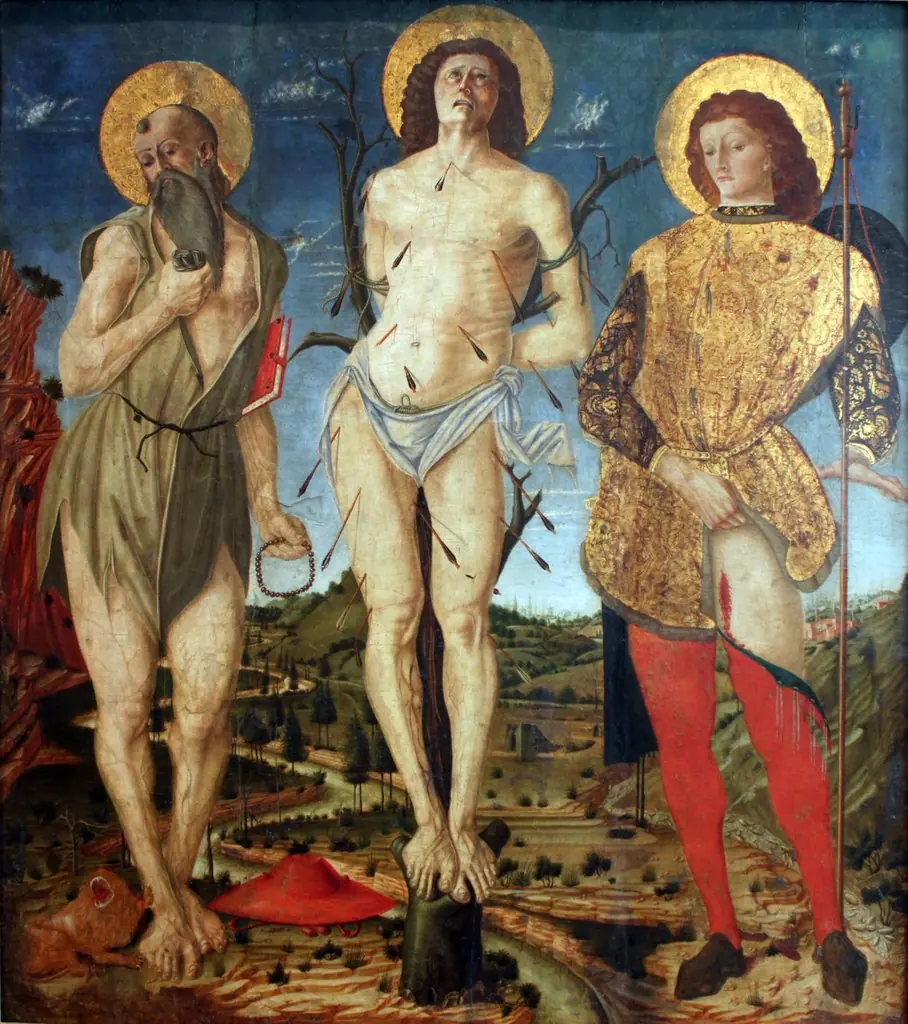
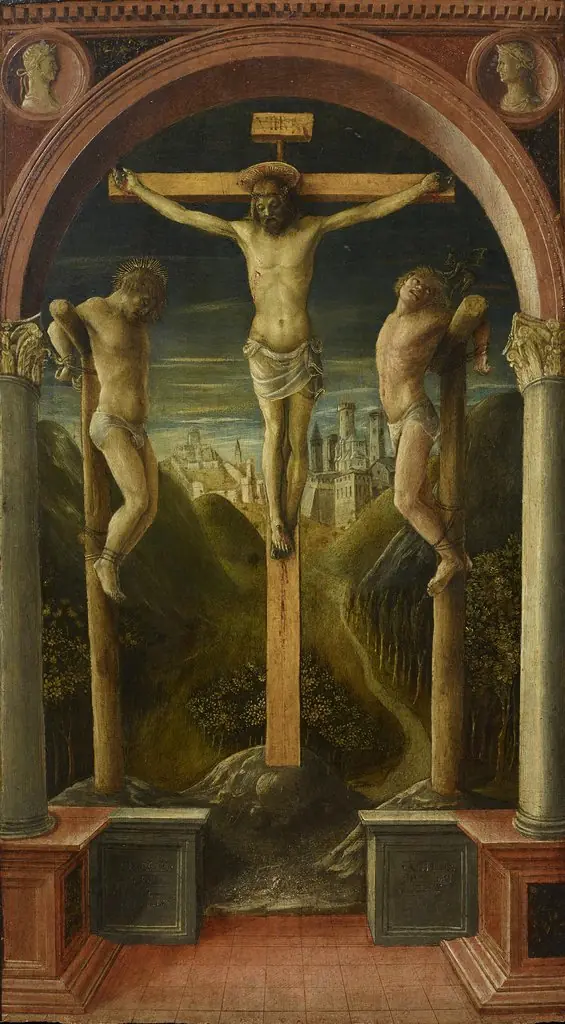
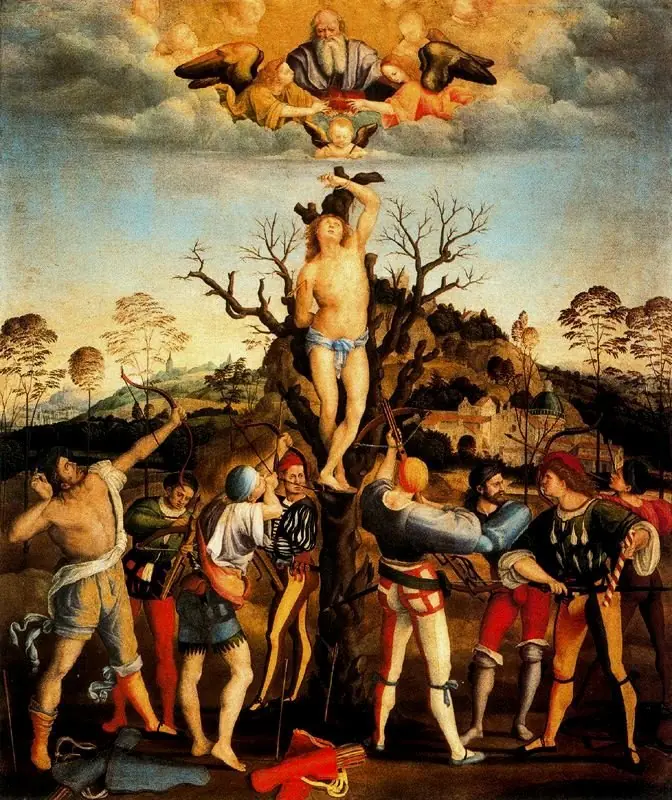
The martyrdom of Saint Sebastian is an oil painting by the Early Renaissance artist Jacopo da Sellaio. It dates from 1469 and is held in the collection of the Bavarian State Painting Collections.
About this work
Subject & Meaning
As a piece of religious art, the composition serves to represent the ultimate sacrifice and faith associated with the saint's legend.
Jacopo da Sellaio's 1469 painting depicts the martyrdom of Saint Sebastian, a central narrative in Christian religious art. The work focuses on the saint's execution, presenting the main subject of his suffering and death as a religious martyr. As a piece of religious art, the composition serves to represent the ultimate sacrifice and faith associated with the saint's legend.
The visual narrative is rendered in oil paint on a poplar panel, emphasizing the dramatic moment of the martyrdom.
Technique & Style
The work is executed in oil paint on a poplar panel, a common support for early Renaissance works in the Florentine tradition. Its dimensions measure 122.5 cm in height by 81.5 cm in width, and it depicts the martyrdom of Saint Sebastian. The surface handling shows a smooth finish typical of tempera-influenced oil applications of the period, while the stylistic qualities reflect a naturalistic treatment of the figure with delicate chiaroscuro.
The composition is balanced and the drapery is rendered with fine linear detail, characteristic of the workshop of Jacopo da Sellaio.
The painting's condition is stable, with the panel support showing minimal warping over centuries of display in the Alte Pinakothek.
History & Provenance
The Martyrdom of Saint Sebastian was created by Jacopo da Sellaio in 1469, executed in oil paint on a poplar panel measuring 122.5 by 81.5 centimeters. The work was produced as a religious painting depicting the martyrdom of Saint Sebastian.
The painting is now part of the Bavarian State Painting Collections and is held at the Alte Pinakothek, where it remains on view as part of the museum's holdings.
The martyrdom of Saint Sebastian is held by the Bavarian State Painting Collections in Munich, where it is accessioned under the inventory number 2121. The work has been exhibited in major retrospectives of early Netherlandish painting, including the 1955 Munich exhibition on Renaissance religious art and a 1987 Bavarian State collection showcase focused on 15th-century panel paintings.
Context
The martyrdom of Saint Sebastian, painted by Jacopo da Sellaio in 1469, exemplifies early Renaissance religious art with its depiction of the saint’s suffering on a wooden panel using oil paint. The work, measuring 122.5 cm by 81.5 cm, is housed in the Bavarian State Painting Collections at the Alte Pinakothek in Munich, reflecting its integration into institutional frameworks for preserving devotional imagery. Scholarship emphasizes its stylistic role within Sellaio’s oeuvre and the broader context of 15th-century Florentine workshops, where such subjects reinforced narratives of faith and endurance during the period’s artistic evolution.
Overview
Jacopo da Sellaio, a Florentine painter of the early Renaissance, completed an oil painting titled The Martyrdom of Saint Sebastian in 1469. The work, now part of the Alte Pinakothek’s holdings, presents a narrative scene of the saint’s execution, rendered with the compositional balance typical of mid‑15th‑century religious art.
Artist & collection

Artist
Jacopo del Sellaio (1441/42–1493) was an Italian painter of the early Renaissance, active in his native Florence.