Artwork
Allegory of Winter
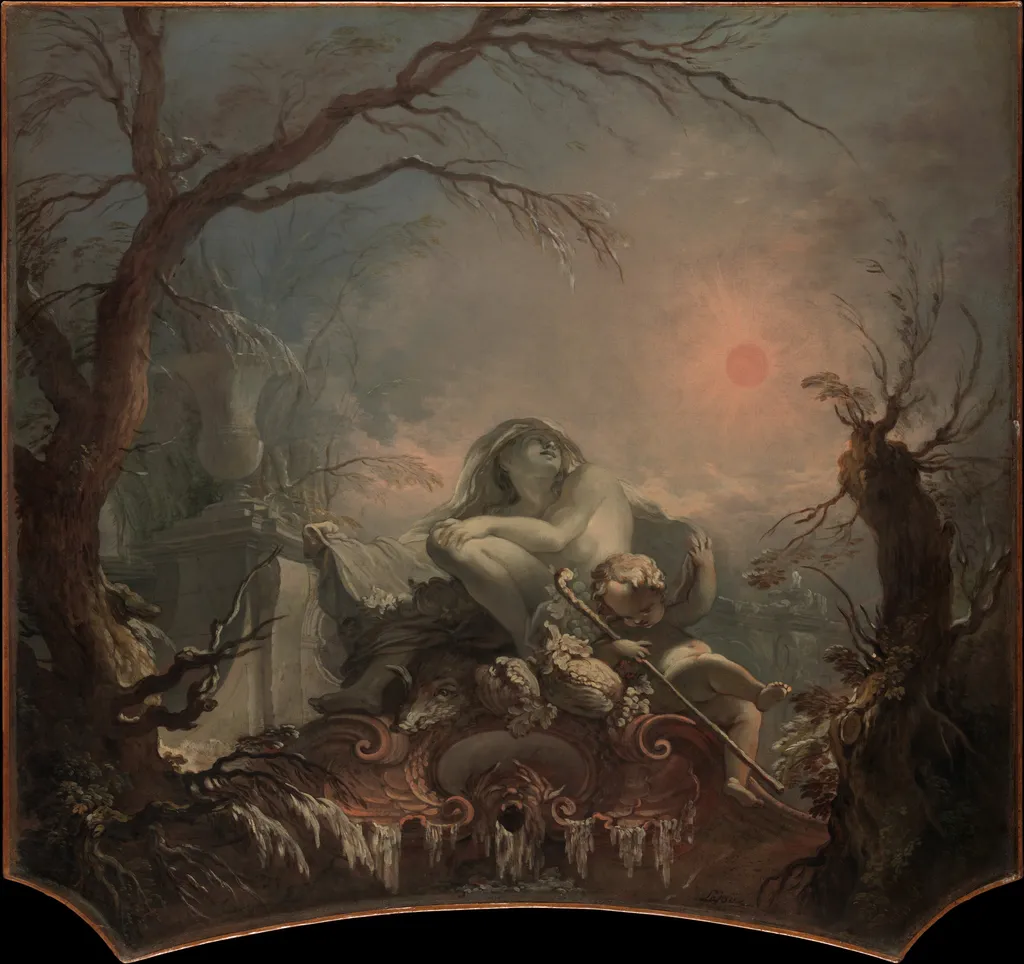
Allegory of Winter is an oil painting by the Rococo painting artist Jacques de Lajoue. It dates from 1733 and is held in the collection of the Metropolitan Museum of Art.
About this work
Subject & Meaning
As an allegorical genre piece, the composition uses these specific elements to symbolize the characteristics of winter.
Jacques de Lajoue's 1733 oil painting, Allegory of Winter, functions as a Rococo personification of the season. The work depicts a female figure accompanied by a putto, set within a landscape featuring a fountain and a tree. As an allegorical genre piece, the composition uses these specific elements to symbolize the characteristics of winter.
The female figure represents the season itself, while the inclusion of the putto and the specific setting of the fountain and tree serve to illustrate the thematic context of the cold season. The Metropolitan Museum of Art identifies the main subject explicitly as winter, framing the work as a visual embodiment of the time of year through its central characters and environmental details.
Technique & Style
The Allegory of Winter is executed in oil paint on canvas, a typical support for eighteenth‑century French painting. The work belongs to the Rococo movement, characterized by its light, decorative approach and allegorical subject matter. While the sources confirm the medium, support, and stylistic classification, they do not record details of the artist’s handling technique or the painting’s current condition. The canvas measures approximately 99.7 cm in height and 105.7 cm in width.
History & Provenance
Jacques de Lajoue executed the oil painting Allegory of Winter in 1733. The work entered the collection of Georges Hoentschel before passing into the ownership of the financier J. P. Morgan. It is currently held by the Metropolitan Museum of Art.
Historically, the painting has been included in exhibition programs at institutions such as the Tokyo Metropolitan Art Museum and the National Museum of China.
The painting is held in the collection of the Metropolitan Museum of Art in New York, having formerly been in the holdings of J. P. Morgan and Georges Hoentschel. Although the specific accession or inventory number is not provided in the sources, its exhibition history shows that it has been loaned for temporary displays at the Tokyo Metropolitan Art Museum and the National Museum of China. These exhibitions underscore the work’s continued scholarly and public interest beyond its permanent home.
Overview
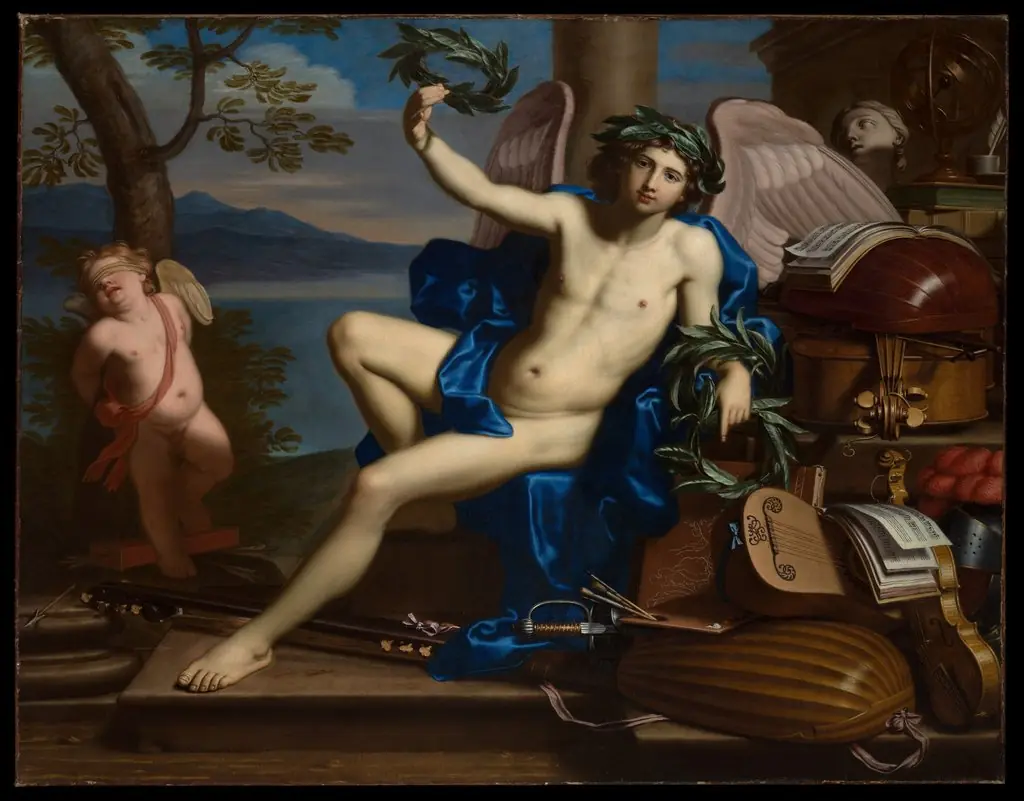
This oil painting, titled Allegory of Winter, depicts a contemplative female figure seated on an ornate fountain. She is partially draped, with a small, winged putto resting on her lap and holding a staff. The scene is set amidst lush foliage, under a sky where sunlight breaks through clouds.
The composition evokes a sense of quiet introspection, with the central figure seemingly lost in thought as she gazes upwards.
Own this work as a print
Artist & collection
Artist
Jacques de Lajoue, a French architectural painter, was born in 1687 in Paris. He became a member of the Academy in 1721, and is noticed for a 'Perspective' which he executed in 1732 at the Library of St. Geneviève. He…

- Satan, Sin and Death (A Scene from Milton's `Paradise Lost')
 Uniate woman
 Scenes of Witchcraft: Morning
 Scenes of Witchcraft: Morning
 Leatherstocking's Rescue
 Parcival befreit Belisane von den Zaubereien des Urma
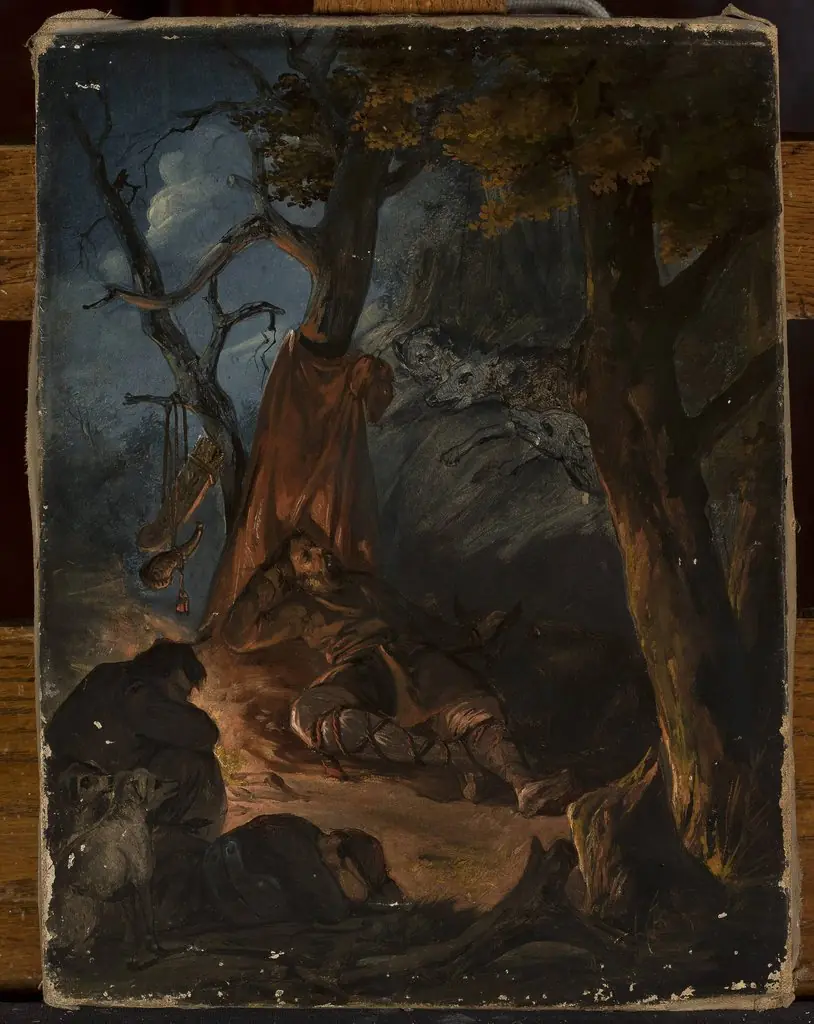 Dream of Gediminas
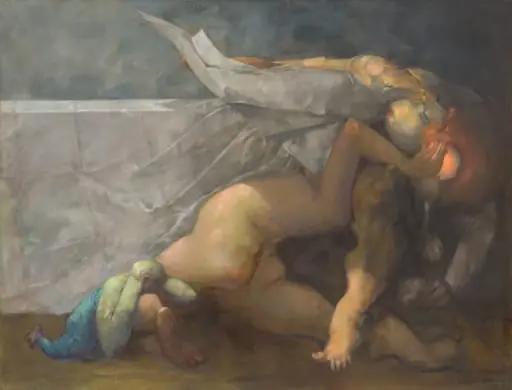 Untitled
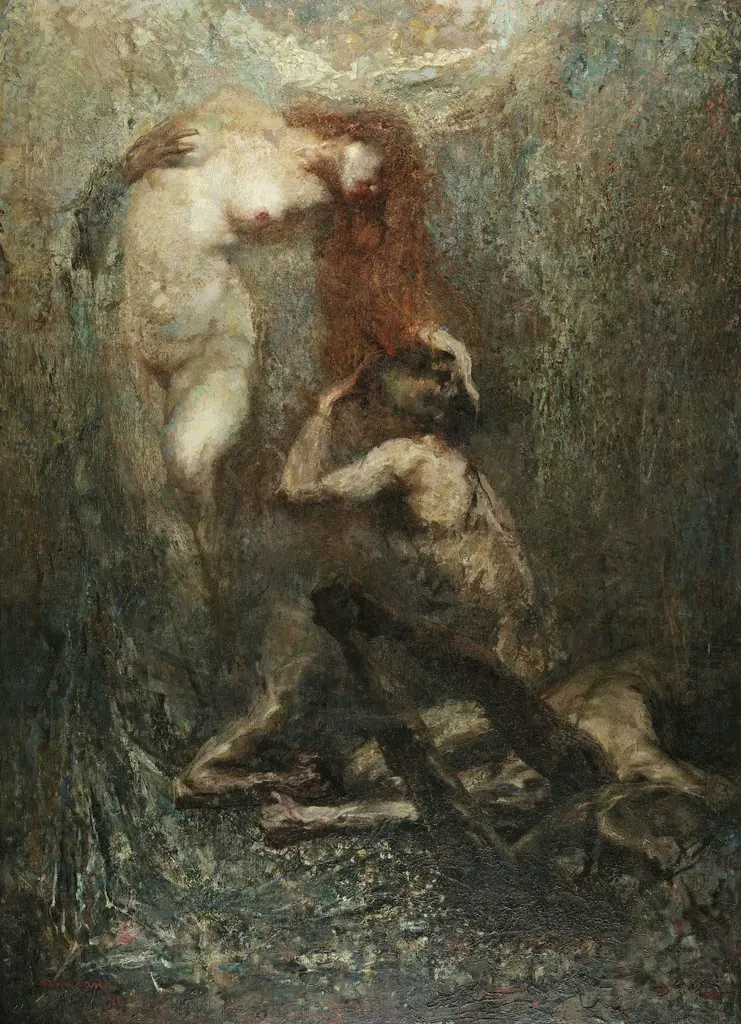 The Tragic Cradle
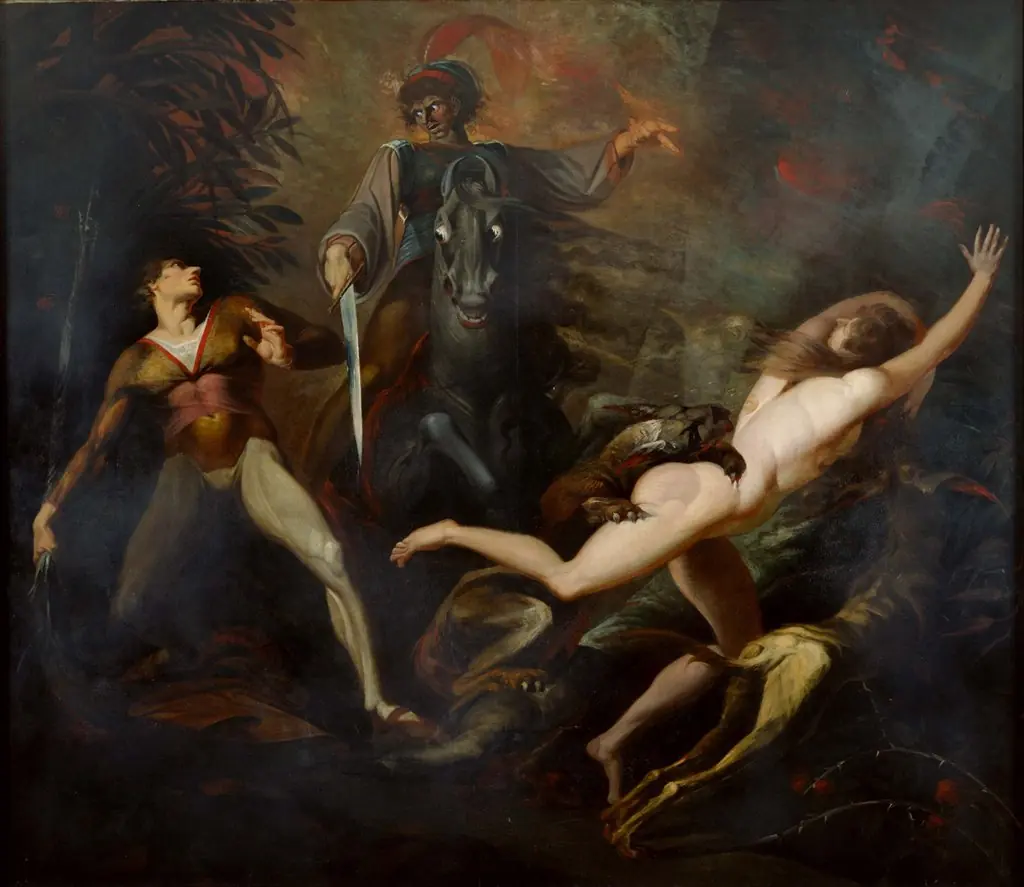 Theodore Meets in the Wood the Spectre of His Ancestor Guido Cavalcanti
 A Mountain Cave
 Visions of the Hereafter: Hell
 Allegory of the Catholic Faith
 An Allegory
 Allegory of Music
 Study For Liberty Displaying the Arts and Sciences, or The Genius of America Encouraging the Emancipation of the Blacks
 The Theological Virtues: Faith, Charity, Hope
 The Muse of Painting
 Falling Leaves, Allegory of Autumn
 Allegory of Sacred and Profane Love