Artwork
A Hermit in a Ruin
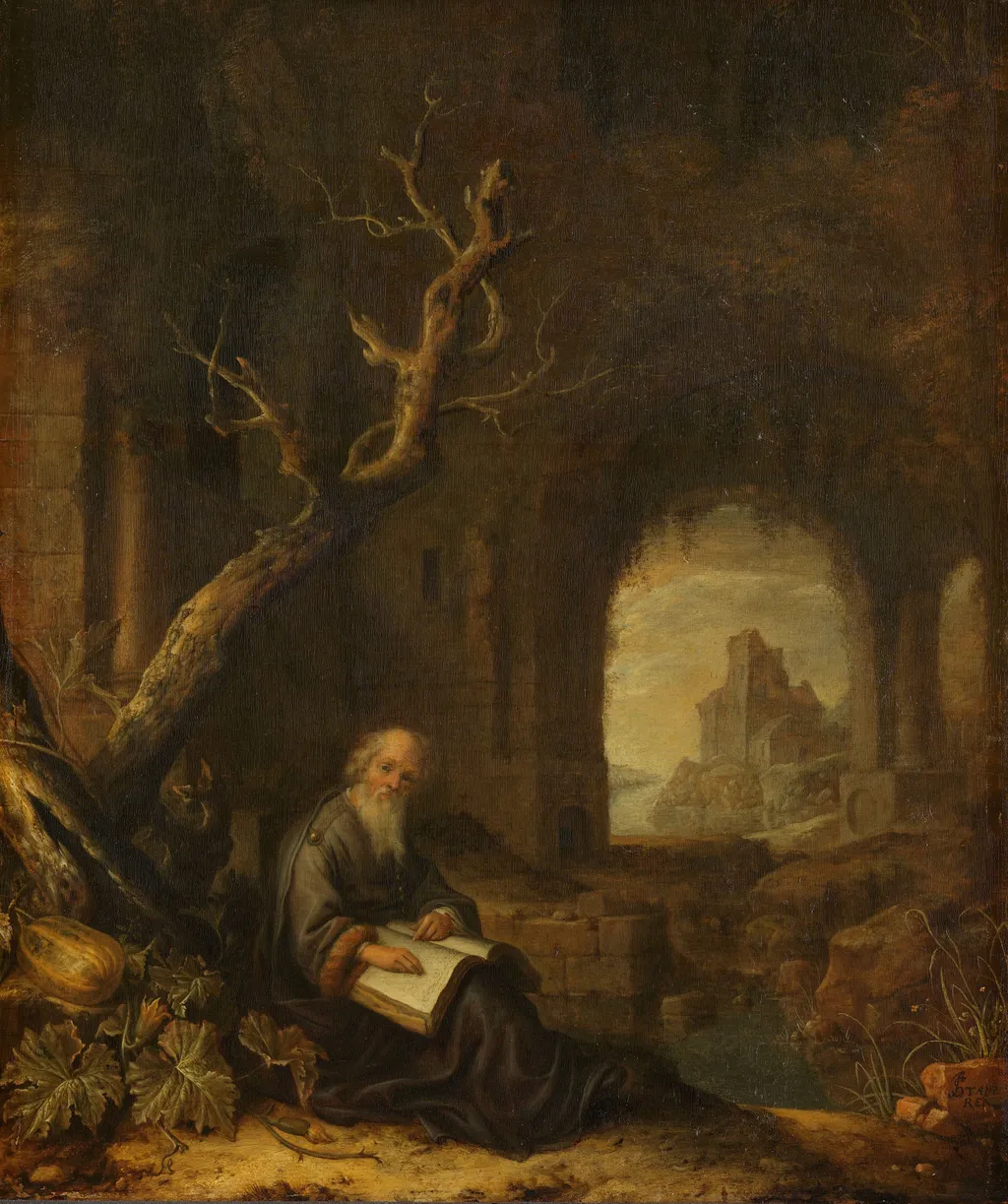
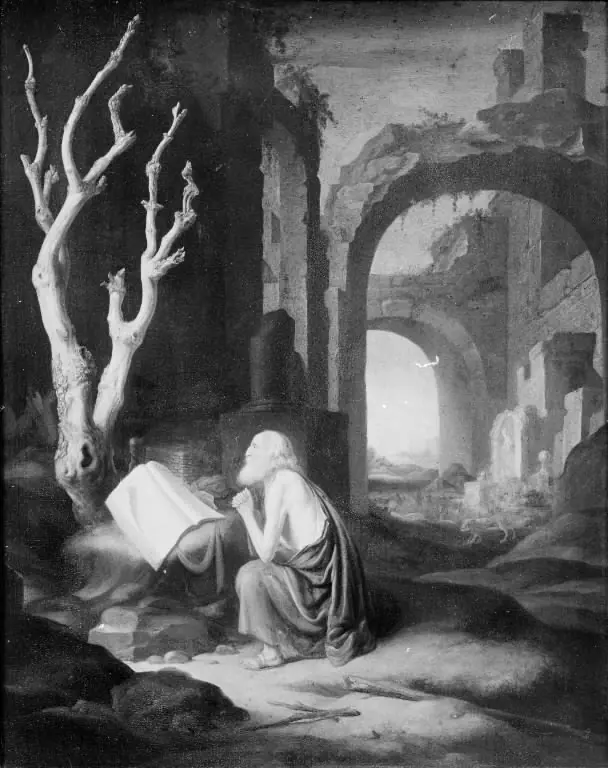
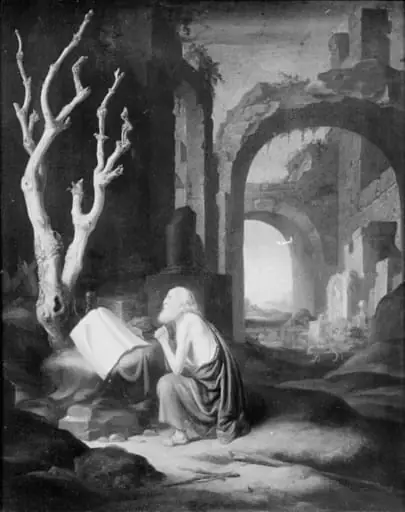
A Hermit in a Ruin is an oil painting by the Dutch Golden Age artist Jan Adriaensz. van Staveren. It dates from 1650 and is held in the collection of the Rijksmuseum.
About this work
Technique & Style
The palette is restrained, dominated by earthy ochres, muted greens, and cool stone grays, with a single warm highlight on the skull to draw the eye.
The painting is executed in oil on a vertically grained oak panel, a common Dutch support of the mid‑seventeenth century. Handling is precise and tightly controlled, with crisp edges and smoothly blended passages that define the hermit’s weathered face and the crumbling masonry of the ruin. Subtle glazes build depth in the stonework and foliage, while the figure’s coarse woolen habit is rendered with short, textured strokes that contrast with the softer modeling of flesh and sky.
The palette is restrained, dominated by earthy ochres, muted greens, and cool stone grays, with a single warm highlight on the skull to draw the eye.
History & Provenance
Jan Adriaensz. van Staveren created the oil-on-panel painting A Hermit in a Ruin in 1650. The work is classified as a religious genre piece. Its provenance traces back to the collection of Adriaan van der Hoop, who owned the painting before it entered the holdings of the Rijksmuseum and the Amsterdam Museum. The work remains part of the Adriaan van der Hoop collection within these institutions.
The painting A Hermit in a Ruin by Jan Adriaensz. van Staveren is held in the collection of the Rijksmuseum in Amsterdam. It originated from the collection of Adriaan van der Hoop and is currently located within the museum's holdings. The work was created in 1650 and measures 36.5 cm in height by 30.5 cm in width. No specific accession number or exhibition history is provided in the available sources.
Overview
A Hermit in a Ruin, an oil painting from circa 1650, is a work by Jan Adriaensz. van Staveren, a Leiden-based artist of the Dutch Golden Age. The piece belongs to the religious genre, featuring a solitary figure within a deteriorating architectural backdrop.
Subject & Meaning
The painting depicts an aged, weary hermit, identifiable by his long white beard and somber attire, intently reading a book amidst ruins. The scene conveys a sense of contemplation and spiritual focus, underscored by the hermit's concentrated expression, illuminated against the predominantly dark setting.
Context
As part of the Dutch Golden Age, A Hermit in a Ruin situates itself within a broader cultural and artistic movement emphasizing detailed realism and emotional depth. The fijnschilders style, to which Van Staveren contributed, is marked by meticulous technique and often, as seen here, a blend of the secular and the spiritually contemplative.
Legacy
While specific lasting impacts or direct influences of A Hermit in a Ruin on subsequent art movements are not widely documented, the piece contributes to the enduring legacy of the Leiden fijnschilders and the Dutch Golden Age's rich artistic heritage.
Own this work as a print
Artist & collection

Artist
Jan Adriaensz. van Staveren (1614 in Leiden – 1669 in Leiden), was a Dutch Golden Age painter of the Leiden school of fijnschilders. According to the RKD he was fourteen when he entered his name in 1628 in the Leiden…