Artwork
Mary Magdalene
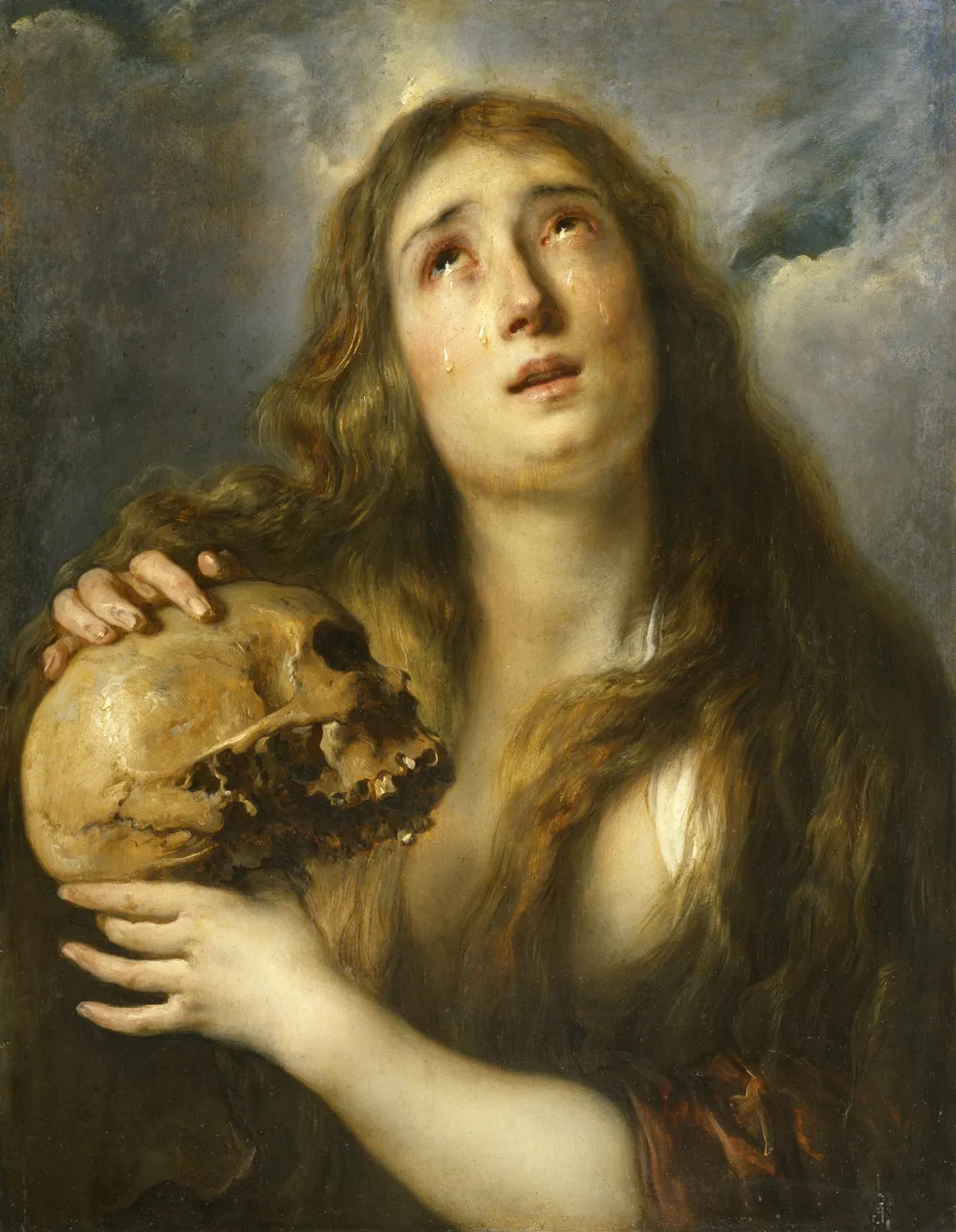
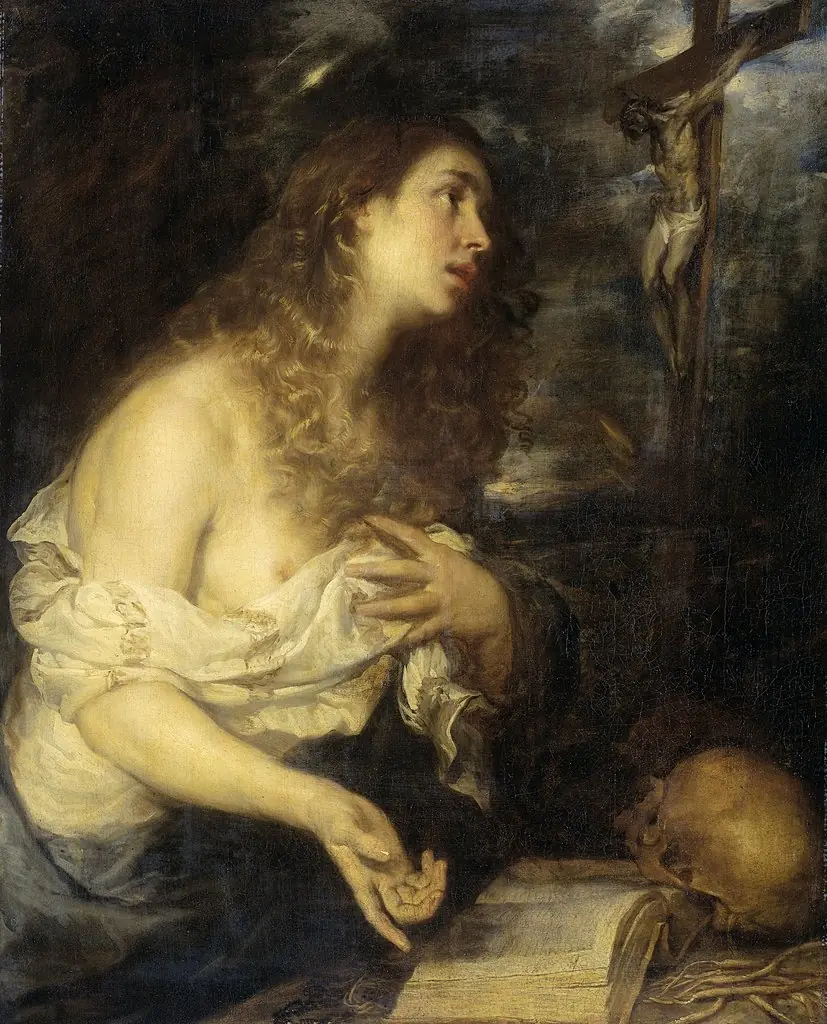
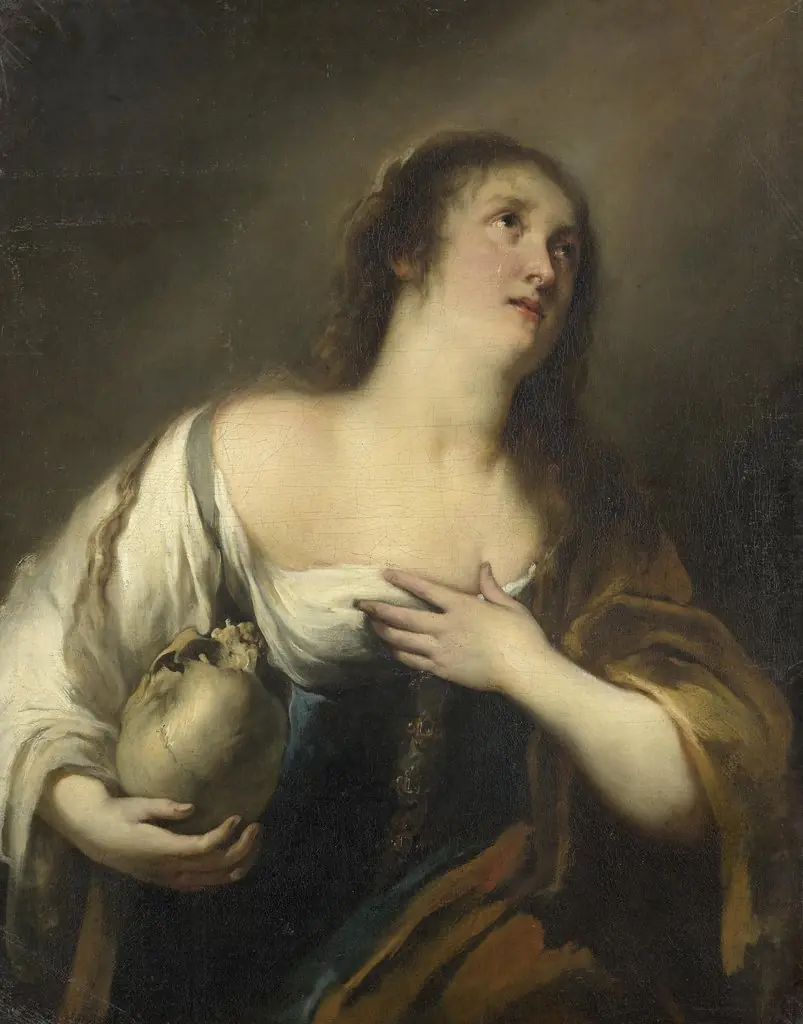
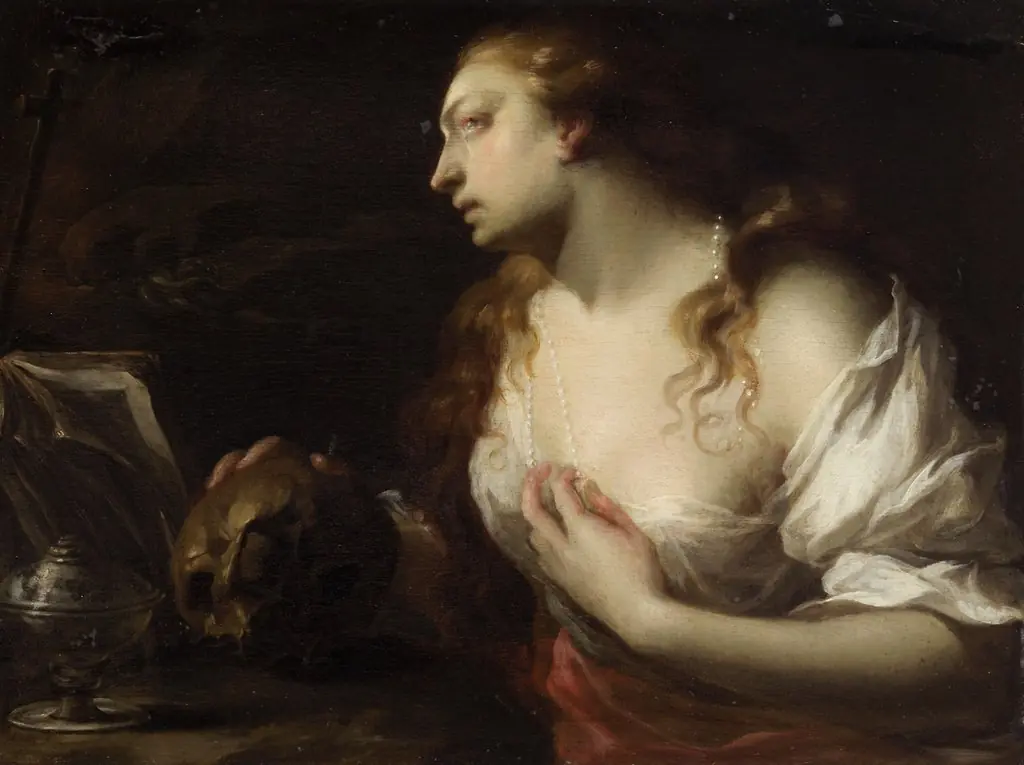
Mary Magdalene is an oil painting by the Flemish Baroque painting artist Jan Boeckhorst. It dates from 1650 and is held in the collection of the Walters Art Museum.
About this work
Subject & Meaning
The open sky and clouds behind her reinforce the contemplative mood, suggesting spiritual transcendence rather than earthly setting.
The painting depicts Mary Magdalene in the guise of the Penitent Magdalene, a devotional type rooted in the medieval identification of the biblical Mary of Magdala with the unnamed woman who anointed Christ's feet. Boeckhorst presents her as a half-length woman with long blond hair falling loosely over her shoulders, her décolletage exposed in a manner associated with the Magdalene's traditional characterization as a former courtesan turned ascetic.
A single tear on her cheek signals her repentance, while the human skull held nearby functions as a memento mori, prompting meditation on mortality and the vanity of worldly beauty. The open sky and clouds behind her reinforce the contemplative mood, suggesting spiritual transcendence rather than earthly setting. Together these attributes, the tear, the skull, the flowing hair, and the upward gaze, encode the standard iconography of penitence, mortality, and devotion that defines the Penitent Magdalene in seventeenth-century religious painting.
Technique & Style
This painting on wood panel was created circa 1650 by Jan Boeckhorst using oil pigments applied to a wooden support. The work depicts a penitent Magdalene in a composition featuring symbolic elements including a human skull and clouds, reflecting themes of mortification of the flesh. The surface shows handling consistent with panel painting practices of the period, with condition noted through careful observation of the wooden support and painted layers.
History & Provenance
Mary Magdalene is a religious painting on wood by Jan Boeckhorst, dated to 1650. The work is held in the collection of the Walters Art Museum, where it is classified as a painting and categorized within the museum's religious holdings. The composition depicts a Penitent Magdalene and is based on the traditional Penitent Magdalene subject.
No information is available regarding the original commission, earlier owners, or the chain of custody prior to the work's acquisition by the Walters Art Museum.
Context
The painting Mary Magdalene by Jan Boeckhorst, created in 1650 and housed at the Walters Art Museum, exemplifies religious art of the period through its depiction of a penitent Magdalene with symbolic elements including a tear, blond hair, décolletage, human skull, and clouds representing mortification of the flesh. Scholarship situates this work within Boeckhorst's broader religious oeuvre and the Penitent Magdalene tradition, reflecting Counter-Reformation themes of penitence and spiritual contemplation. Its composition and iconography align with contemporary devotional practices, emphasizing personal repentance through visual symbolism.
The work's significance is contextualized within 17th-century European religious painting, particularly as interpreted through its presence in major museum collections like the Walters Art Museum.
Overview
Jan Boeckhorst, a German‑born painter who worked in Antwerp during the mid‑17th century, executed the oil painting on wood titled Mary Magdalene around 1650. The work belongs to the Flemish Baroque tradition and is currently part of the Walters Art Museum’s collection.
Own this work as a print
Artist & collection

Artist
Jan Boeckhorst or Johann Bockhorst (c. 1604 – 21 April 1668) was a German-born Flemish Baroque painter and draughtsman who worked most of his career in Antwerp. He was a versatile artist who produced history paintings,…