Artwork
The Archdukes Albert and Isabella Visiting a Collector's Cabinet
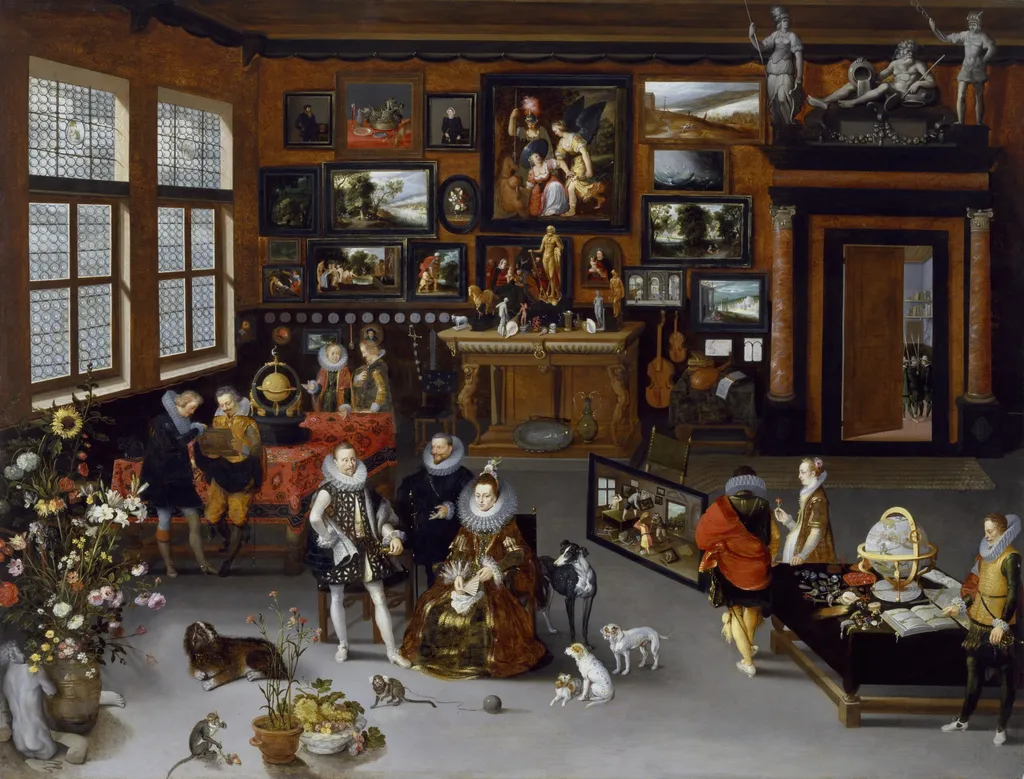
The Archdukes Albert and Isabella Visiting a Collector's Cabinet is an oil painting by the Flemish Baroque painting artist Jan Brueghel, the elder. It dates from 1621 and is held in the collection of the Walters Art Museum. The work titled The Archdukes Albert and Isabella Visiting a Collector’s Cabinet is an oil painting on panel created in the early 1620s.
About this work
This painting shows two important rulers visiting a private art room. The work is oil paint on a panel by Jan Brueghel the Elder, made in 1621.
We know the rulers are Archdukes Albert and Isabella. They’re checking out a fancy collection of paintings, books, and strange objects.
If you like this kind of scene, look up the Walters Art Museum in Baltimore.
Subject & Meaning
The painting shows Archduke Albert VII and his wife, Infanta Isabella Clara Eugenia, seated in a richly decorated collector’s cabinet filled with artworks, scientific instruments, and natural curiosities. Symbolic elements include an allegory of Iconoclasm that references the 16th‑century Beeldenstorm, reinforcing the idea that the arts will be protected under their rule, and a sunflower turned toward the archdukes, representing the flourishing of culture under their patronage. The work also incorporates allegories of Painting rescued from Ignorance, a globe representing perpetual‑motion experiments, and a two‑headed dog, all contributing to a vision of enlightened collecting that unites natural wonder, artistic production, and scientific curiosity.
Technique & Style
A notable formal anomaly occurs on the left side, where a dog appears to possess two heads due to underpainting showing through the surface.
Created in 1621, this collaborative Flemish work is executed in oil paint on a panel support. Measuring 94 cm in height and 123.3 cm in width, the painting exemplifies the *constkamer* or gallery genre, characterized by an encyclopedic arrangement of naturalia and artificialia within an interior setting. The composition features a dense accumulation of objects, including sculptures like Giambologna's bronze *Allegory of Architecture*, various paintings, and scientific instruments such as a perpetual-motion clock by Cornelis Drebbel. A notable formal anomaly occurs on the left side, where a dog appears to possess two heads due to underpainting showing through the surface. The work also includes Jan Brueghel the Elder's specific contribution of a large sunflower, one of the earliest depictions of this American species in painting, which is oriented toward the archdukes rather than the sun.
History & Provenance
Created in 1621, *The Archdukes Albert and Isabella Visiting a Collector's Cabinet* is a collaborative oil-on-panel work by Jan Brueghel the Elder and Hieronymus Francken II. The painting was produced during the period of peace and prosperity in Flanders under the joint rule of Archdukes Albert and Isabella, ending with Albert's death that same year. It belongs to the genre of *constkamer* or gallery paintings, which were popular in early 17th-century Flanders. The work was previously misattributed to Frans Francken II and Adriaen van Stalbemt, the latter being associated with a similar composition now held in the Prado. The painting is currently part of the permanent collection of the Walters Art Museum in Baltimore, Maryland.
The Archdukes Albert and Isabella Visiting a Collector's Cabinet is held by the Walters Art Museum in Baltimore, Maryland. It is part of the museum's permanent collection, which includes this 17th-century Flemish collaborative painting by Jan Brueghel the Elder and Hieronymus Francken II. The work has been exhibited publicly as part of the "Off the Wall" program in 2012, an open-air exhibition on the streets of Baltimore featuring a weather-resistant vinyl reproduction of the piece. The original painting remains in the custody of the Walters Art Museum, where it continues to be displayed as a key example of the constkamer genre.
Context
The Archdukes Albert and Isabella Visiting a Collector's Cabinet (1621) is recognized as an early example of the Flemish cabinet painting genre, reflecting the era's culture of curiosity that blended artworks, scientific instruments, and natural specimens. Scholars note its collaborative authorship between Jan Brueghel the Elder and Hieronymus Francken II, depicting allegorical works such as Allegory of Iconoclasm and a scene of Painting rescued from Ignorance, which reference the earlier Beeldenstorm iconoclasm and underscore the protection of the arts under Archduke Albert's patronage. The painting features symbolic elements like a large sunflower turned toward the archdukes, representing artistic flourishing, and a double-headed dog resulting from pentimenti, illustrating Brueghel's technical experimentation. It is housed in the Walters Art Museum in Baltimore and was highlighted in the 2012 Off the Wall outdoor exhibition, underscoring its continued relevance.
Legacy
The work is recognized as an early example of the collector’s cabinet genre, a format that gained prominence in early‑17th‑century Flanders and influenced later depictions of art‑filled interiors. Its iconographic program, including the Allegory of Iconoclasm and the allegory of Painting rescued from Ignorance, was interpreted as a political statement celebrating the patronage of Albert VII and Isabella Clara Eugenia, reinforcing their reputation as cultural benefactors. The painting’s innovative inclusion of a sunflower turned toward the archdukes was noted as the earliest artistic appearance of the American flower in Europe, underscoring its role in the emergence of botanical motifs in European art. Subsequent scholarship and exhibitions, such as the 2012 Off the Wall outdoor display in Baltimore, have highlighted its legacy as a prototype for later ‘gallery’ paintings and for the broader cultural history of curiosity cabinets.
Own this work as a print
Artist & collection
Artist
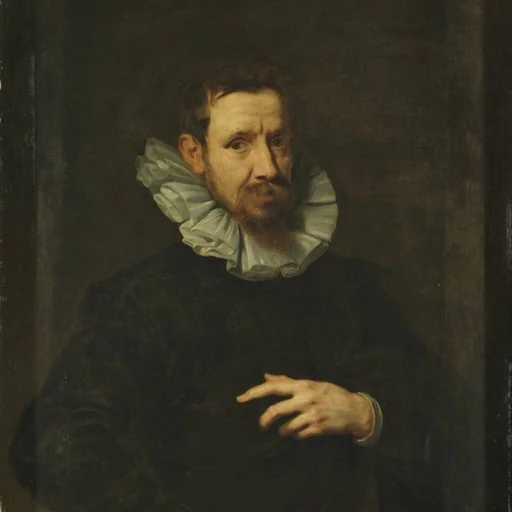
Jan Brueghel the Elder ( BROY-gəl, US also BROO-gəl; Dutch:; 1568 – 13 January 1625) was a Flemish painter and draughtsman.

 The Sciences and Arts
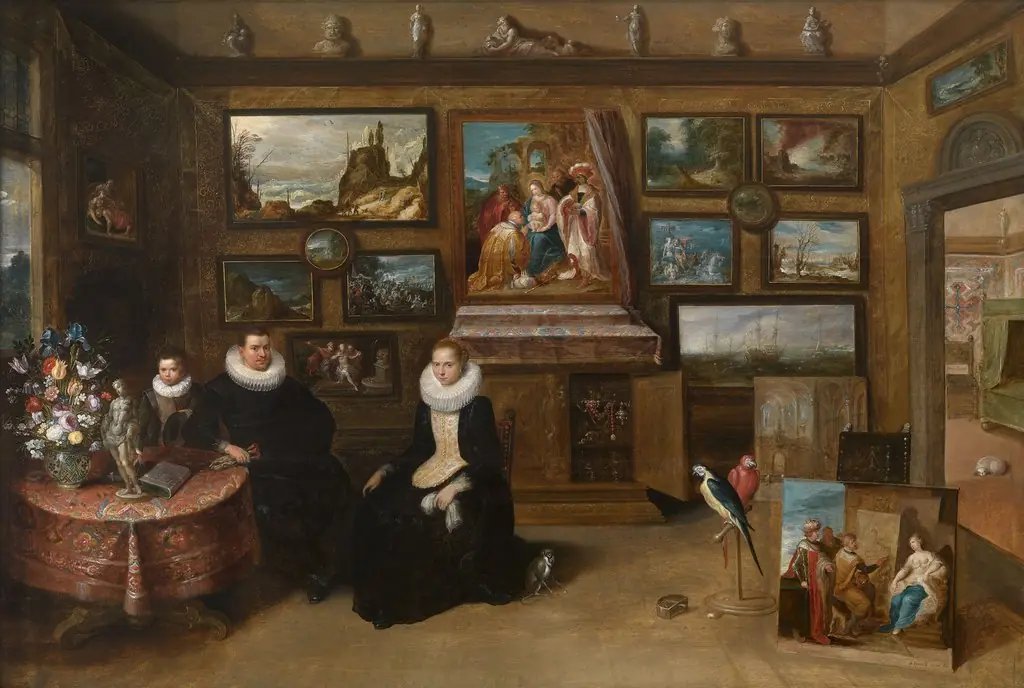 The Collection of paintings of Sebastiaan Leerse
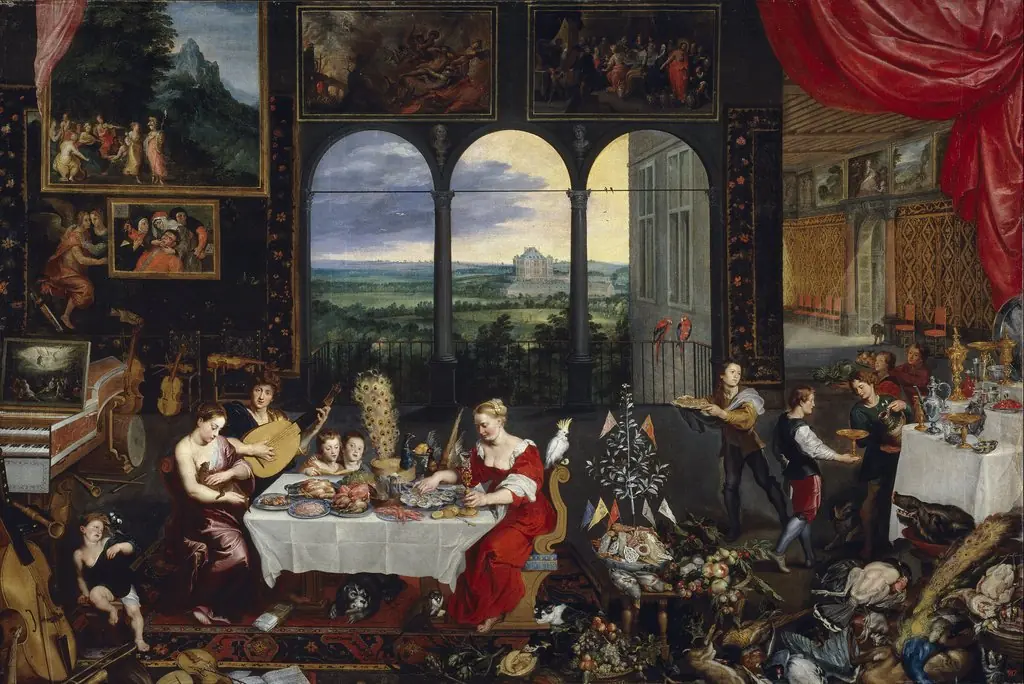 The Senses of Hearing, Touch and Taste
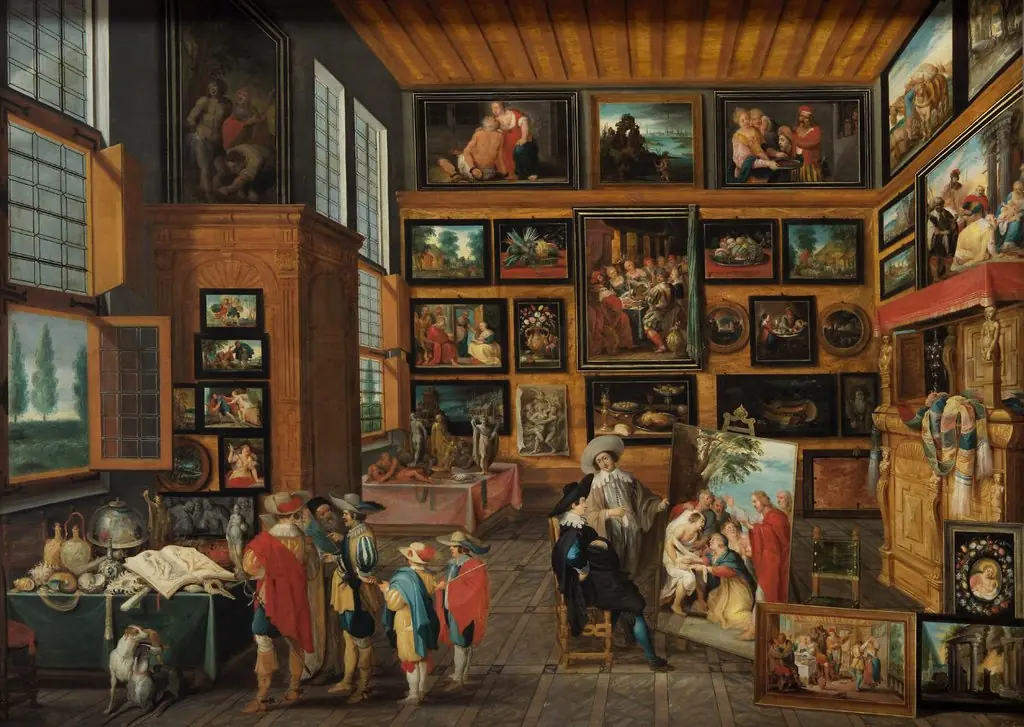 Art and Rarity Cabinet
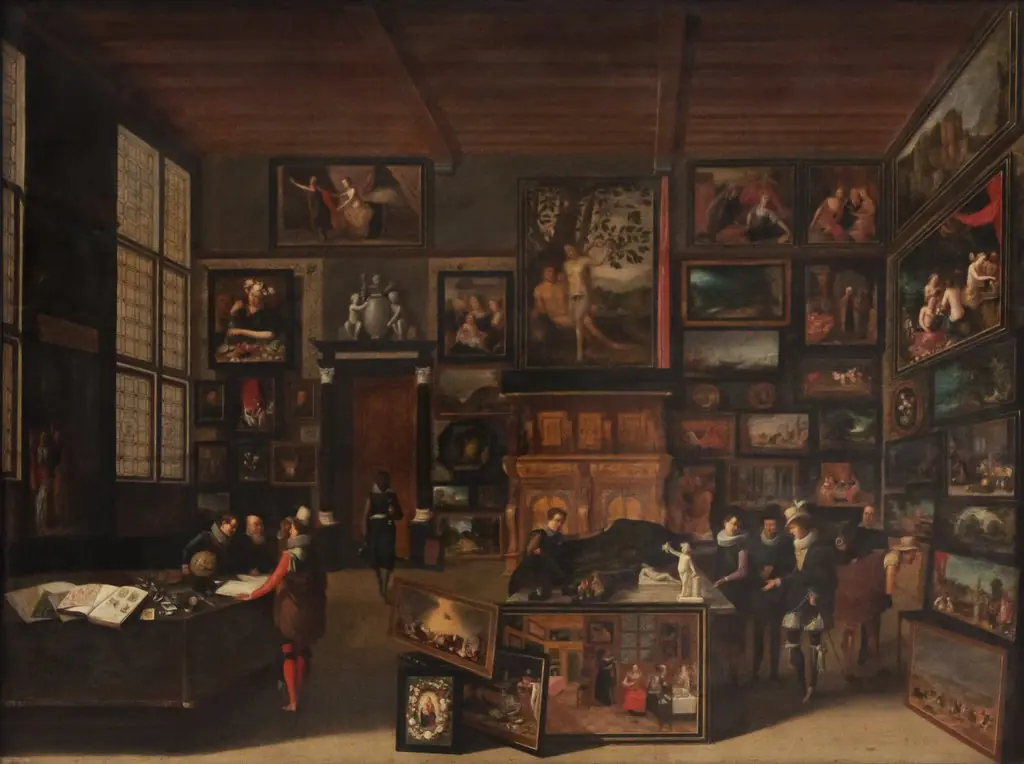 The Art Gallery of Jan Snellinck
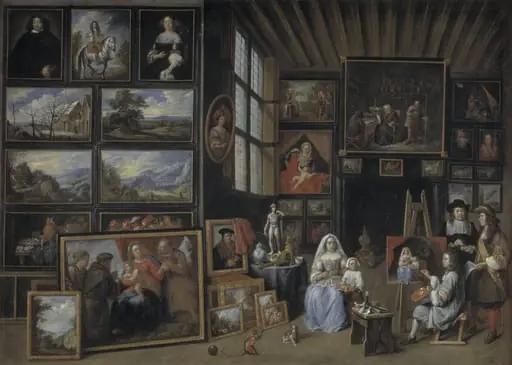 A Picture Gallery with an Artist Painting a Woman and a Girl. Allegory of the Art of Painting
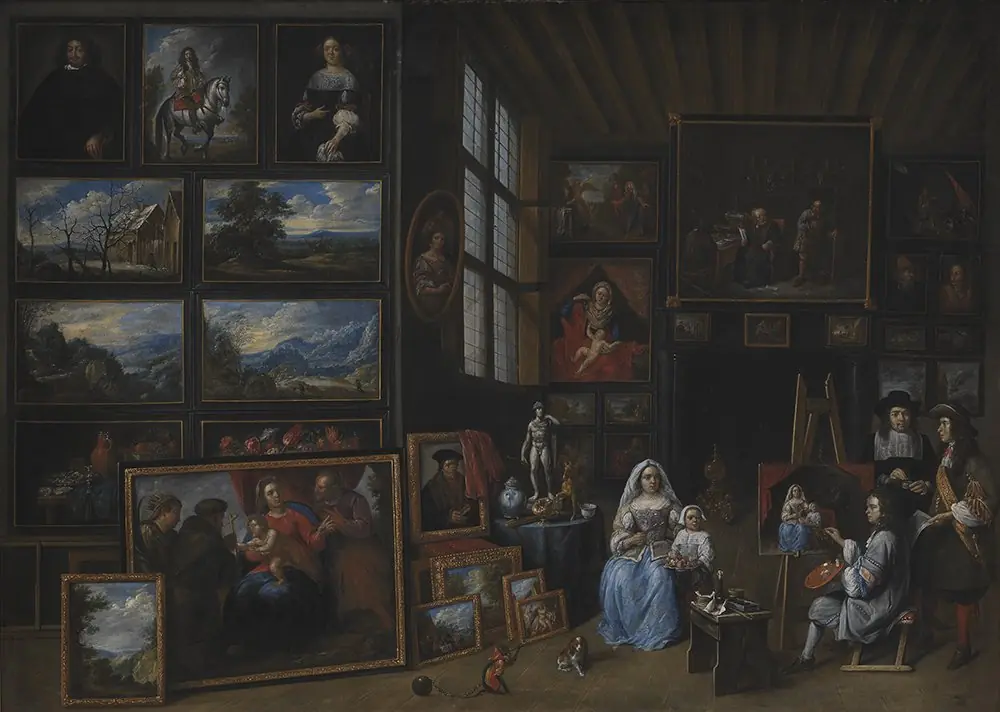 Et billedgalleri med en kunstner, der maler en kvinde og en pige. Allegori over malerkunsten