Artwork
The Senses of Hearing, Touch and Taste
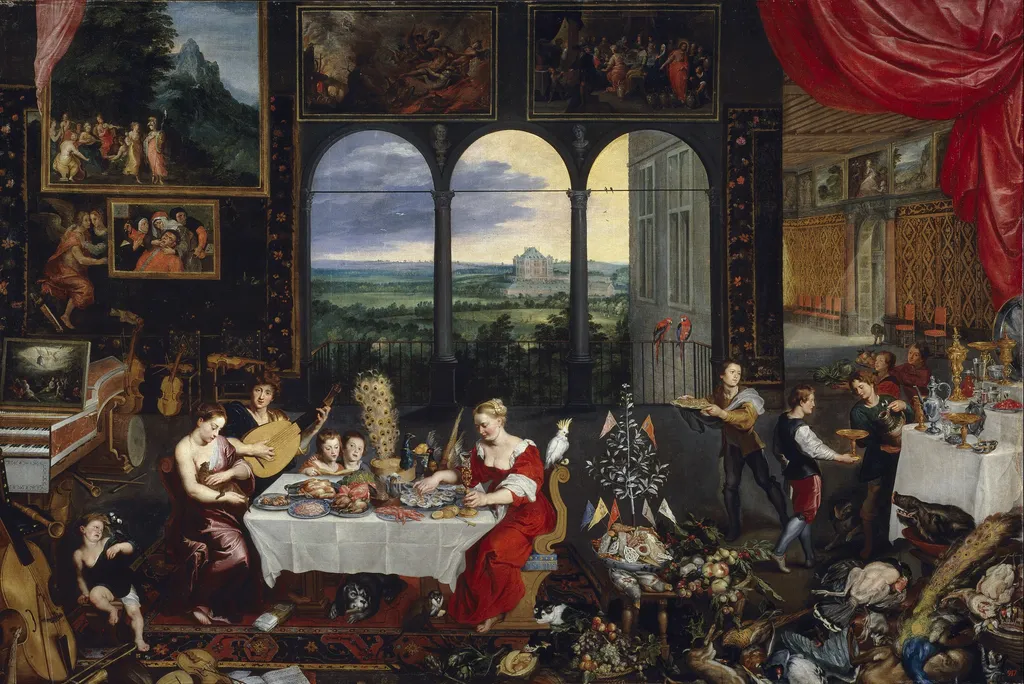
The Senses of Hearing, Touch and Taste is an oil painting by the Flemish Baroque painting artist Jan Brueghel, the elder. It dates from 1618 and is held in the collection of the Museo del Prado.
About this work
Subject & Meaning
The piece operates as an allegory, where the arrangement of objects and the interior view collectively represent the abstract concepts of sensory perception.
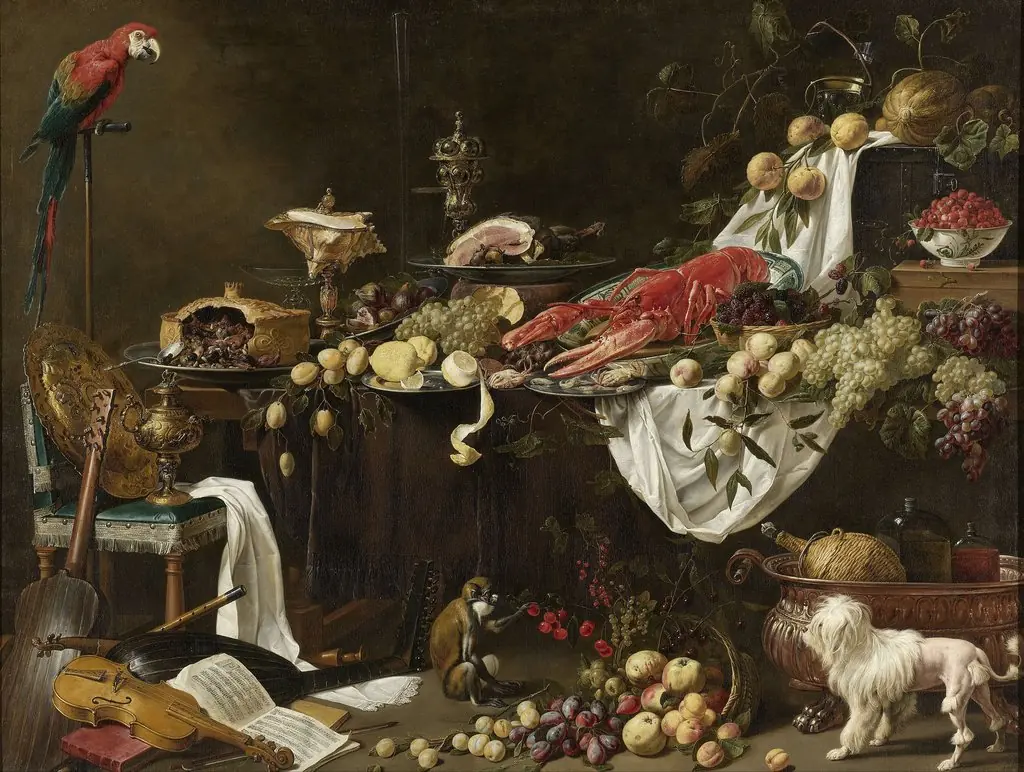
Created in 1618, this allegorical painting by Jan Brueghel the Elder depicts the senses of Hearing, Touch, and Taste within an interior setting. The work functions as a visual representation of these specific human faculties, utilizing symbolic objects to convey their meanings. The composition includes musical instruments, specifically a flute and a violin, which directly allude to the sense of Hearing.
These items, alongside other depicted paintings within the scene, serve as the primary iconographic elements that define the subject matter. The piece operates as an allegory, where the arrangement of objects and the interior view collectively represent the abstract concepts of sensory perception.
Technique & Style
Executed in 1618, this allegorical work by Jan Brueghel the Elder is realized in oil paint on a panel support. The composition functions as an interior view, densely populated with objects symbolizing the titular senses, including various musical instruments such as flutes and violins alongside depictions of other paintings. The large-scale format measures 176 cm in height and 264 cm in width, allowing for an extensive arrangement of these symbolic elements within the depicted space.
History & Provenance
Jan Brueghel the Elder painted The Senses of Hearing, Touch and Taste in 1618 as an oil on panel allegory. The work originally formed part of a series exploring the senses, with this piece specifically linked to the sense of hearing. After its creation it entered the collection of Ferdinand VII of Spain, who kept it in the Royal Palace of Madrid.
The painting remained in the Spanish royal collection before being transferred to the Museo del Prado, where it is presently housed. Its early ownership is documented through royal inventories, confirming the Spanish monarch’s stewardship of the artwork.
The work is held by the Museo del Prado, Madrid (inventory no. 1618).
It was painted in 1618 by Jan Brueghel the Elder and entered the Spanish royal collection before 1818, later passing to the Prado under Ferdinand VII. The painting was shown in the Museo del Prado’s 2018 exhibition Jan Brueghel the Elder (1568–1625): The Entry of the Animals into Noah’s Ark and Other Paintings from the Collection of Her Majesty the Queen of Spain, where it was identified as part of the series depicting the senses.
Context
Created in 1618, Jan Brueghel the Elder's The Senses of Hearing, Touch and Taste functions as an allegorical interior view within the artist's broader series on the senses. The work is currently held by the Museo del Prado in Madrid, having entered the collection under the ownership of Ferdinand VII of Spain. As a large-scale oil painting on panel measuring 176 by 264 cm, it exemplifies Brueghel's specialized approach to depicting complex allegories populated with detailed objects such as musical instruments.
The piece builds upon the thematic foundation of the sense of Hearing, situating itself within the early seventeenth-century Flemish tradition of sensory allegory.
Overview
Jan Brueghel the Elder's oil painting, The Senses of Hearing, Touch and Taste, completed in 1618, offers an allegorical exploration of human perception. This work, part of the Flemish Baroque tradition, presents a vibrant scene of individuals engaged in various activities that evoke these three senses. It is currently housed in the collection of the Museo del Prado in Madrid. The composition is rich with detail, inviting viewers to discern the symbolic elements.
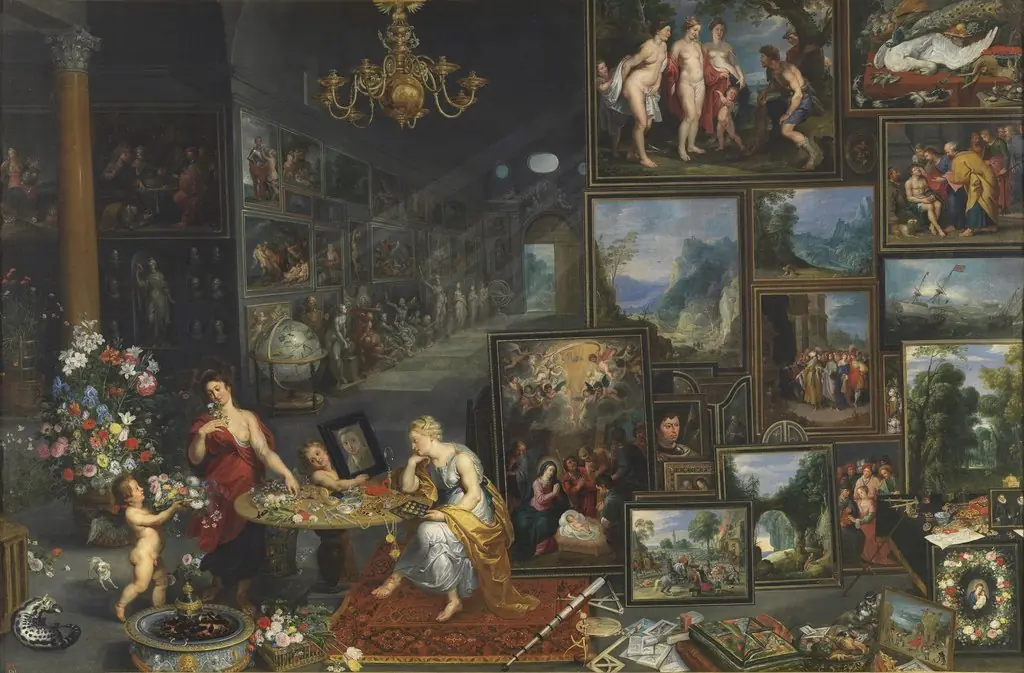
Own this work as a print
Artist & collection
Artist
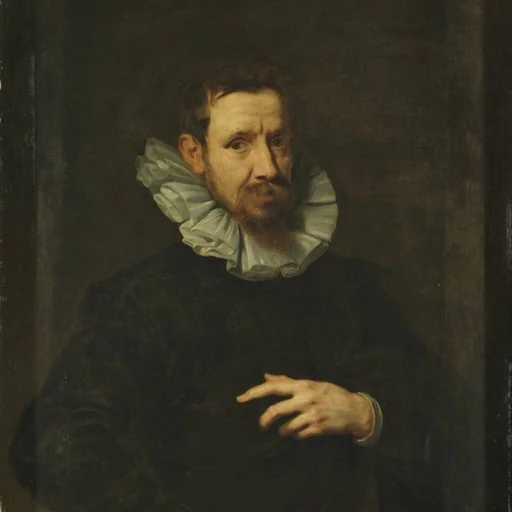
Jan Brueghel the Elder ( BROY-gəl, US also BROO-gəl; Dutch:; 1568 – 13 January 1625) was a Flemish painter and draughtsman.

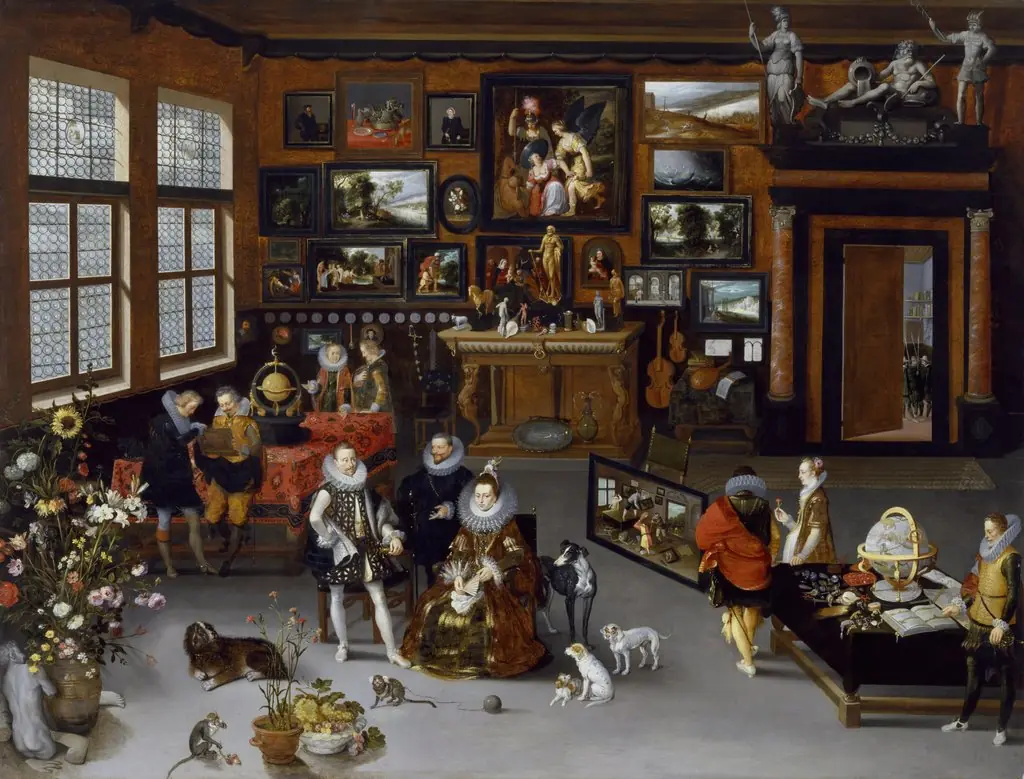 The Archdukes Albert and Isabella Visiting a Collector's Cabinet
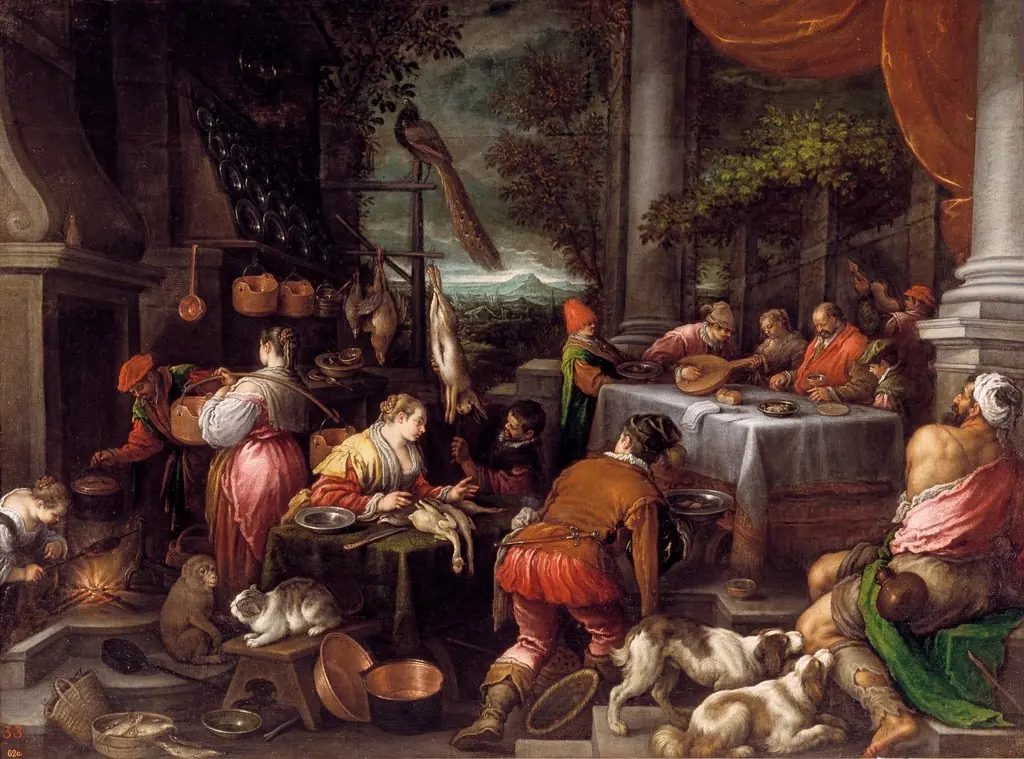 Lazarus and Dives
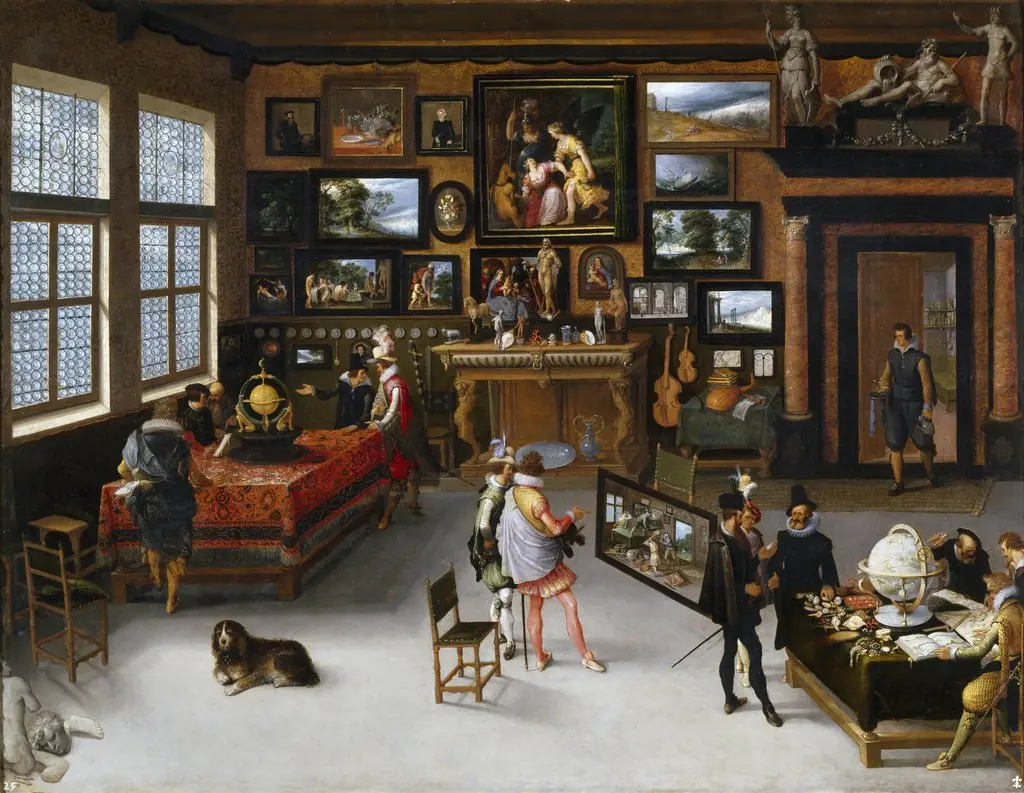 The Sciences and Arts
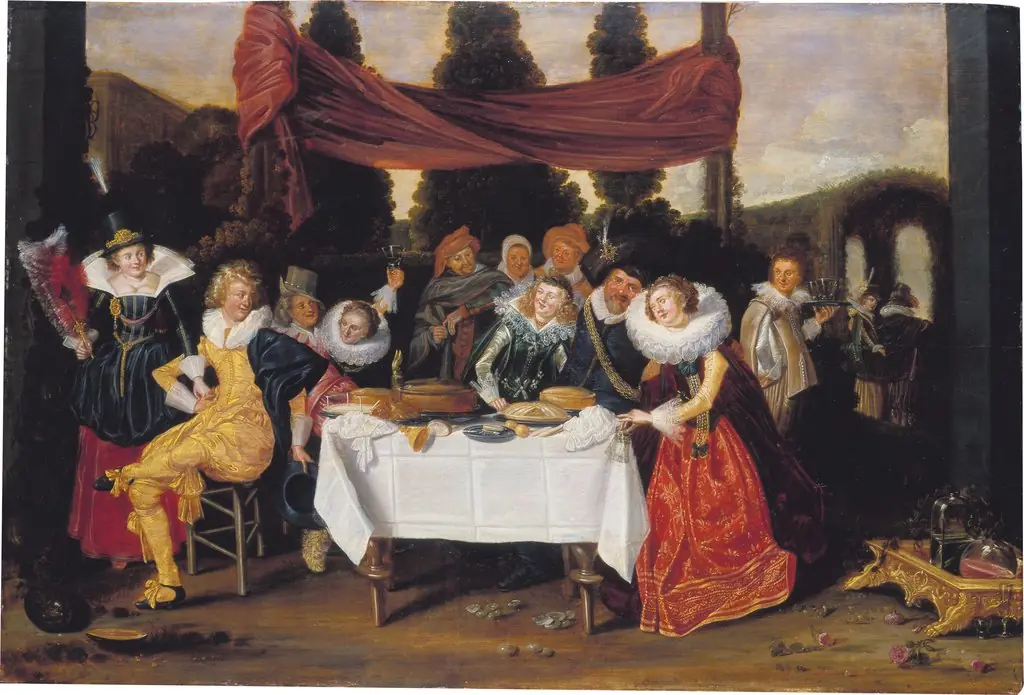 Merry Company
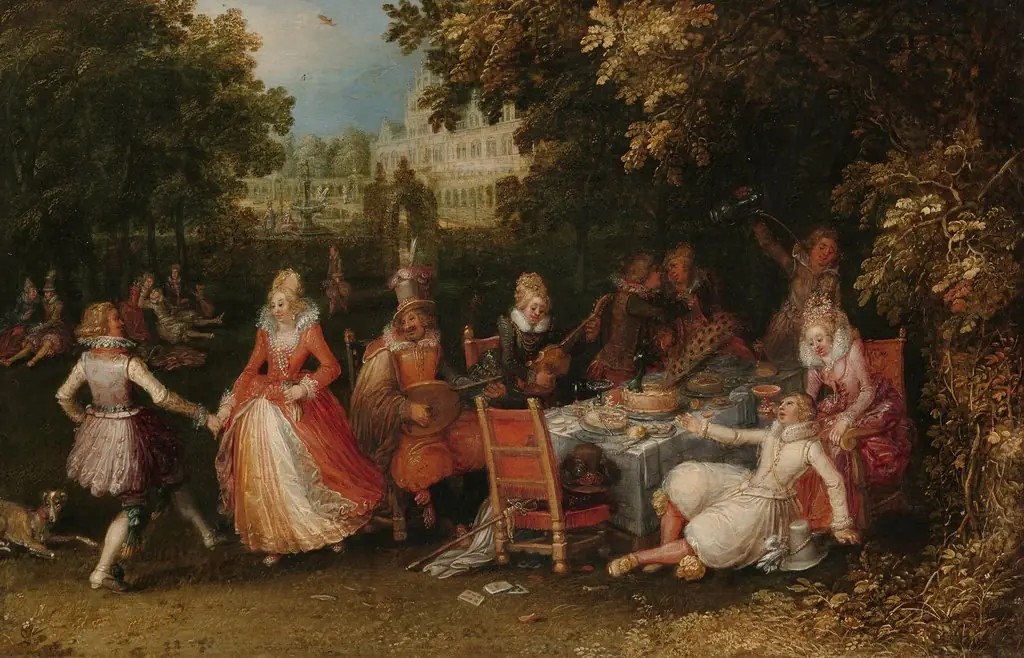 The fête champêtre
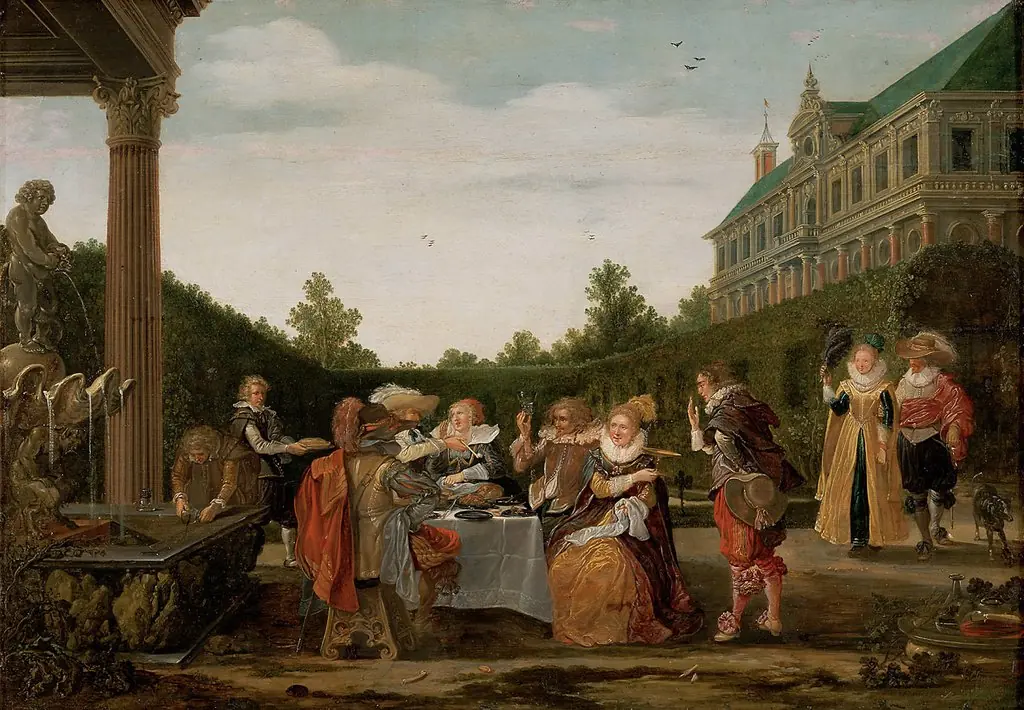 Banquet in a palatial garden, with an elegant company drinking and in conversation
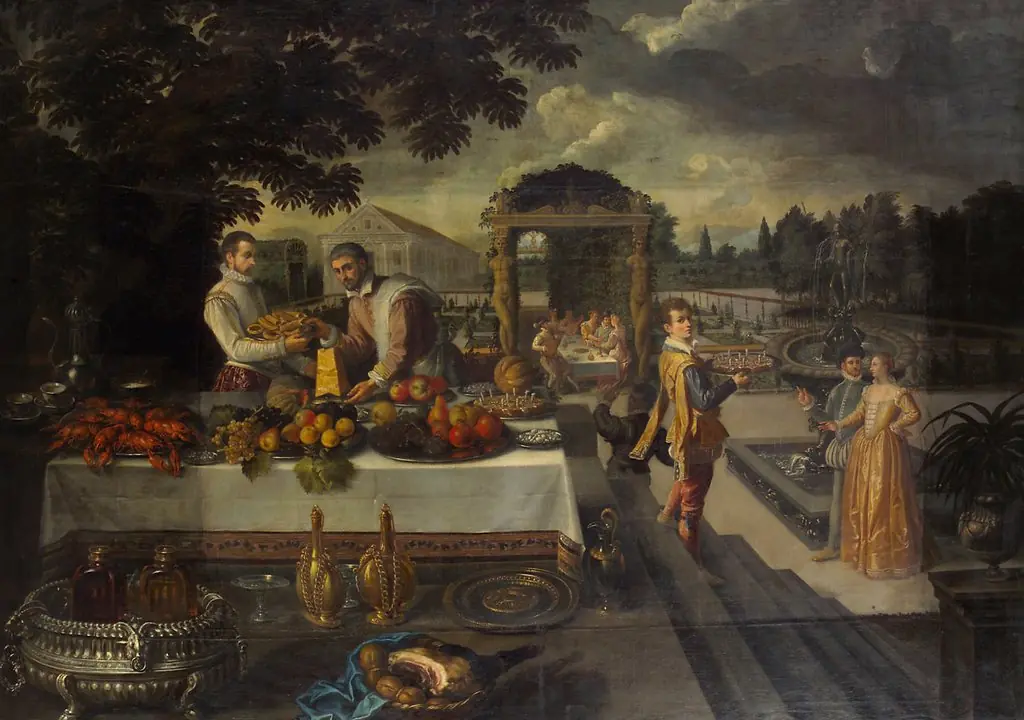 Banquet in the Park
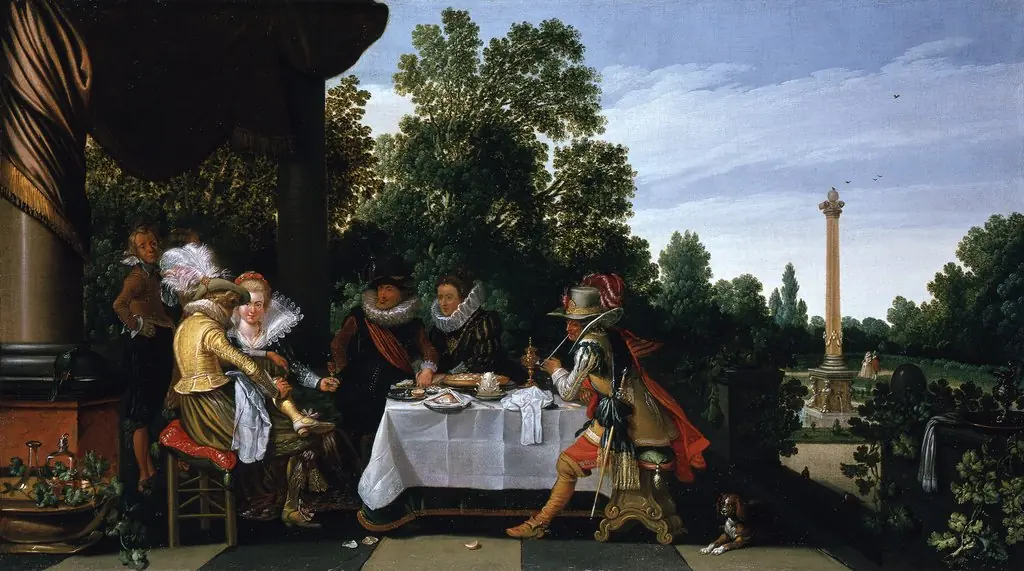 Elegant company eating, drinking, smoking and in conversation on a terrace
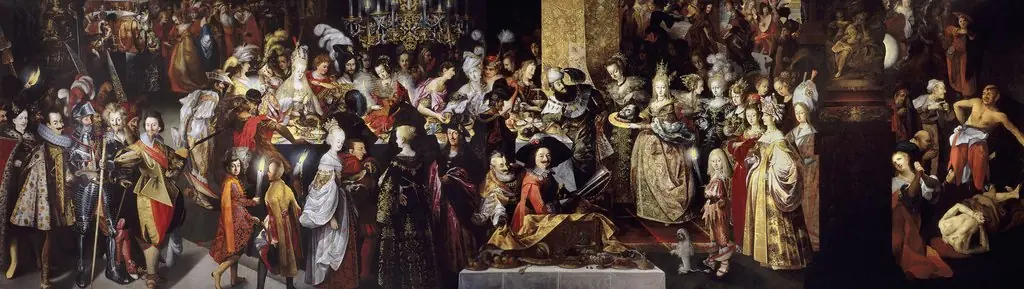 Feast of Herod with the Beheading of St John the Baptist
 Christ Healing at the Pool of Bethesda
 Banquet Still Life