Artwork
Allegory of Sight and Smell
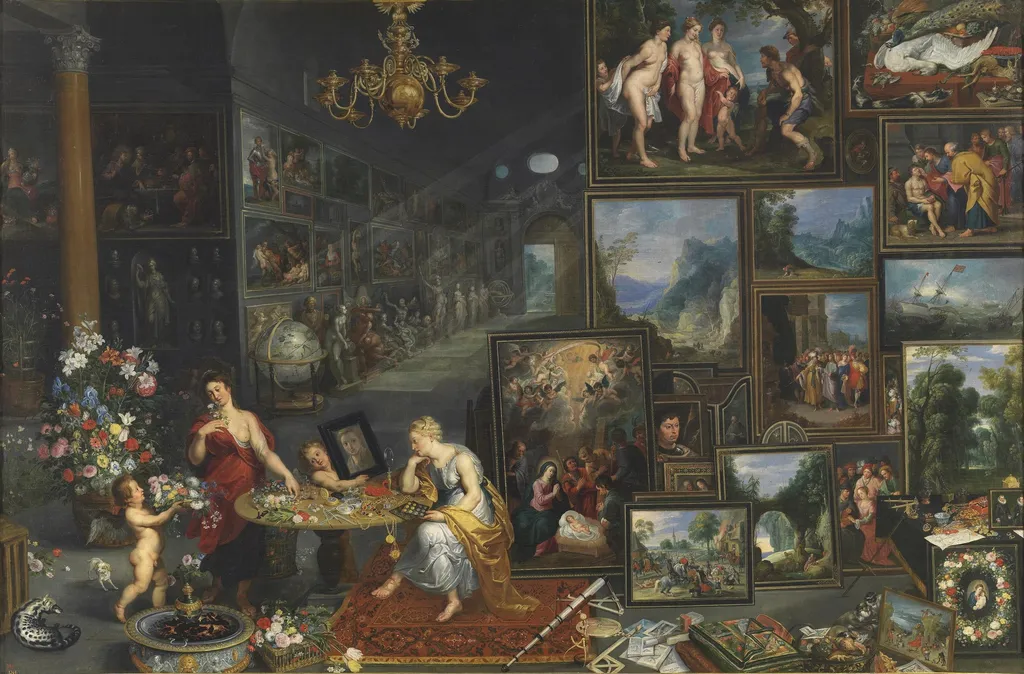
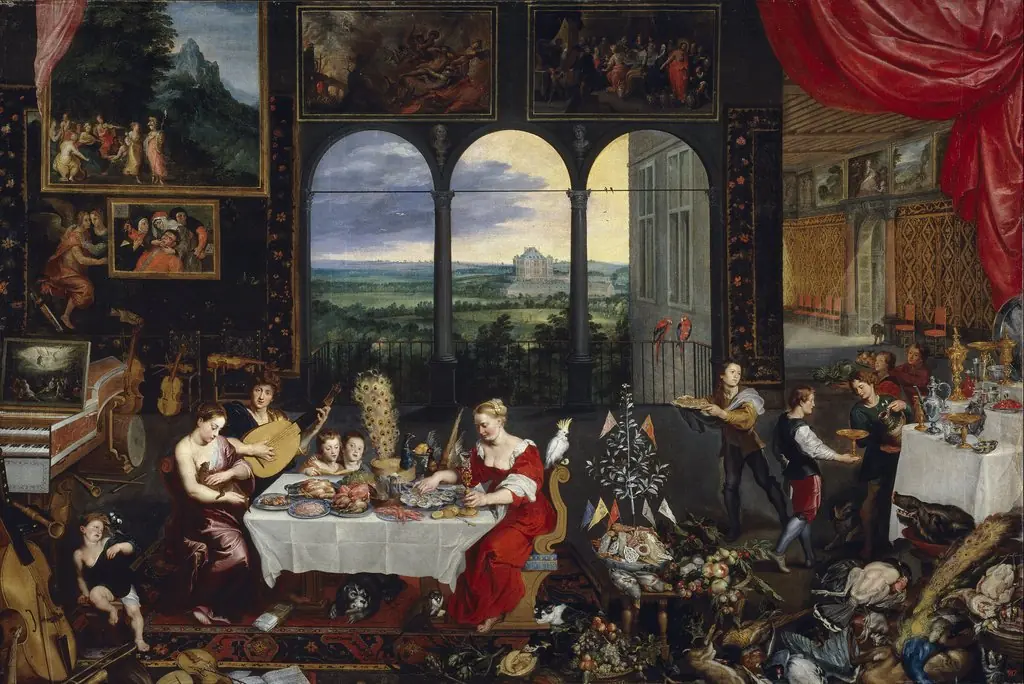
Allegory of Sight and Smell is an oil painting by the Flemish Baroque painting artist Jan Brueghel, the elder. It dates from 1620 and is held in the collection of the Museo del Prado.
About this work
Subject & Meaning
The work belongs to a pair alongside the Allegory of Taste, Hearing, and Touch.
The Allegory of Sight and Smell is a collaborative painting that personifies two of the five senses within a palace interior filled with artworks, flowers, and curiosities. The sense of smell is embodied by a woman in a red robe receiving a bouquet of flowers from a putto, while the sense of sight is represented by a woman gazing at her reflection in a mirror held by another putto. Each depicted object and animal corresponds to one of the two senses: a dog evokes a keen sense of smell, and a civet suggests foul odor, while the surrounding paintings illustrate both physical sight and spiritual sight, including depictions of the healing of the man born blind.
The painting also functions as a visual inventory of the art collections of Archduke Albert of Austria and Infanta Isabella Clara Eugenia of the Archduchy of Brussels, incorporating their portrait and works by Flemish masters such as Rubens, including a version of The Tiger Hunt and a Silenus. The work belongs to a pair alongside the Allegory of Taste, Hearing, and Touch.
Technique & Style
The Allegory of Sight and Smell is executed in oil paint on panel, a support typical of Flemish cabinet pictures of the early seventeenth century. The work measures 176 cm in height by 264 cm in width, making it a sizable horizontal composition suited to its allegorical and collector-cabinet subject matter. Brueghel's technique is described as a demonstration of his technical capabilities, with the painting functioning as a showcase of refined Flemish oil-handling at its most virtuosic.
The composition is the result of a collaborative effort: while Jan Brueghel the Elder is the principal author, the work also involved Hendrick van Balen the Elder, Frans Francken the Younger, Sebastiaen Vrancx, Gerard Seghers, and Joos de Momper, a division of labor characteristic of the Brueghel workshop's collaborative productions. The painting belongs to a paired allegorical series, of which it forms the visual counterpart to the Allegory of Taste, Hearing and Touch, both works having been held at the Torre de la Reina in the Royal Alcázar of Madrid since 1623.
History & Provenance
Painted around 1618 by Jan Brueghel the Elder, possibly with collaborations from Gerard Seghers, Frans Francken the Younger, and Joos de Momper, this oil panel forms part of a series depicting the senses. The artwork likely illustrates artifacts from the collection of Archduke Albert of Austria and Infanta Isabella Clara Eugenia, featuring their portraits alongside works by Peter Paul Rubens. By 1623, the painting had arrived in Madrid, where it was installed in the Torre de la Reina at the Royal Alcázar alongside its companion piece, the Allegory of Taste, Hearing, and Touch.
The work eventually entered the possession of Ferdinand VII of Spain and is currently held in the collection of the Museo del Prado.
The Allegory of Sight and Smell by Jan Brueghel the Elder is held in the collection of the Museo del Prado in Madrid, Spain, where it remains today. The painting entered the museum’s holdings by 1623, when it was recorded as part of the collection of the Torre de la Reina in the Royal Alcázar of Madrid. It is accessioned under the museum’s permanent inventory as a work from the early 17th-century Flemish school.
The painting has not been loaned for major international exhibitions since its arrival in Spain, remaining continuously in the Prado’s collection.
Overview
Jan Brueghel the Elder, a prominent Flemish Baroque artist, completed Allegory of Sight and Smell in 1620 using oil paint. This work exemplifies the allegorical genre, showcasing the artist's ability to integrate intricate still-life elements with expansive thematic concepts. The painting is notable for its densely packed composition, featuring numerous objects and scenes that invite close examination. It is currently housed in the Museo del Prado in Madrid.
Own this work as a print
Artist & collection
Artist
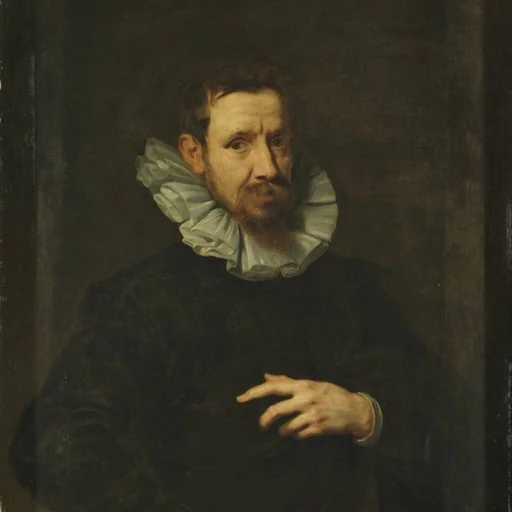
Jan Brueghel the Elder ( BROY-gəl, US also BROO-gəl; Dutch:; 1568 – 13 January 1625) was a Flemish painter and draughtsman.

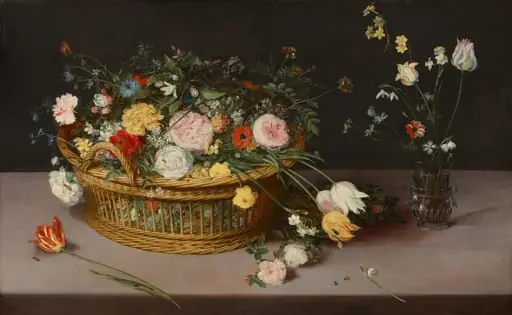
 Intérieur avec personnages devant une collection de peintures
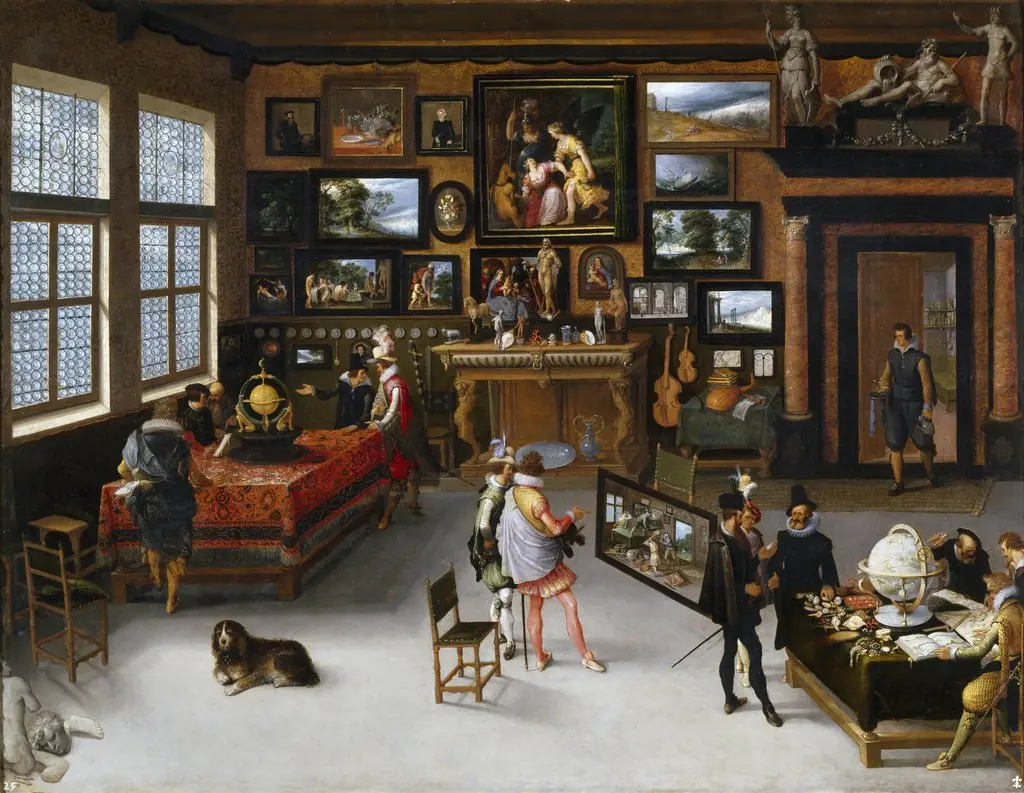 The Sciences and Arts
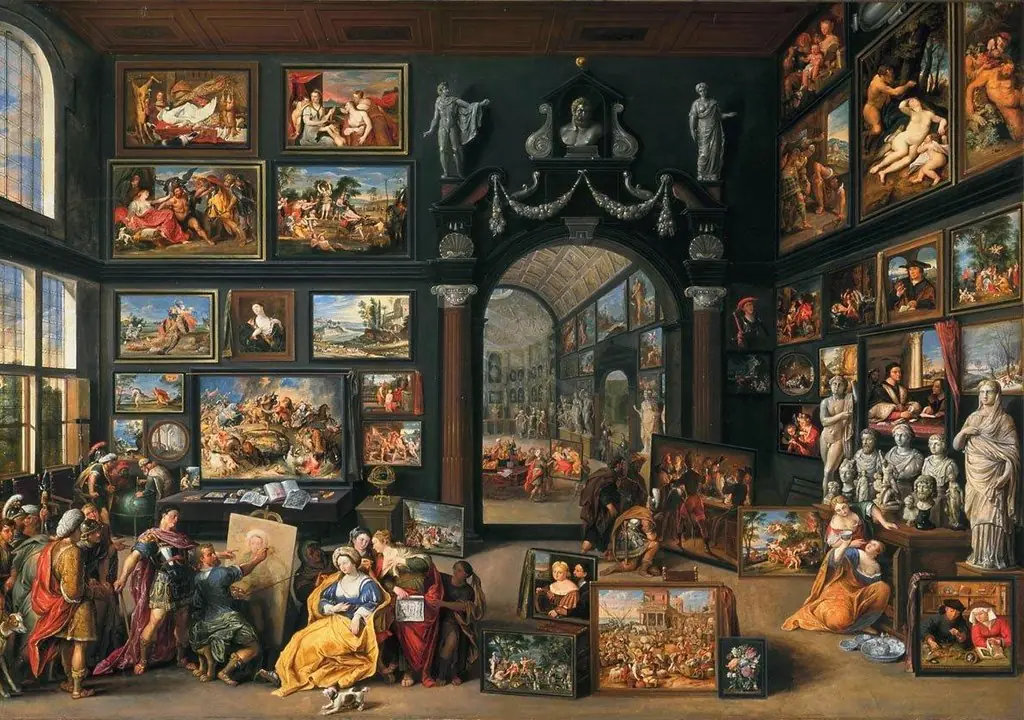 Appelles painting Campaspe
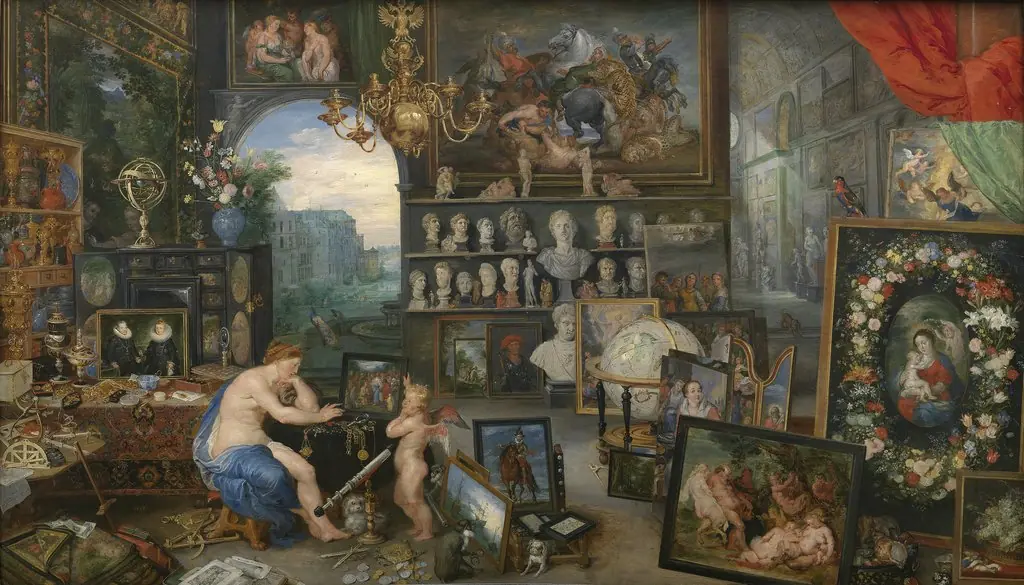
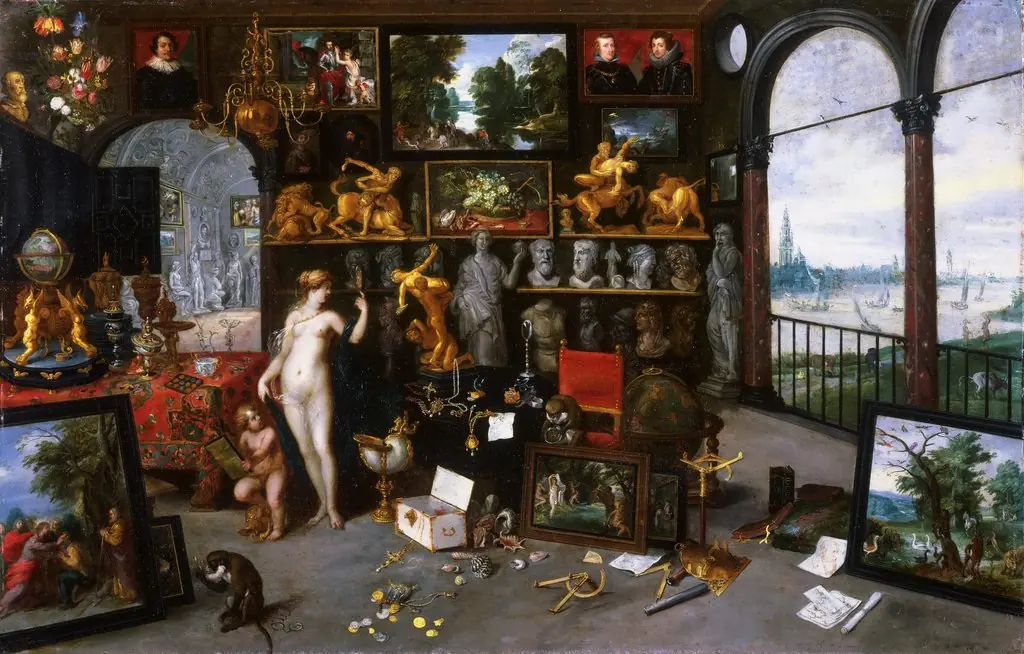 Allegory of Sight (Venus and Cupid in a Picture Gallery)
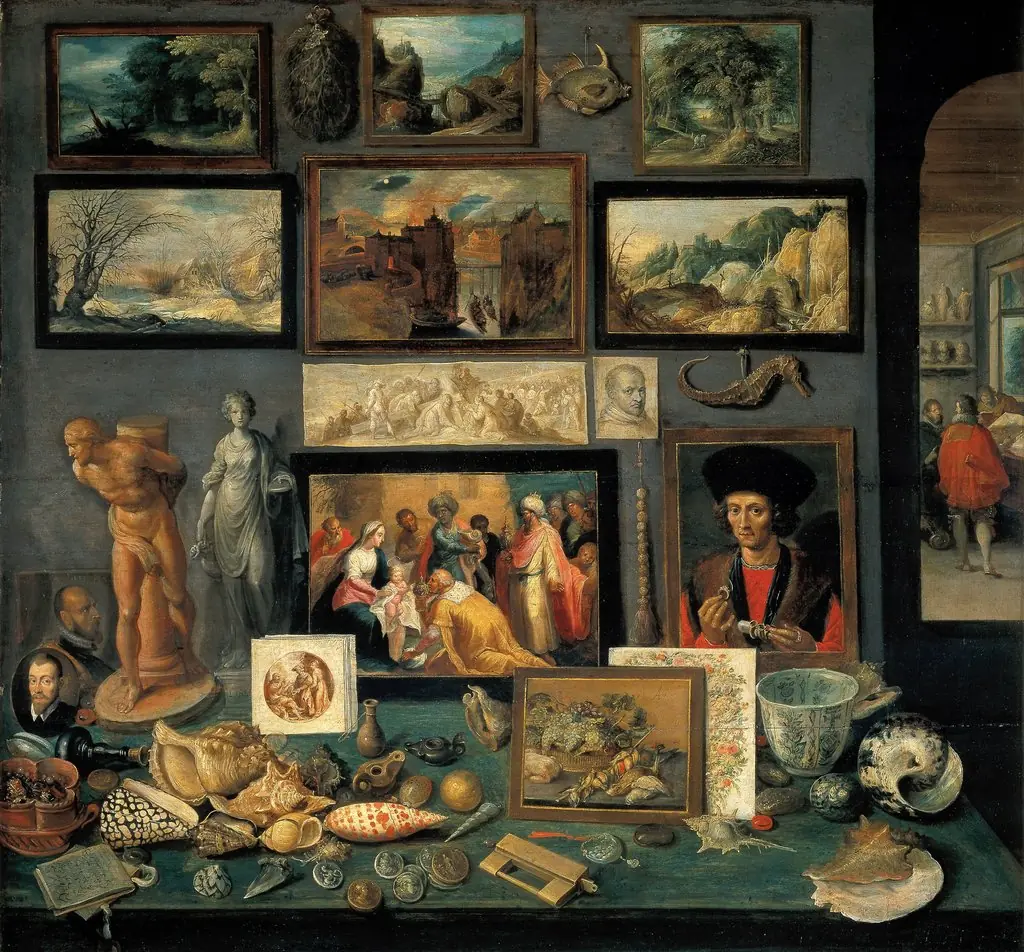 Chamber of Art and Curiosities
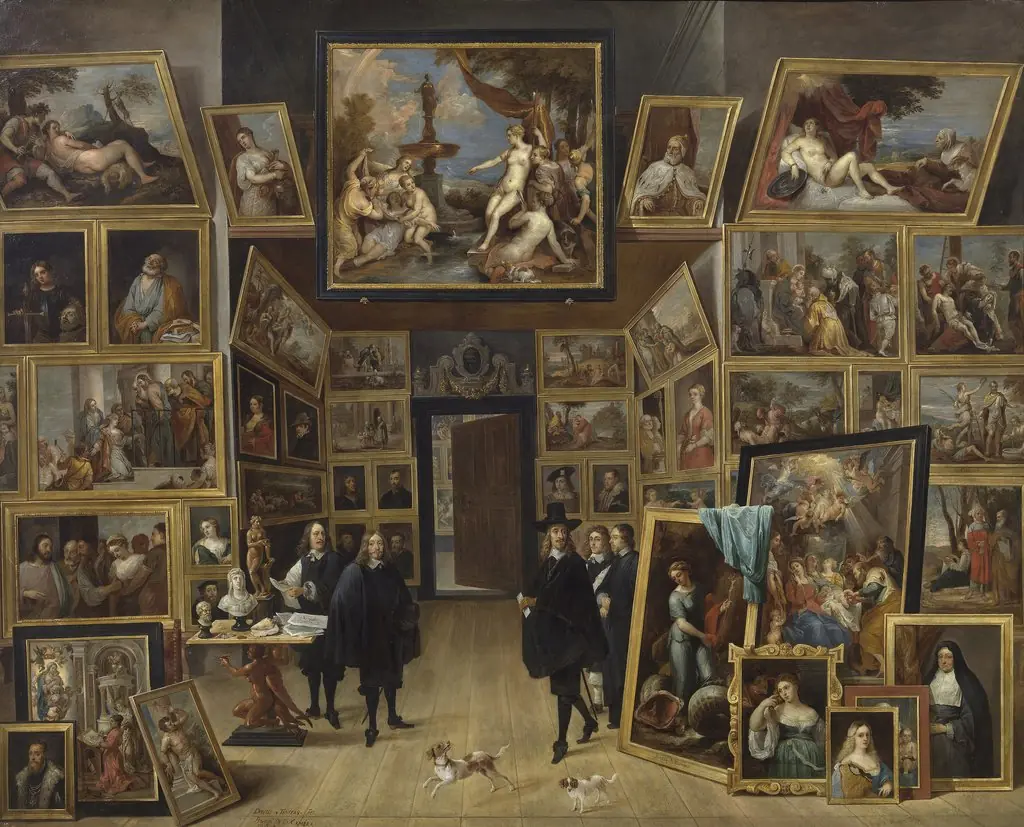 Archduke Leopold Wilhelm in his Gallery
 A Picture Gallery with an Artist Painting a Woman and a Girl. Allegory of the Art of Painting
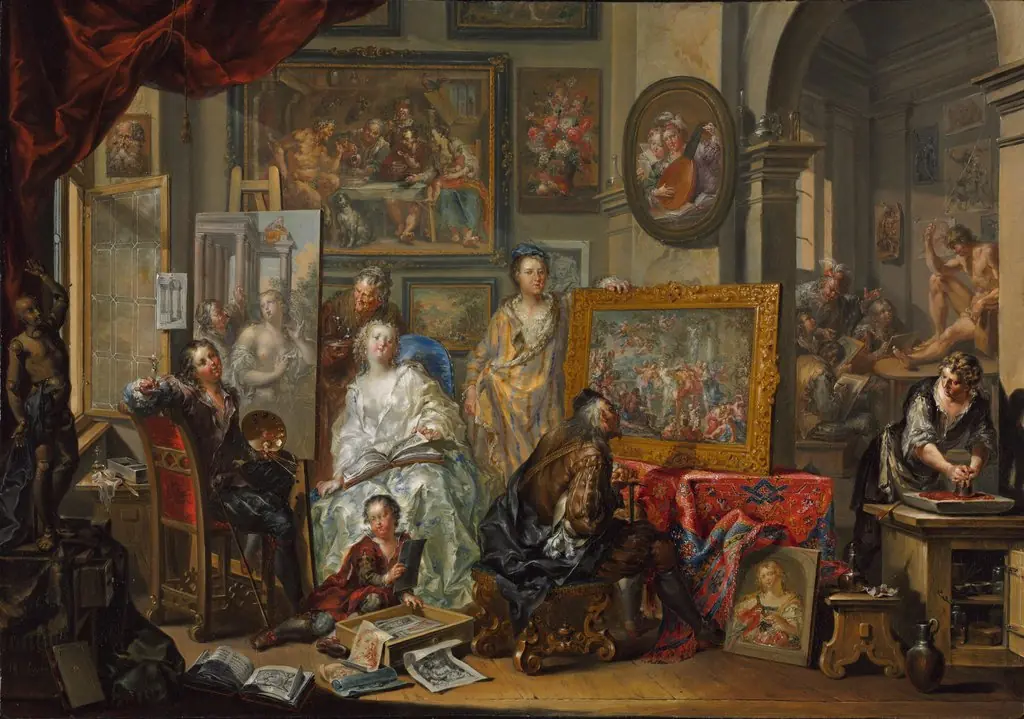 The Artist's Studio
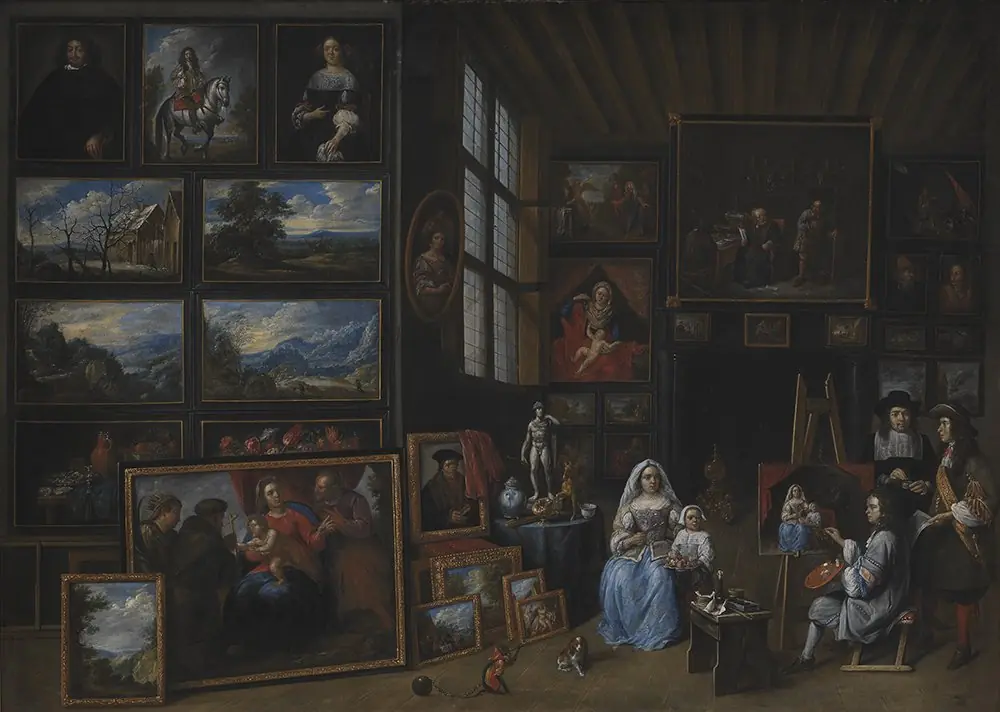 Et billedgalleri med en kunstner, der maler en kvinde og en pige. Allegori over malerkunsten
 Art and Rarity Cabinet
 The Senses of Hearing, Touch and Taste
- The Sense of Sight