Artwork
Portrait of Alexander Lensky (1847–1908), Russian artist
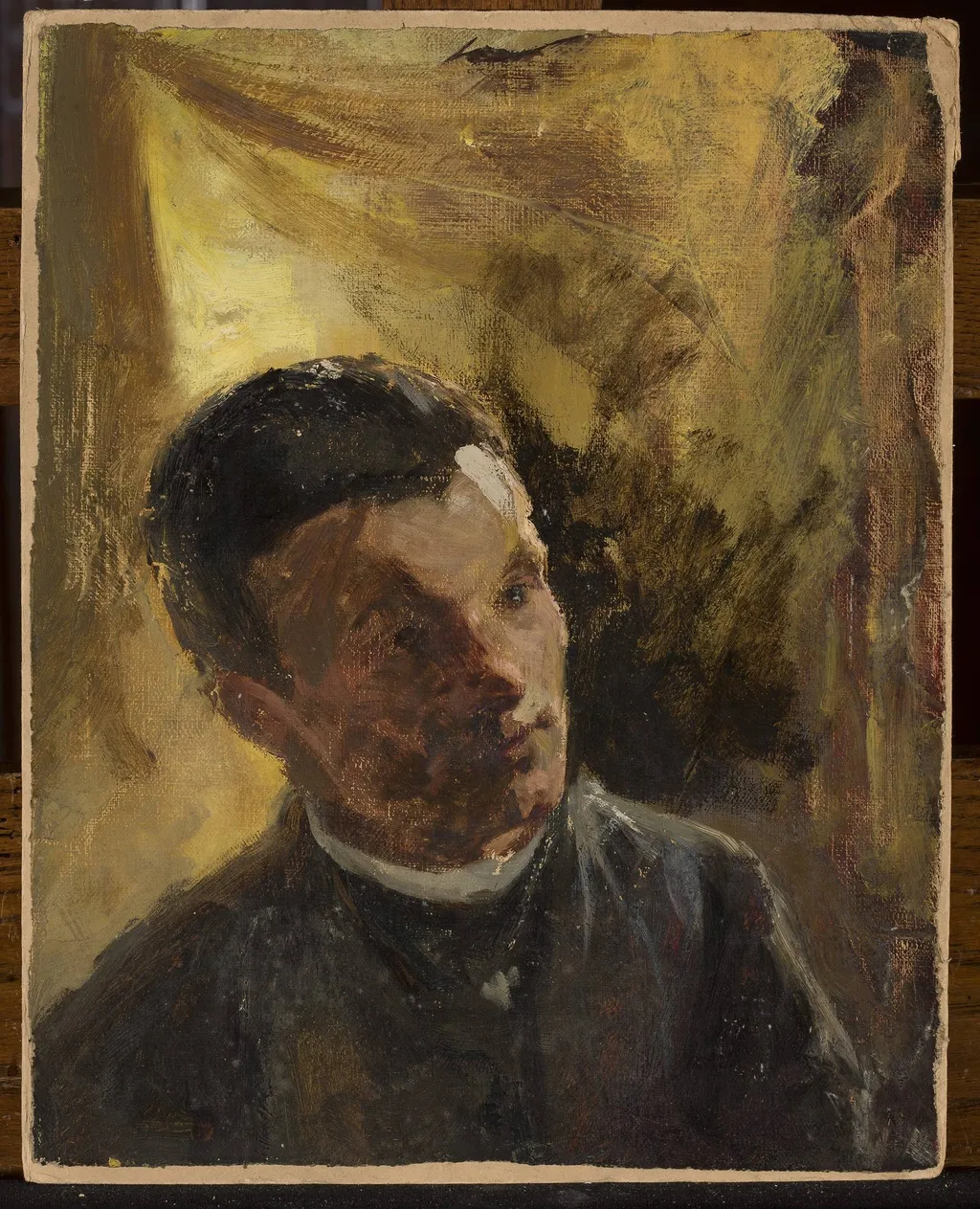
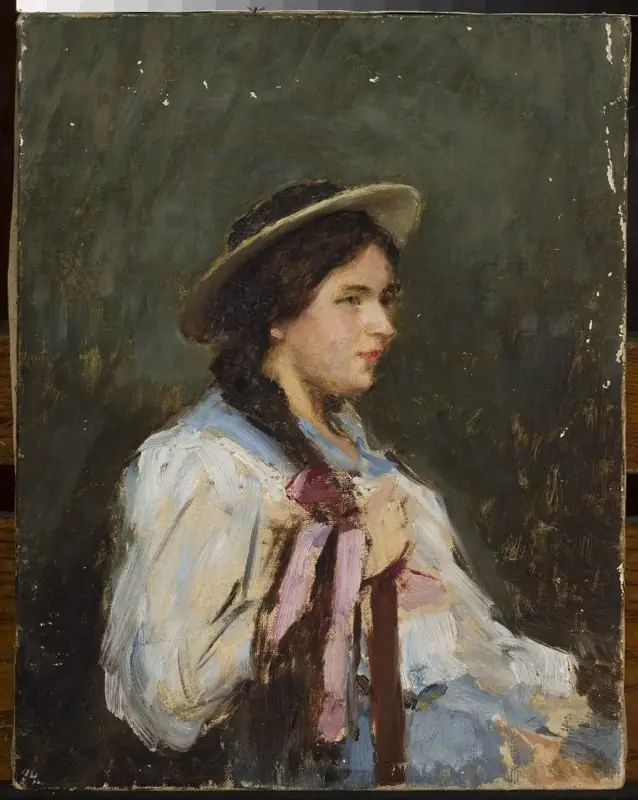
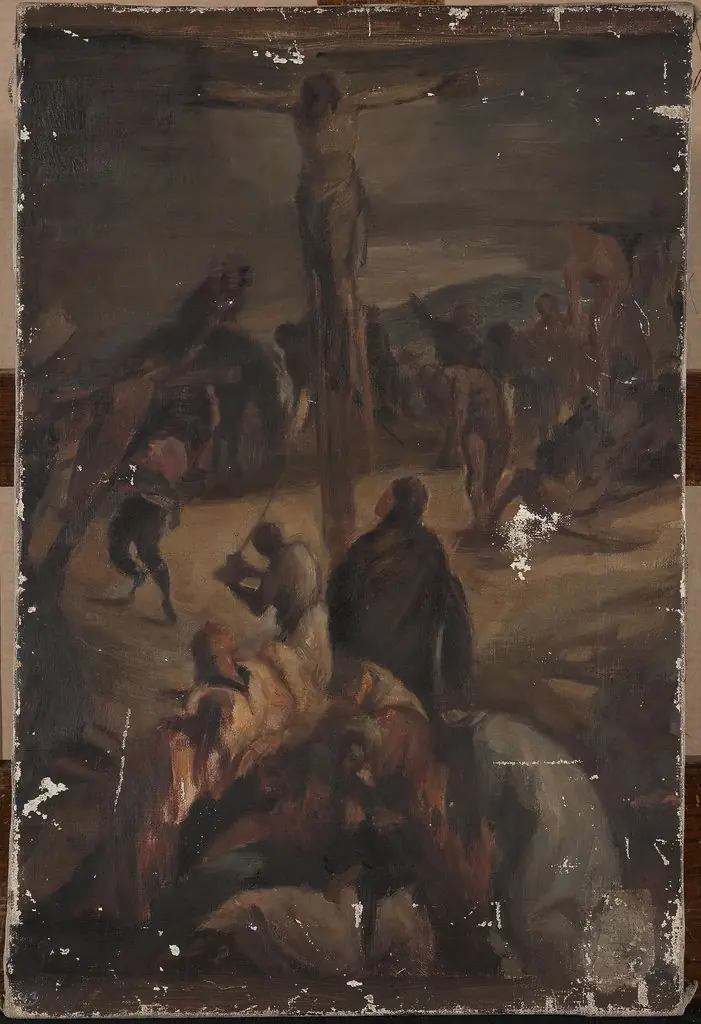
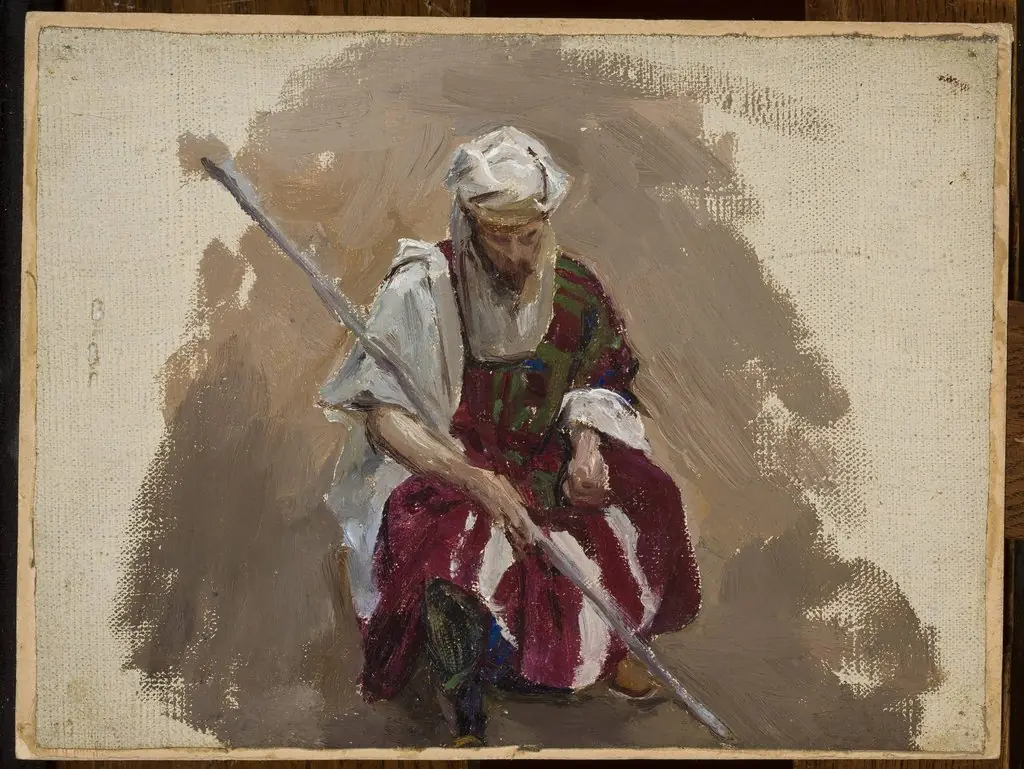
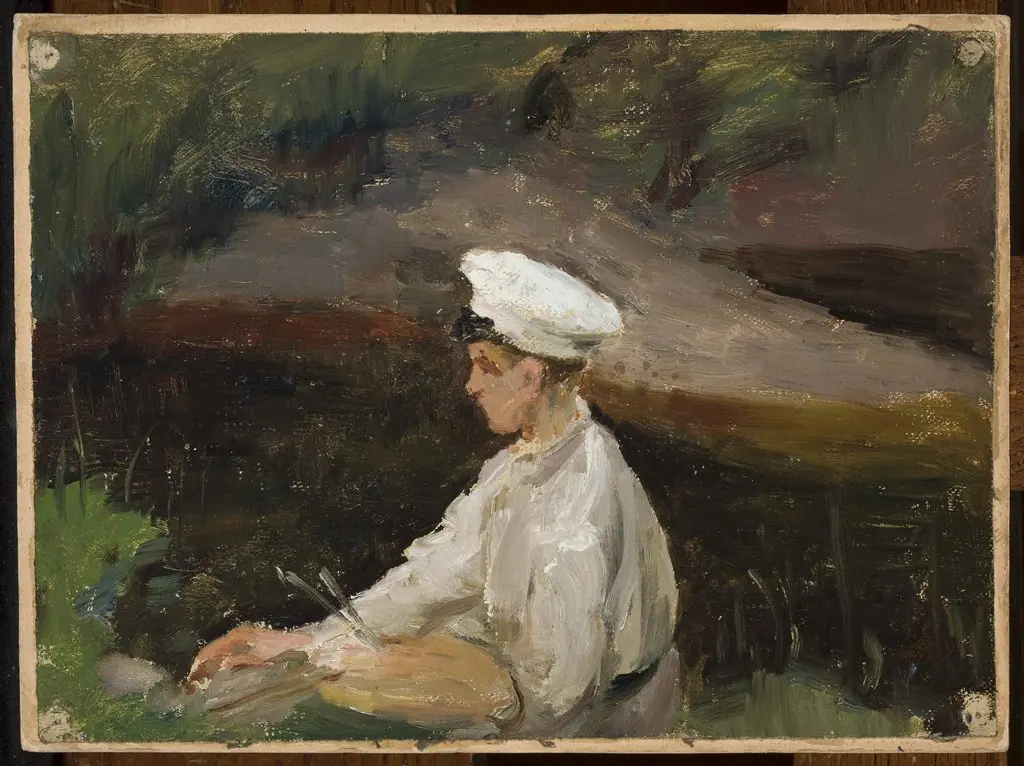
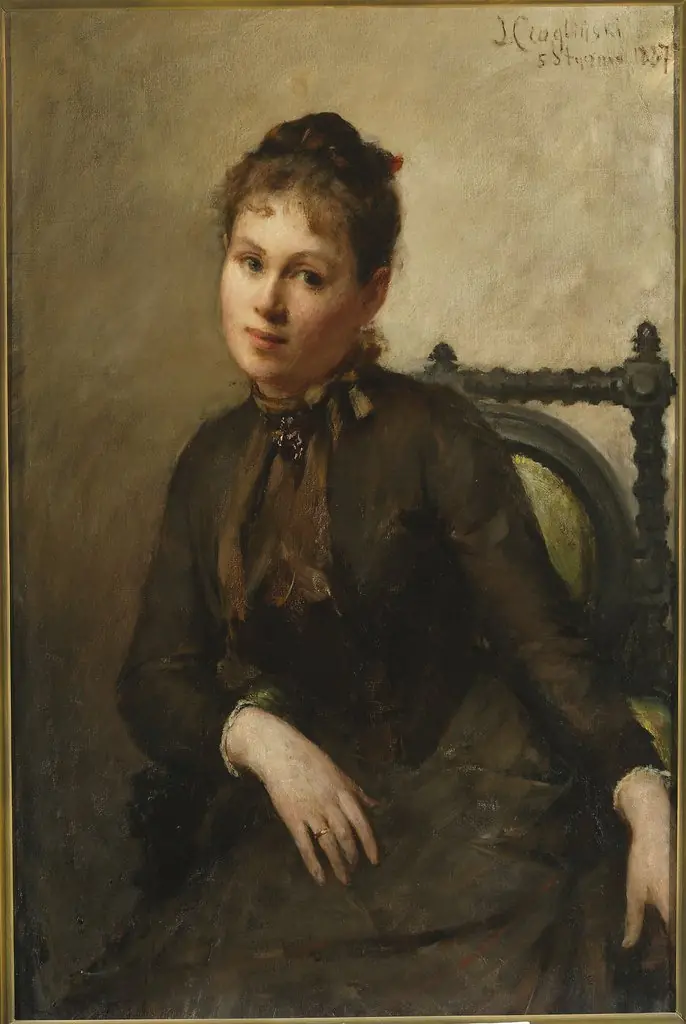
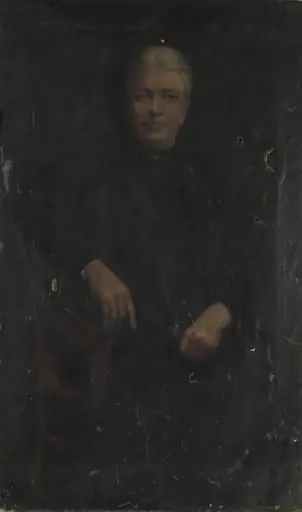
Portrait of Alexander Lensky (1847–1908), Russian artist is an unspecified painting by the Realist artist Jan Ciągliński. It dates from 1895 and is held in the collection of the National Museum in Warsaw.
About this work
Overview
It is held in the collection of the National Museum in Warsaw.
The Portrait of Alexander Lensky (1847-1908), Russian artist is an oil painting by Jan Ciągliński, a Polish-born painter who became a pivotal figure in early Russian Impressionism. The work, measuring 39.3 by 31.4 centimeters, is a bust-length portrait executed on canvas. It is held in the collection of the National Museum in Warsaw. The painting exemplifies Ciągliński's characteristic approach to portraiture, combining visible, energetic brushwork with a penetrating study of a notable cultural figure of late Imperial Russia. As a portrait of Aleksandr Pavlovich Lensky, a prominent Russian actor, the work sits at the intersection of Ciągliński's broader practice of depicting performers and his role in introducing Impressionist techniques to Russian painting circles at the turn of the twentieth century.
Subject & Meaning
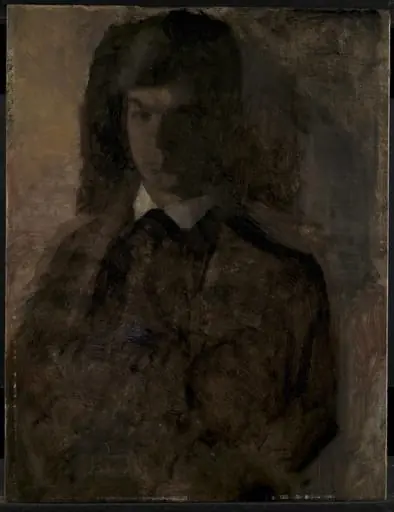
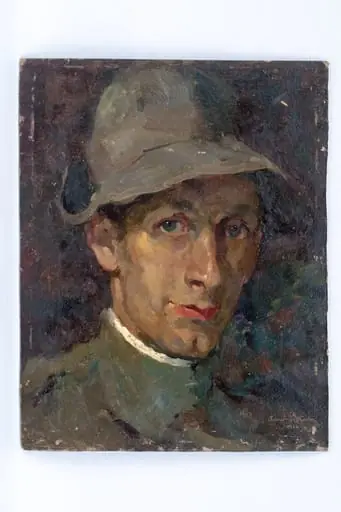
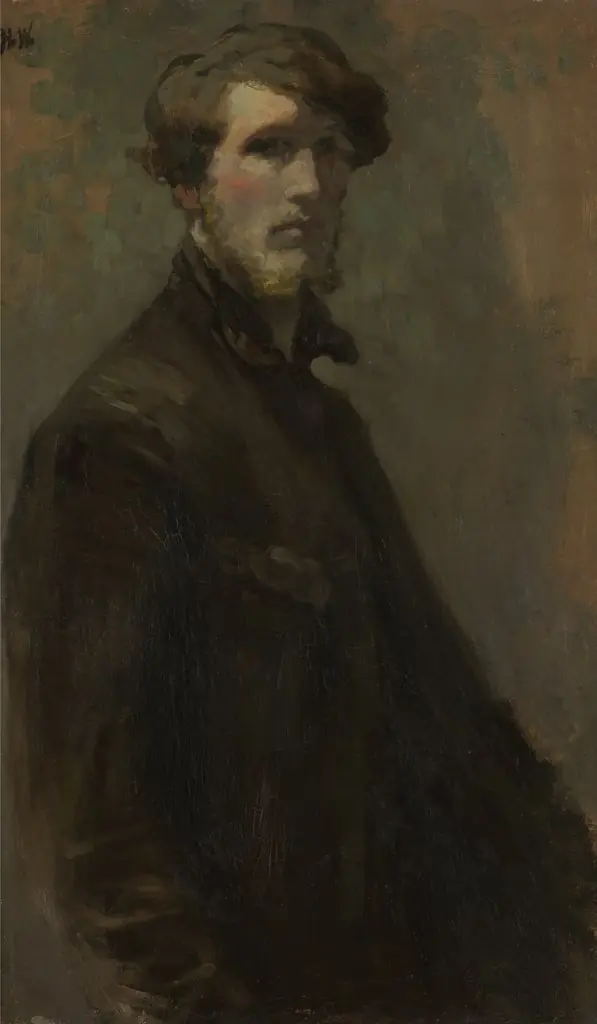
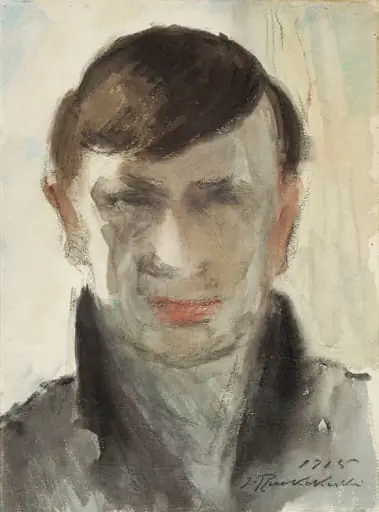
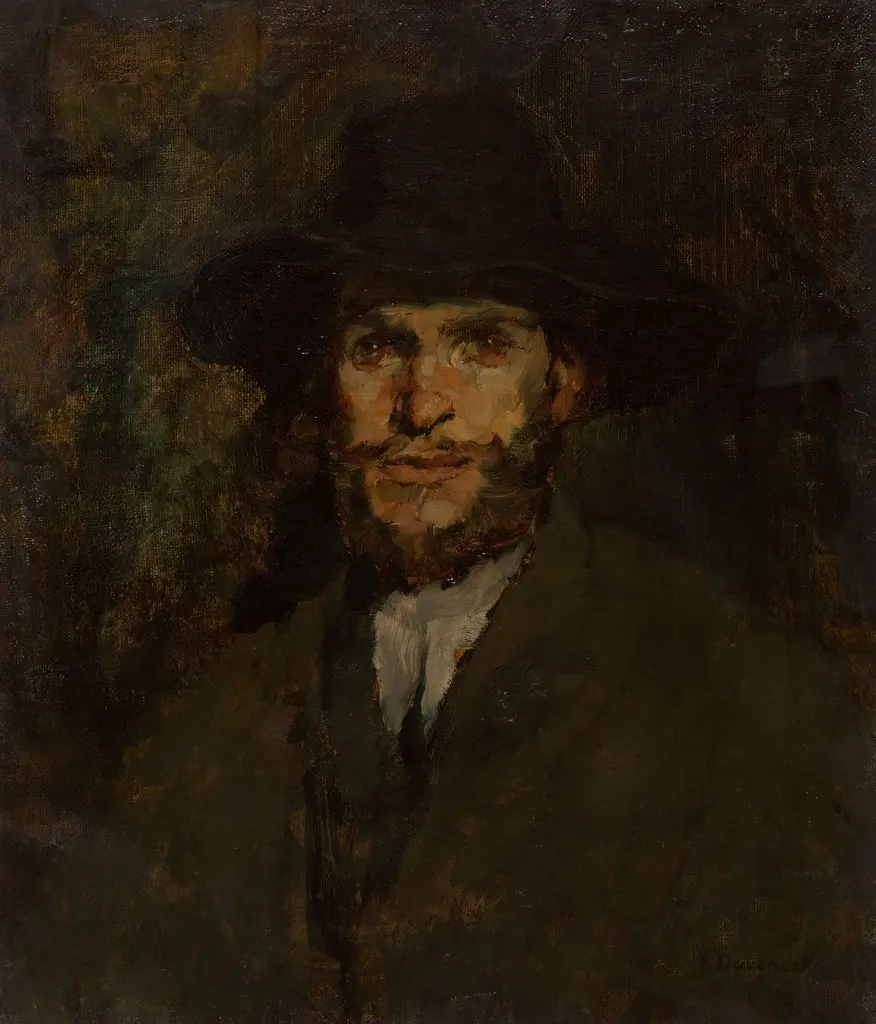
The subject, Aleksandr Pavlovich Lensky (1847-1908), was a distinguished Russian actor rather than a visual artist, a point clarified by the more reliable source identification. The portrait presents Lensky in a three-quarter view facing right, his gaze directed slightly upward in a manner that conveys contemplation or theatrical intensity. His dark, slicked-back hair with a prominent white highlight on the forehead and his dark mustache are rendered with careful attention to individual character. The light-colored collar visible at his neck provides a point of luminosity against the otherwise somber tonality of his garments. The composition positions Lensky slightly off-center, creating a dynamic rather than static presence. The warm, abstract background of yellows, ochres, and browns suggests an atmospheric setting rather than a specific location, focusing attention on the psychological presence of the sitter. This treatment aligns with Ciągliński's broader interest in capturing the inner life of his subjects, particularly those from the performing arts, among whom he counted many of his portrait subjects.
Technique & Style
The painting demonstrates the hallmarks of Ciągliński's technique and his position as an early proponent of Impressionism in Russian art. The brushwork is consistently visible and textured throughout the composition: thick, directional strokes animate the background while the face receives more blended though still apparent handling. Light falls from the upper left, illuminating the left side of the forehead and cheek while the right side recedes into shadow, modeling the facial structure through chiaroscuro. The paint surface shows deliberate variation in finish, with some areas more thickly applied and others thinner, allowing the canvas texture to remain perceptible. The edges of the painted surface reveal the raw canvas border, suggesting either an intentional modernist framing device or the preservation of the work's original physical state. The palette is muted and earthy, with dark clothing contrasting against the lighter, warmer background tones. This approach reflects what contemporaries described as Ciągliński's fast, passionate method of working, which earned him the nickname neistovym Yanom (fierce or frenetic Jan).
History & Provenance
The specific date of the portrait's execution is not recorded in the available sources, though it falls within Ciągliński's mature period when he was established in Saint Petersburg and actively producing portraits of cultural figures. The artist had settled in Russia permanently after receiving a remunerative commission, and by the time of this portrait he had become a lecturer at the Society for the Encouragement of the Arts, a founding member of Mir iskusstva (World of Art), and from 1902 a teacher at the Imperial Academy. The painting's provenance reflects the complex fate of Ciągliński's oeuvre. Although he was better known in Russia during his lifetime, his last will and testament bequeathed his works to Poland. By 1922, most had been transferred there. Due to subsequent border changes, some works are now in Ukraine. This particular portrait is now in the collection of the National Museum in Warsaw, where it is catalogued among sixty-one portrait paintings by the artist in that institution. The accession details and specific exhibition history are not documented in the provided sources.
Context
Jan Ciągliński occupies a significant though sometimes overlooked position in the history of Russian art as one of the first practitioners of Impressionism in that context. Born into a Polish noble family, he studied at the University of Warsaw and the Imperial Academy of Arts before establishing himself in Saint Petersburg, where he became integrated into the city's artistic and cultural circles. His role as a founding member of Mir iskusstva connected him to the most progressive artistic tendencies of the period, while his teaching positions at the Society for the Encouragement of the Arts and the Imperial Academy allowed him to influence subsequent generations. Among his students were Yury Annenkov, Ivan Bilibin, Eugene Lanceray, Pavel Filonov, Elena Guro, and Piotr Buchkin. The portrait of Lensky belongs to a substantial body of work depicting musicians and performers, reflecting Ciągliński's own amateur musicianship and his social connections within the theatrical and musical worlds of late Imperial Russia. Other portraits in this vein included depictions of Pyotr Tchaikovsky, Sergei Rachmaninoff, Anton Rubinstein, and Josef Hofmann. The National Museum in Warsaw now holds the largest concentration of his work, reflecting the posthumous repatriation of his artistic legacy.
Legacy
The Portrait of Alexander Lensky stands as a representative example of Ciągliński's portraiture and his contribution to the early reception of Impressionism in Russia. While his reputation in the West has remained limited compared to some of his contemporaries, the institutional concentration of his works in Poland, particularly at the National Museum in Warsaw, has preserved his legacy for scholarly attention. The portrait's afterlife is intertwined with the broader reassessment of cross-cultural artistic exchange between Poland and Russia in the late nineteenth and early twentieth centuries. Ciągliński's nickname, neistovym Yanom, captures something of the enduring perception of his artistic personality, one that combined technical innovation with emotional directness. For the subject, Lensky, the portrait preserves the visage of a significant figure in Russian theatrical history at the height of his powers. The work's current location in Warsaw rather than Saint Petersburg serves as a material reminder of the territorial and political reconfigurations that have shaped the dispersal of cultural patrimony in Eastern Europe. The portrait continues to be accessible through the National Museum's collection and has entered digital circulation through museum databases and image platforms, ensuring its continued visibility for researchers and the public.
Own this work as a print
Artist & collection
Artist
Jan Ciągliński (Polish:; Russian: Ян/Иван Францевич Ционглинский, romanized: Yan/Ivan Frantsevich Tsionglinskiy; 20 February 1858 – 6 January 1913) was a Polish painter, active in St.