Artwork
Dordrecht
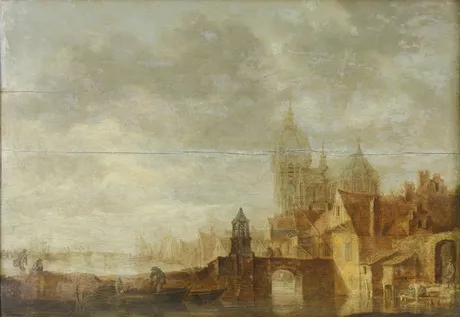
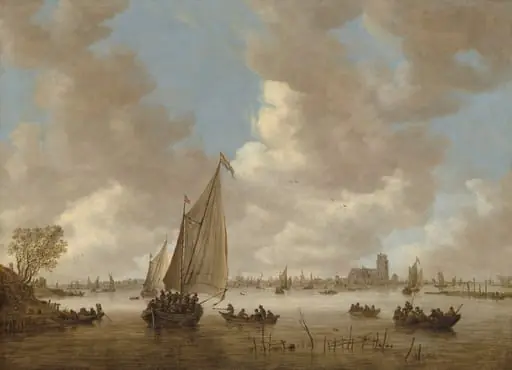
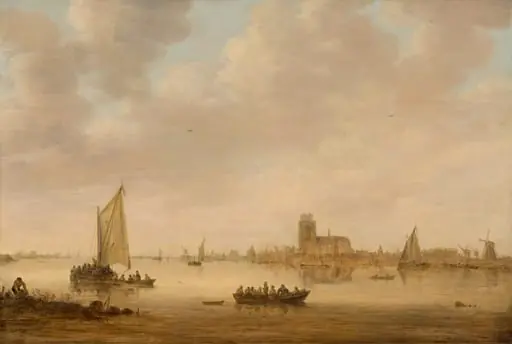
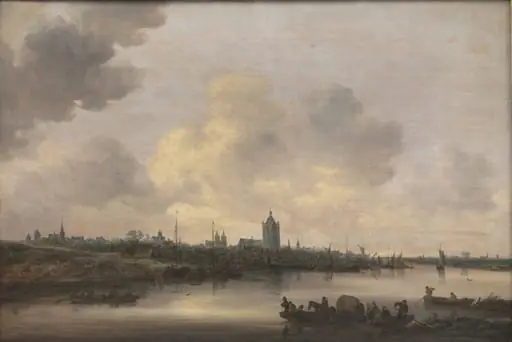
Dordrecht is an oil painting by the Dutch Golden Age artist Jan van Goyen. It dates from 1642 and is held in the collection of the National Gallery of Armenia.
About this work
Overview
Van Goyen’s output was extensive, with over two thousand works attributed to him, many of which explore similar urban and riverine scenes.
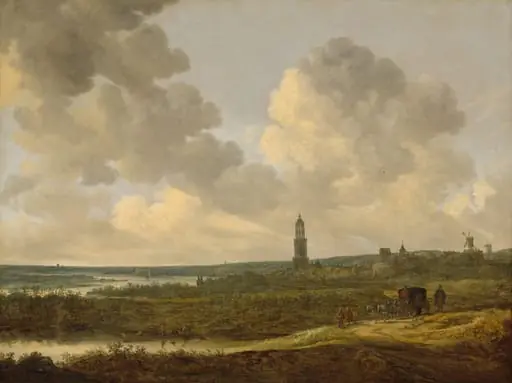
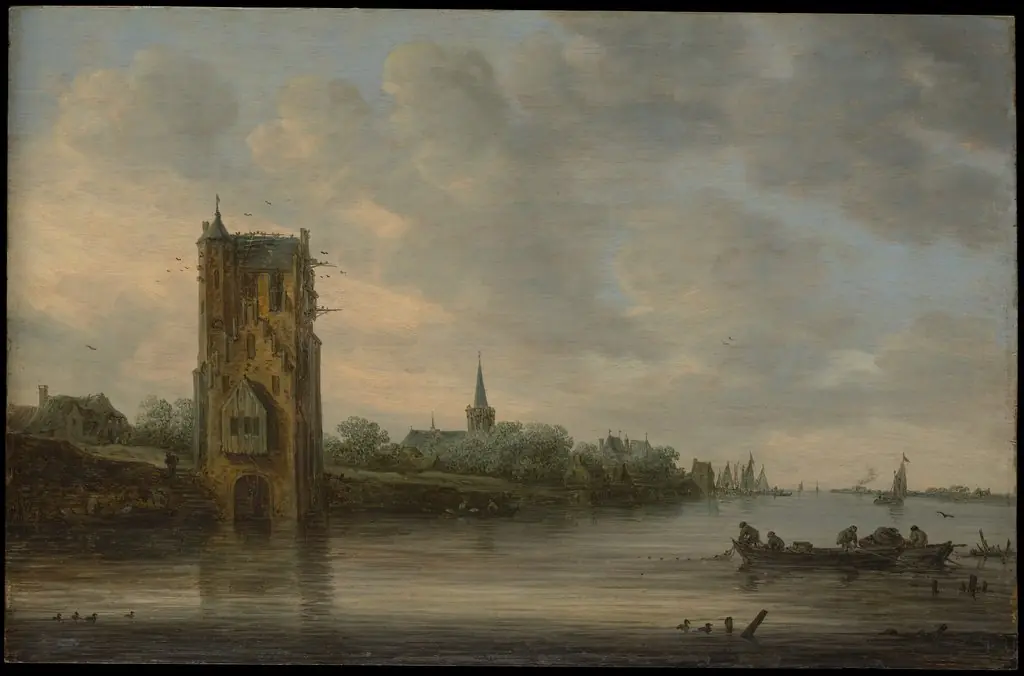
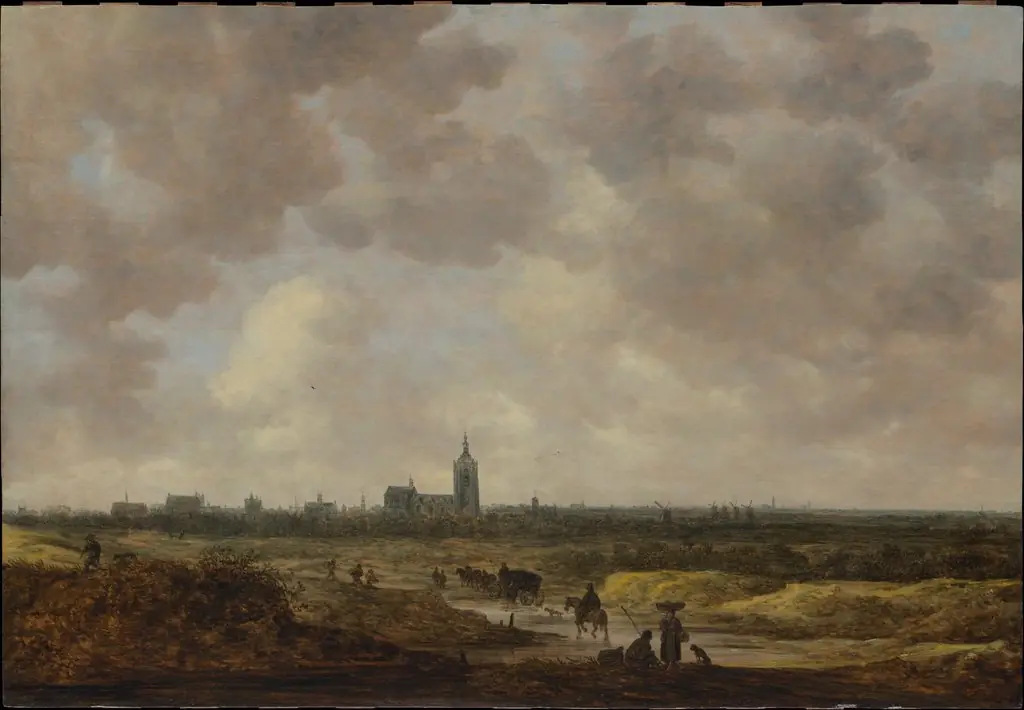
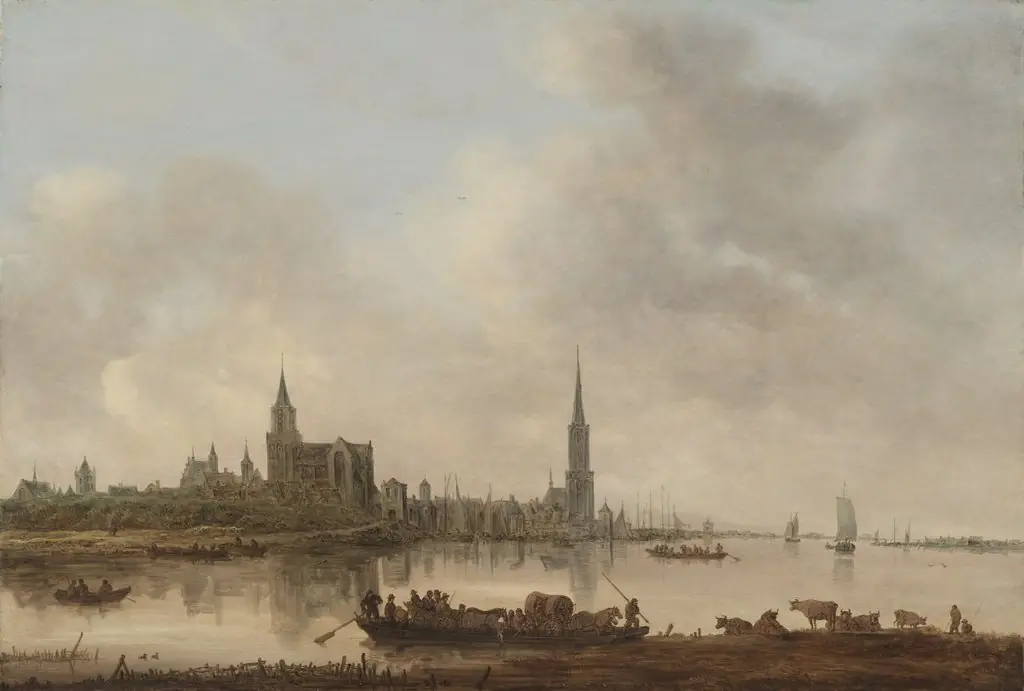
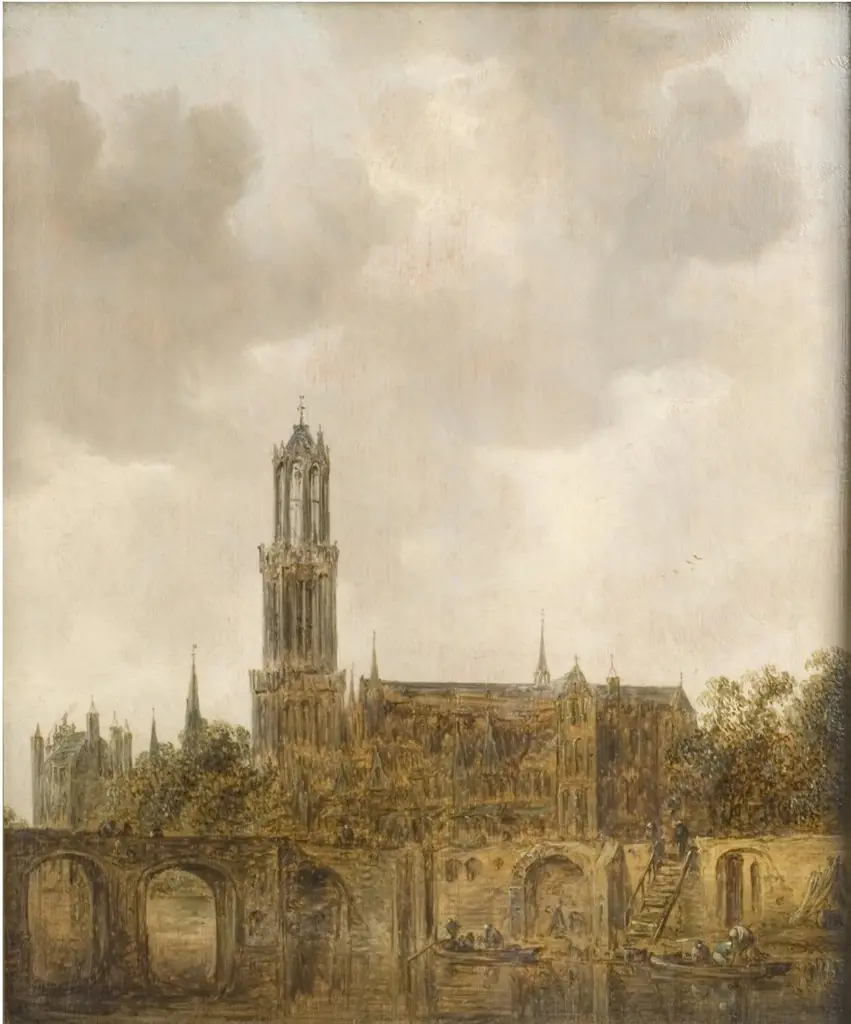
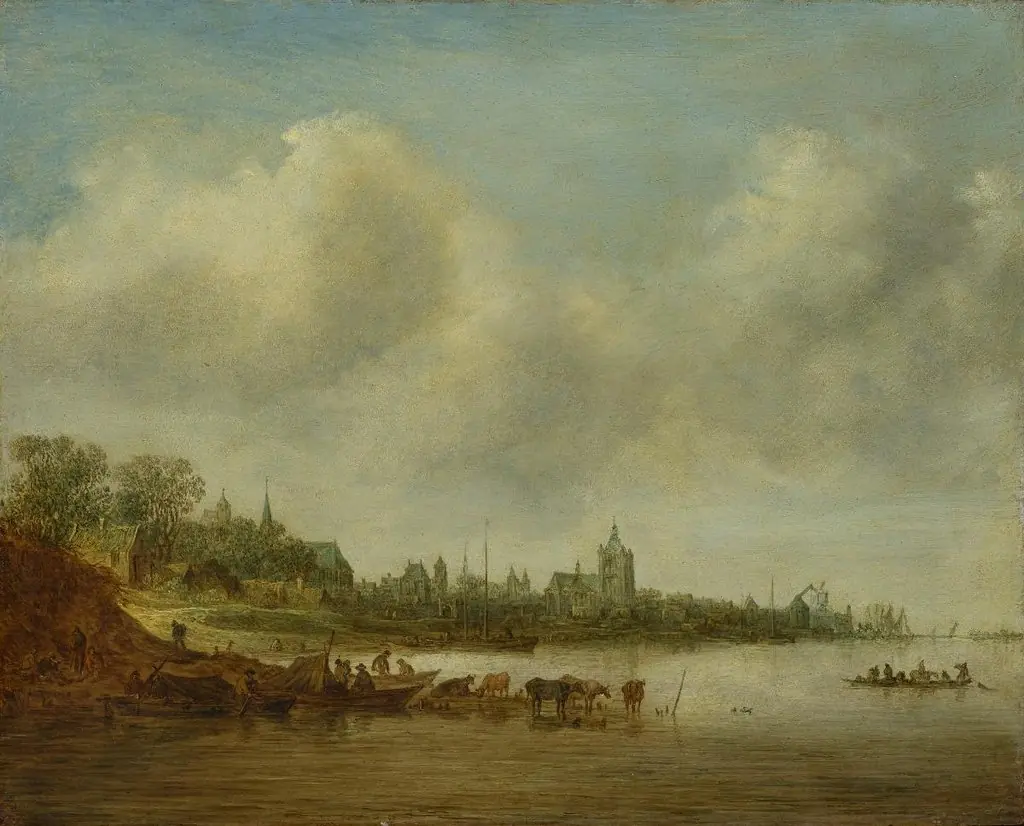
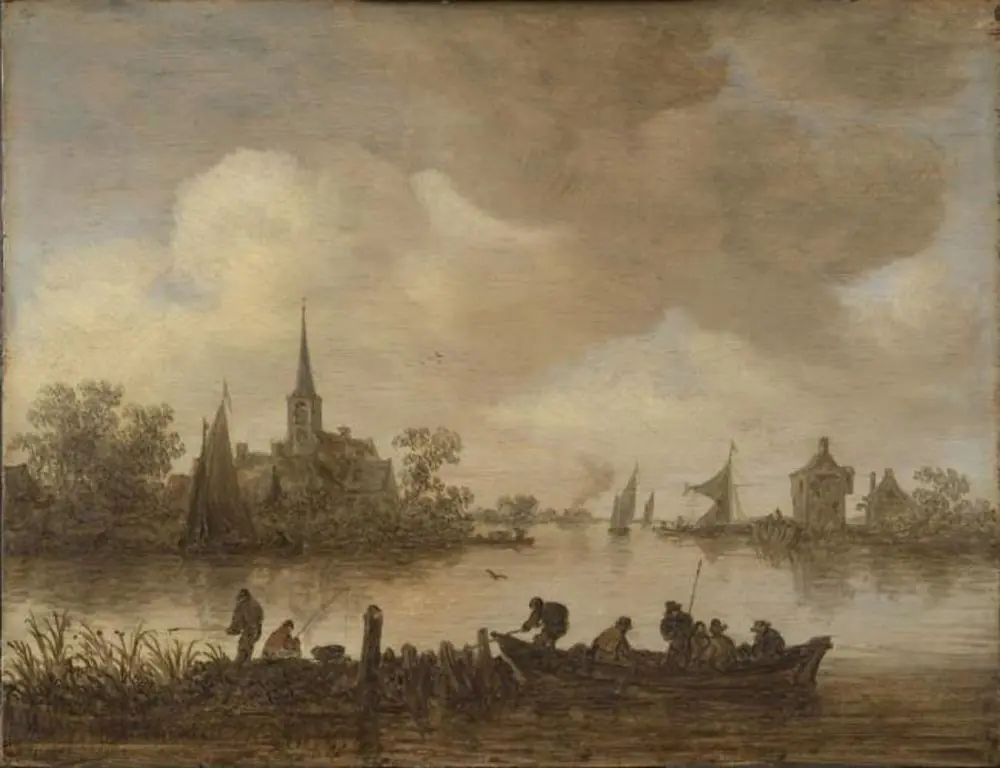
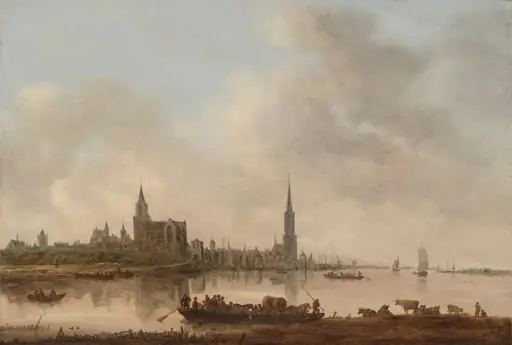
Painted in 1642, Dordrecht is a landscape by Jan van Goyen executed in oil on wood. It captures the Dutch city with its prominent church tower and dome, set against a quiet waterway dotted with boats and figures. The work reflects the quiet realism characteristic of mid-17th-century Dutch painting, emphasizing atmospheric tone over dramatic action.
Van Goyen’s output was extensive, with over two thousand works attributed to him, many of which explore similar urban and riverine scenes.
Subject & Meaning
The painting presents Dordrecht as a working port city, its architecture and waterborne activity suggesting economic vitality without overt celebration. The presence of boats, figures on the shore, and the church tower implies daily life rooted in trade and community. The subdued palette and overcast sky convey a sense of ordinary time rather than grandeur, aligning with the Dutch preference for depicting the dignity of everyday scenes.
Technique & Style
Van Goyen employed a restrained color scheme dominated by grays, browns, and soft greens to evoke a hazy, overcast atmosphere. His brushwork is precise yet unobtrusive, allowing architectural details and the texture of water to emerge naturally. The composition uses horizontal bands of land, water, and sky to create depth, while the placement of figures and vessels adds scale and quiet movement without dominating the scene.
History & Provenance
The painting entered the collection of the National Gallery of Armenia at some point in the 20th century, though its earlier ownership history remains undocumented. It was likely acquired through institutional exchanges or purchases during the Soviet era, when European artworks were systematically dispersed among regional museums. Its presence in Yerevan reflects broader patterns of cultural redistribution rather than direct Dutch-Armenian ties.
Context
Created during the Dutch Golden Age, Dordrecht reflects a cultural moment when urban and river landscapes became popular subjects among artists. Dordrecht, one of the oldest cities in the Netherlands, was a key trading hub. Van Goyen’s focus on such locations, rather than idealized or mythological scenes, aligned with the rising middle class’s interest in depictions of their own environment and livelihoods.
Legacy
Van Goyen’s approach to landscape painting influenced generations of Dutch artists through his emphasis on light, atmosphere, and everyday subject matter. Dordrecht exemplifies his ability to transform ordinary views into compositions of quiet harmony. While not widely exhibited, its presence in Armenia underscores the global reach of Dutch Golden Age art beyond its original cultural context.
Artist & collection

Artist
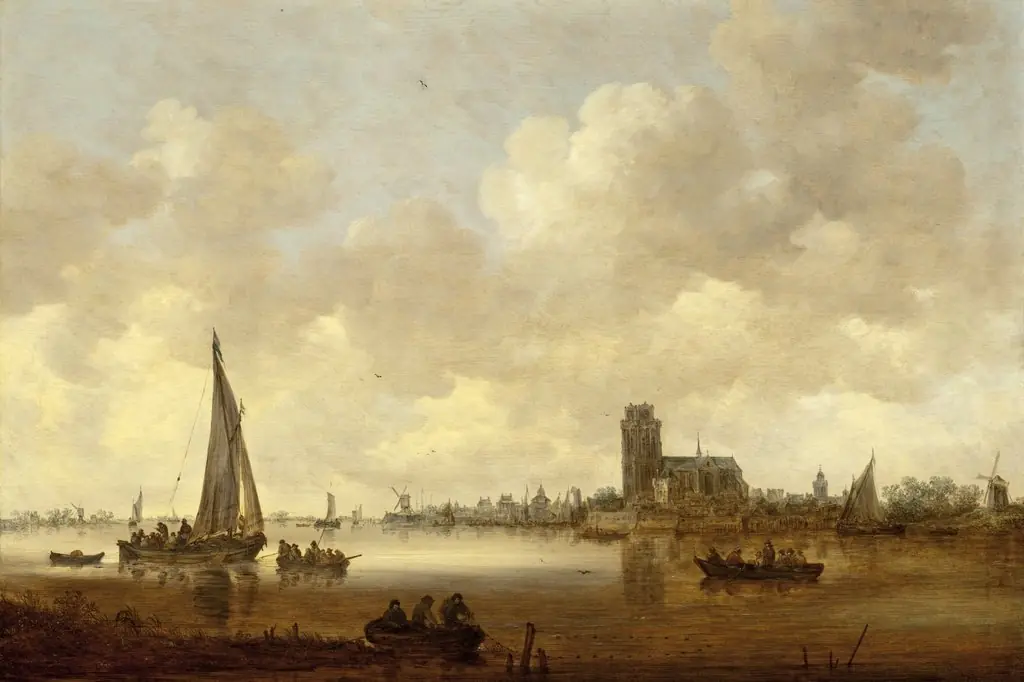
Jan Josephszoon van Goyen (Dutch pronunciation: ; 13 January 1596 – 27 April 1656) was a Dutch landscape painter.