Artwork
A View of The Hague from the Northwest
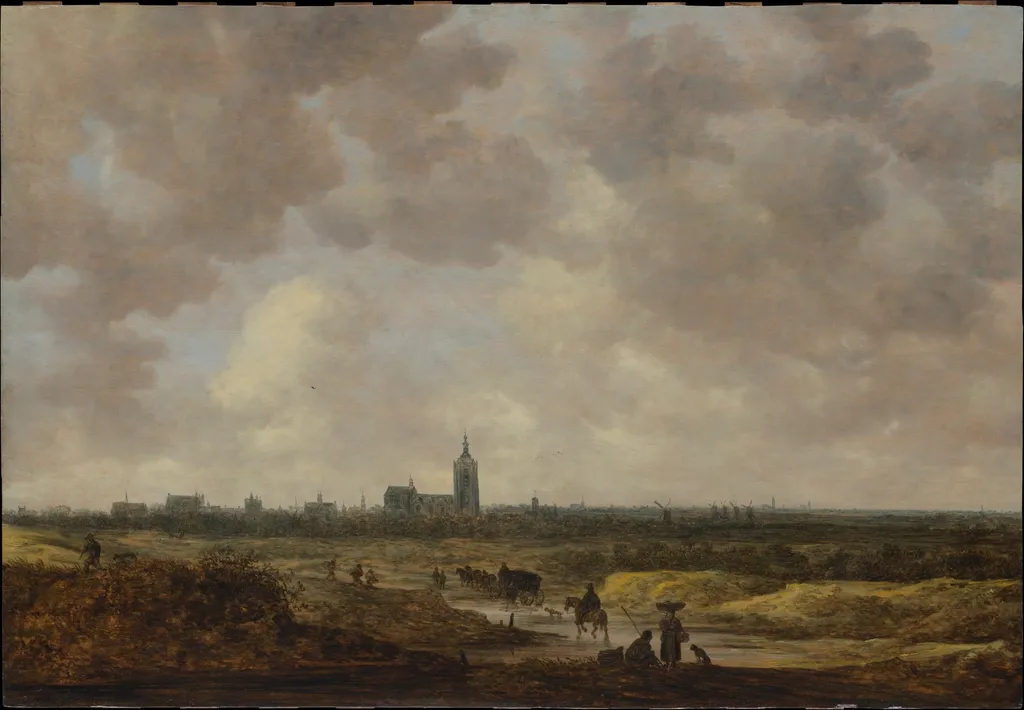
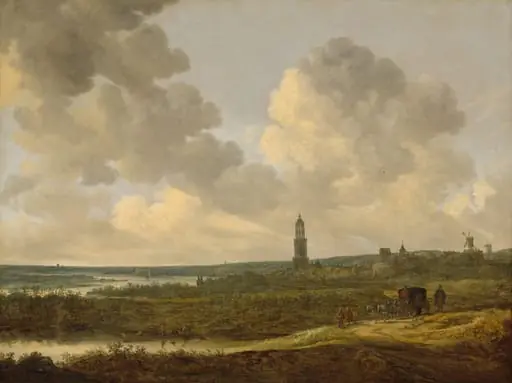
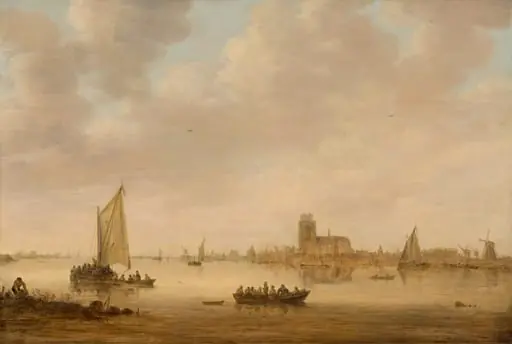
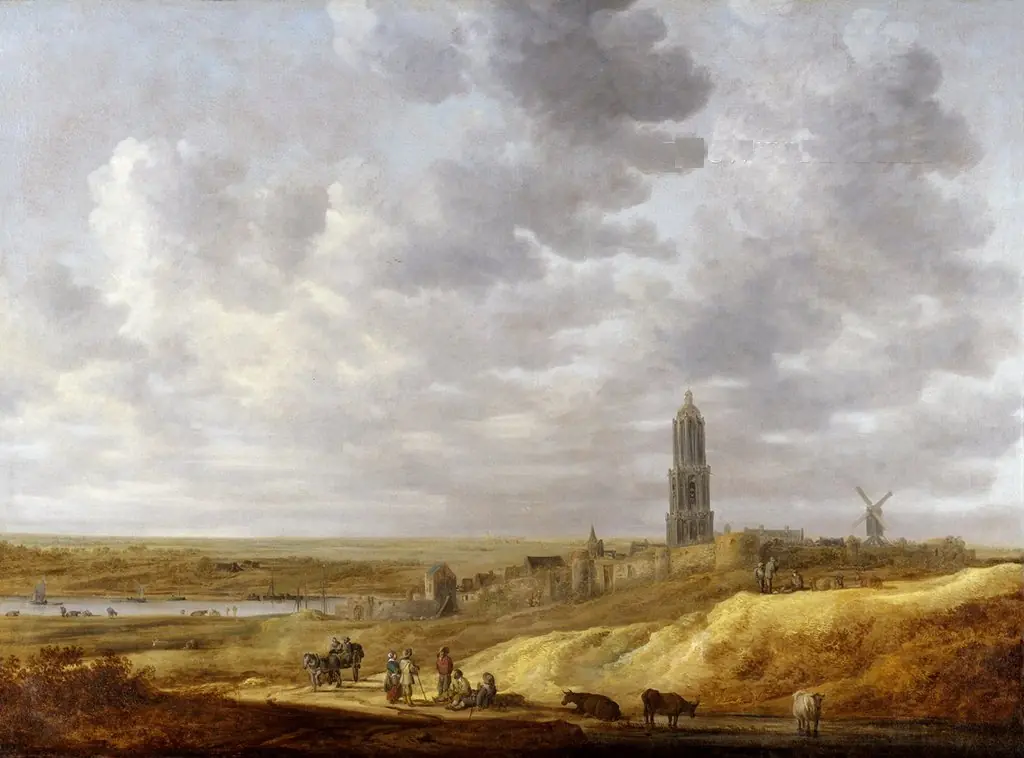
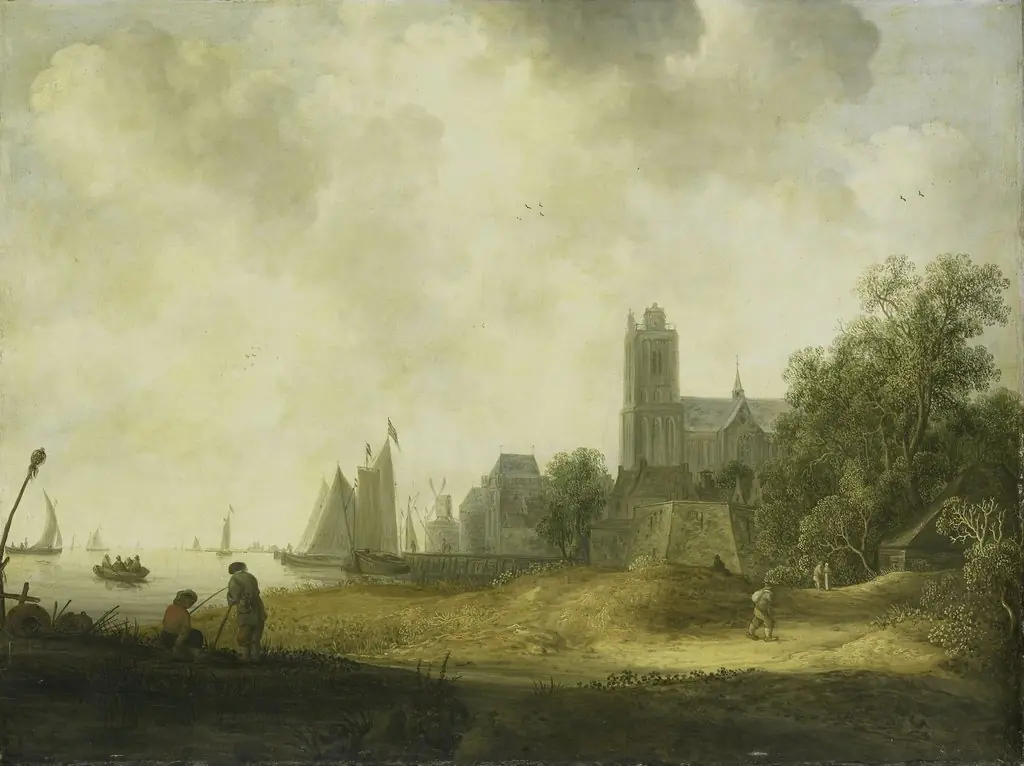
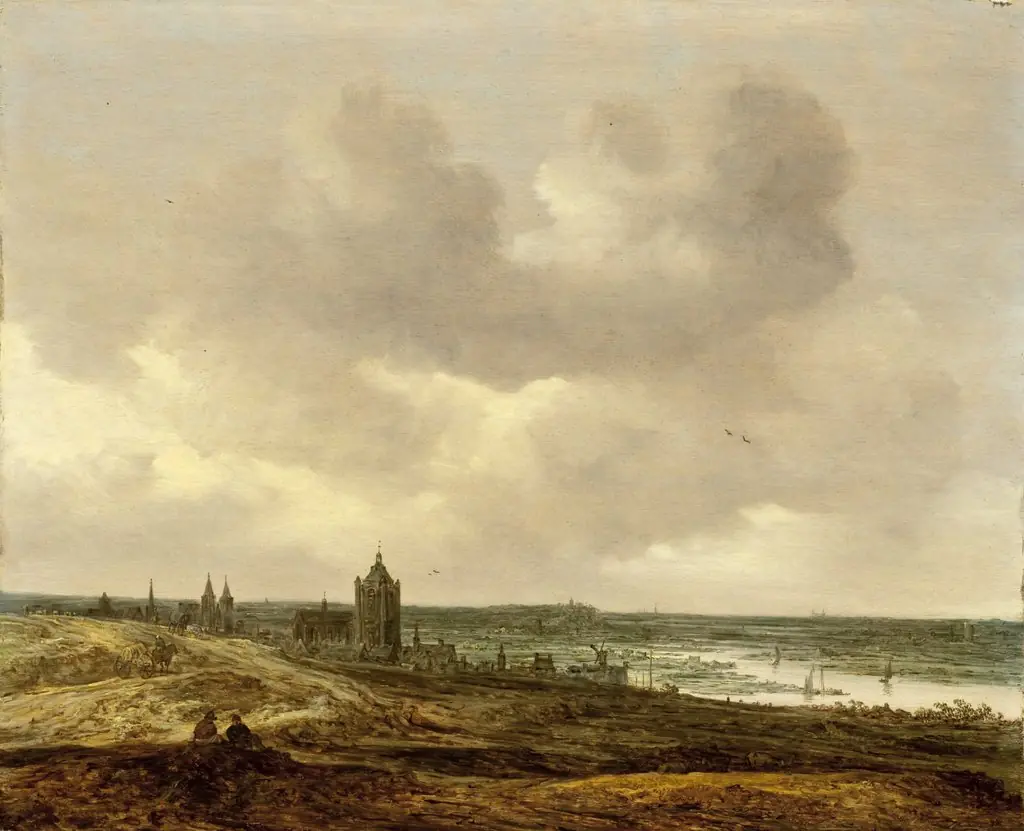
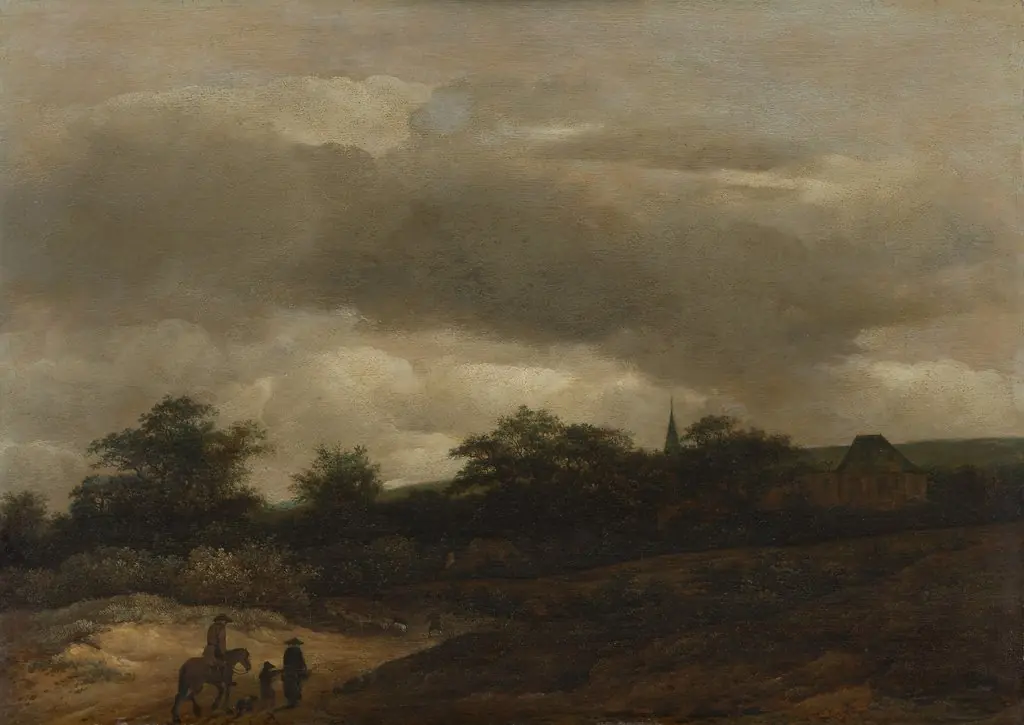
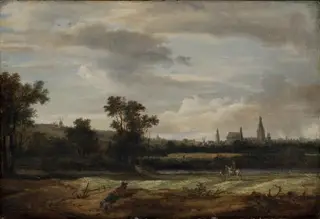
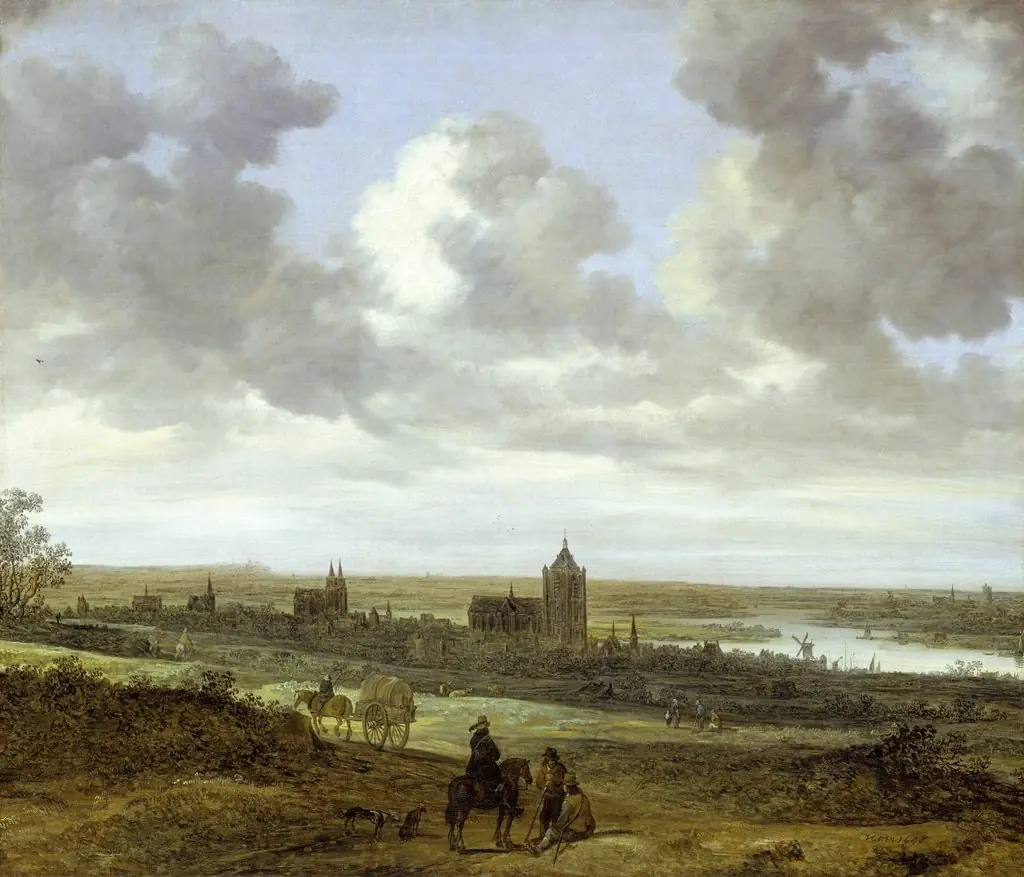
A View of The Hague from the Northwest is an oil painting by the Dutch Golden Age artist Jan van Goyen. It dates from 1647 and is held in the collection of the Metropolitan Museum of Art.
About this work
A quiet town spreads under a sky of soft, swirling cloud in pale yellow and blue, a tall church spire rising in the distance. Along a dirt path and a small stream below, a few figures and animals pass through warm browns and greens. Jan van Goyen painted it in 1647.
Subject & Meaning
As a landscape painting, the subject matter emphasizes the relationship between the built environment and the natural world, characteristic of the genre.
Jan van Goyen's 1647 oil painting, A View of The Hague from the Northwest, functions as a landscape depiction of the Dutch city and its environs. The composition captures a panoramic scene featuring the town of The Hague, a road, and a distinct horizon line. Iconographically, the work includes specific elements such as horses traversing the road, situating the urban center within a broader rural context.
As a landscape painting, the subject matter emphasizes the relationship between the built environment and the natural world, characteristic of the genre. The piece represents a topographical record of The Hague as it appeared in the mid-seventeenth century, focusing on the spatial arrangement of the city relative to the surrounding terrain and sky.
Technique & Style
Created in 1647, A View of The Hague from the Northwest is an oil painting executed on a wooden panel support. The work measures 66 cm in height and 96.2 cm in width. As a landscape painting by Jan van Goyen, the piece depicts the town of The Hague, featuring elements such as a road, horses, and a distinct horizon line.
The artist's handling of oil paint on the rigid panel support facilitates the detailed rendering of the urban and natural environment. While the specific condition report is not detailed in the available records, the medium and format are consistent with the artist's practice during the mid-seventeenth century. The composition captures the spatial depth of the Dutch landscape, utilizing the panel to maintain structural integrity for the scene's expansive horizontal orientation.
History & Provenance
The work is held by the Metropolitan Museum of Art, New York, where it is recorded with accession number 64.183. It was painted in 1647 and has appeared in the museum’s holdings since its acquisition. No exhibition history is documented in the provided sources.
Legacy
The 1647 oil painting A View of The Hague from the Northwest, by Jan van Goyen, exemplifies the tonal landscape style of his mature period and reflects the artist’s focus on atmospheric Dutch scenery. Classified as a landscape painting, it is part of the Metropolitan Museum of Art’s collection, a status that highlights its recognized importance within Dutch Golden Age art and informs ongoing scholarship on van Goyen’s influence on the genre.
Overview
This oil painting, titled "A View of The Hague from the Northwest," presents a serene landscape. It captures a distant view of the town, identifiable by its prominent church spire, under an expansive sky. In the foreground, daily life unfolds quietly with figures and animals traversing a path beside a small watercourse. The composition emphasizes a sense of calm and the subtle interplay of natural light across the scene.
Context
This work exemplifies characteristics often found in the landscapes of Jan van Goyen, an artist known for his distinctive treatment of light and atmospheric effects. His paintings frequently explore expansive skies and muted color palettes to evoke a particular mood. "A View of The Hague from the Northwest" aligns with this stylistic approach, showcasing his interest in capturing the subtle beauty of the Dutch landscape and its transient light.
Own this work as a print
Artist & collection

Artist
Jan Josephszoon van Goyen (Dutch pronunciation: ; 13 January 1596 – 27 April 1656) was a Dutch landscape painter.