Artwork
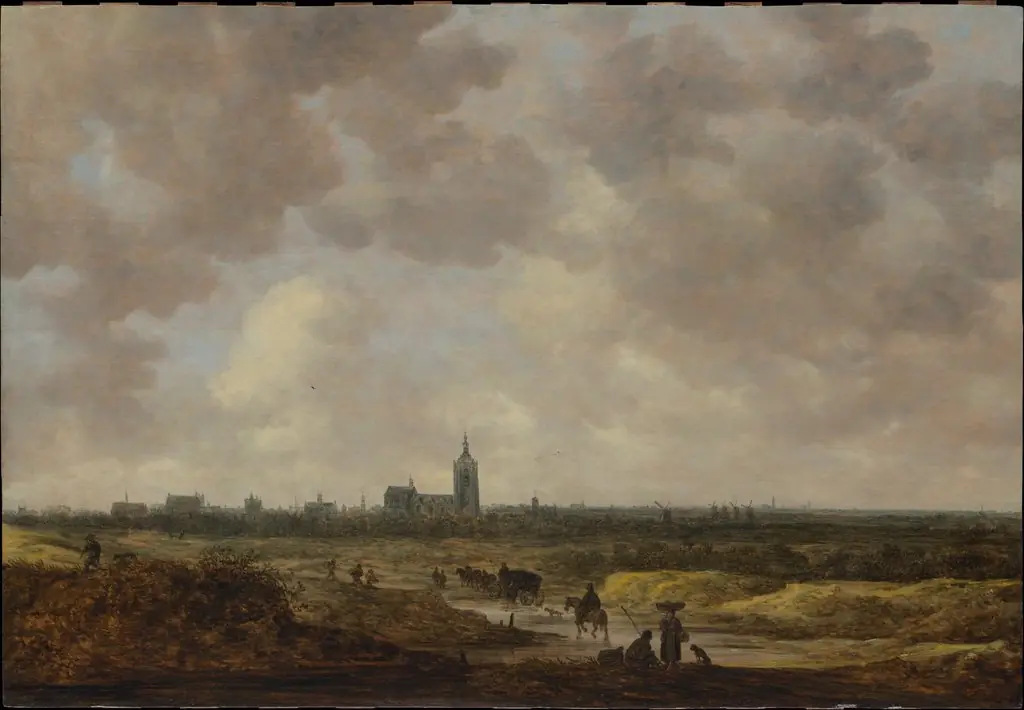
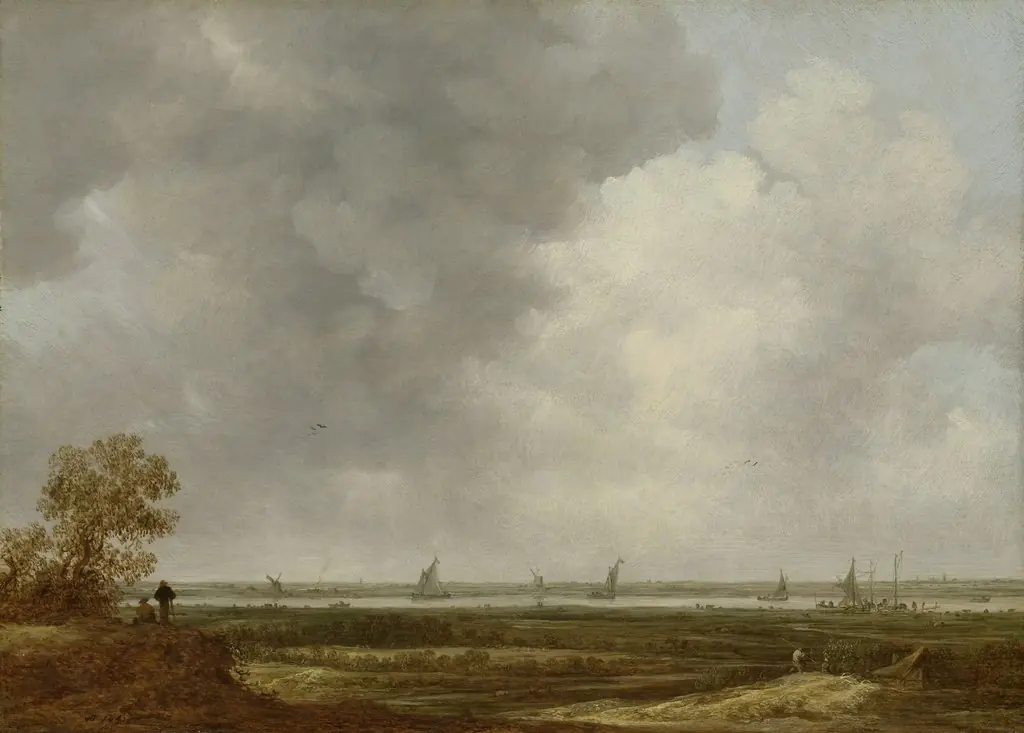
A panoramic view of Rhenen, seen from the North-East
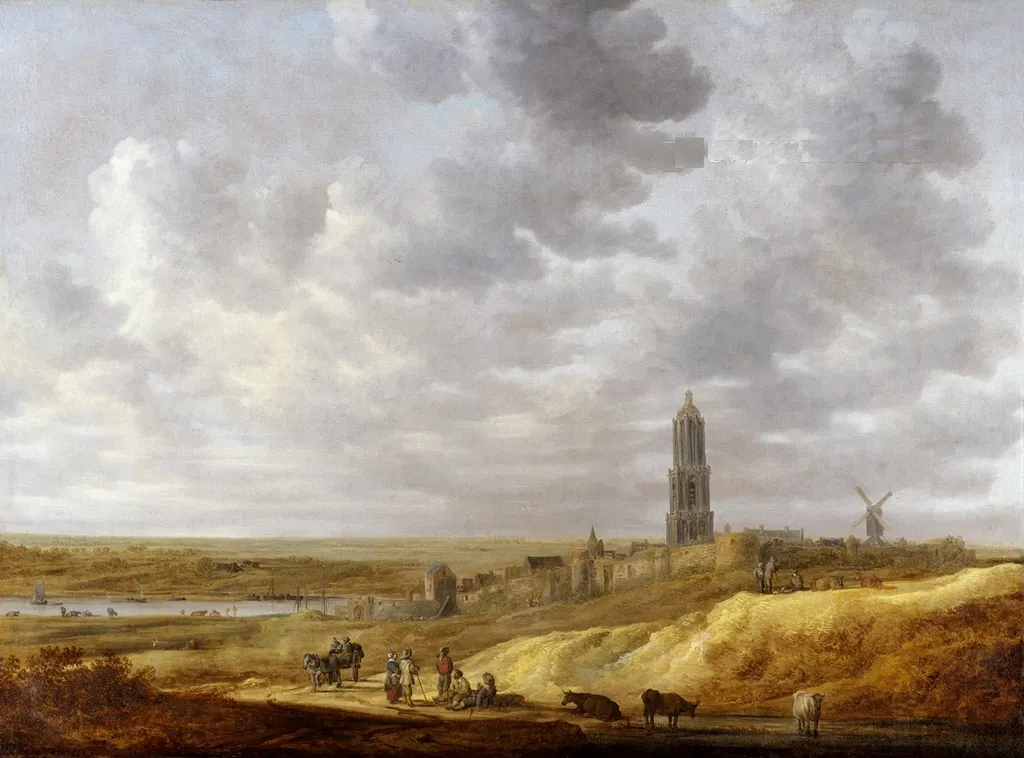
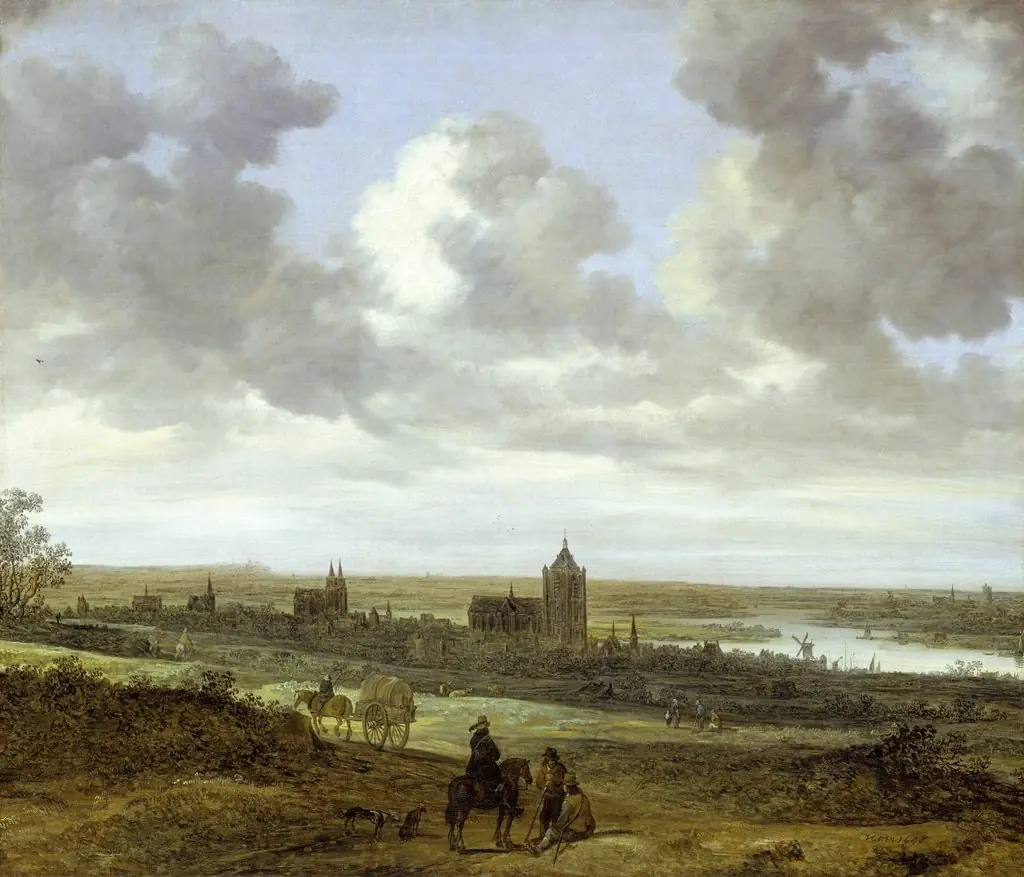
A panoramic view of Rhenen, seen from the North-East is an oil painting by the Dutch Golden Age artist Jan van Goyen. It dates from 1636 and is held in the collection of the Metropolitan Museum of Art.
About this work
Subject & Meaning
The depiction functions both as a recognizable portrait of the town and as a celebration of the inhabited Dutch countryside.
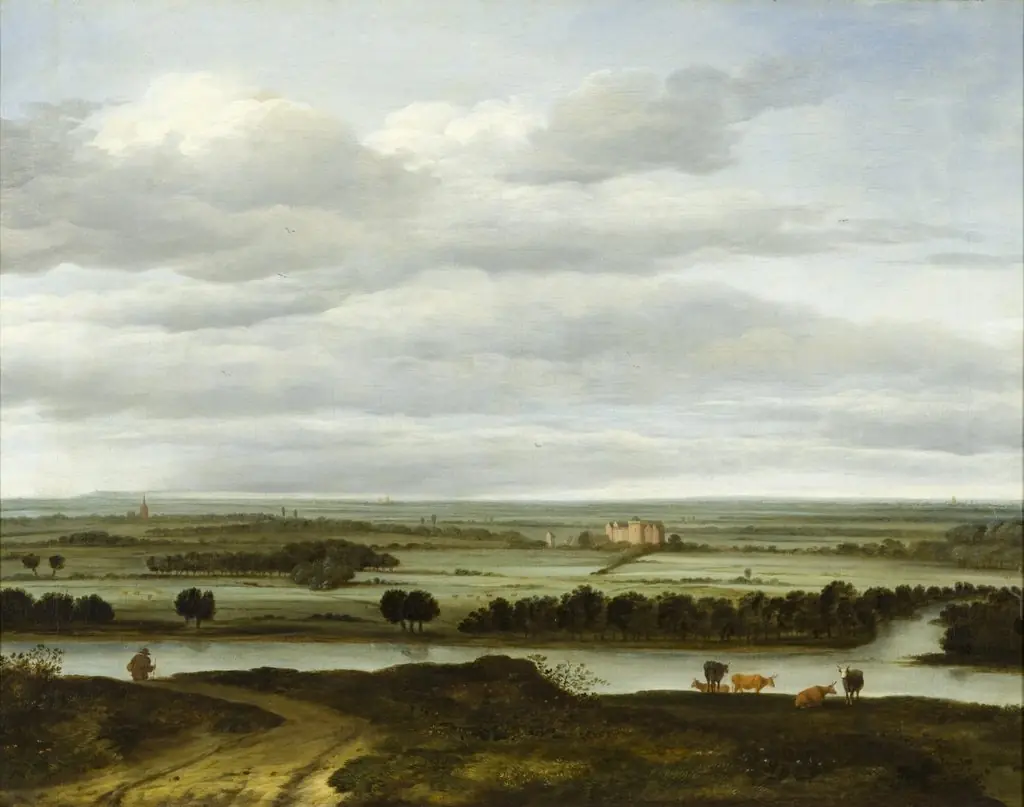
The painting presents a panoramic view of Rhenen, a Dutch town, observed from its north-eastern vantage point. The composition centers on the urban settlement and its architectural landmarks, most notably the Cunerakerk, the town's principal church, which anchors the visual identity of the scene. Human presence and daily activity are conveyed through figures and a horse-drawn wagon traversing the landscape, situating the town within a working rural environment rather than presenting it as a purely topographical record.
As a landscape by Jan van Goyen, the work reflects the seventeenth-century Dutch interest in depicting recognizable local geography, combining documentary observation of Rhenen's skyline and surroundings with the atmospheric, tonal treatment characteristic of the artist's panoramic cityscapes. The depiction functions both as a recognizable portrait of the town and as a celebration of the inhabited Dutch countryside.
Technique & Style
Executed in oil paint on panel, this panoramic view measures 101 cm in height by 136.5 cm in width, a horizontal format suited to its expansive depiction of Rhenen and its surroundings. The work is classified as a landscape painting, consistent with Jan van Goyen's characteristic panoramic compositions. The medium of oil on a rigid wooden support allowed for the fine, fluid handling associated with the artist's tonal landscape manner.
The painting is held in a private collection, with related documentation also referencing the Metropolitan Museum of Art.
History & Provenance
The work titled A panoramic view of Rhenen, seen from the North-East was painted by Jan van Goyen in 1636, as recorded in contemporary documentation. Executed in oil on panel, the composition measures 101 cm by 136.5 cm and depicts a landscape with a man, a horse‑drawn wagon, the town of Rhenen and the Cunerakerk. The painting entered the collection of the Metropolitan Museum of Art, which lists it as part of its holdings while noting that it remains in a private collection.
No record of a specific commission survives, and the work is generally dated to the mid‑1630s based on stylistic analysis and the artist’s activity during that period.
Context
Jan van Goyen’s 1636 oil on panel, A panoramic view of Rhenen, seen from the North‑East, exemplifies the tonal landscape idiom that defined his mature output. The work’s expansive composition, recorded in both the artist’s catalogue and the Metropolitan Museum’s entry, situates it within the Dutch Republic’s growing fascination with topographical vistas of the 1630s. Depicting a horse‑drawn wagon and the Cunerakerk, it bridges genre painting and pure landscape, influencing later Dutch specialists.
As part of his documented oeuvre of Rhenen panoramas, the piece is cited in scholarship as a key example of van Goyen’s synthesis of atmospheric effect and detailed scenery.
Overview
Jan van Goyen's A panoramic view of Rhenen, seen from the North-East, an oil painting from 1636, exemplifies 17th-century Dutch landscape art. This work captures a tranquil scene of the Dutch countryside, focusing on the town of Rhenen and its prominent Cunerakerk. It reflects the period's interest in depicting local topography and daily life with an atmospheric quality. The painting is part of The Metropolitan Museum of Art's collection.
Artist & collection

Artist
Jan Josephszoon van Goyen (Dutch pronunciation: ; 13 January 1596 – 27 April 1656) was a Dutch landscape painter.