Artwork
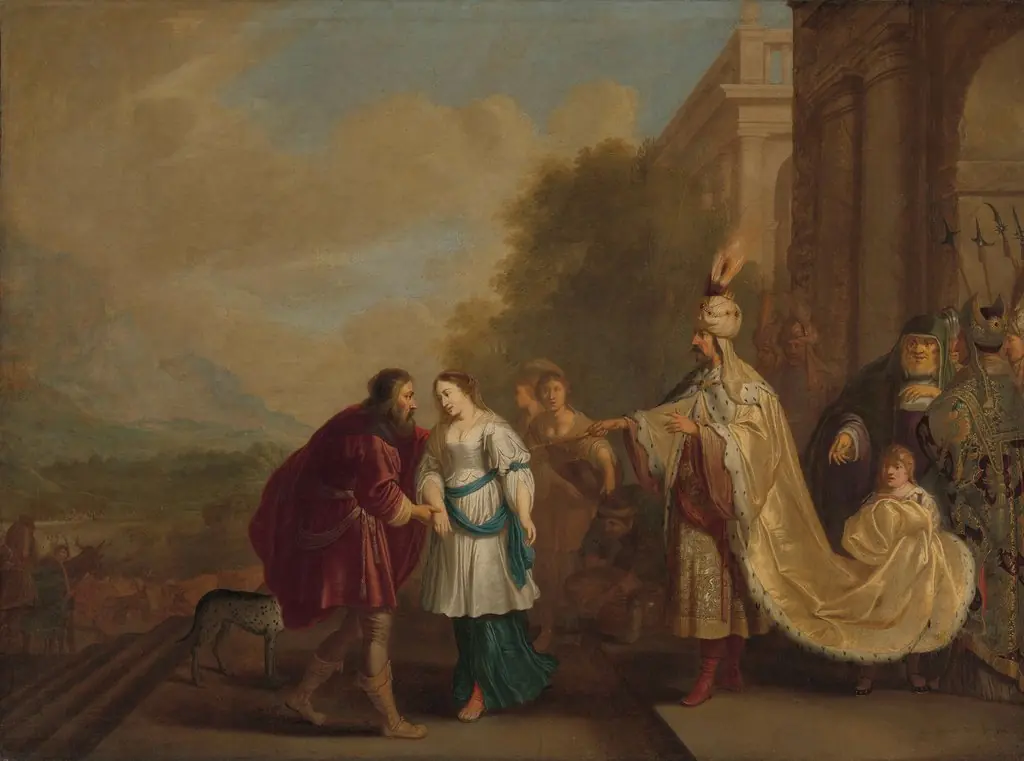
The continence of Scipio
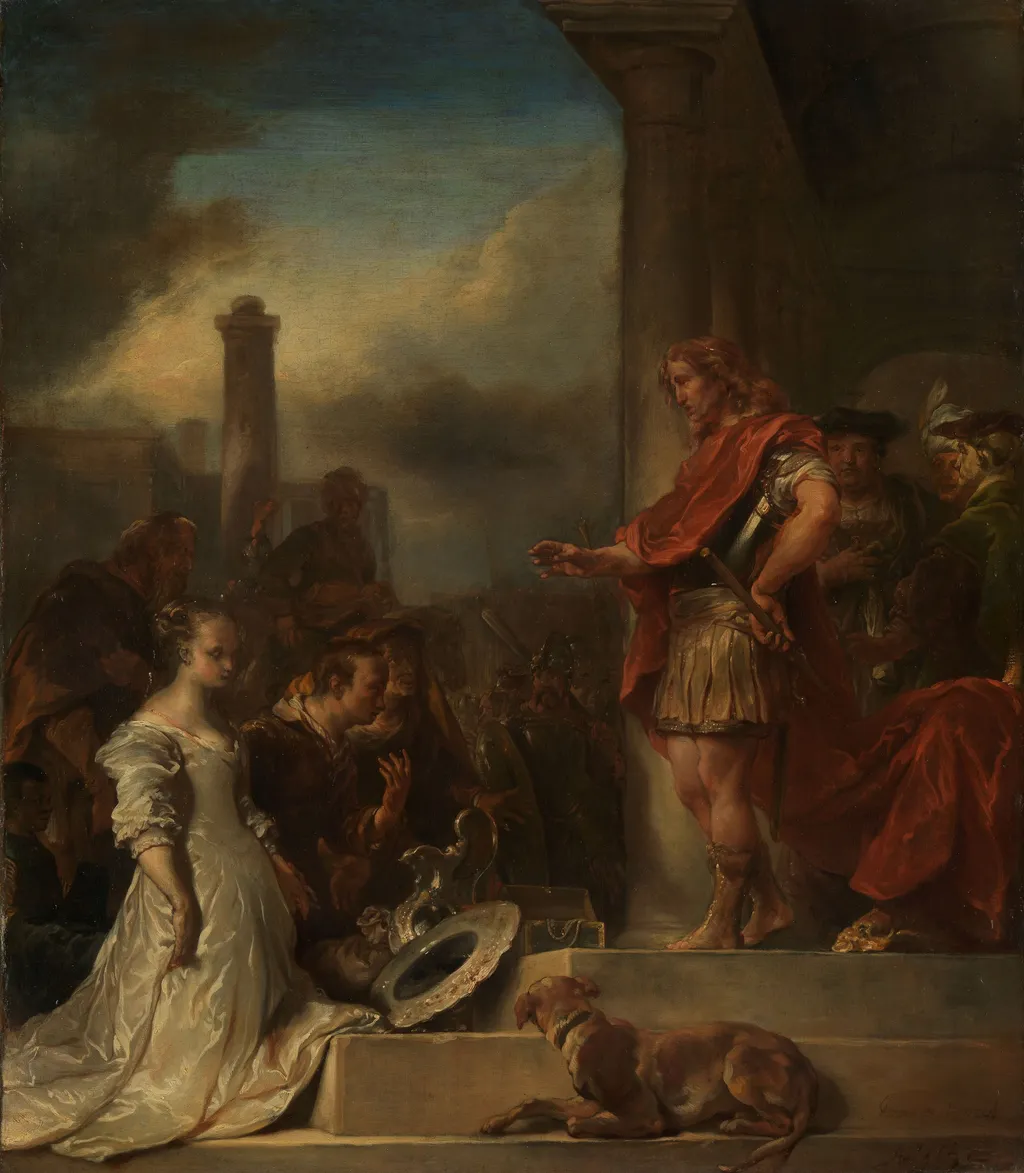
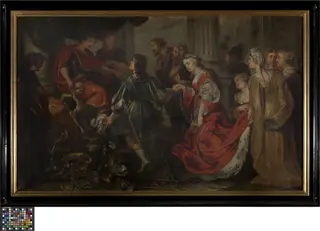
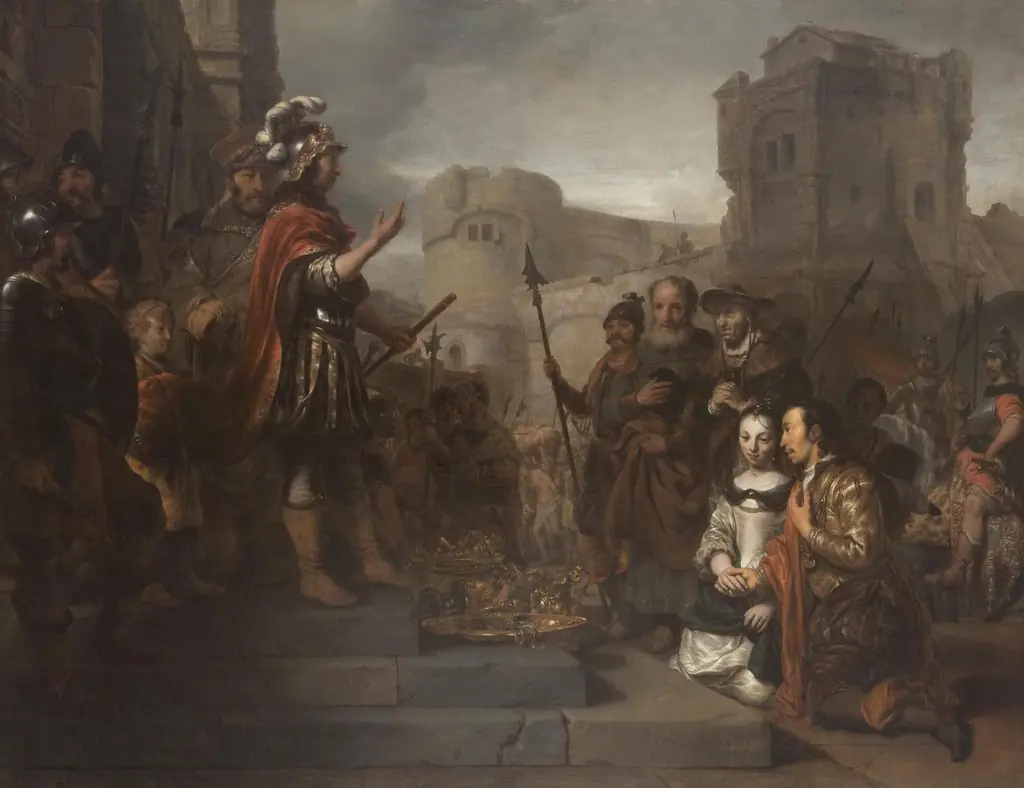
The continence of Scipio is an oil painting by the Dutch Golden Age artist Jan van Noordt. It dates from 1672 and is held in the collection of the Rijksmuseum.
About this work
Subject & Meaning
This moral exemplum resonated with contemporary audiences, reinforcing ideals of public service and personal modesty.
The painting portrays the Roman general Scipio Africanus in the moment he declines offered riches, embodying the virtue of self‑restraint celebrated in early modern moral discourse. Iconographically, the work references the classical story of Scipio's continence, a theme that symbolised disciplined leadership and civic virtue, aligning with the didactic aims of Dutch history painting in the late 17th century.
The composition underscores the narrative through the figure's gesture and the surrounding opulence, which he rejects, thereby visualising the tension between material temptation and ethical integrity. This moral exemplum resonated with contemporary audiences, reinforcing ideals of public service and personal modesty.
Technique & Style
The work is executed in oil paint on canvas, a standard support for Dutch history paintings of the period. Its dimensions are recorded as 103 cm in height by 88 cm in width. The painting is classified as a history painting, treating the continence of Scipio as its main subject.
Stylistically, it belongs to the Dutch classicizing tradition of historical narrative painting, depicting the Roman general Scipio Africanus within a moralizing scene. The canvas support and oil medium are consistent with the working methods of Jan van Noordt, who produced the work in 1672.
History & Provenance
The Continence of Scipio was created by Jan van Noordt in 1672, executed in oil paint on canvas. The painting entered the collection of Jacobus Salomon Hendrik van de Poll before being held by the Rijksmuseum, where it is currently located.
Jan van Noordt's 1672 history painting, The Continence of Scipio, is held in the collection of the Rijksmuseum in Amsterdam. The work, executed in oil on canvas, depicts the Roman general Scipio Africanus and measures 103 cm in height by 88 cm in width. Historical records indicate the painting was previously owned by Jacobus Salomon Hendrik van de Poll.
The provided sources do not contain specific details regarding the work's accession number or a list of exhibitions in which it has appeared.
Legacy
The painting's reputation grew through 19th-century European art criticism, where it was frequently cited as an exemplar of Dutch historical painting's moral narrative, influencing academic instruction at the Rijksmuseum academy. Contemporary scholarship highlights its role in shaping interpretations of Scipio Africanus's legendary virtue, particularly through repeated engravings that disseminated its compositional scheme across European academies. The work's inclusion in major collections, notably the Rijksmuseum's permanent display since 1885, cemented its status as a reference point for studying 17th-century Dutch approaches to classical subject matter, though its attribution to Jan van Noordt remained contested until the mid-20th century when technical analysis of the canvas and pigment layers confirmed the date and authorship.
Overview
Jan van Noordt’s 1672 oil painting, The Continence of Scipio, portrays a moment from the life of the Roman general Scipio Africanus. Executed in the Dutch Baroque tradition, the work is part of the Rijksmuseum’s collection and measures the dramatic tension of a historical narrative through a tightly composed interior scene.
Own this work as a print
Artist & collection

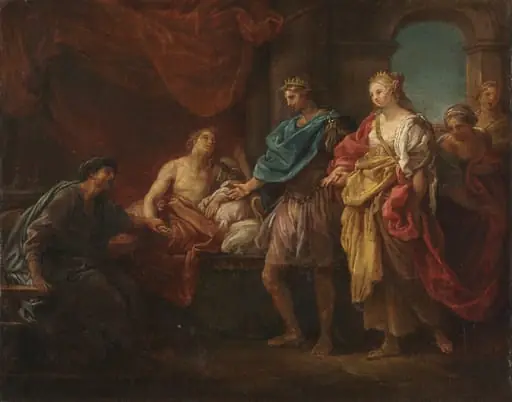 Study for "Antiochus and Stratonice"
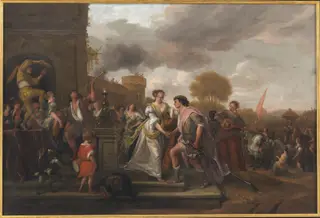 David Returning Victorious after Defeating Goliath and the Philistines
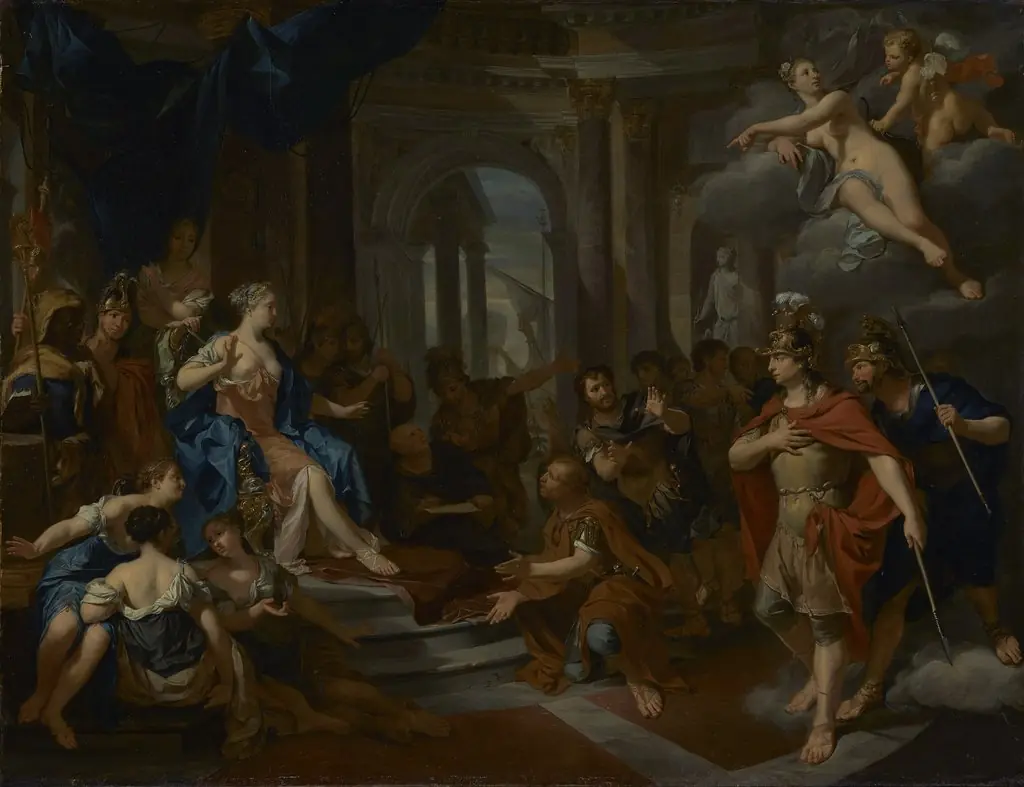 Dido and Aeneas
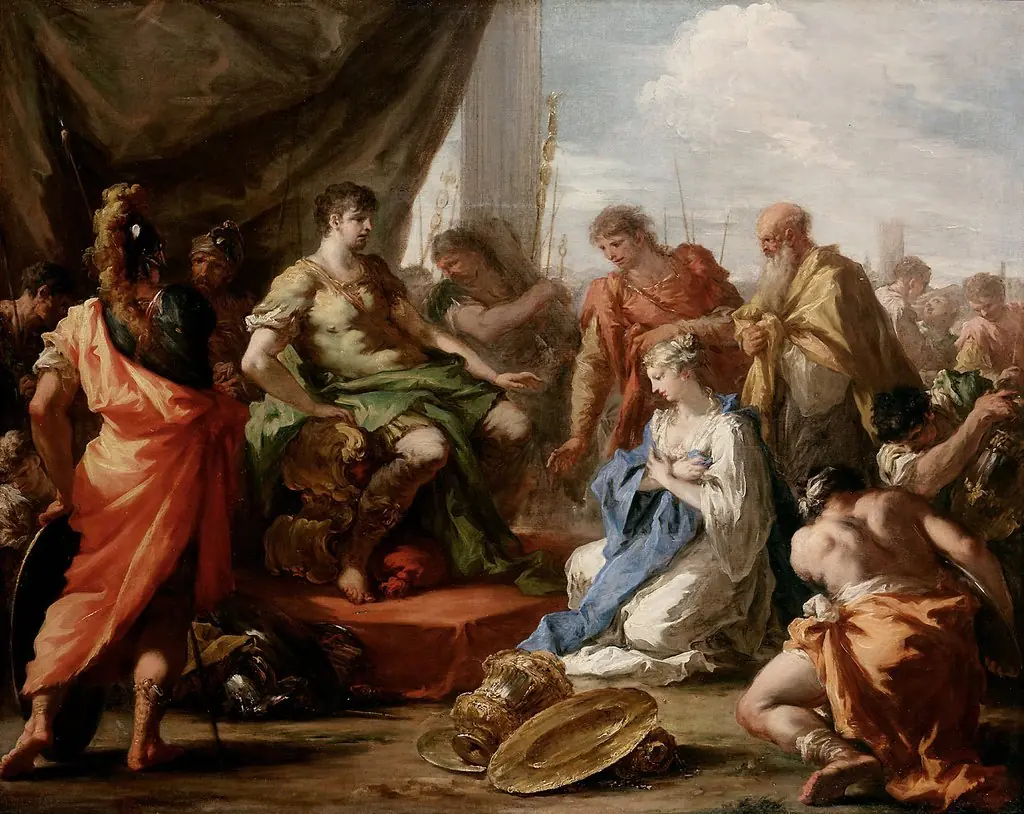 Enthaltsamkeit des Scipio
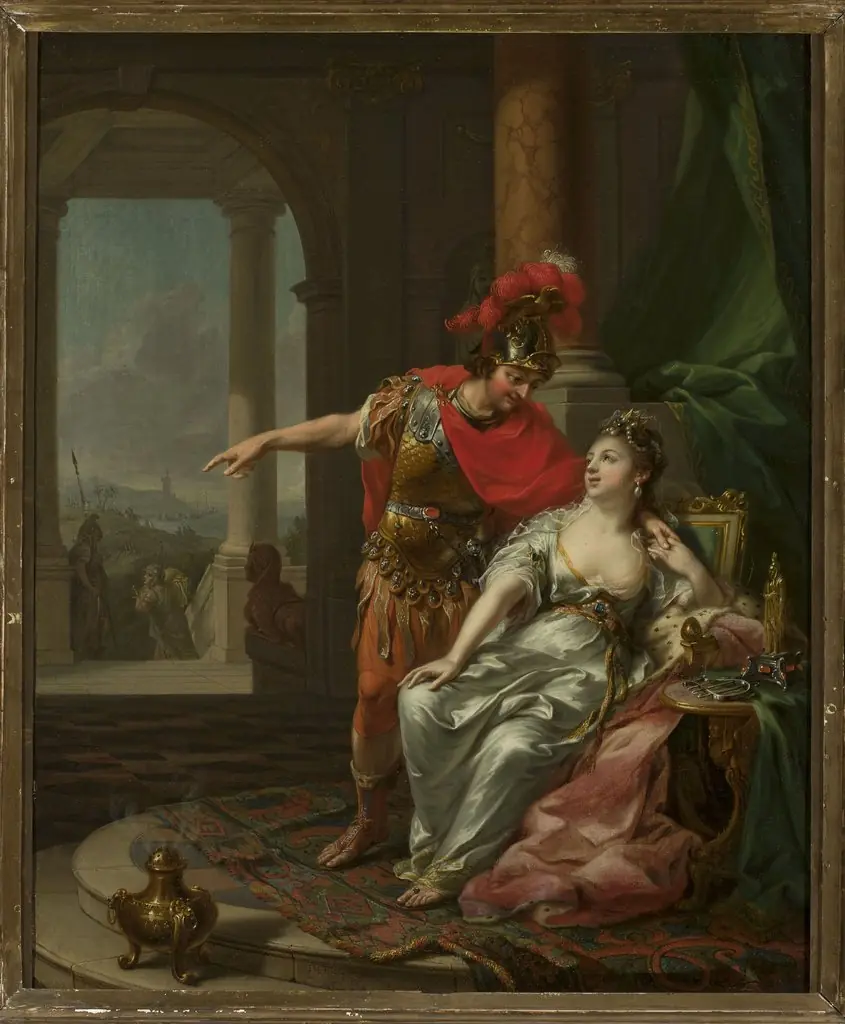 Antony and Cleopatra
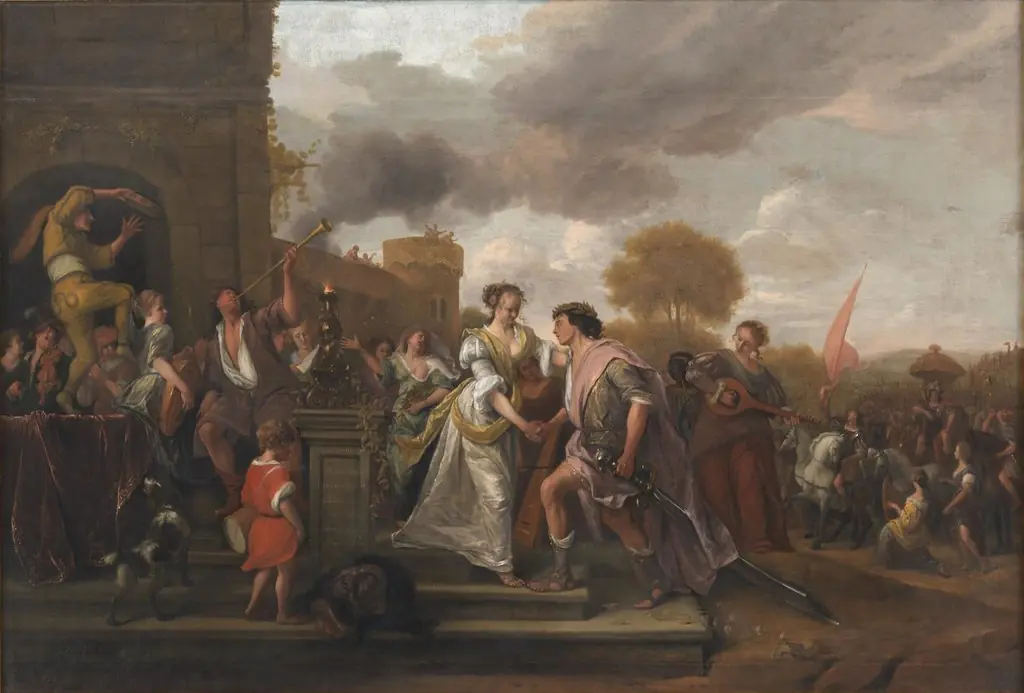 David Returning Victorious after Defeating Goliath and the Philistines
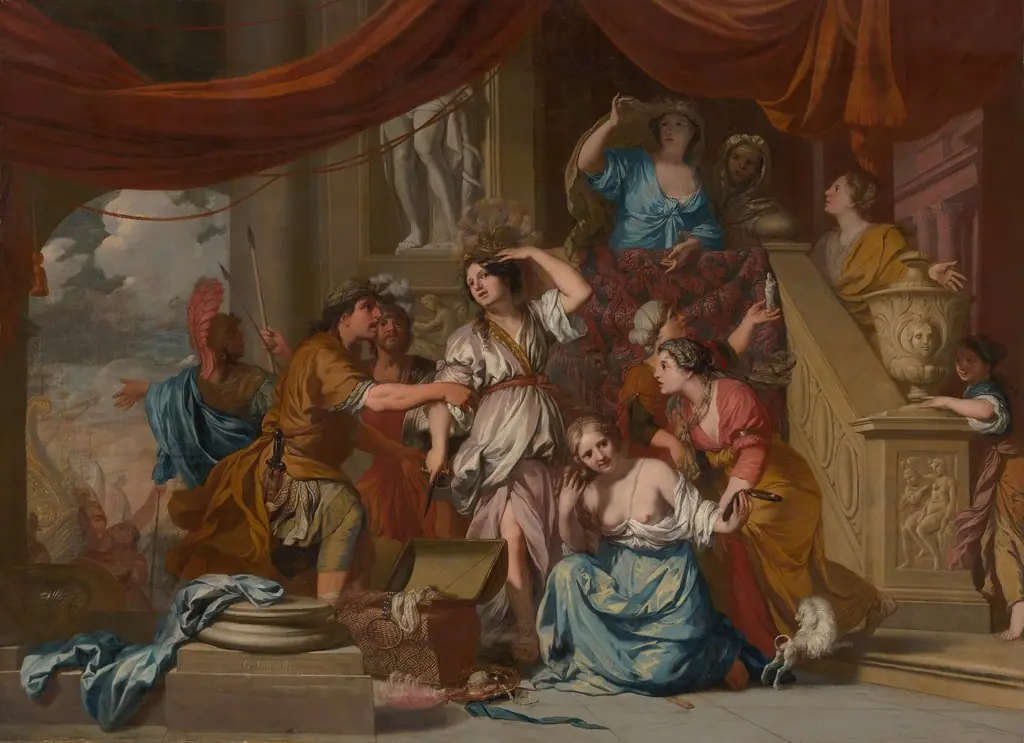 Achilles Discovered among the Daughters of Lycomedes
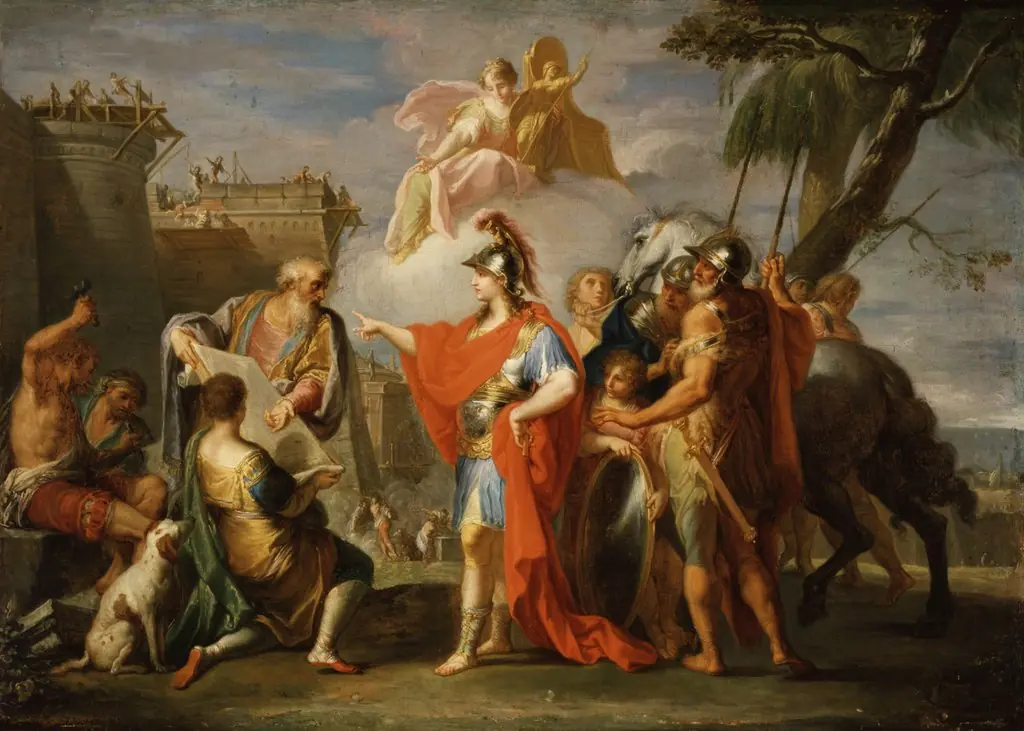 Alexander the Great Founding Alexandria
 Pharaoh gives Sarah back to Abraham