Artwork
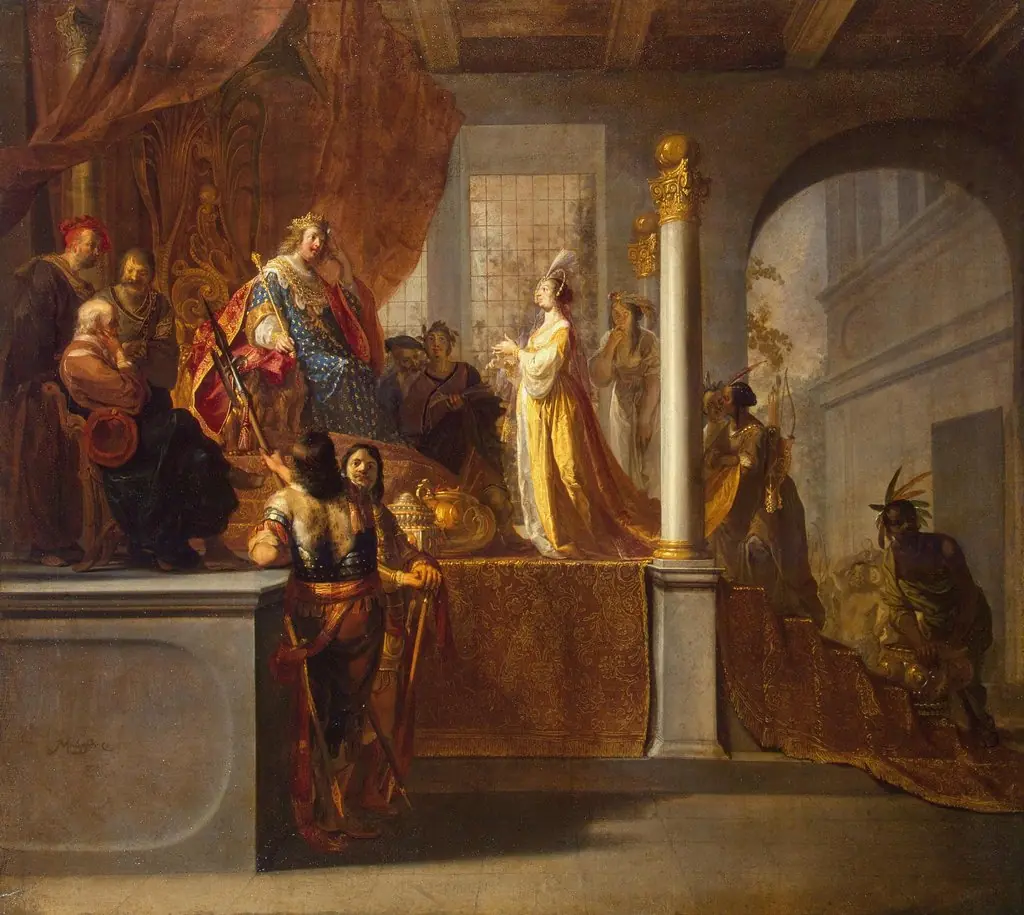
The Magnanimity of Scipio Africanus
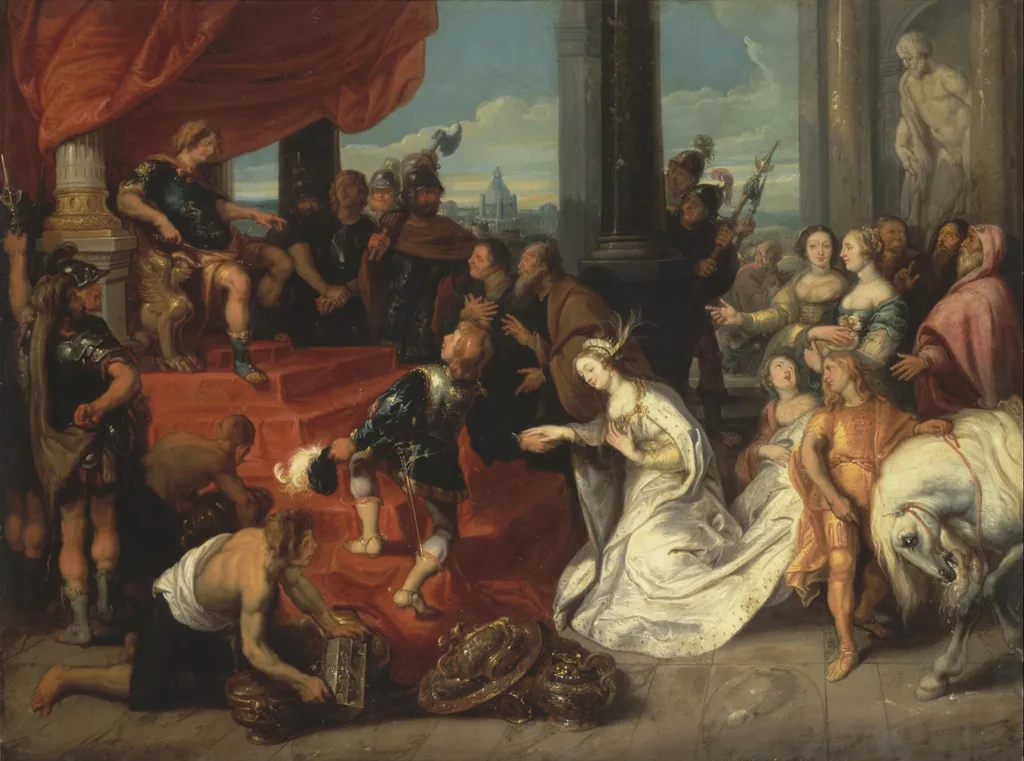
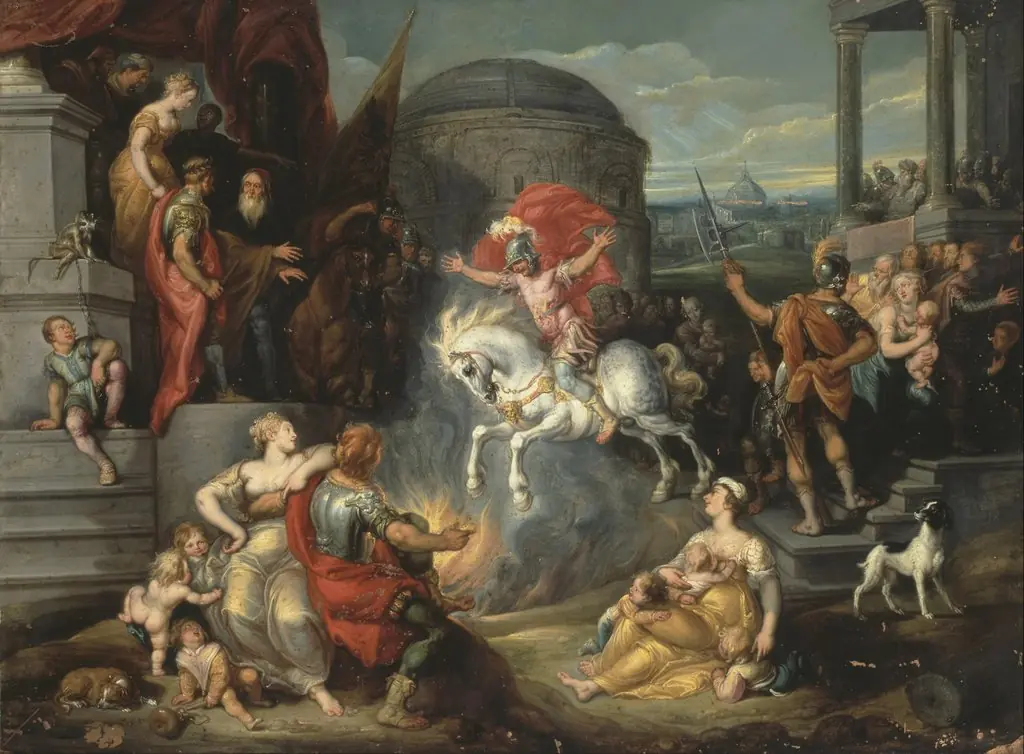
The Magnanimity of Scipio Africanus is an oil painting by the Flemish Baroque painting artist Simon de Vos. It dates from 1641 and is held in the collection of the Hermitage Museum.
About this work
Overview
The Magnanimity of Scipio Africanus is a 1641 history painting by the Flemish artist Simon de Vos, executed in oil on copper.
The Magnanimity of Scipio Africanus is a 1641 history painting by the Flemish artist Simon de Vos, executed in oil on copper. Measuring 66.5 by 88 centimeters, the work is held in the collection of the Hermitage Museum in Saint Petersburg, where it entered between 1763 and 1796 as part of the collection of Catherine the Great. The painting represents a significant example of Flemish Baroque historical narrative, treating a classical subject with the theatrical grandeur and moral emphasis characteristic of the period. Its polished technique on the copper support and its dramatic staging of Roman virtue have made it a notable work within de Vos's oeuvre and within the broader tradition of Scipionic imagery in European art.
Subject & Meaning
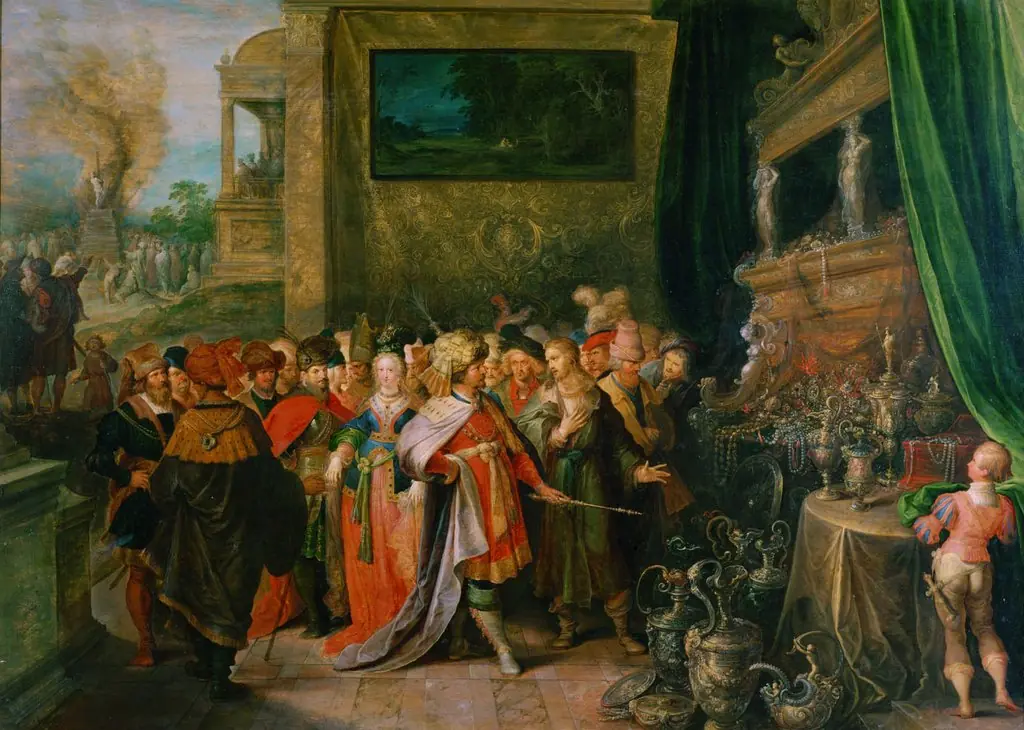
The painting depicts the Continence of Scipio, an episode from the life of the Roman general Scipio Africanus the Elder following his victory over Carthage in the Second Punic War. In the scene, Scipio sits enthroned at left, clad in dark armor with a blue tunic and red drapery, gesturing with magnanimity as he refuses a ransom and returns a captured maiden to her betrothed. The kneeling armored figure before him holds a plumed helmet and extends his hand toward the woman in white, who kneels with bowed head, one hand at her breast, the other reaching toward him. She wears an elaborate white gown with gold sleeves and a jeweled headdress, accompanied by women and attendants behind her, with a white horse partially visible at the far right. Soldiers observe from the left, one carrying an axe, while the foreground displays scattered golden vessels, armor, and two nearly naked male figures handling treasure. Tall columns frame the composition, with a marble statue of a nude male in a niche at upper right and a domed cityscape beyond. The subject exemplifies the Baroque fascination with classical virtue, specifically the Stoic and Roman ideal of continence or self-restraint in victory, which served as a moral exemplum for contemporary viewers.
Technique & Style
The work is painted in oil on copper, a support that allows for exceptionally smooth and polished execution. The dimensions of 66.5 by 88 centimeters indicate a relatively intimate cabinet format, yet the composition achieves a sense of monumental scale through its architectural setting and multi-figure arrangement. The palette is dominated by deep reds, blues, creamy whites, and golden browns, with strong chiaroscuro effects illuminating the central figures. The brushwork is smooth and polished, with careful attention to the rendering of fabrics, metal, and flesh tones. This refined handling on the copper surface creates a luminous, enamel-like finish that enhances the theatrical and staged quality of the scene. The composition is organized along a diagonal axis that leads the eye from the scattered treasure in theROS foreground through the central exchange of figures to the architectural backdrop, demonstrating de Vos's skill in managing complex narrative arrangements within a confined space.
History & Provenance
The painting was created in 1641 in Flanders, during the mature phase of Simon de Vos's career. The work entered the Hermitage Museum collection between 1763 and 1796, forming part of the acquisitions of Catherine the Great, whose extensive collecting activities transformed the imperial Russian collection into one of Europe's premier repositories of Western European art. The Hermitage accession number for the painting is GE-620. A later variant or copy, attributed to de Vos and dated 1.64 (presumably 1664), was offered at auction in 2018, measuring 21.5 by 28.25 inches, with the auction house noting the Hermitage version as the primary example.
Context
Simon de Vos (1603-1676) was a Flemish painter active in Antwerp, working within the rich tradition of Flemish Baroque art that combined Italianate influences with northern attention to detail. The choice of the Continence of Scipio subject places this work within a long European tradition of history painting that drew moral and political lessons from classical antiquity. Such subjects were particularly favored in court and aristocratic circles, where they served to validate contemporary power through association with Roman virtue. The painting's acquisition by Catherine the Great reflects the broader pattern of eighteenth-century Russian imperial collecting, which sought to establish cultural legitimacy through the accumulation of Western European masterpieces. The work's place in de Vos's oeuvre demonstrates his engagement with large-scale historical narrative, a genre that demanded both erudition in classical subject matter and technical accomplishment in multi-figure composition.
Legacy
The Magnanimity of Scipio Africanus remains in the Hermitage Museum as part of one of the world's most significant collections of European painting, its provenance from the collection of Catherine the Great ensuring its preservation and public accessibility. The existence of a later attributed variant indicates the composition's continued resonance and the demand for such imagery in the seventeenth century. The work exemplifies the enduring appeal of Scipionic subjects in European art, themes that would continue to engage artists and patrons well beyond the Baroque period. Its polished copper technique serves as a testament to the technical achievements of Flemish panel and metal painting, while its moralizing classical subject represents the continued cultural authority of Roman historical exempla in the early modern period.
Own this work as a print
Artist & collection
Artist
Simon de Vos (20 October 1603 – 15 October 1676) was a Flemish painter, draughtsman and art collector.