Artwork
Castel San Elmo (from Cropsey Album)
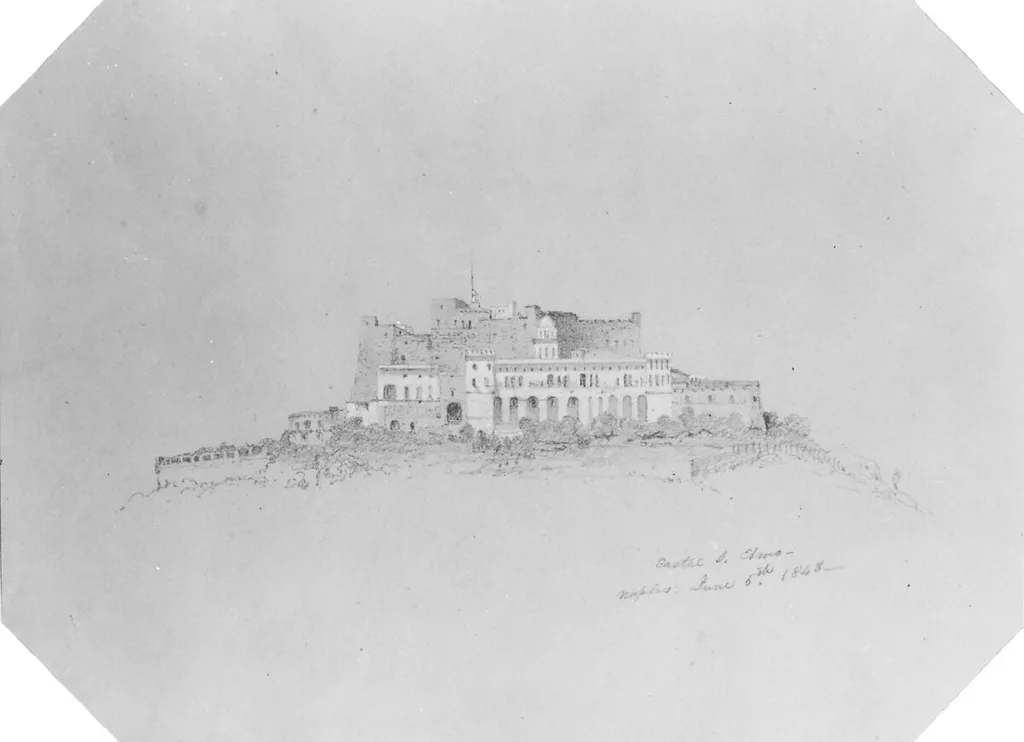
Castel San Elmo (from Cropsey Album) is a watercolor work on paper by the Hudson River School artist Jasper Francis Cropsey. It dates from 1848 and is held in the collection of the Metropolitan Museum of Art.
About this work
Overview
3 cm), the work is held in the American Wing of the Metropolitan Museum of Art, where it entered in 1970 as object number 1970.
Castel San Elmo (from Cropsey Album) is a graphite, white gouache, and watercolor drawing on dark buff-colored wove paper, attributed to the American artist Jasper Francis Cropsey and dated 1848. Measuring 6 7/8 by 9 9/16 inches (17.5 x 24.3 cm), the work is held in the American Wing of the Metropolitan Museum of Art, where it entered in 1970 as object number 1970.9.4 through the Charles and Anita Blatt Gift. The drawing belongs to a pivotal moment in Cropsey's early career, produced during his European travels of 1847-1849, and exemplifies the intersection of architectural precision and landscape sensibility that would define his contribution to the Hudson River School.
Subject & Meaning
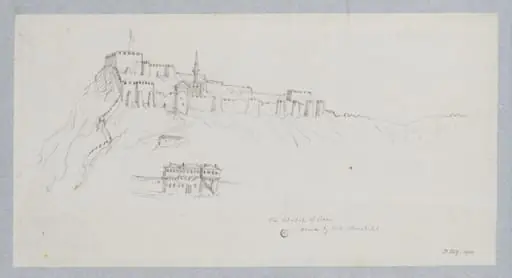
The drawing depicts a distant view of the fourteenth-century Castel Sant'Elmo, the darker hilltop fortress that overlooks the city of Naples. In the foreground stands the lighter Certosa di San Martino, a former Carthusian monastery now converted to a museum. The composition isolates these structures against a largely blank background, emphasizing their commanding position above the urban landscape below. A handwritten inscription in the lower right identifies the site. The absence of human figures or moving elements directs attention to the architectural masses and their historical gravity. The pairing of military and religious architecture carries implicit meaning about the layered histories of power and faith in Italian urban topography, though the drawing treats these themes with documentary restraint rather than overt symbolism. The octagonal sheet format and centered horizontal placement of the fortress create a sense of monumental stability, while the atmospheric treatment suggests the particular quality of Mediterranean light that attracted northern European artists to Italy.
Technique & Style
The medium combines graphite, white gouache, and watercolor on dark buff-colored wove paper, a support whose warm tone serves as a middle value against which both dark graphite and opaque white highlights register. The technique employs fine, controlled linework with delicate hatching to model architectural shadows, while lighter strokes suggest atmospheric haze around the structures. Sparse, sketchy marks describe the foreground terrain, indicating the work's function as a preparatory study or travel drawing rather than a finished presentation piece. The palette is restricted to gray tones with selective white heightening, producing a restrained tonal harmony. The overall finish is precise yet economical, balancing documentary accuracy with the spontaneity of on-site observation. Cropsey's architectural training under Joseph Trench in the early 1840s is evident in the confident rendering of structural volumes, crenellated walls, arched windows, and the central entrance portal. The handling of the tall spire or antenna rising from the roof demonstrates his ability to combine measured draftsmanship with atmospheric suggestion.
History & Provenance
The drawing was created in 1848, during Cropsey's European sojourn from 1847 to 1849, when he traveled through England, France, Switzerland, and Italy. This period of study abroad was conventional for American artists of his generation seeking direct contact with European artistic traditions. The work's provenance before its acquisition by the Metropolitan Museum of Art is not fully documented in available sources, though its designation "from Cropsey Album" suggests it was preserved as part of a personal collection of the artist's drawings. The Metropolitan Museum purchased the work in 1970 through the Charles and Anita Blatt Gift, assigning it object number 1970.9.4. No exhibition history is recorded in the provided sources.
Context
Castel San Elmo occupies a significant place within Cropsey's early development and the broader phenomenon of American artists working in Italy during the mid-nineteenth century. Cropsey had trained as an architect before turning exclusively to landscape painting around 1845, and his 1847-1849 European tour represented a formative exposure to Italian subjects and light. The drawing demonstrates the persistence of architectural interest even as he committed to landscape as his primary genre. Within the Hudson River School, Cropsey was distinguished by his belief that landscape constituted the highest art form and that nature was a direct manifestation of God, views that informed his later, more famous autumnal scenes of the American Northeast. This Italian drawing, however, reveals the European foundation of his visual education and his participation in the Grand Tour tradition that shaped American artistic identity. The attribution "Attributed to Jasper Francis Cropsey" rather than a firm ascription suggests some lingering scholarly caution, perhaps reflecting the drawing's place within a larger album context where individual sheet authorship may require continued examination.
Legacy
The later influence and cultural afterlife of Castel San Elmo (from Cropsey Album) are modest but indicative of broader patterns in American art history. The work's preservation within an album and its eventual acquisition by the Metropolitan Museum of Art reflect the institutional recognition of Cropsey's significance that accelerated after his rediscovery by galleries and collectors in the 1960s. Today his works are held in numerous major American museums, including the National Gallery of Art, the Pennsylvania Academy of the Fine Arts, and the Museum of Fine Arts, Boston, as well as the White House. The drawing itself, as an accessible example of his early European period, contributes to understanding how American landscape painters absorbed Italian architectural and atmospheric precedents before developing their distinctive national vision. Its presence in the Metropolitan's collection ensures continued scholarly attention to this transitional phase of Cropsey's career, even as his reputation rests primarily on the vivid autumnal landscapes of his mature period.
Artist & collection
Artist
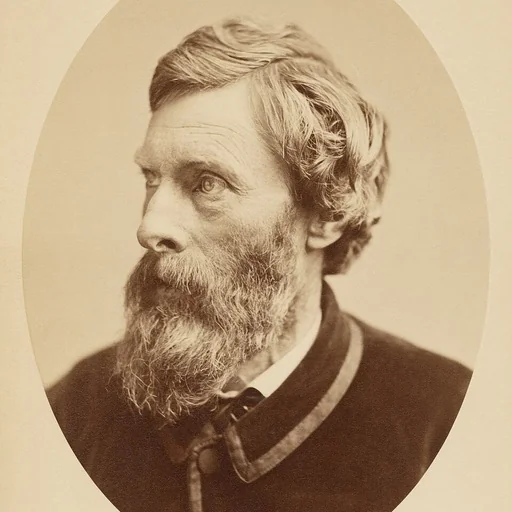
Jasper Francis Cropsey was an American architect and artist. He is best known for his Hudson River School landscape paintings.



 Sketches made during the Campaign of 1854-55 in the Crimea, Circassia and Constantinople
 Topographical drawing
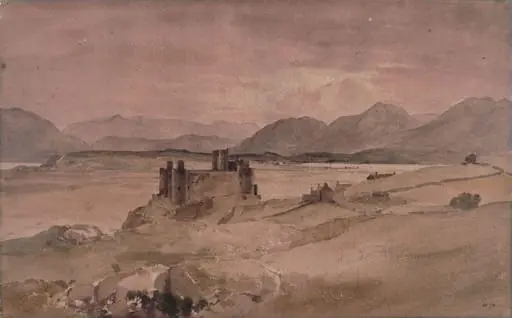 Harlech Castle, North Wales
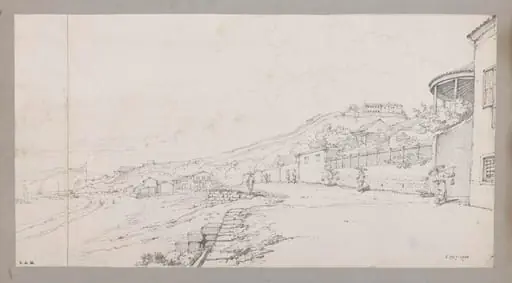 Part of Macao Bay, looking west
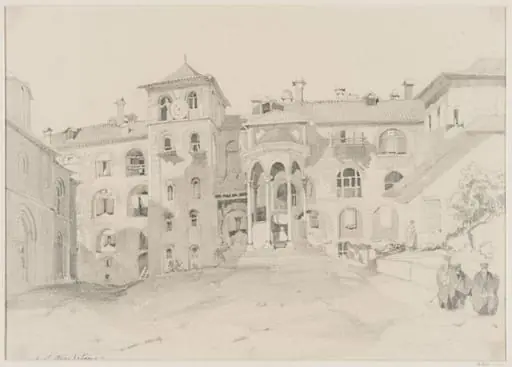 Convent of Xirapatamo
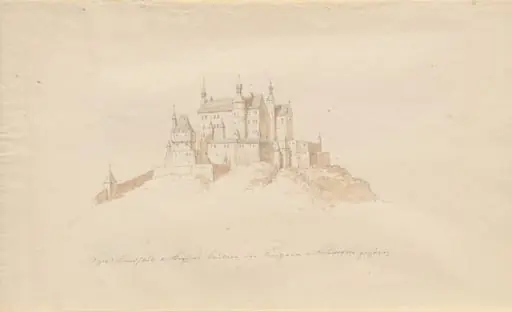 Schloss Landstuhl b. Kaisers, Lautern, den Prinzen v. Sickingen gehürig
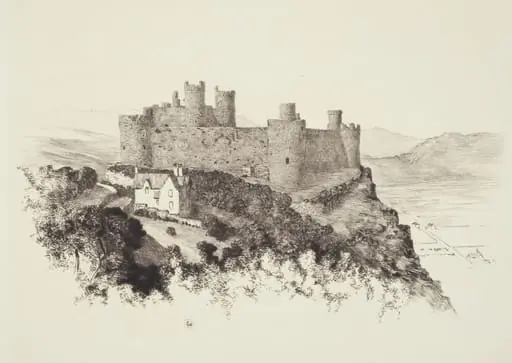 Harlech Castle, Wales
 View of Salzburg
 Manalva Palace
 The Rev. Mr. Vatchell's house (formerly Mr. Thornhill's), Macao
 Untitled
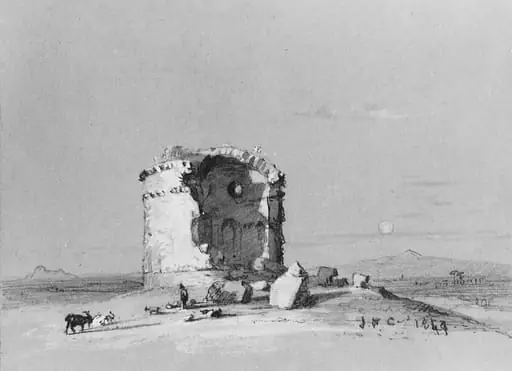
- Torre dei Schiavi, The Roman Campagna (from Cropsey Album)