Artwork
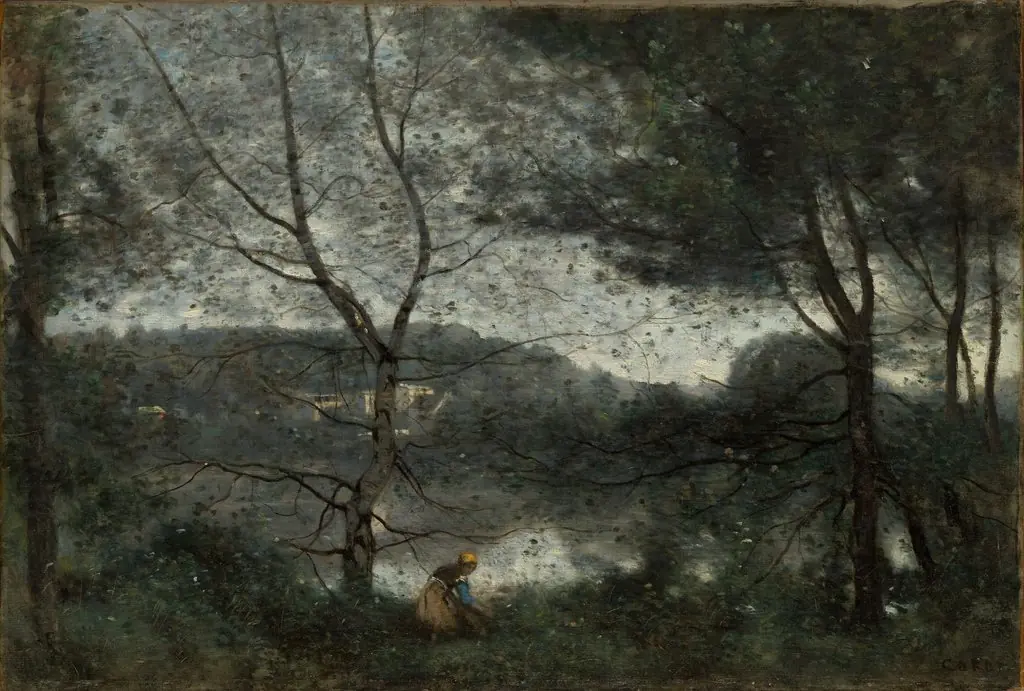
A Woman Gathering Faggots at Ville-d'Avray
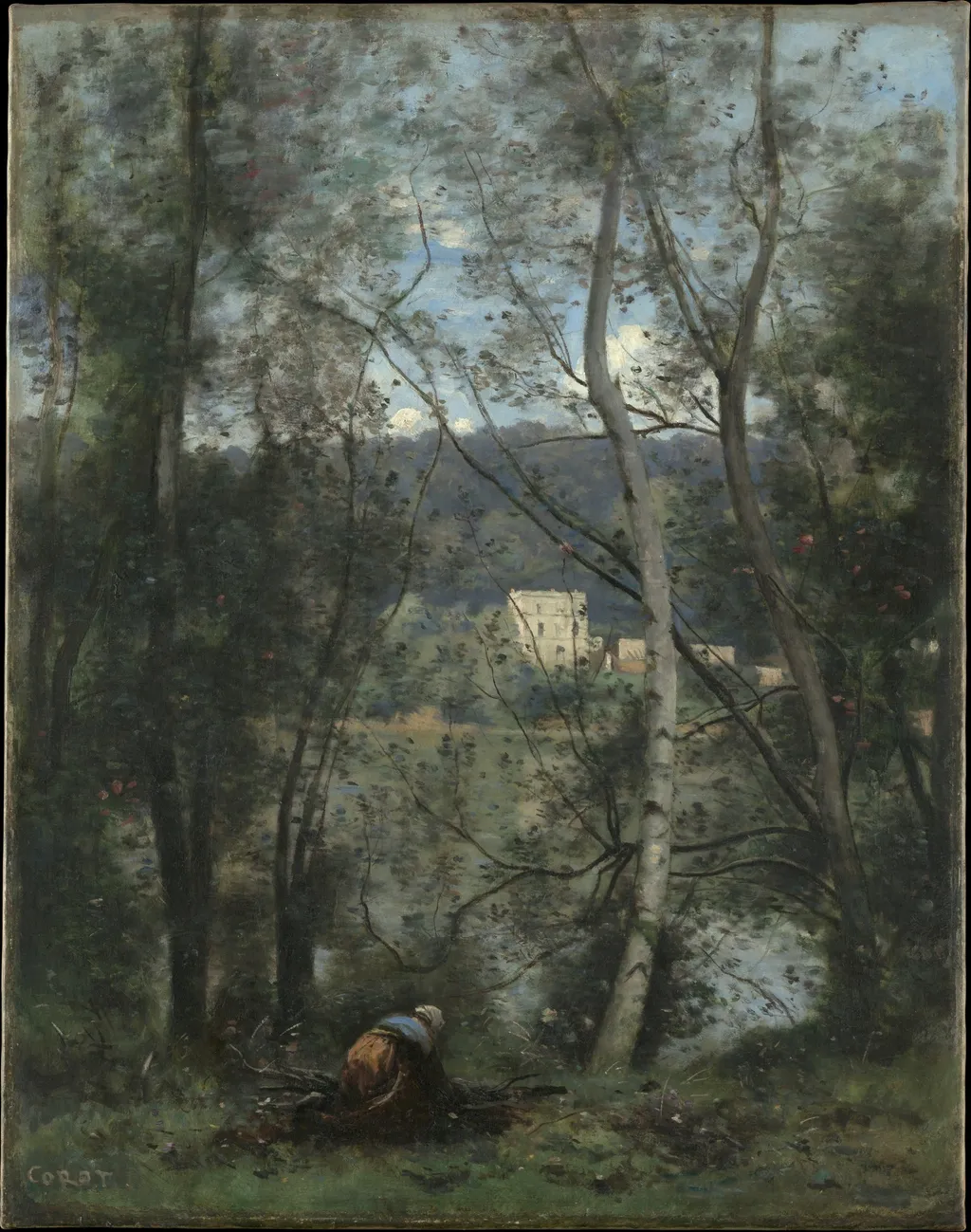
A Woman Gathering Faggots at Ville-d'Avray is an oil painting by the Impressionist artist Jean Baptiste Camille Corot. It dates from 1871 and is held in the collection of the Metropolitan Museum of Art.
About this work
Subject & Meaning
Executed in oil on canvas in 1871, the work exemplifies 19th-century Romantic idealization of modest labor and the pastoral landscape.
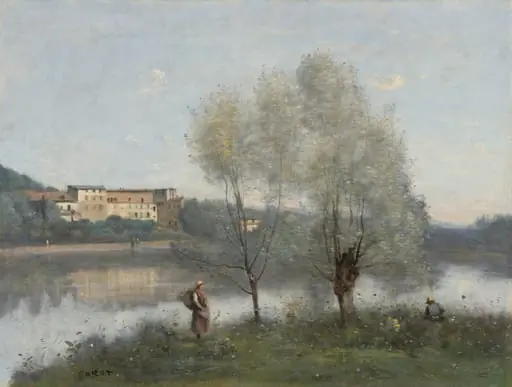
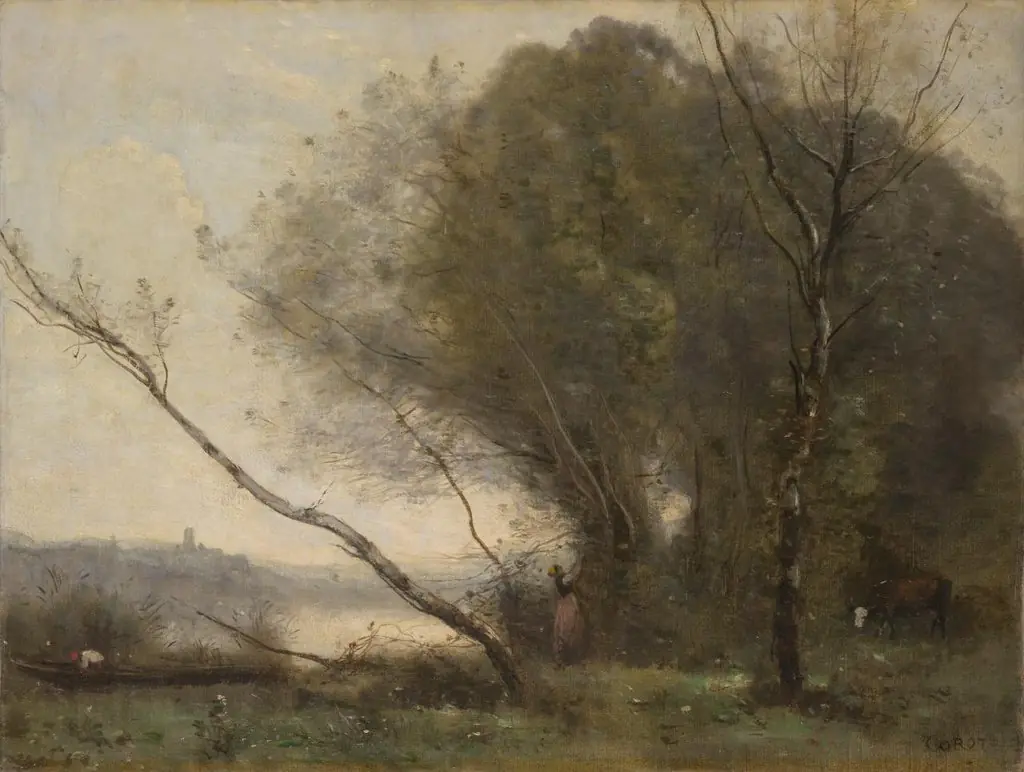
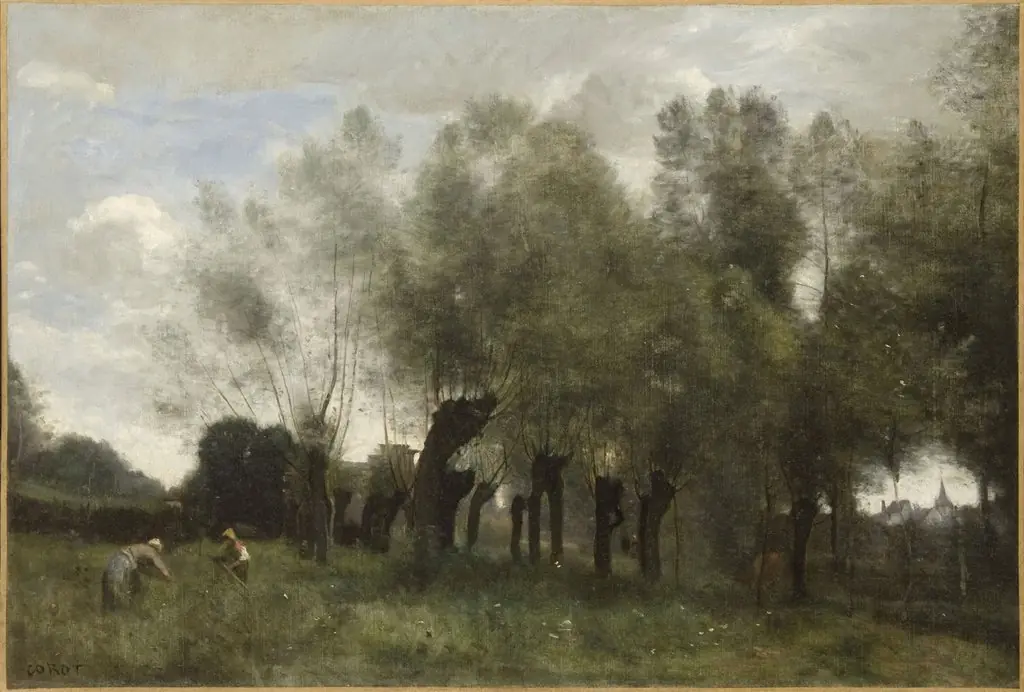
The painting shows a solitary woman bent over a pile of firewood in a forest clearing near Ville-d'Avray. The composition reflects Corot's interest in everyday rural activity and the quiet dignity of manual labor. Gathering faggots, a necessary domestic task, symbolizes the sustenance of household life and the harmonious relationship between humans and the natural environment.
Executed in oil on canvas in 1871, the work exemplifies 19th-century Romantic idealization of modest labor and the pastoral landscape.
Technique & Style
The work is an oil painting on canvas, measuring 72.1 cm in height and 57.2 cm in width. Executed in 1871, it employs a restrained, luminous handling characteristic of Corot's late plein-air practice, with thin, blended layers that convey atmospheric effects rather than detailed texture. The composition emphasizes tonal harmony and soft transitions between light and shadow, focusing on the silhouette of a woman against a wooded backdrop.
Brushwork remains fluid and unobtrusive, subordinating detail to overall atmospheric unity, while the restricted palette favors earthy greens, silvery grays, and muted ochres to evoke the quietude of the forest interior.
History & Provenance
The work is held by the Metropolitan Museum of Art, New York, where it is recorded under accession number 1975.1.208. The available sources confirm the museum's current ownership but do not document prior provenance, exhibition history, or the circumstances of acquisition.
Overview
Jean-Baptiste-Camille Corot's 1871 oil painting, "A Woman Gathering Faggots at Ville-d'Avray," presents a solitary figure engaged in rural labor within a wooded landscape. This work exemplifies Corot's characteristic focus on natural settings and his nuanced depiction of light and atmosphere. The piece is part of the collection at The Metropolitan Museum of Art, representing a significant example of the artist's output during a pivotal period in French landscape painting.
Context
As a prominent French painter of the 19th century, Jean-Baptiste-Camille Corot played a crucial role in the development of landscape art. His artistic approach often synthesized the structured compositions of Neoclassical painting with a more direct, observational engagement with nature. This distinctive blend positioned him as an influential figure, bridging earlier traditions with the burgeoning Impressionist movement and its emphasis on capturing transient visual experiences.
Own this work as a print
Artist & collection
Artist
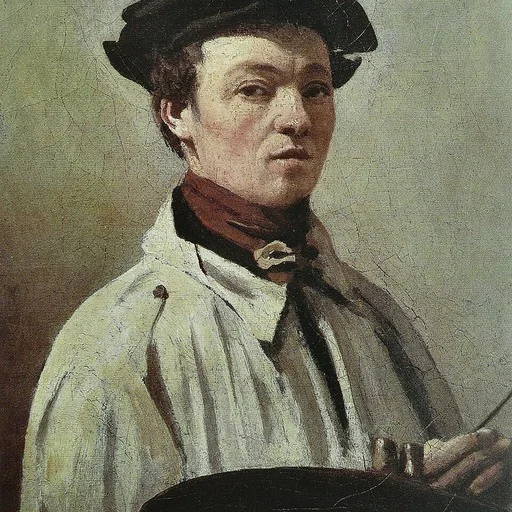
Jean-Baptiste-Camille Corot (UK: KORR-oh, US: kə-ROH, kor-OH; French:; 16 July 1796 – 22 February 1875), or simply Camille Corot, was a French landscape and portrait painter as well as a printmaker in etching.