Artwork
Diana and Actaeon (Diana Surprised in Her Bath)
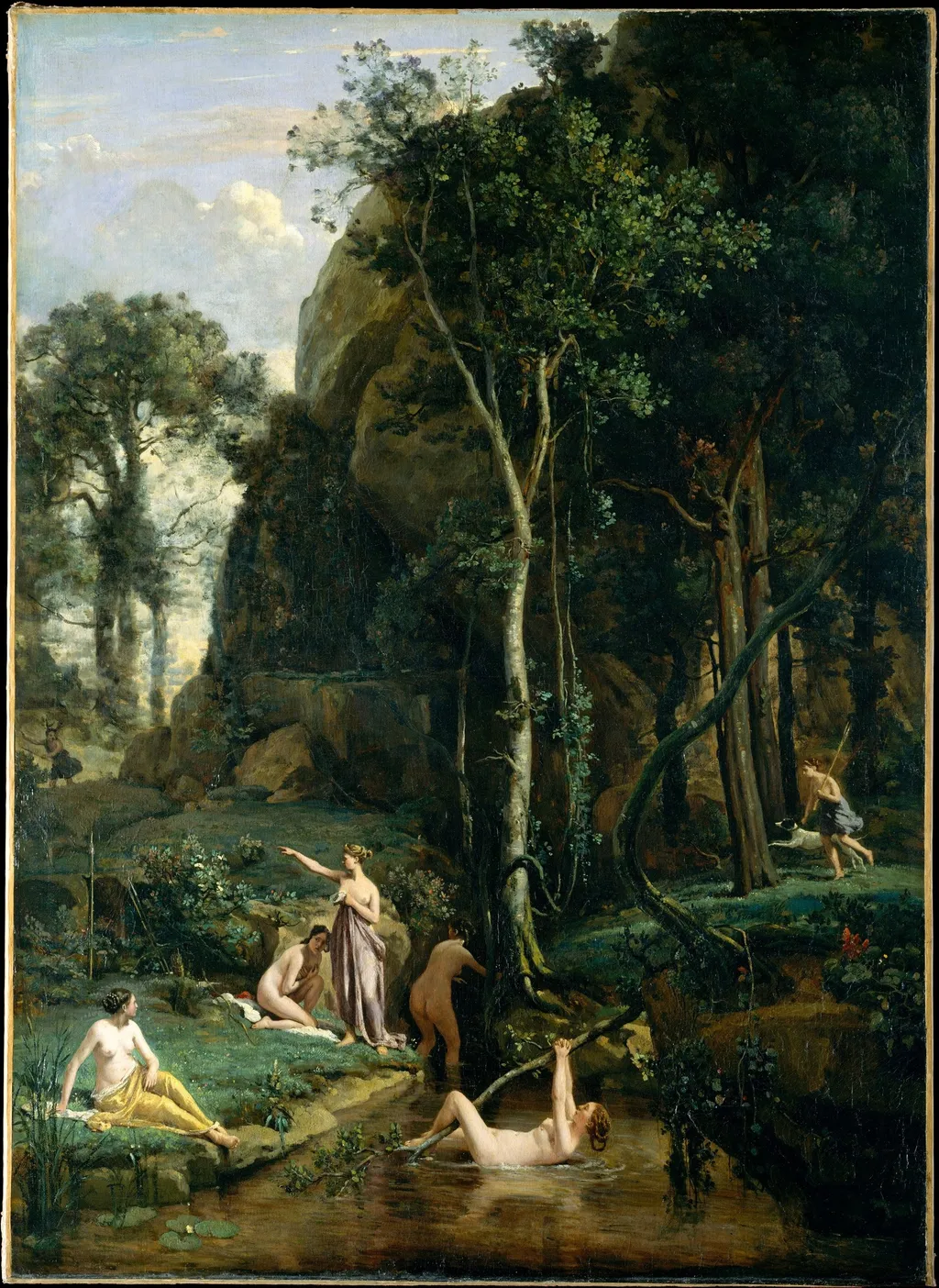
Diana and Actaeon (Diana Surprised in Her Bath) is an oil painting by the French Romanticist artist Jean Baptiste Camille Corot. It dates from 1836 and is held in the collection of the Metropolitan Museum of Art. Jean-Baptiste-Camille Corot's 1836 oil on canvas, Diana and Actaeon, presents a classical narrative within a verdant landscape.
About this work
Subject & Meaning
It captures the moment the young hunter Actaeon accidentally discovers the goddess Diana and her nymphs bathing nude in a forest pool.
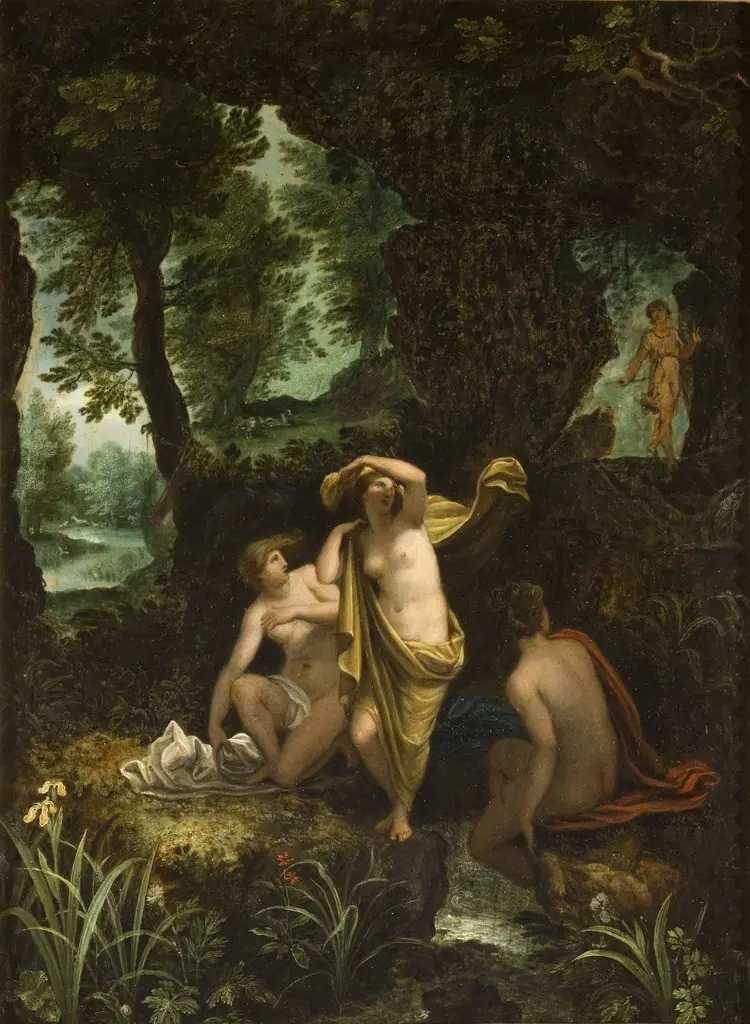
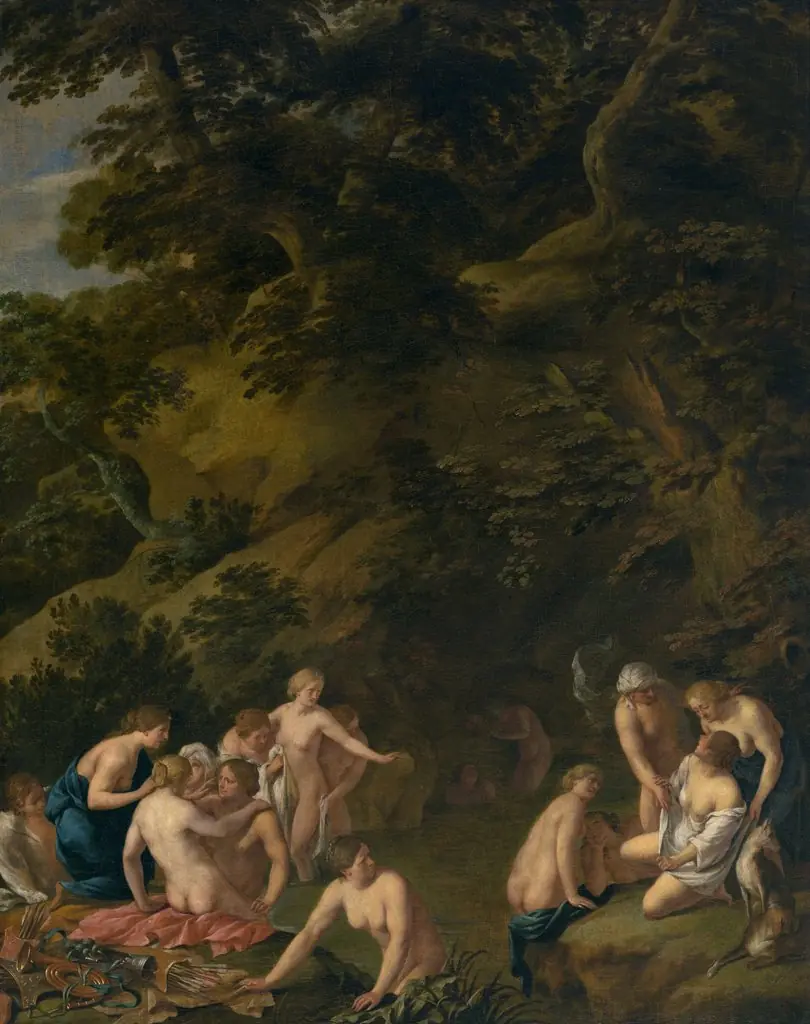
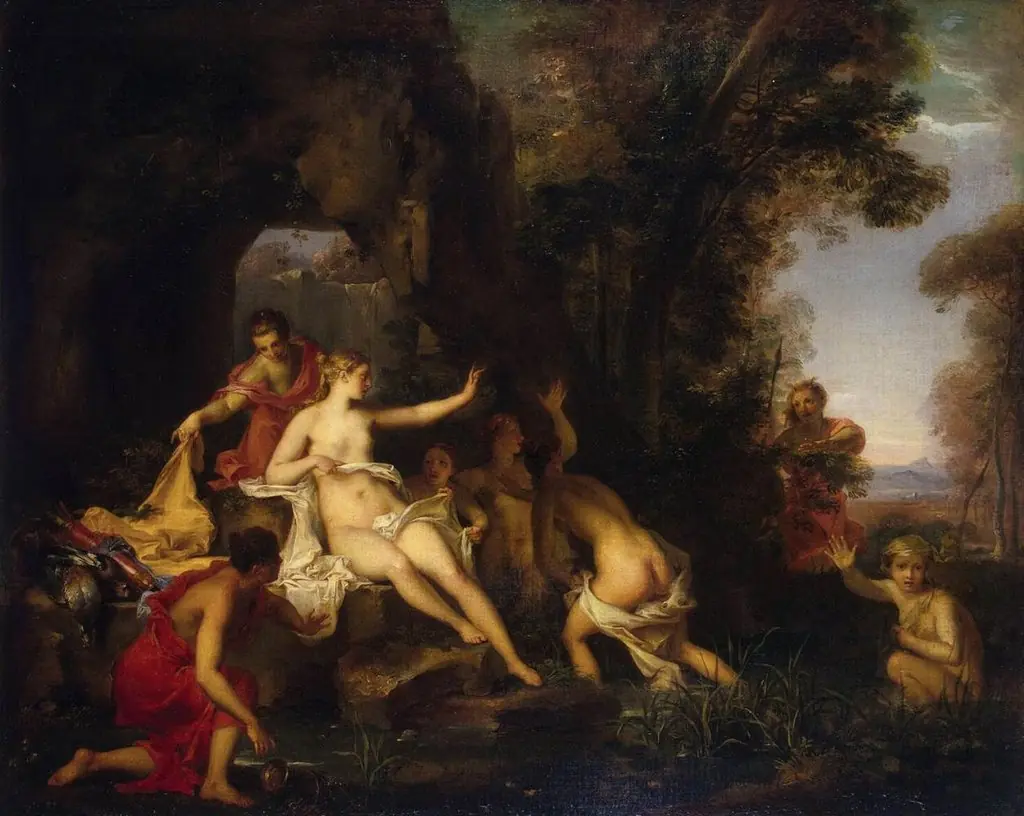
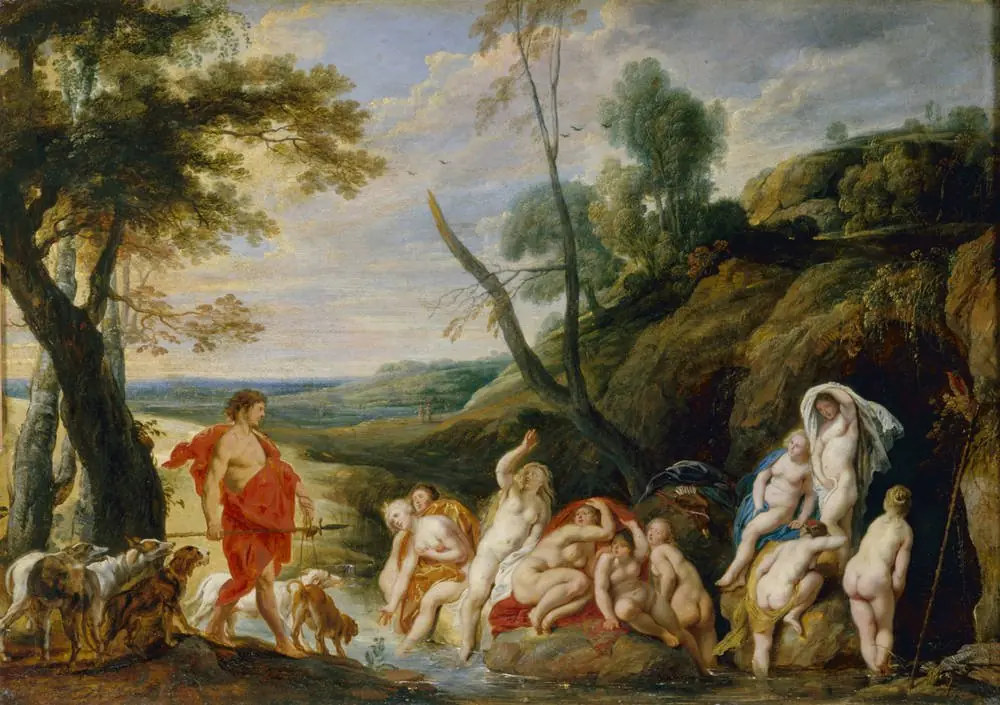
The painting illustrates the mythological narrative of Diana and Actaeon, derived from the Roman poet Ovid's Metamorphoses. It captures the moment the young hunter Actaeon accidentally discovers the goddess Diana and her nymphs bathing nude in a forest pool. In retaliation for this intrusion, a furious Diana punishes Actaeon by transforming him into a deer, a fate that ultimately leads to him being torn apart by his own hounds.
Corot's vertical composition emphasizes the wooded landscape, depicting Diana standing and covering herself with a veil while menacingly pointing at Actaeon, who is already sprouting antlers as he flees. The surrounding nymphs react in various poses, from kneeling in modesty to reclining on the shore or resting against a tree branch, underscoring the sudden disruption of their secluded bath.
Technique & Style
Jean-Baptiste-Camille Corot’s Diana and Actaeon is an oil painting on canvas executed in 1836. The composition is organized vertically, with a dense forest interior dominating the scene: tall trees and a rocky outcrop frame the mythological encounter. Diana stands centrally, partially draped, her gesture and gaze directed toward Actaeon, who appears at the right with incipient antlers.
Nymphs occupy the woodland pool, some kneeling, others reclining or clinging to branches, their varied poses creating a rhythm across the surface. Corot’s handling emphasizes silvery light filtering through foliage, modulating flesh and drapery with delicate, blended strokes. The palette favors cool greens and blues against warm ivory tones, while the overall tonality aligns with the Barbizon school’s muted naturalism.
The work was exhibited at the Salon of 1836 in Paris and is now in the collection of the Metropolitan Museum of Art, New York.
History & Provenance
Painted in 1836 by Jean-Baptiste-Camille Corot, Diana and Actaeon was first exhibited at the Salon in Paris that same year. The work was later acquired by the Metropolitan Museum of Art, New York, in 1975 as part of the Robert Lehman collection. No direct commission record survives, though the subject’s prominence in French academic circles and Corot’s presence at the 1836 Salon suggest it was produced for exhibition rather than a private patron. A preparatory oil sketch, differing in composition and lacking Actaeon, is preserved in Reims.
Context
Corot’s Diana and Actaeon (1836) was exhibited at the Paris Salon of 1836, a pivotal platform for mid-19th-century French art that shaped public and critical reception of mythological subjects. The work emerged during Corot’s Barbizon period, aligning with the movement’s turn toward poetic landscape and figure integration, though its mythological narrative distinguished it from the plein-air focus of contemporaries like Millet or Rousseau. The painting’s inclusion in the 1996 Metropolitan Museum of Art retrospective Corot (with Tinterow, Pantazzi, and Pomarède) underscored its significance within the artist’s oeuvre, linking his early Salon success to later landscape innovations.
Scholars such as Katharine Baetjer and Brettell contextualize the work within Corot’s broader engagement with classical themes, noting its fusion of narrative urgency with atmospheric woodland settings, a hallmark of his Barbizon synthesis.
Overview
Jean-Baptiste-Camille Corot's 1836 oil on canvas, Diana and Actaeon, presents a classical narrative within a verdant landscape. This painting, also known as Diana Surprised in Her Bath, is housed at the Metropolitan Museum of Art in New York. It captures a moment of both tranquility and impending drama, as the goddess Diana and her nymphs bathe, unaware of a hidden observer. The work exemplifies Corot's early engagement with historical subjects, blending mythological storytelling with a naturalistic setting.
Own this work as a print
Artist & collection
Artist
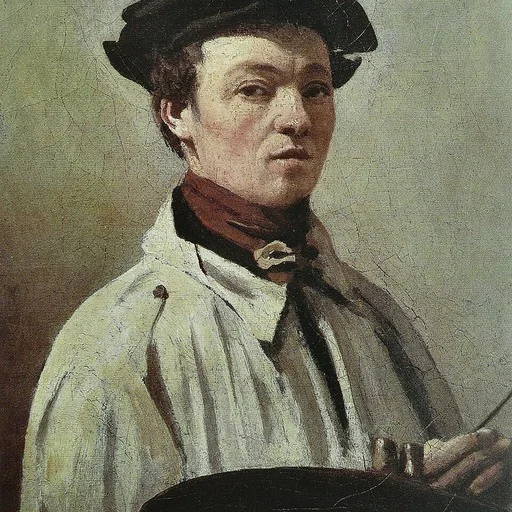
Jean-Baptiste-Camille Corot (UK: KORR-oh, US: kə-ROH, kor-OH; French:; 16 July 1796 – 22 February 1875), or simply Camille Corot, was a French landscape and portrait painter as well as a printmaker in etching.