Artwork
Fontainebleau: Oak Trees at Bas-Bréau
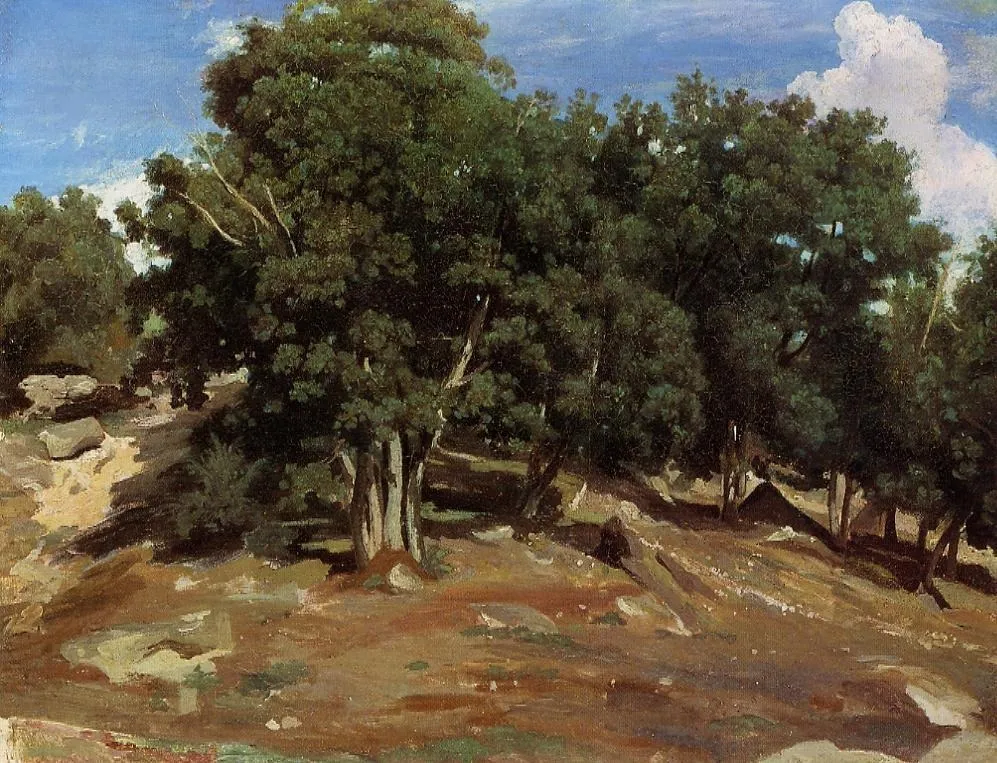
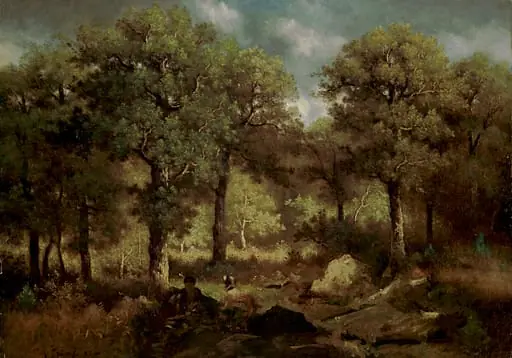
Fontainebleau: Oak Trees at Bas-Bréau is an oil painting by the Barbizon school artist Jean Baptiste Camille Corot. It dates from 1830 and is held in the collection of the Metropolitan Museum of Art.
About this work
Subject & Meaning
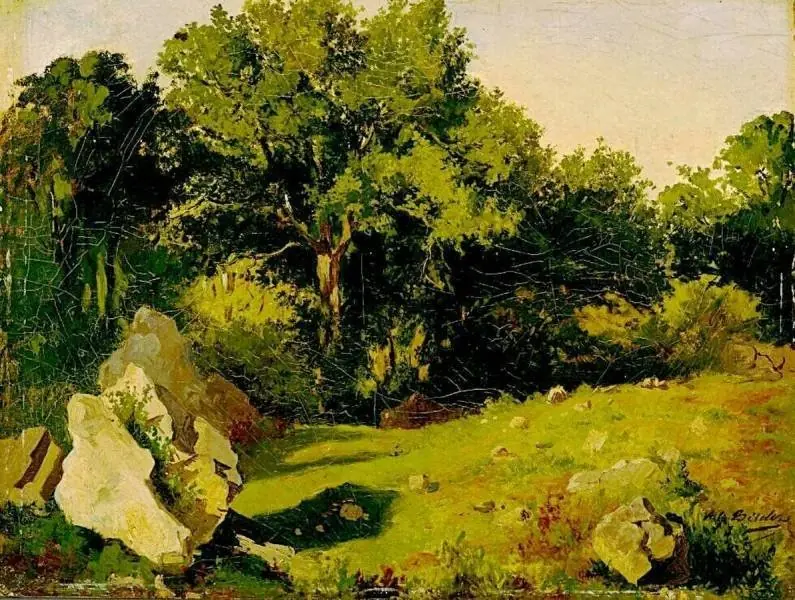
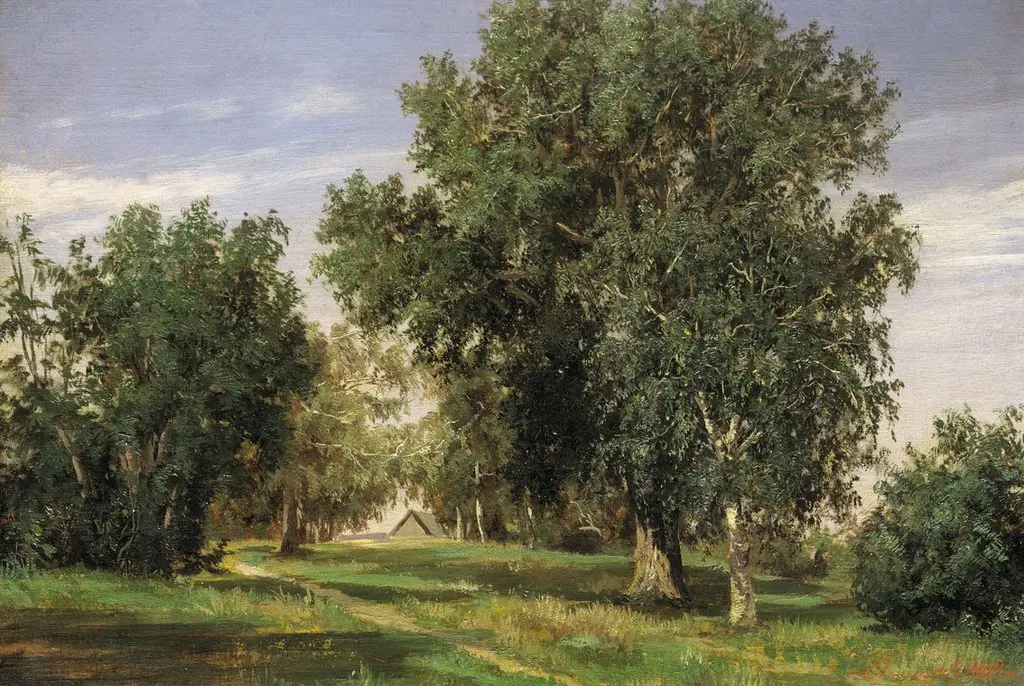
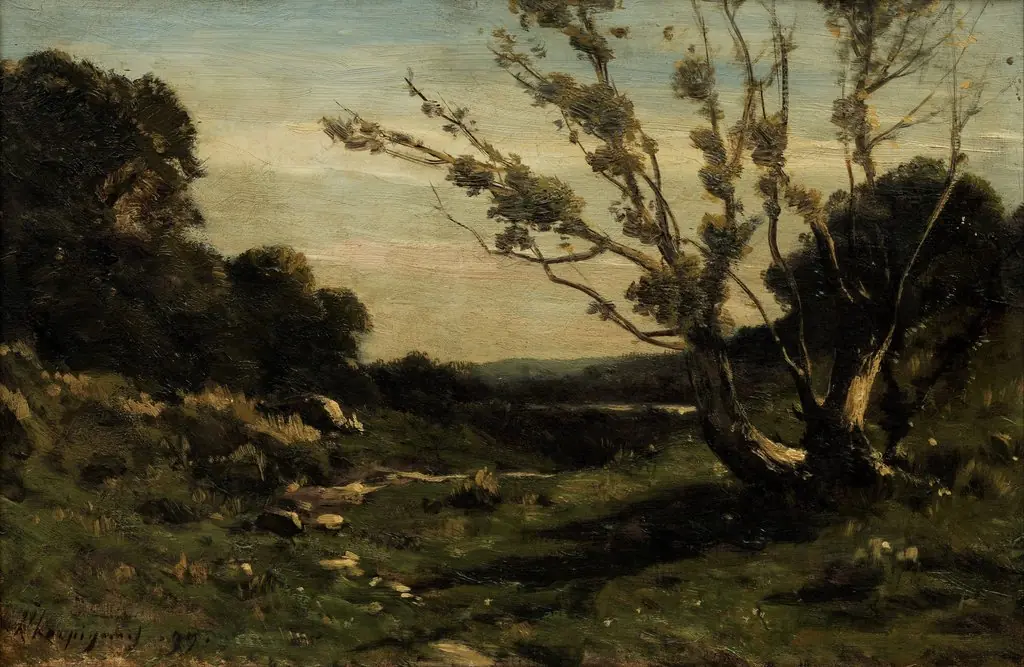
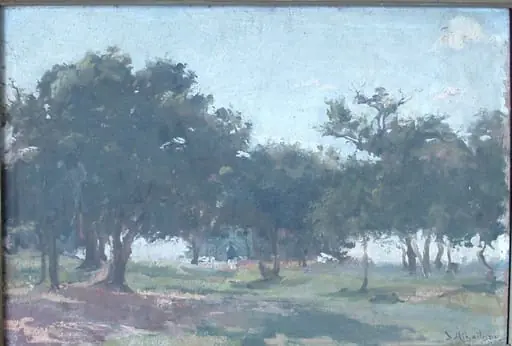
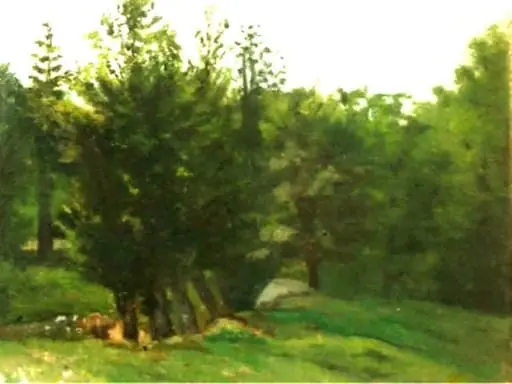
The painting depicts a stand of oak trees in the forest of Fontainebleau, specifically at the site known as Bas-Bréau.
The painting depicts a stand of oak trees in the forest of Fontainebleau, specifically at the site known as Bas-Bréau. The work belongs to Corot's early Barbizon-period engagement with the wooded landscapes south of Paris, presenting the gnarled forms of mature oaks as its primary subject rather than figures or narrative incident. By isolating the trees and the dense forest setting, the painting treats the Fontainebleau oak grove itself as the locus of meaning, aligning the artist with contemporaries who drew pictorial and symbolic value from this celebrated woodland.
The work thus represents both a specific natural locale and the broader Romantic-to-Realist interest in unidealized native forest scenery, with the oak standing as an emblem of age, endurance, and the character of the French landscape.
Technique & Style
The painting Fontainebleau: Oak Trees at Bas‑Bréau is an oil on canvas work created in 1830. It measures 39.7 cm in height and 49.5 cm in width, and it depicts a stand of oak trees within the Fontainebleau forest. The artwork is executed in oil paint, a medium typical of Corot’s landscape practice, and is supported by a canvas substrate.
It belongs to the Metropolitan Museum of Art’s collection, where it is catalogued as part of the museum’s holdings of Corot’s works. The composition reflects Corot’s characteristic attention to atmospheric light and the detailed rendering of natural foliage.
History & Provenance
Fontainebleau: Oak Trees at Bas‑Brûau is an oil on canvas painting by Jean‑Baptiste‑Camille Corot, dated 1830. The work was created during Corot’s stay in the Fontainebleau forest, reflecting his interest in the region’s oak‑filled landscapes. It entered the collection of the Metropolitan Museum of Art, where it remains on view as part of the museum’s holdings.
The painting has been featured in the exhibition "Corot 1796‑1875," which documented the artist’s oeuvre. No specific commissioning details are recorded; the work is understood to be part of Corot’s independent production of landscape subjects from this period.
The painting is held in the collection of the Metropolitan Museum of Art, where it is catalogued as an oil on canvas (39.7 × 49.5 cm). Its documented exhibition history includes the show "Corot 1796-1875," during which it was displayed as a work by Jean-Baptiste Camille Corot dating to 1830.
Overview
Jean-Baptiste-Camille Corot's Fontainebleau: Oak Trees at Bas-Bréau, painted in oil in 1830, captures a specific natural scene within the renowned Fontainebleau Forest. This work exemplifies the French artist's early engagement with landscape painting, a genre he would profoundly influence. It is currently part of the collection at The Metropolitan Museum of Art, representing a pivotal moment in the development of 19th-century art.
Context
Created during a period of artistic transition, this painting reflects Corot's connection to the Barbizon School, a group of artists dedicated to painting directly from nature. His method of capturing light and atmosphere on site served as a crucial link between the classical landscape tradition and the emerging plein-air techniques. This engagement with natural observation laid foundational groundwork for the Impressionist movement that followed.
Artist & collection
Artist
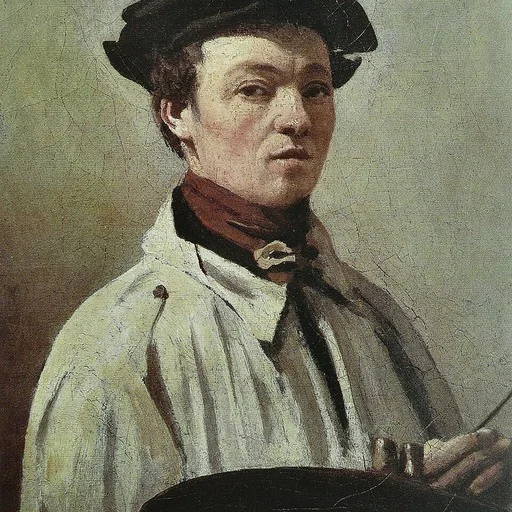
Jean-Baptiste-Camille Corot (UK: KORR-oh, US: kə-ROH, kor-OH; French:; 16 July 1796 – 22 February 1875), or simply Camille Corot, was a French landscape and portrait painter as well as a printmaker in etching.