Artwork
Girl Weaving a Garland
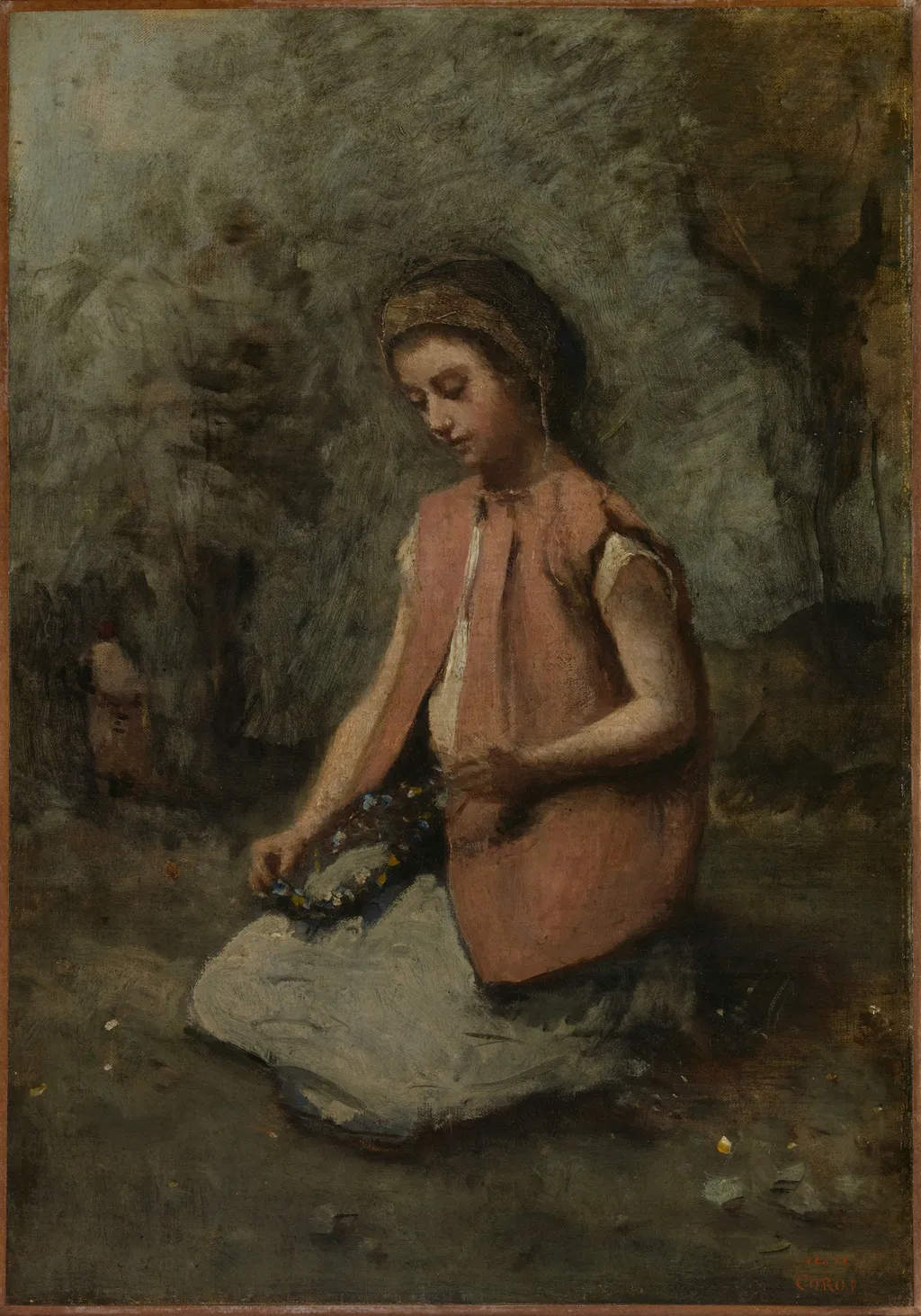
Girl Weaving a Garland is an oil painting by the Realist artist Jean Baptiste Camille Corot. It dates from 1860 and is held in the collection of the Metropolitan Museum of Art.
About this work
Subject & Meaning
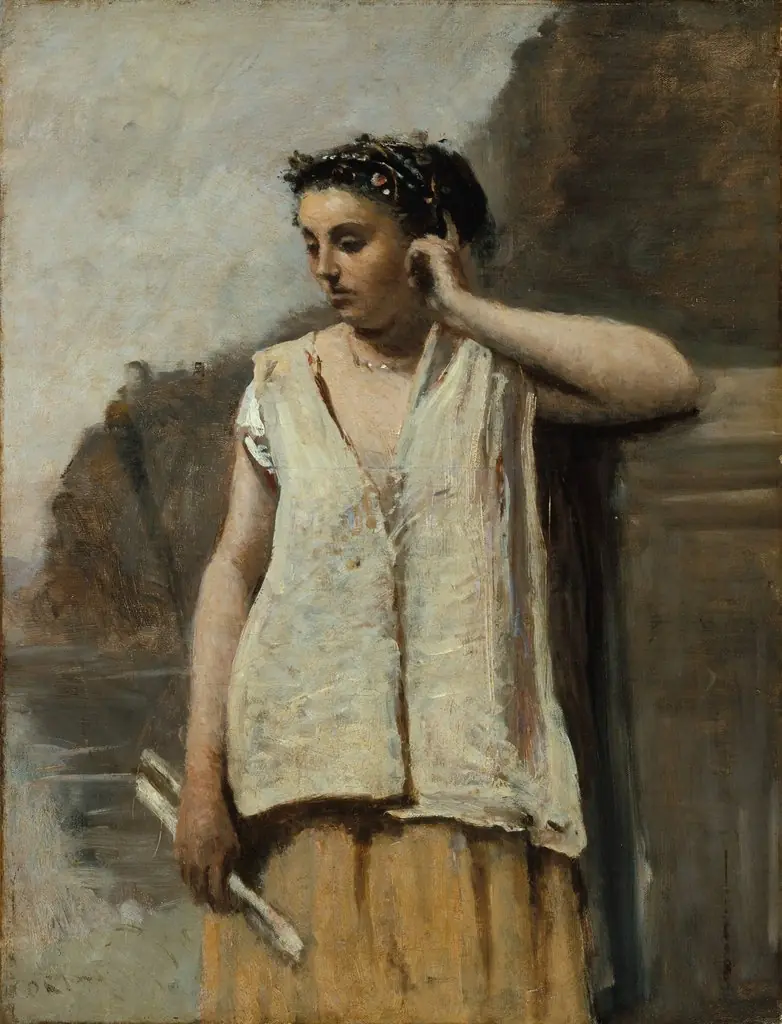
Jean-Baptiste Camille Corot's 1860 painting, Girl Weaving a Garland, depicts a young girl engaged in the act of weaving a garland.
Jean-Baptiste Camille Corot's 1860 painting, Girl Weaving a Garland, depicts a young girl engaged in the act of weaving a garland. The subject matter is explicitly identified as a girl and the garland she is creating. While the work presents a straightforward scene of domestic or pastoral activity, the specific symbolic meaning or deeper iconographic significance attributed to the girl's task is not detailed in the provided sources.
The image focuses on the figure and her interaction with the floral or leafy material she is assembling.
Technique & Style
Girl Weaving a Garland is an oil painting on canvas created in 1860 by Jean‑Baptiste Camille Corot. The work measures 41.9 cm in height by 29.8 cm in width and is classified as a painting. It portrays a young girl engaged in weaving a garland, a subject rendered with soft tonal modeling characteristic of Corot’s figure studies.
The composition balances the figure against a muted background, emphasizing a delicate handling of light. The piece belongs to the Metropolitan Museum of Art collection and was formerly owned by Louisine Havemeyer.
History & Provenance
Girl Weaving a Garland is an oil on canvas painting by Jean Baptiste Camille Corot created in 1860. The work measures 41.9 cm in height and 29.8 cm in width and depicts a girl weaving a garland. It was originally owned by collector Louisine Havemeyer and subsequently acquired by the Metropolitan Museum of Art, where it remains in the collection. The painting was executed in oil paint on canvas, reflecting the artist’s practice of the period.
Girl Weaving a Garland is part of the Metropolitan Museum of Art’s collection in New York. The painting entered the museum through the bequest of Louisine Havemeyer, a noted American art patron who donated many works to the institution. Its provenance traces back to the artist’s own sale in 1860, after which it passed through private hands before joining Havemeyer’s holdings.
The work is catalogued in the museum’s inventory as part of the Havemeyer donation, though the specific accession number is not disclosed in the available records. No exhibition record for the piece is documented in the cited sources.
Context
Girl Weaving a Garland is an 1860 oil on canvas painting by Jean-Baptiste Camille Corot, measuring 41.9 × 29.8 cm. The work portrays a young girl arranging a floral garland and was part of the collection of Louisine Havemeyer before entering the Metropolitan Museum of Art, where it remains on view. Its subject matter reflects Corot’s occasional forays into genre scenes that combine intimate figure studies with a soft, atmospheric treatment of space. The painting’s provenance and material details are documented in the Metropolitan Museum of Art’s catalogue, underscoring its significance within the artist’s oeuvre.
Overview
Jean-Baptiste-Camille Corot completed Girl Weaving a Garland in 1860, an oil painting that exemplifies the Realist interest in ordinary life. This work depicts a young woman engaged in a simple, domestic task, rendered with a quiet intensity. The French artist, known for his landscapes and portraits, often explored figures within natural or intimate settings, and this piece is a notable example of his figurative work.
Own this work as a print
Artist & collection
Artist
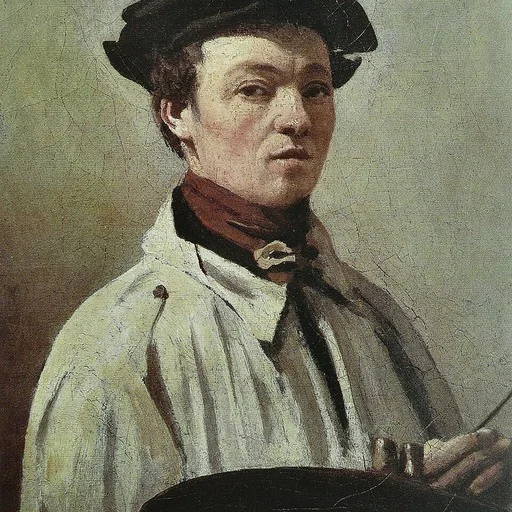
Jean-Baptiste-Camille Corot (UK: KORR-oh, US: kə-ROH, kor-OH; French:; 16 July 1796 – 22 February 1875), or simply Camille Corot, was a French landscape and portrait painter as well as a printmaker in etching.