Artwork
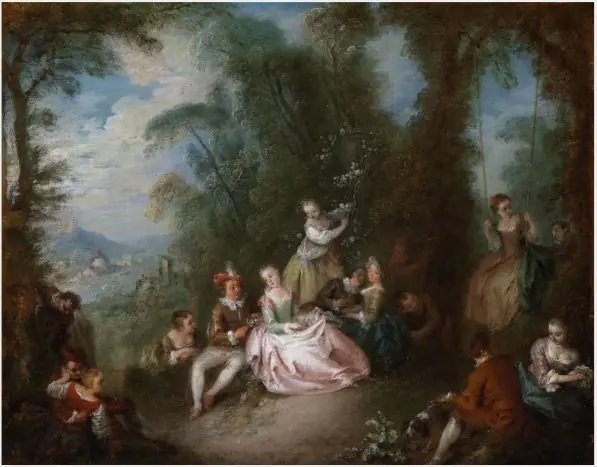
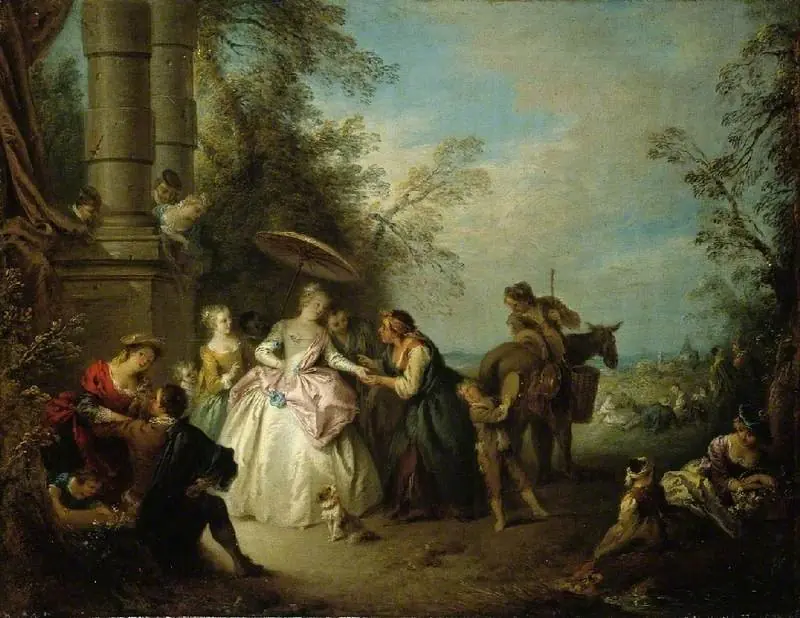
La Balançoire
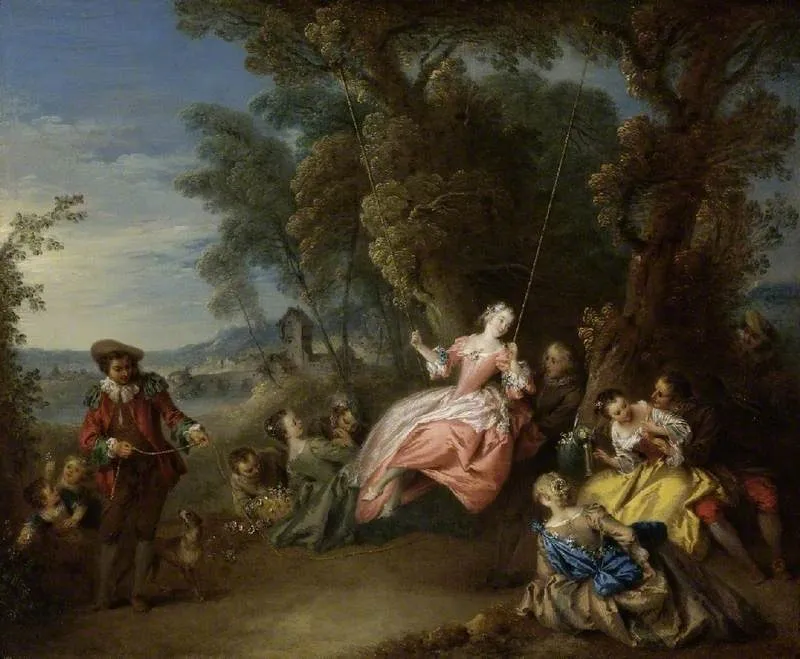
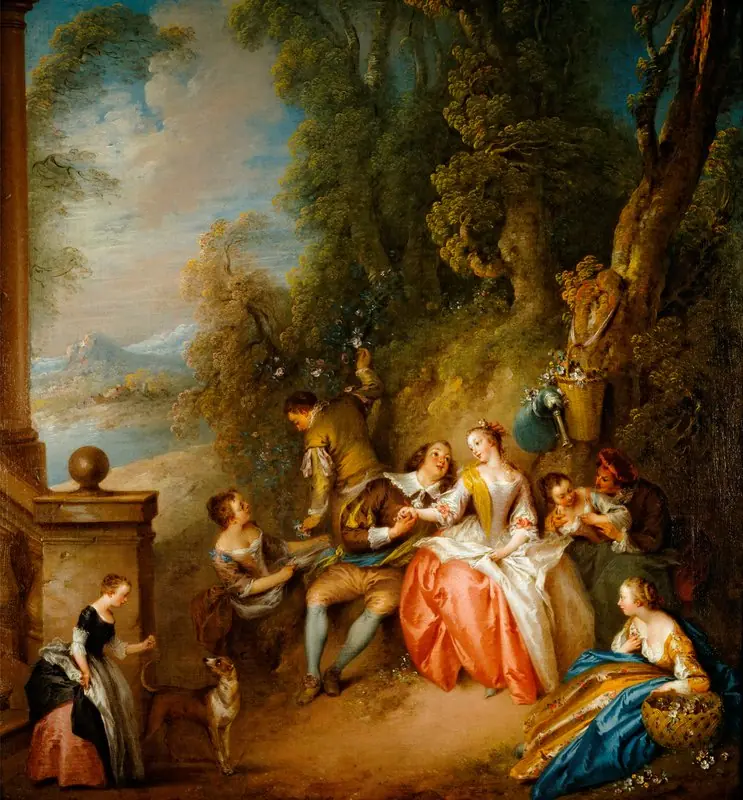
La Balançoire is an oil painting by Jean-Baptiste Pater. It dates from 1725 and is held in the collection of the Fitzwilliam Museum.
About this work
Overview
It is currently held in the Fitzwilliam Museum in Cambridge, where it is catalogued under the accession number PD.
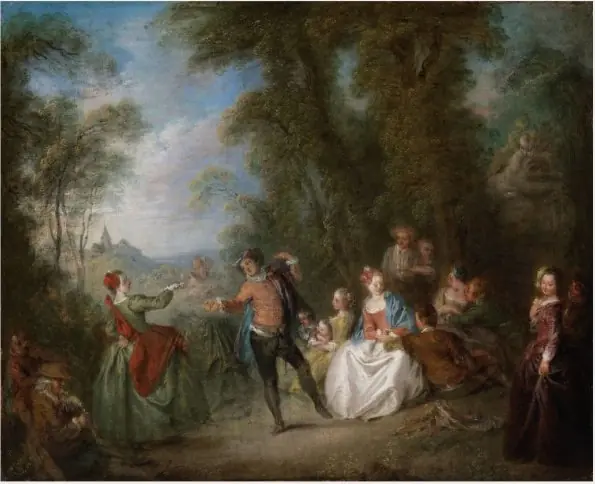
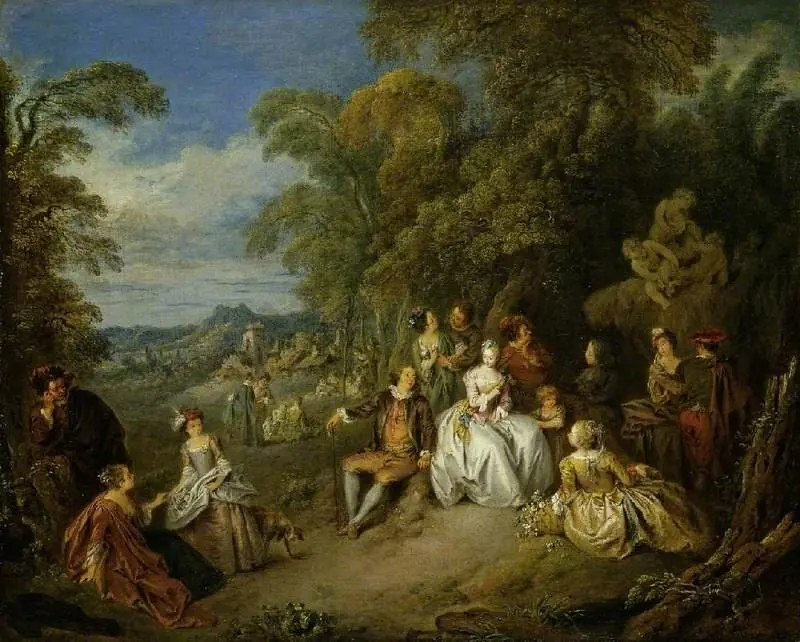
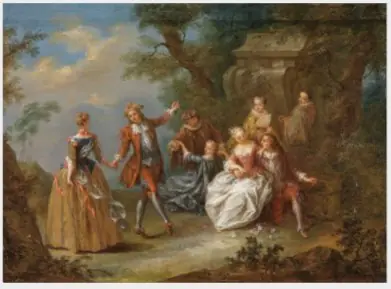
La Balancoire, translated as The Swing, is an oil on canvas painting by the French artist Jean-Baptiste Pater. Created sometime between 1710 and 1736, the work measures 46.3 by 56.5 centimeters and belongs to the landscape genre. It is currently held in the Fitzwilliam Museum in Cambridge, where it is catalogued under the accession number PD.22-1977. The painting is a significant example of the fete galante, a category of French Rococo painting pioneered by Pater's master, Antoine Watteau, depicting elegant figures in leisurely outdoor amusement.
Subject & Meaning
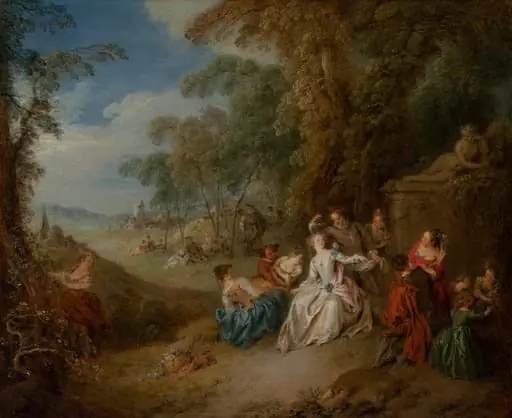
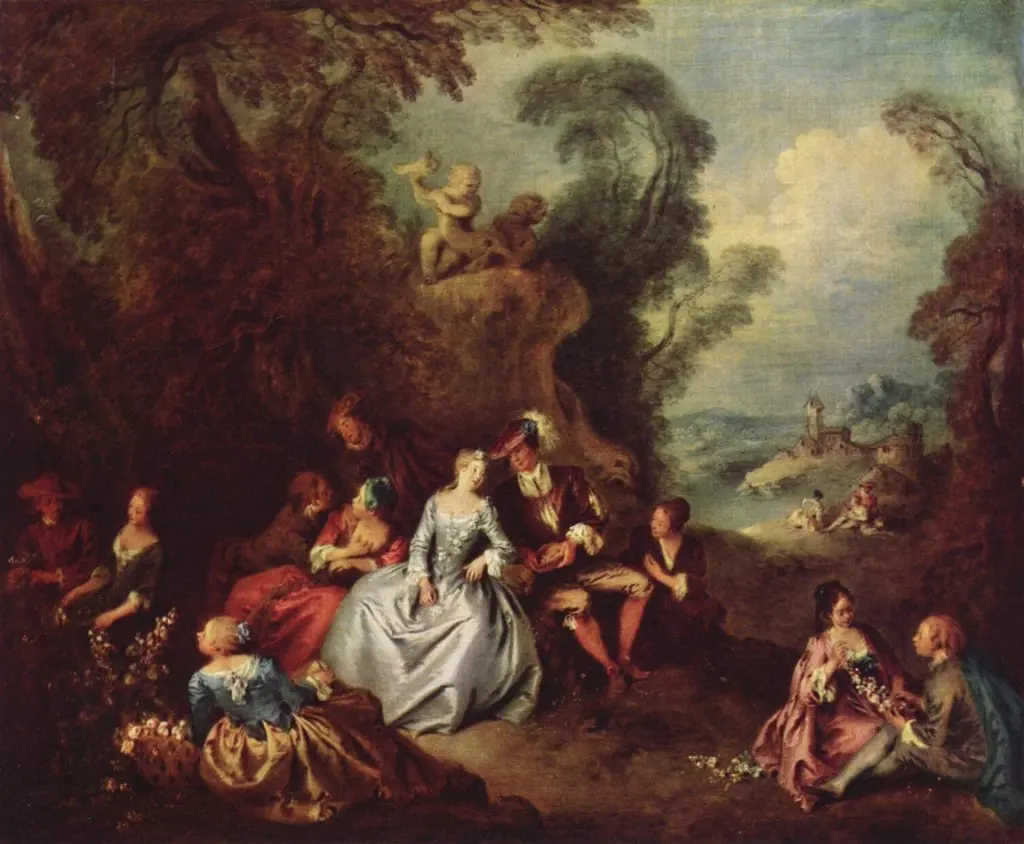
The composition centers on a woman in a pink silk gown seated on a swing suspended from a large tree. A man in a red coat and brown hat stands to her left, holding a rope attached to the swing, while a small dog rests near his feet. Surrounding them are several other adults and children, including a seated woman in blue and gray accompanied by another figure in yellow in the lower right foreground, and two children embracing or playing near the tree trunk. The scene captures a popular subject in eighteenth-century French painting, portraying aristocratic pastimes within a park-like landscape of distant hills and soft clouds. The mood is light and carefree, evoking amorous intrigue and the intimate, small-scale scenes favored by Rococo artists who extracted individual motifs from the broader fete galante tradition to make them independent themes.
Technique & Style
Executed in oil on a canvas support, the painting demonstrates the refined handling characteristic of Pater's mature style. The brushwork is smooth and polished, featuring carefully blended transitions between forms. Pater paid close attention to the textures of luxurious fabrics and dense foliage. The palette relies on warm earth tones and deep greens for the forest floor and background, punctuated by pastel accents in pink, blue, and yellow that highlight the costumes of the figures. Light falls evenly across the composition, illuminating the central woman on the swing while the overarching tree provides contrasting areas of shadow, enhancing the intimate atmosphere of the outdoor gathering.
History & Provenance
The painting's documented history begins in 1827 with Frederick de Neil Williams. It subsequently passed through the collections of the Marquise de Lavalette and Lady Emily Digby. In 1951, it appeared in the sale of A.E.H. Digby in London, lot 29, attributed to Pater. The work later belonged to Mrs. John Tursby and then Count Michel de Pret Roose, who consigned it to Christie's in London on November 26, 1976, lot 19. The Fitzwilliam Museum acquired the painting in 1977, purchasing it from Count Michel de Pret Roose with funds from the Perceval Fund, the National Art Collections Fund, and the Victoria and Albert Museum Purchase Grant Fund.
Context
Pater and Watteau were both natives of Valenciennes. Pater likely followed Watteau to Paris around 1710 to become his pupil, though he was dismissed shortly after due to Watteau's difficult temperament. In 1721, a dying Watteau called Pater to Nogent, and Pater later claimed he learned everything about painting during those final weeks. Watteau's style and subject matter left an indelible mark on Pater, who specialized in fetes galantes. Pater was approved by the Academie Royale de Peinture et de Sculpture in 1725 and received in 1728, specifically as a painter of fete galante, the same category created for Watteau in 1717. Following Watteau's death, Pater experienced increasing demand, enjoying considerable success and receiving a royal commission in 1736 for a Tiger Hunt for the Chateau de Versailles. His work was widely collected by figures such as Frederick the Great, who acquired over forty of his paintings.
Legacy
Pater, alongside Nicolas Lancret, stands as one of the most important representatives of the many artists influenced by Watteau. By choosing individual motifs or groups from Watteau's fete galante and making them independent themes, Pater's process reflects a specific tendency in Rococo toward small-scale, intimate scenes. Works like La Balancoire were precisely the type of exquisite fete galante for which Pater was so admired during his lifetime. His interpretation of the swing subject helped establish it as one of the most popular themes in eighteenth-century French painting, setting a decorative and amorous precedent that would later culminate in the famous Rococo treatments of the motif by subsequent generations.
Artist & collection
Artist
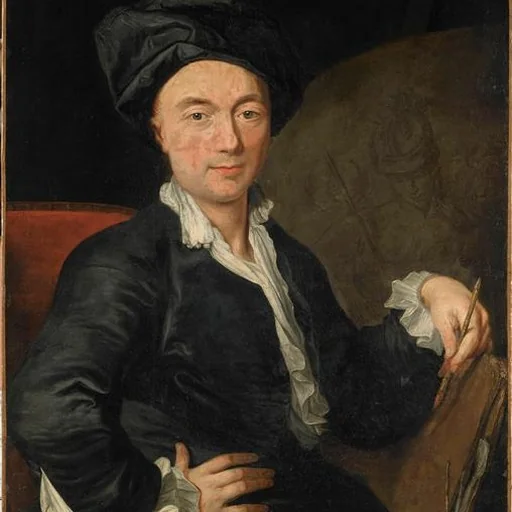
Jean-Baptiste Pater (December 29, 1695 – July 25, 1736) was a French rococo painter.