Artwork
La Bonne Aventure
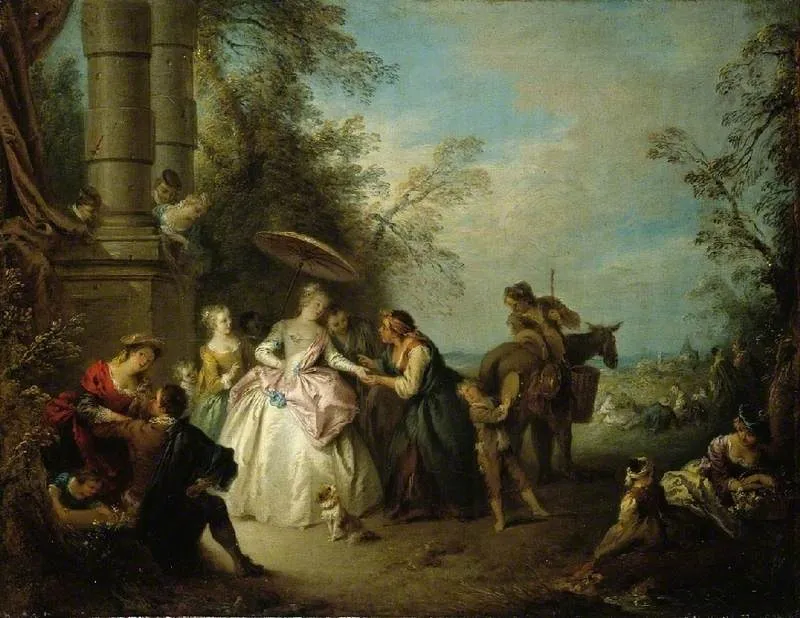
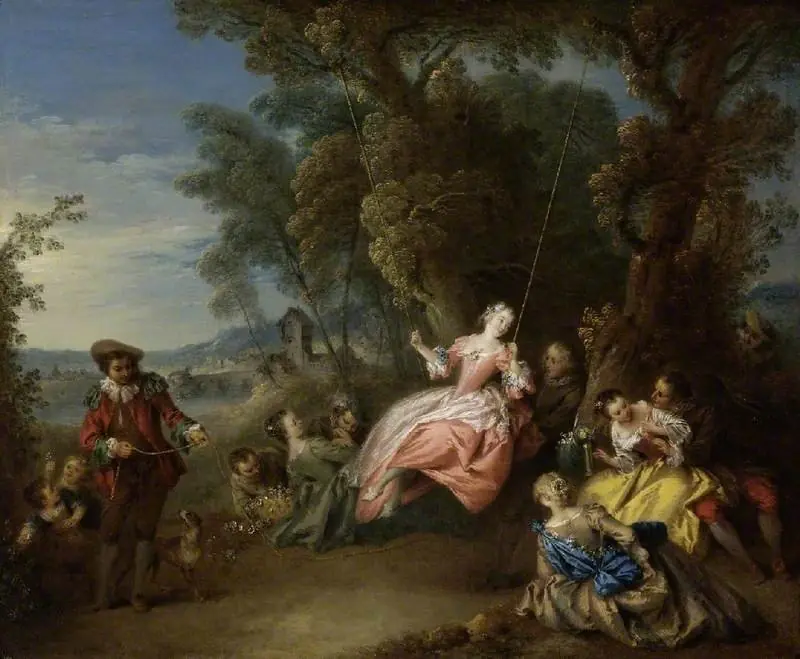
La Bonne Aventure is an oil painting by Jean-Baptiste Pater. It dates from 1720 and is held in the collection of the Fitzwilliam Museum.
About this work
Subject & Meaning
The composition draws on traditional galant motifs, music, dancing, and romantic intrigue, to convey the lighthearted pleasures of the elite.
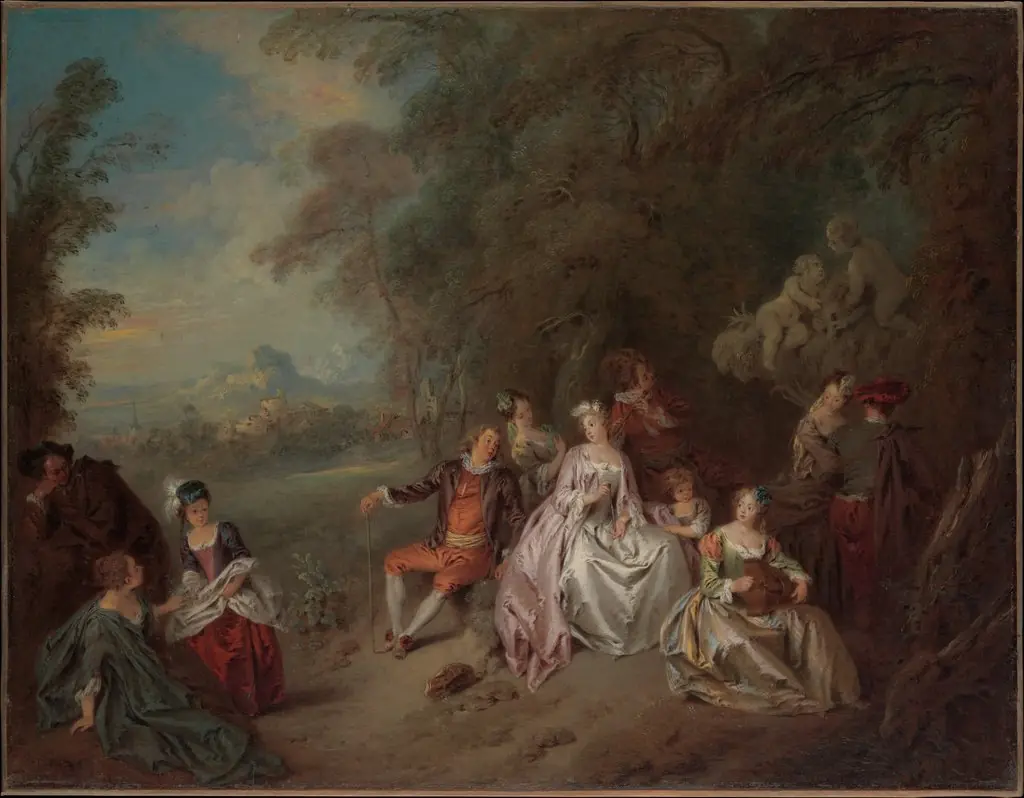
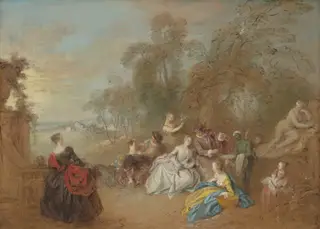
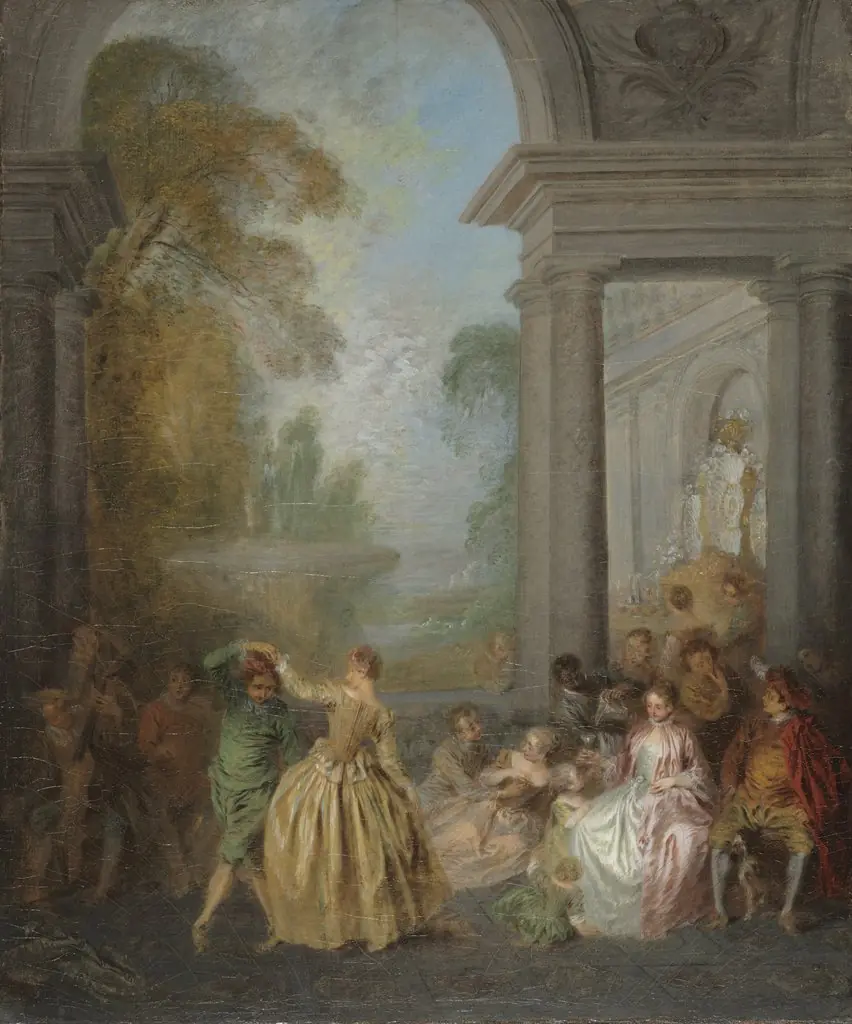
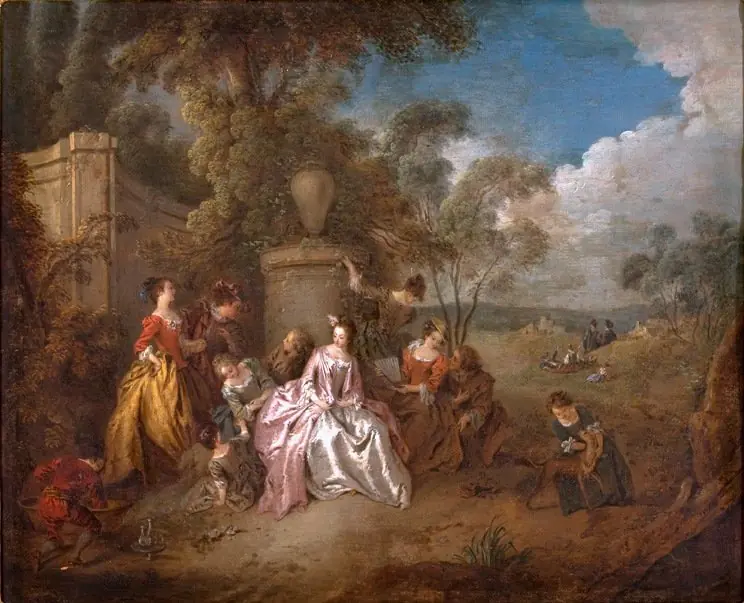
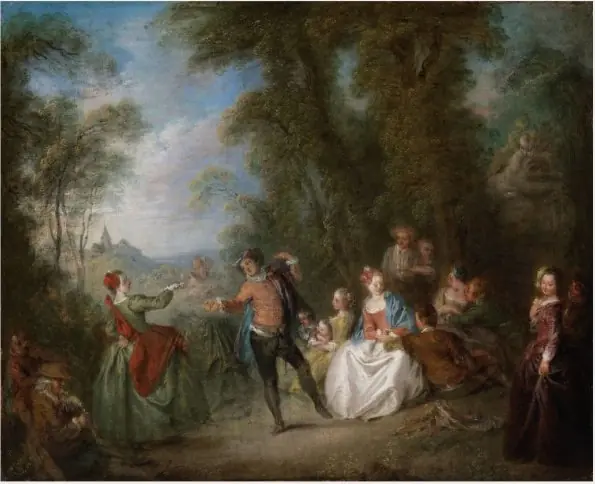
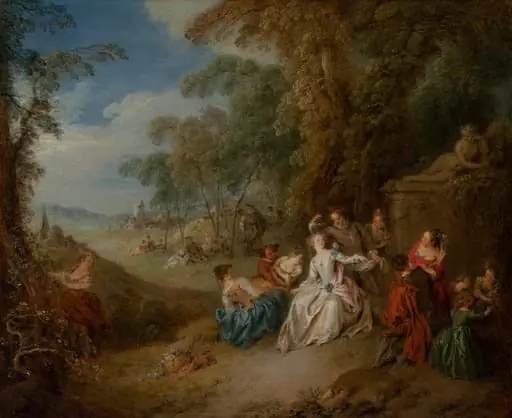
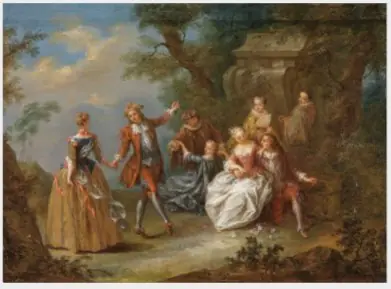
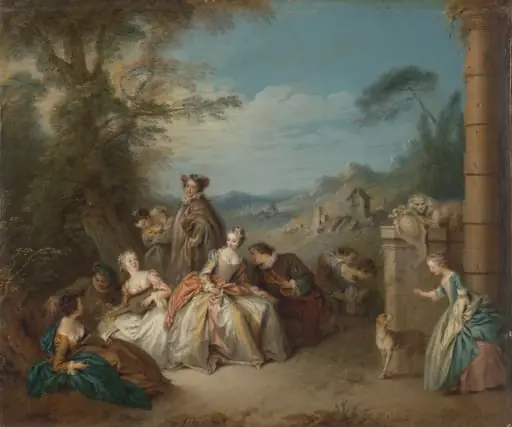
The painting portrays a festive gathering in a park where a woman holds a fan and a man offers a coin, while a boy gestures toward a column; these figures enact a Fête galante scene that symbolizes the playful flirtation and chance encounters of aristocratic leisure in early 18th‑century France. The composition draws on traditional galant motifs, music, dancing, and romantic intrigue, to convey the lighthearted pleasures of the elite.
Technique & Style
Executed in 1720, this work is an oil painting on canvas measuring 34 cm in height and 45.5 cm in width. The composition depicts a Fête galante scene set within a park, featuring a column and figures including a woman, a man, and a boy. Stylistically, the piece functions as a landscape genre painting, focusing on the social interaction of the subjects within an outdoor environment.
History & Provenance
La Bonne Aventure was painted by Jean-Baptiste Pater in 1720, executed in oil on canvas as a fête galante scene. The work was at one point in the collection of Étienne François, duc de Choiseul, and later passed into the holdings of Daniel McLean McDonald. McDonald bequeathed the painting, and it was received by the Fitzwilliam Museum in 1992 under the accession number PD.113-1992.
La Bonne Aventure, also known as The Fortune Teller, is held in the collection of the Fitzwilliam Museum. The work entered the museum's holdings in 1992 following its bequest by Dr. Daniel McLean McDonald in 1991. It is cataloged under the accession number PD.113-1992. Prior to this acquisition, the painting was owned by Étienne François, duc de Choiseul.
The provided sources do not contain specific records regarding the exhibition history of this artwork.
Context
La Bonne Aventure, painted by Jean-Baptiste Pater in 1720, exemplifies the fêtes galantes genre popular in early 18th-century French art, depicting a woman, man, and boy within a park-like setting adorned with a column. The work is an oil on canvas measuring 34 cm in height and 45.5 cm in width, currently held in the collection of the Fitzwilliam Museum, which acquired it through the bequest of Daniel McLean McDonald in 1991. Its thematic focus on a fortune-telling scene aligns with Pater's broader oeuvre and the Rococo fascination with leisurely, aristocratic pastimes, situating the painting within the artist's mature period and the wider trajectory of French landscape and genre painting.
The attribution to Pater, a follower of Watteau, underscores its connection to the decorative and narrative traditions of the French court, while its presence in a British museum collection reflects the 19th-century acquisition patterns of European decorative arts.
Overview
Created in 1720 by French painter Jean‑Baptiste Pater, La Bonne Aventure is an oil on canvas that exemplifies the Rococo fascination with elegant outdoor gatherings. The work is part of the Fitzwilliam Museum’s holdings and is classified within the landscape genre, though its focus is on a leisurely social scene rather than a natural vista.
Artist & collection
Artist
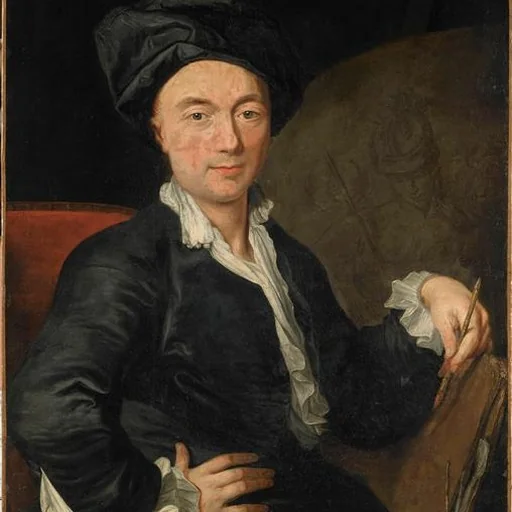
Jean-Baptiste Pater (December 29, 1695 – July 25, 1736) was a French rococo painter.