Artwork
Blindman's Buff
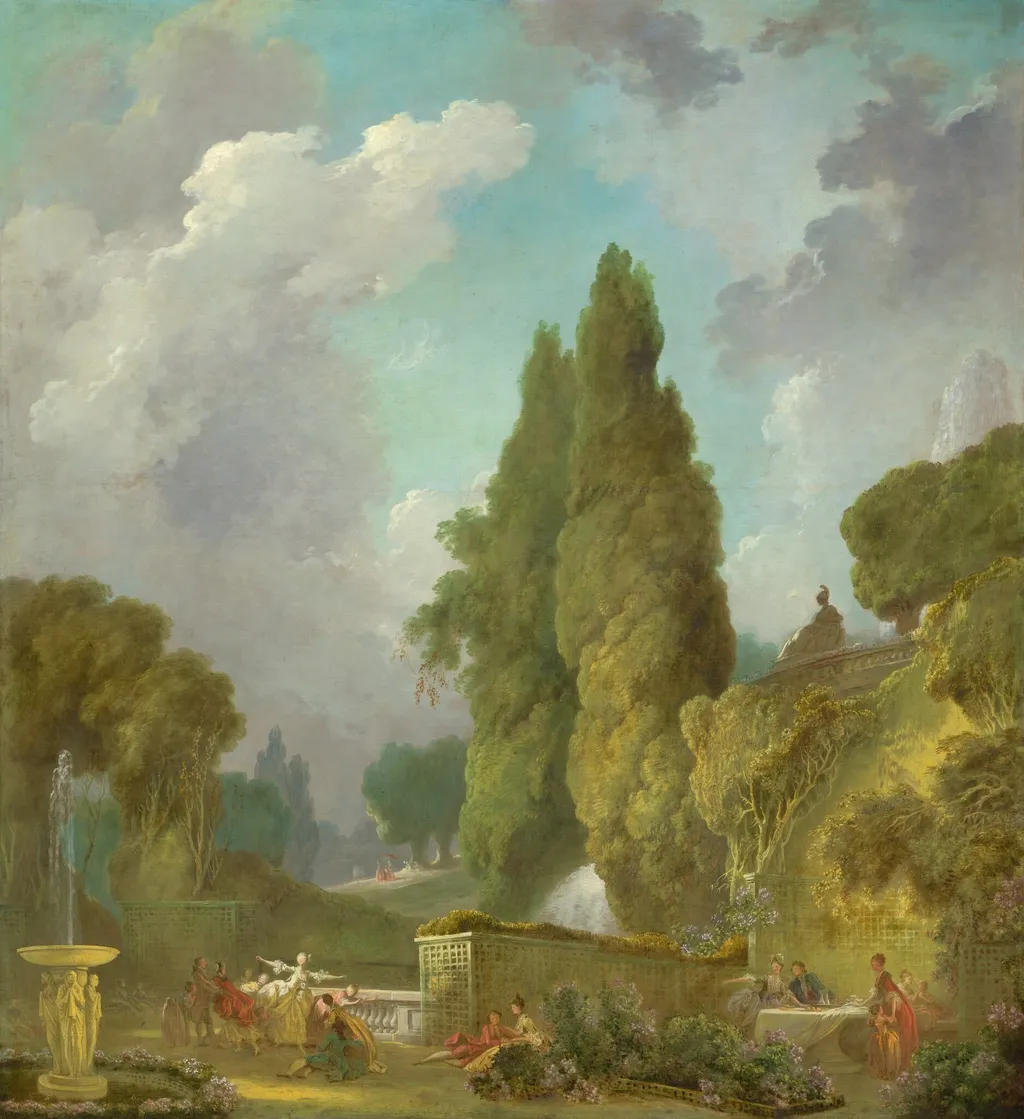
Blindman's Buff is an oil painting by the Rococo painting artist Jean Honoré Fragonard. It dates from 1778 and is held in the collection of the National Gallery of Art.
About this work
Technique & Style
The formal qualities of Blindman's Buff reflect the Rococo style through its dynamic composition, delicate brushwork, and subtle play of light and shadow.
Blindman's Buff is an oil painting executed on canvas. The work measures 216.2 cm in height by 197.8 cm in width and was created in 1773. It is classified as a painting within the corpus and was originally owned by Casimir Perrin, marquis de Cypierre, before passing through the hands of possibly marquise de Montesquiou-Fezensac and Camille Groult before being acquired by Wildenstein & Co. in February 1954 and subsequently purchased by the Samuel H. Kress Foundation.
In 1961 the painting was gifted to the National Gallery of Art, where it remains in the collection today.
The formal qualities of Blindman's Buff reflect the Rococo style through its dynamic composition, delicate brushwork, and subtle play of light and shadow. The handling of oil on canvas demonstrates a smooth application that enhances the painting's atmospheric depth and intricate detailing, characteristic of Fragonard's mature technique.
History & Provenance
Jean-Honoré Fragonard completed the oil-on-canvas painting Blindman's Buff in 1773. The earliest confirmed record of the work dates to the estate sale of Casimir Perrin, marquis de Cypierre, held in Paris on March 10, 1845. Following this, the painting may have passed through the collection of the marquise de Montesquiou-Fezensac before being acquired by Camille Groult, whose ownership is documented from at least 1889 until his death in 1908.
After Groult's tenure, the work entered the trade through Wildenstein & Co. in New York. It was sold to the Samuel H. Kress Foundation in February 1954 and subsequently gifted to the National Gallery of Art in Washington, D.C., in 1961.
Blindman's Buff is held in the collection of the National Gallery of Art in Washington, D.C., as part of the Samuel H. Kress Collection. The painting entered the foundation's holdings in February 1954 after being sold by Wildenstein & Co. of New York. It was subsequently gifted to the museum in 1961.
The work's documented history begins with Casimir Perrin, marquis de Cypierre, in Paris, appearing in his estate sale in March 1845. It possibly passed through the collection of the marquise de Montesquiou-Fezensac before being acquired by Camille Groult, who likely owned it from 1889 until 1908. No specific exhibition history is detailed in the provided records.
Overview
Jean-Honoré Fragonard's Blindman's Buff, executed in 1778, depicts a spirited outdoor gathering centered on the titular game. The composition captures a moment of playful chaos within a lush garden setting, where figures in elegant 18th-century attire engage in the blindfolded pursuit. A central female figure, likely the blindfolded player, is surrounded by laughing companions who guide or evade her, creating a dynamic interplay of movement and social interaction.
The scene is framed by architectural elements and a fountain, grounding the frivolity in a structured, aristocratic environment. Painted in oil on canvas, the work exemplifies Fragonard's mature Rococo style, characterized by loose, energetic brushwork and a vibrant, sun-drenched palette that enhances the sense of immediacy and joy. Created during the late 1770s, this piece reflects the artist's continued mastery of the fête galante genre, focusing on themes of leisure, romance, and the fleeting nature of pleasure.
It stands as a significant example of Fragonard's ability to animate social scenes with psychological depth and visual spontaneity, bridging the gap between the decorative elegance of the early Rococo and the more naturalistic tendencies emerging in late 18th-century French art.
Subject & Meaning
The scene captures a moment of leisurely amusement, with several participants appearing to spin or dance while blindfolded, suggesting a game of blind‑man’s buff. This playful activity, set among aristocratic attire, reflects the Rococo fascination with lighthearted social rituals and the fleeting pleasures of garden life.
Own this work as a print
Artist & collection

Artist
Jean-Honoré Fragonard was born on 5 April 1732 in Grasse, the son of a glover, and moved with his family to Paris in 1738.

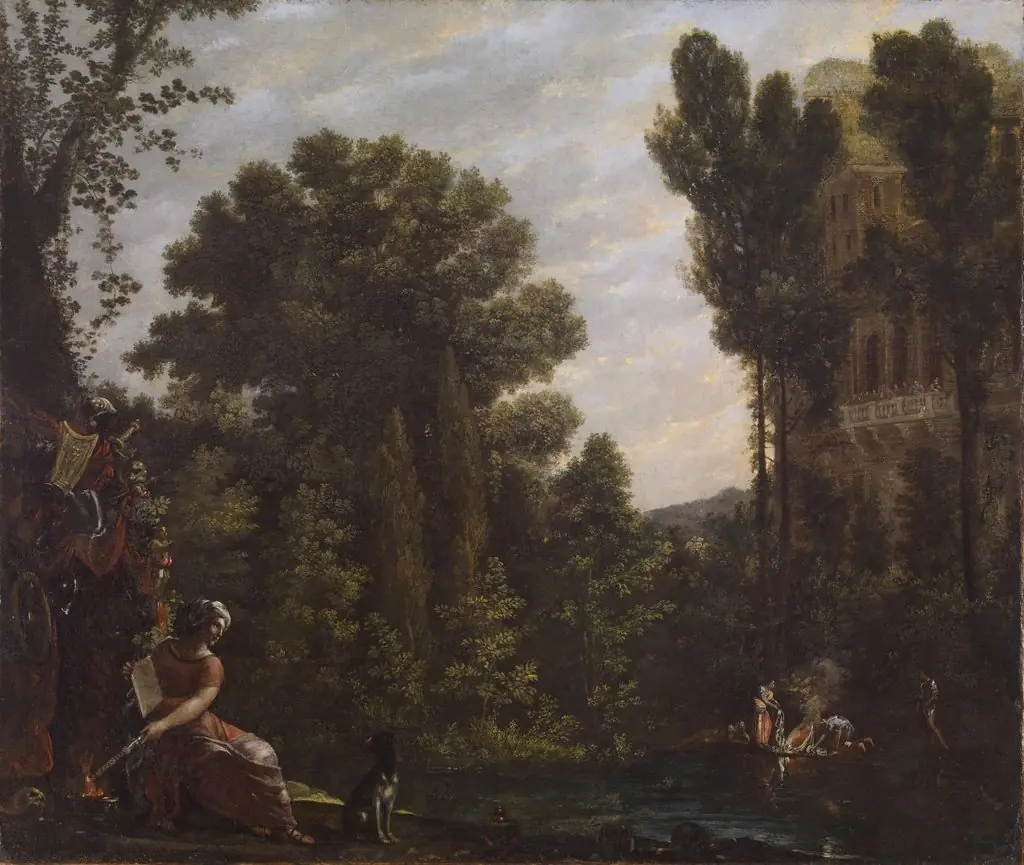 Landscape with a Scene of Witchcraft
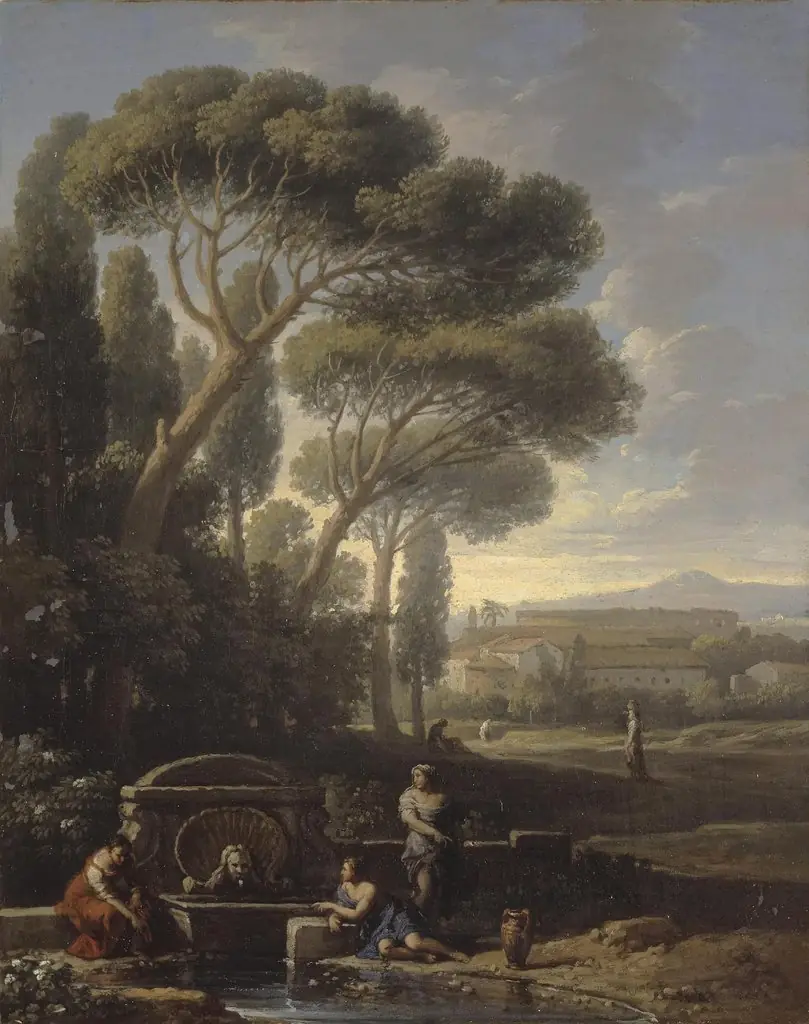 Landscape in Latium
 Landscape
 Solitude
 Landscape in Latium with Three Female Figures by a Fountain
 The Portico of a Country Mansion
 Landscape with a Pond
 Landscape with a Terrace and Cascade
 English Landscape Capriccio with a Palace
 Landscape with Figures in the Background