Artwork
The Garter
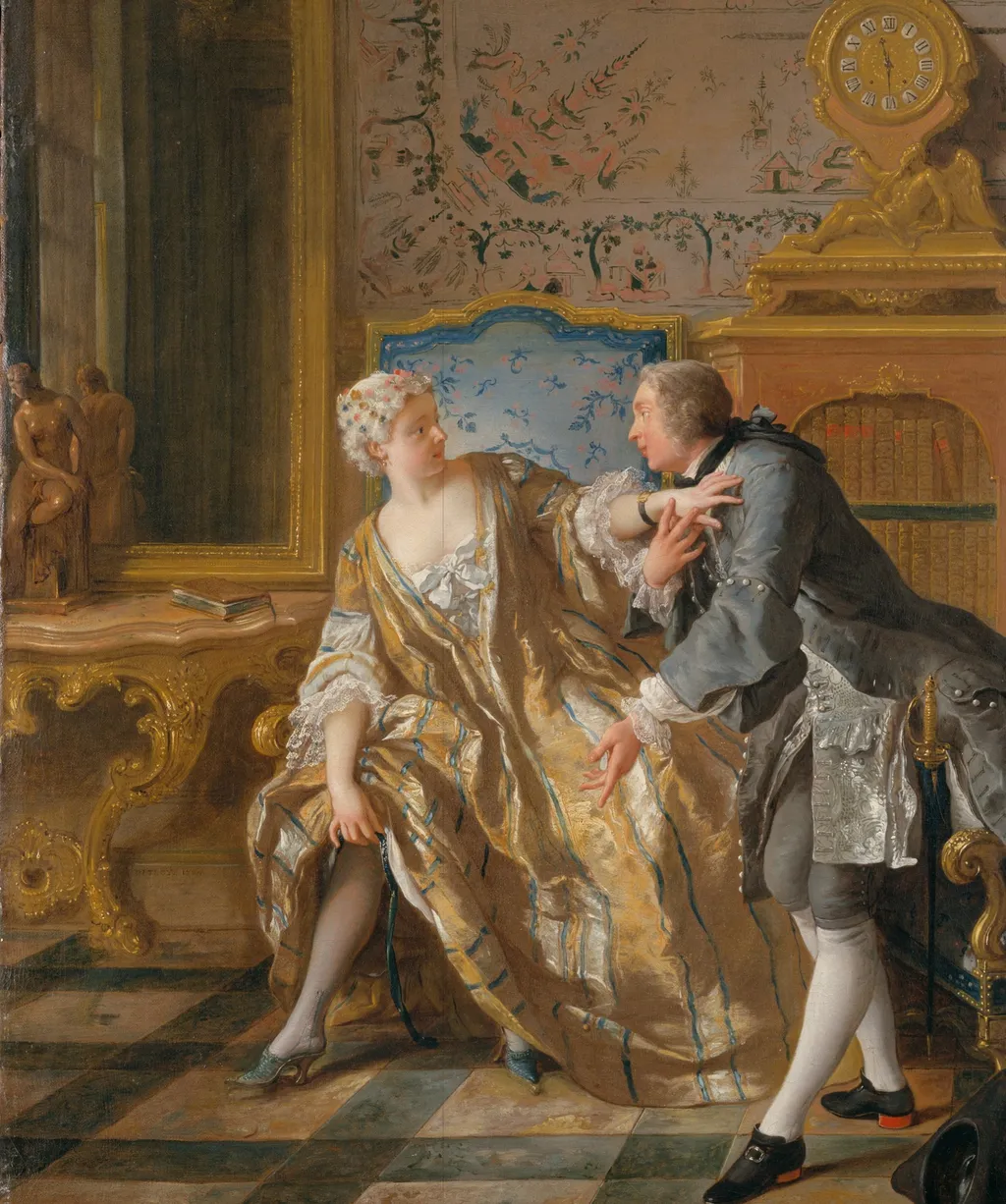
The Garter is an oil painting by the Rococo painting artist Jean-François de Troy. It dates from 1724 and is held in the collection of the Metropolitan Museum of Art.
About this work
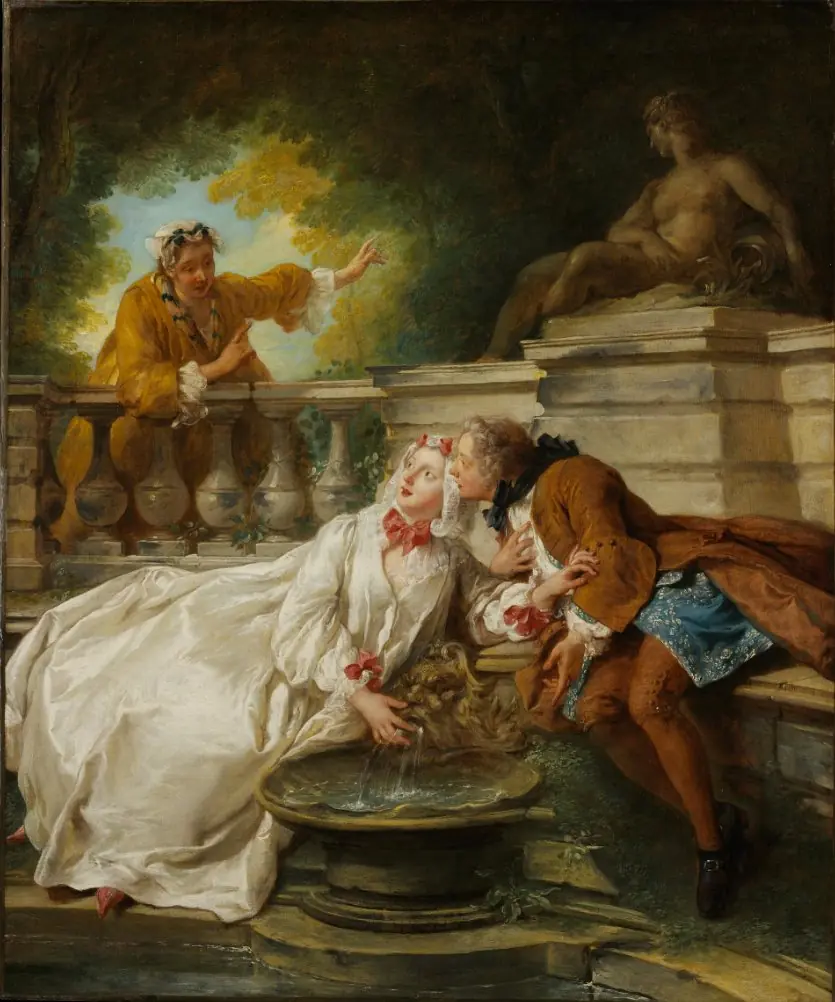
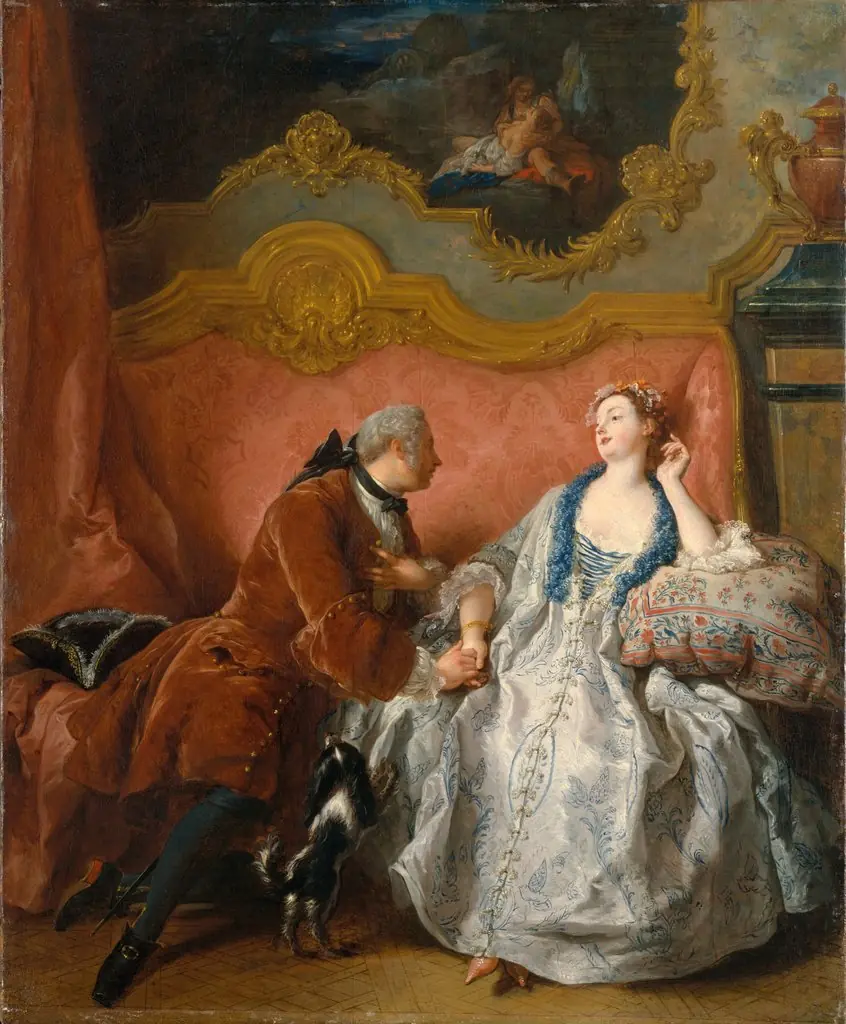
An oil painting from 1724 by Jean-Francois de Troy. It has a companion piece, The Declaration of Love, made the same year, so de Troy likely meant the two to hang together.
Subject & Meaning
Created in 1724, The Garter depicts an intimate, erotically charged interaction between a nobleman and a noblewoman within a finely decorated interior.
Created in 1724, The Garter depicts an intimate, erotically charged interaction between a nobleman and a noblewoman within a finely decorated interior. The scene centers on the woman reattaching her garter while firmly rejecting the man's offer of assistance, a gesture emphasized by his discarded tricorn hat on the floor. The work functions as a narrative of seduction, where specific iconographic elements foreshadow the woman's eventual surrender.
A nude classical female statuette and a clock featuring a seated figure of Saturn serve as symbolic indicators that, despite her initial resistance, she will yield to the man's advances. As noted by scholar Mary Salzman, these objects suggest the woman will ultimately reach the same state of undress as the bronze figure, beginning with the removal of her garter.
Technique & Style
The Garter is executed in oil paint on canvas, a standard medium for French eighteenth-century easel painting. The canvas measures 64.8 by 53.7 centimeters, a modest, intimate scale suited to its genre subject. Stylistically, the work belongs to the tradition of eroticized genre painting associated with de Troy, presenting a finely appointed interior as the setting for a charged encounter between a finely dressed noble couple.
The composition is structured around carefully observed still-life elements, a classical nude female statuette on a table, a book, a mirror reflecting a nearby window, and an ornate clock decorated with a seated figure of Saturn in a manner recalling the furniture designs of André-Charles Boulle, rendered with the polished finish and decorative refinement characteristic of the artist's mature style. The handling of these objects lends the scene its allegorical weight, with the statuette and clock functioning as visual cues to the narrative.
History & Provenance
Jean-François de Troy created the oil-on-canvas painting The Garter in 1724, the same year he produced its pendant work, The Declaration of Love. The work was exhibited at the Salon of 1725. Its ownership history traces through several prominent collectors, beginning with Oscar Huldschinsky, followed by Heinrich Thyssen and the Thyssen-Bornemisza family.
Later in its provenance, the painting was acquired by Charles Bierer Wrightsman and subsequently by Jayne Wrightsman. Since 2019, the artwork has been held in the collection of the Metropolitan Museum of Art in New York. The creation of the piece is firmly dated to 1724, with the subject matter reflecting the artist's genre scenes of noble intimacy.
The Garter is held by the Metropolitan Museum of Art in New York, where it has been part of the collection since its acquisition and was displayed in the Salon of 1725 before entering the museum. The work belongs to the Huldschinsky collection and later to the Thyssen‑Bornemisza family collection before its transfer to the Met. Since 2019 it is exhibited alongside its pendant, The Declaration of Love, as part of the museum’s European paintings galleries. Its accession number is not publicly disclosed in the available records.
Context
Painted in 1724, The Garter was first exhibited at the Salon of 1725 as part of a pair with its pendant, The Declaration of Love. Scholars analyze the work as a quintessential example of Jean-François de Troy's erotically charged genre scenes, which depict intimate moments between nobility within opulent interiors. Art historian Mary Salzman interprets the painting's iconography, specifically the nude classical statuette and the clock featuring Saturn, as narrative devices signaling the woman's eventual surrender to seduction, mirroring the bronze figure's state of undress.
The work's inclusion in prominent collections, such as the Huldschinsky and Thyssen-Bornemisza families before entering the Metropolitan Museum of Art, underscores its historical significance within 18th-century French painting. Its detailed furnishings, including a clock in the style of André-Charles Boulle, further anchor the piece within the material culture of the French nobility.
Legacy
The Garter has come to be recognized as a quintotypical Rococo genre scene that explores erotic tension through subtle symbolism. Its inclusion in the Metropolitan Museum of Art and frequent display in major exhibitions have cemented its reputation as a highlight of 18th‑century French painting. Scholars highlight the painting’s use of a nude statuette and a clock as visual cues for seduction, interpreting the work as a commentary on consensual erotic progression.
The parallel French entry underscores its pendant relationship with The Declaration of Love, reinforcing its place within a paired narrative that influenced later intimate genre works.
Overview
The Garter is an oil painting completed in 1724 by the French artist Jean-François de Troy. This work is currently held in the collection of the Metropolitan Museum of Art in New York. It represents a facet of de Troy's artistic production during the early 18th century, reflecting the prevailing styles and interests of the period.
Own this work as a print
Artist & collection

Artist
Jean-François de Troy (27 January 1679, Paris – 26 January 1752, Rome) was a French Rococo easel and fresco painter, draughtsman and tapestry designer.