Artwork
The Declaration of Love
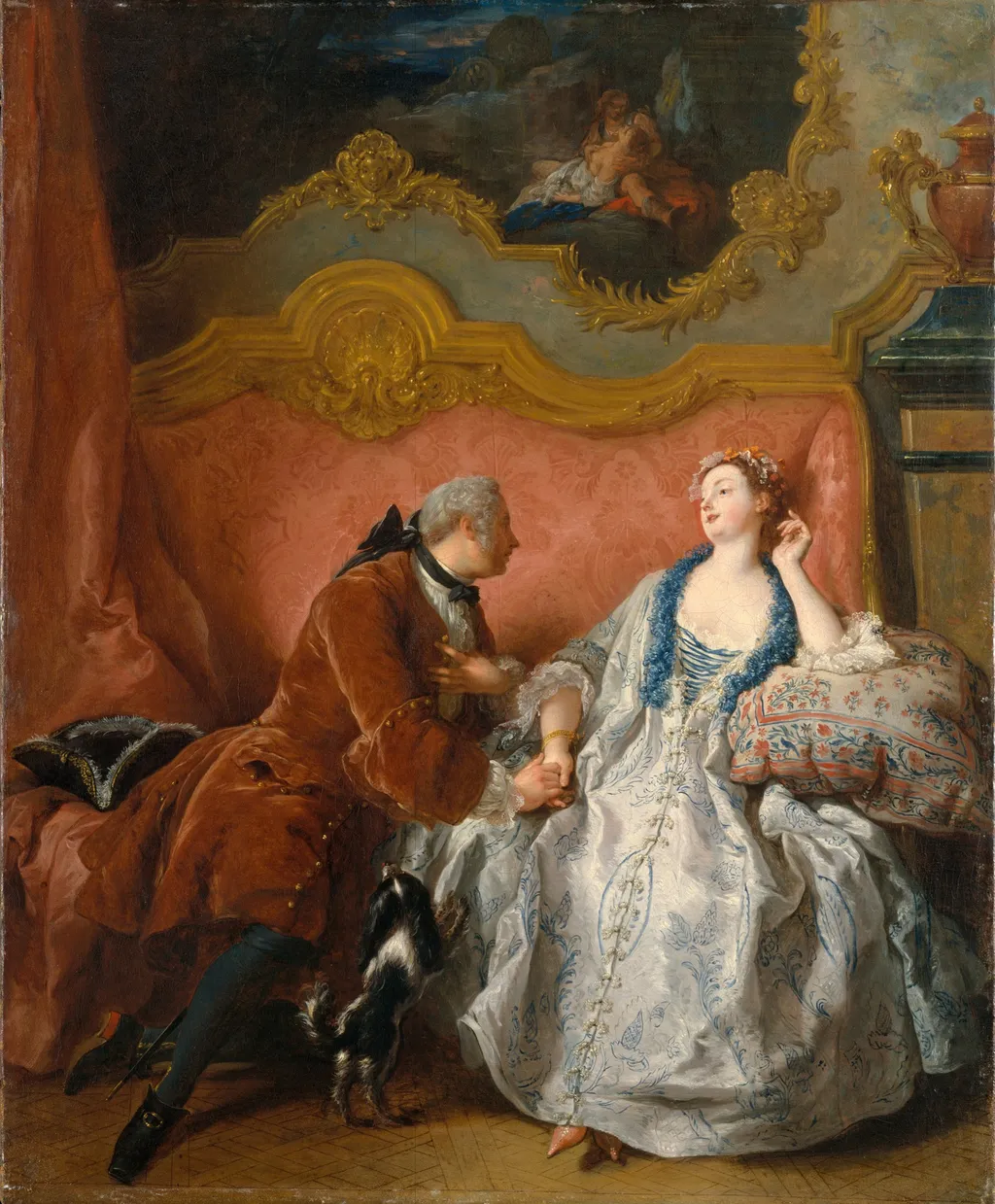
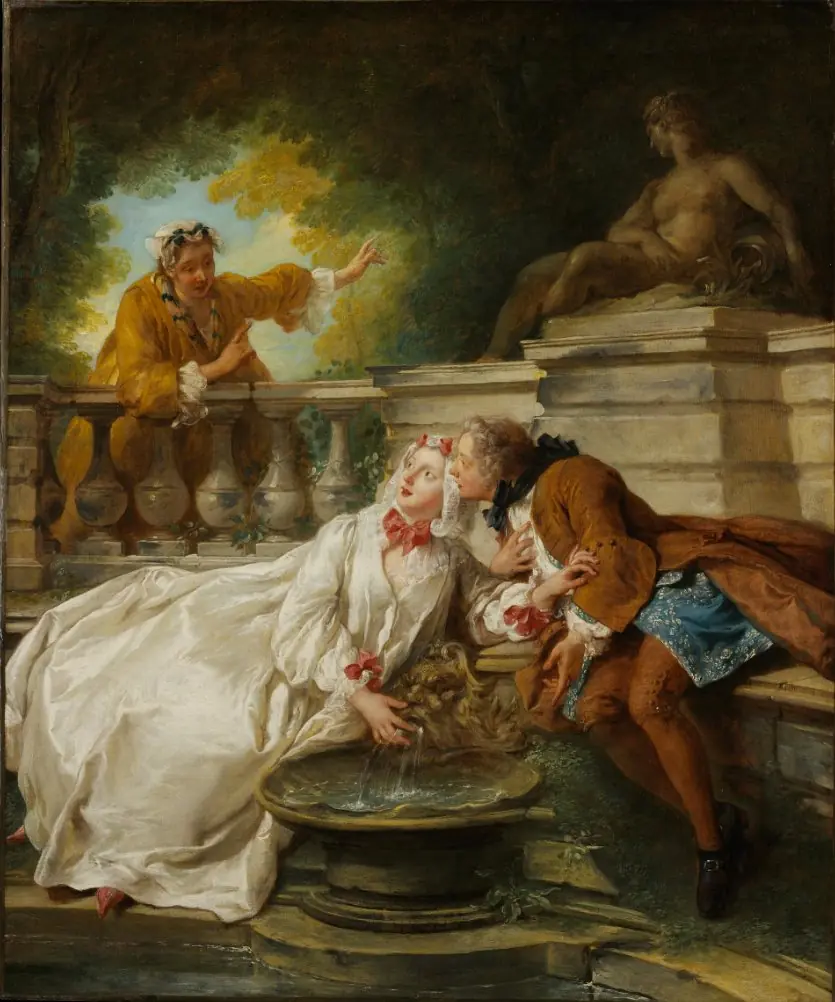
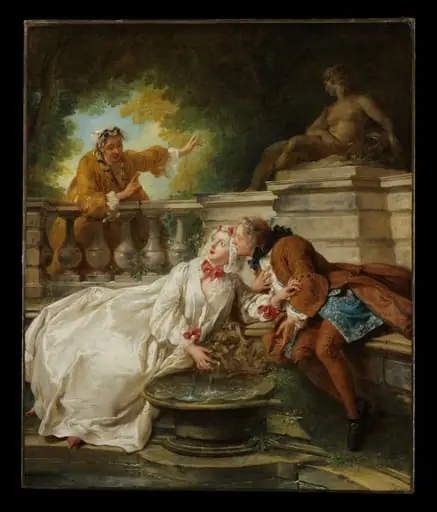
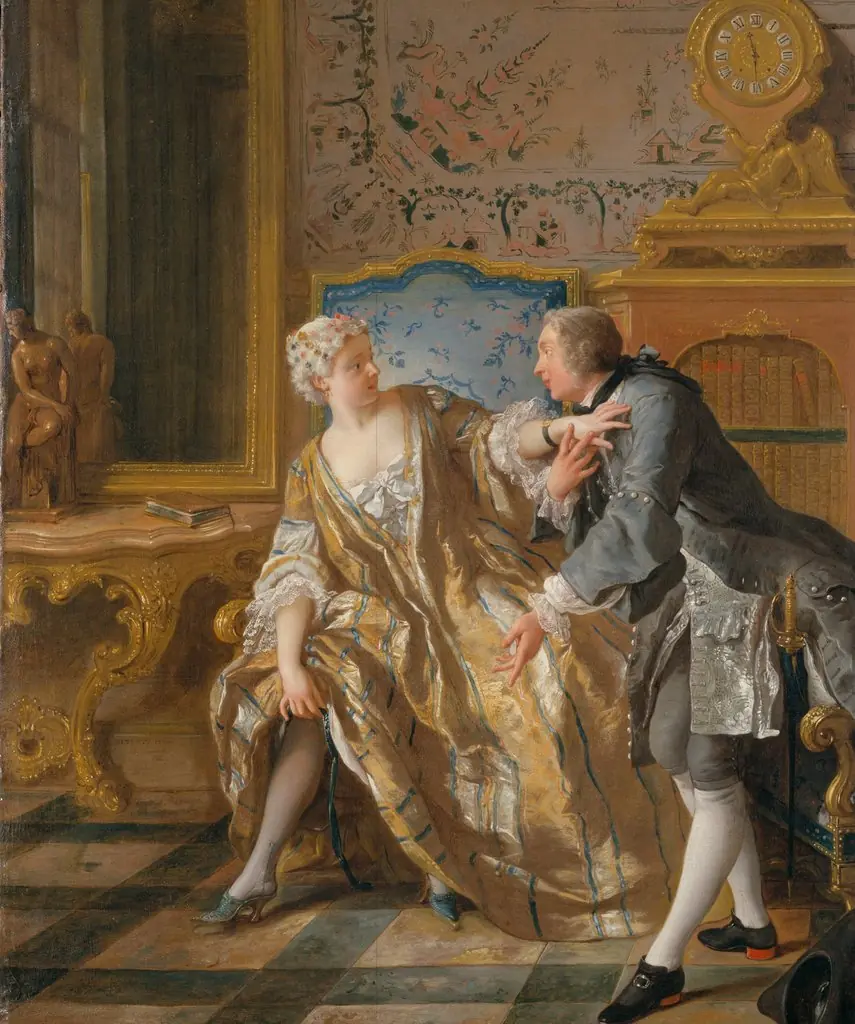
The Declaration of Love is an oil painting by the Rococo painting artist Jean-François de Troy. It dates from 1724 and is held in the collection of the Metropolitan Museum of Art.
About this work
Subject & Meaning
The composition centers on a couple, accompanied by a man and a woman, whose interaction suggests a romantic narrative consistent with the title.
Jean-François de Troy's 1724 oil painting, The Declaration of Love, belongs to the genre of genre art, depicting an intimate interior scene. The composition centers on a couple, accompanied by a man and a woman, whose interaction suggests a romantic narrative consistent with the title. A dog is also present within the domestic setting, a common motif in eighteenth-century genre scenes often symbolizing fidelity or companionship.
While the specific symbolic meanings of the individual figures are not detailed in the available records, the work as a whole represents a moment of romantic exchange or courtship. The painting was first exhibited at the Salon of 1725, establishing its thematic focus on human relationships and emotional expression within a private, domestic context.
Technique & Style
The Declaration of Love is an oil painting on canvas executed in 1724 by Jean‑François de Troy. The work employs a smooth, fluid handling typical of Rococo oil technique, with thin glazes building a luminous surface that captures the intimate interior scene. As a genre painting, it depicts an elegantly dressed couple, a small dog, and furnishings within a light‑filled room, emphasizing delicate gestures and refined textures.
The palette is soft and pastel‑toned, reinforcing the playful, amorous mood. Exhibited at the Salon of 1725, the piece exemplifies de Troy’s mastery of decorative genre subjects, combining precise draftsmanship with a lively, painterly brushwork.
History & Provenance
Jean-François de Troy executed 'The Declaration of Love' in 1724 as an oil painting on canvas. The work was publicly exhibited at the Salon of 1725 shortly after its completion. Its documented ownership history begins with Oscar Huldschinsky, followed by Heinrich Thyssen, indicating its presence in the Thyssen-Bornemisza family collection.
The painting was subsequently acquired by Charles Bierer Wrightsman and his wife, Jayne Wrightsman. Ultimately, the work entered the collection of the Metropolitan Museum of Art, where it remains housed.
Context
The Declaration of Love, painted by Jean‑François de Troy in 1724, exemplifies early‑18th‑century French genre painting through its intimate interior scene of a couple accompanied by a dog. Its debut at the Salon of 1725 marked a public presentation that scholars cite when tracing the evolution from Rococo ornamentalism toward more narrative‑driven subjects. The work’s provenance, passing through the Huldschinsky, Thyssen‑Bornemisza, and Wrightsman collections before entering the Metropolitan Museum of Art, reflects its recognized importance within the artist’s broader oeuvre and within the genre‑scene tradition.
Contemporary scholarship frequently references the painting when discussing de Troy’s role in bridging decorative and narrative painting in pre‑Neoclassical France.
Overview
The Declaration of Love is an oil painting that captures an intimate moment between two figures in an opulent interior. The artwork depicts a man and a woman engaged in a private conversation, their expressions and postures suggesting a significant exchange. The use of oil paint allows for rich color and detailed textures, contributing to the overall sense of luxury and warmth within the scene.
Own this work as a print
Artist & collection

Artist
Jean-François de Troy (27 January 1679, Paris – 26 January 1752, Rome) was a French Rococo easel and fresco painter, draughtsman and tapestry designer.