Artwork
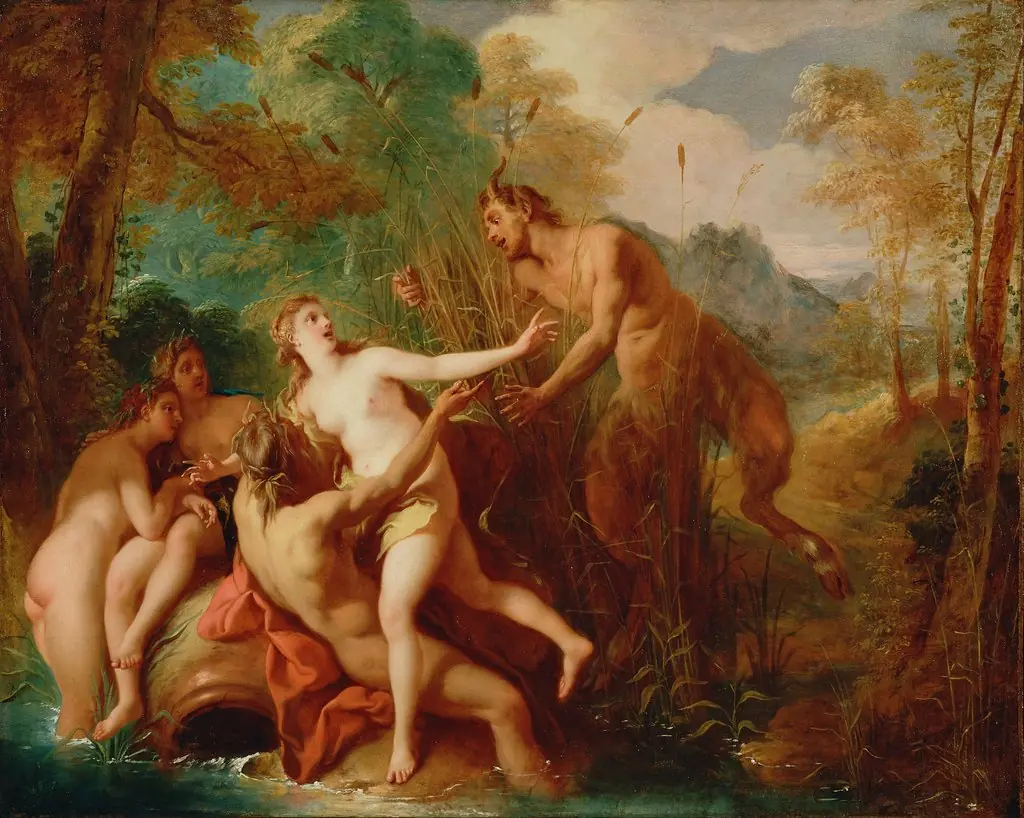
Pan and Syrinx
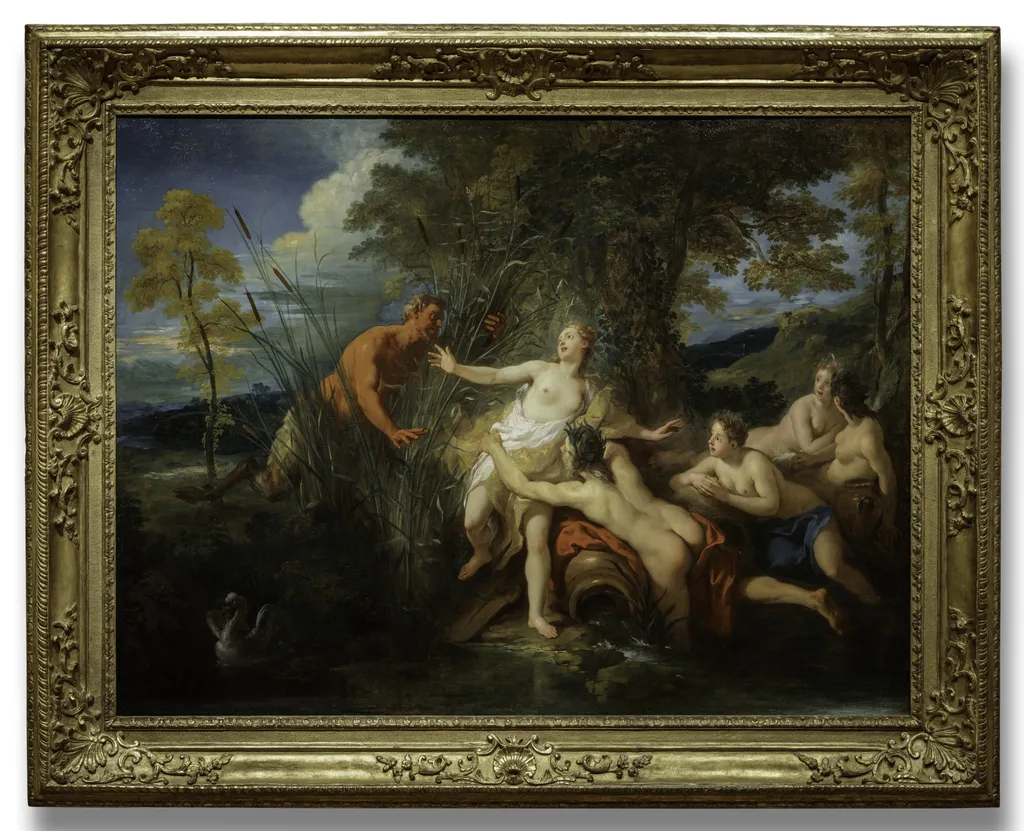
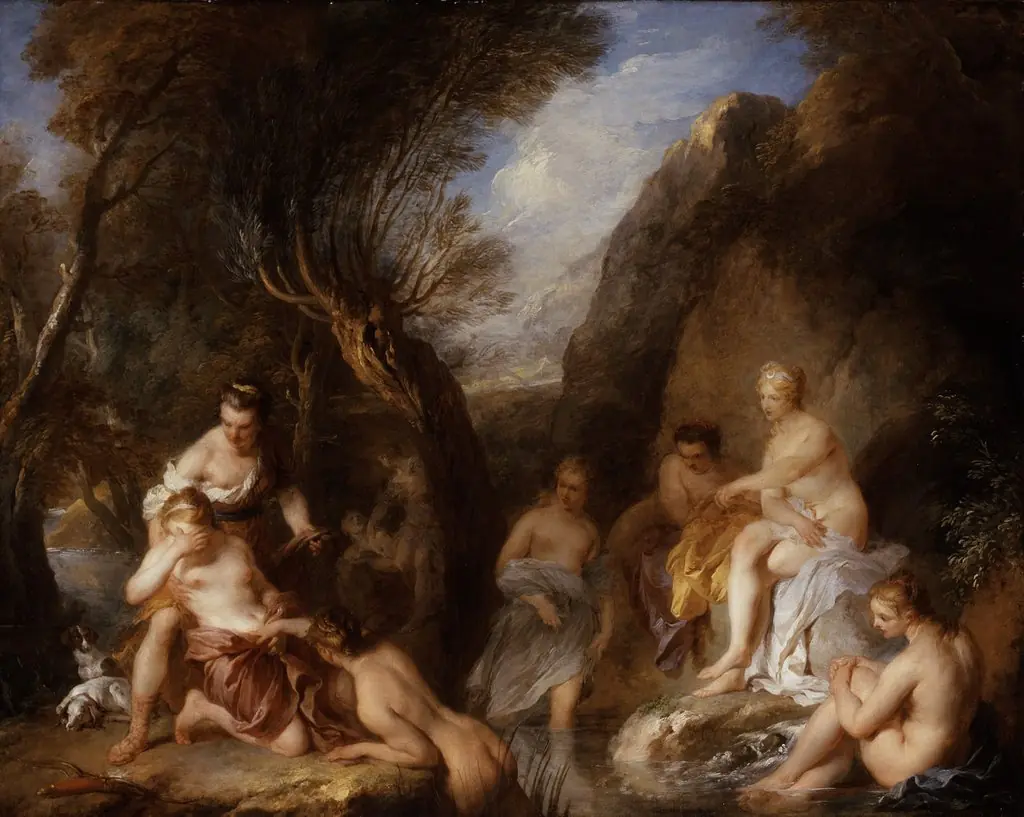
Pan and Syrinx is an oil painting by the Rococo painting artist Jean-François de Troy. It dates from 1720 and is held in the collection of the Cleveland Museum of Art.
About this work
Subject & Meaning
In the composition Pan reaches toward the fleeing Syrinx while she leans toward the water, symbolizing the chase and the nymph's desperate escape.
The painting portrays the moment when the rustic god Pan pursues the nymph Syrinx, a scene drawn from classical mythology. In the composition Pan reaches toward the fleeing Syrinx while she leans toward the water, symbolizing the chase and the nymph's desperate escape. The work embodies themes of unrequited desire and the transformative power of nature, common in 18th-century mythological painting.
Executed in oil on canvas in 1720, the piece measures 106 cm by 139 cm and was created in France, reflecting the decorative tastes of the period.
History & Provenance
Pan and Syrinx is an oil-on-canvas painting by Jean-François de Troy, dated 1720 and produced in France. According to the documented record, it entered the collection of the Cleveland Museum of Art, where it is identified by the accession number 1973.212. The museum's acquisition in 1973 establishes the end of its documented ownership chain; earlier provenance prior to that acquisition is not detailed in the available sources.
No information is provided regarding the circumstances of the work's commission, its original patron, or any intermediate owners between its creation in early eighteenth-century France and its accession by the Cleveland Museum of Art. The painting remains in Cleveland, Ohio, and no specific exhibition history is recorded.
Overview
Jean-François de Troy's 1720 oil painting, Pan and Syrinx, depicts a moment from classical mythology. This work showcases the artist's engagement with historical narratives, a common theme for this prominent French Rococo painter. The artwork is currently part of the collection at the Cleveland Museum of Art, representing a key example of de Troy's output from the early 18th century.
Technique & Style
As a leading figure of the Rococo era, Jean-François de Troy employed a refined aesthetic in Pan and Syrinx. The composition features a dramatic interplay of light and shadow, where soft illumination highlights the figures against a deep, dark background. This technique, reminiscent of chiaroscuro, emphasizes the forms and creates a sense of depth and theatricality, characteristic of the period's dramatic narrative paintings.
Context
Jean-François de Troy was a versatile artist active during the Rococo period in France. While known for grand history paintings like Pan and Syrinx, he also excelled in decorative commissions and portraiture. His innovative tableaux de modes offered glimpses into contemporary Parisian society, demonstrating his ability to adapt his sophisticated style across various genres and capture both mythological grandeur and everyday life.
Own this work as a print
Artist & collection
Artist
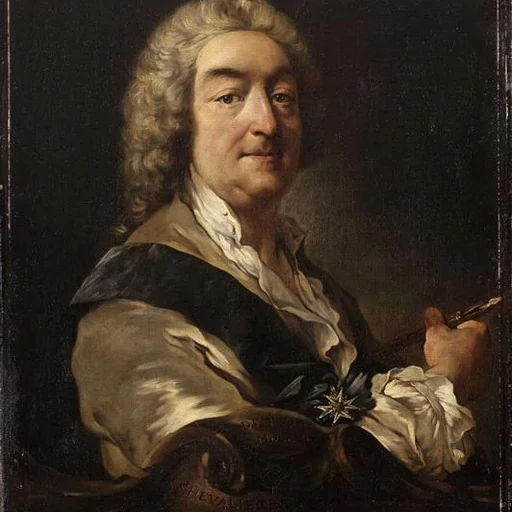
Jean-François de Troy (27 January 1679, Paris – 26 January 1752, Rome) was a French Rococo easel and fresco painter, draughtsman and tapestry designer.