Artwork
The Goose Girl
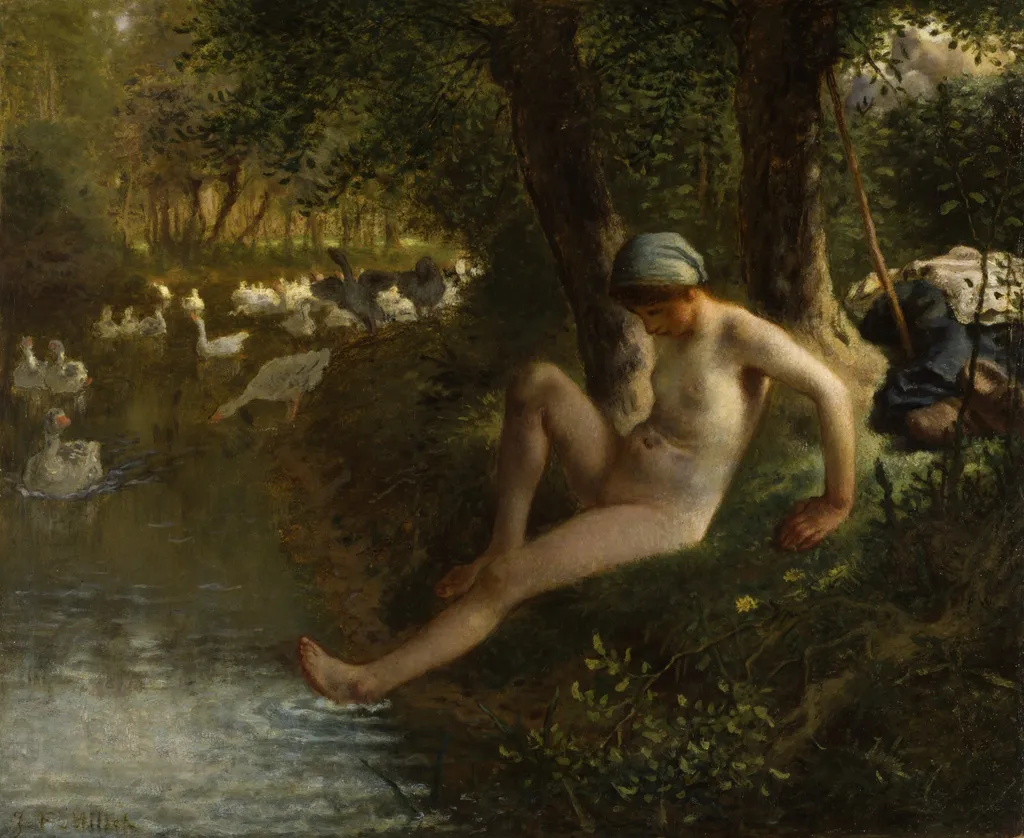
The Goose Girl is an oil painting by the Realist artist Jean François Millet. It dates from 1863 and is held in the collection of the Walters Art Museum.
About this work
Subject & Meaning
By portraying the figure in a moment of private repose amidst her labor, the painting highlights the intersection of human vulnerability and the natural world.
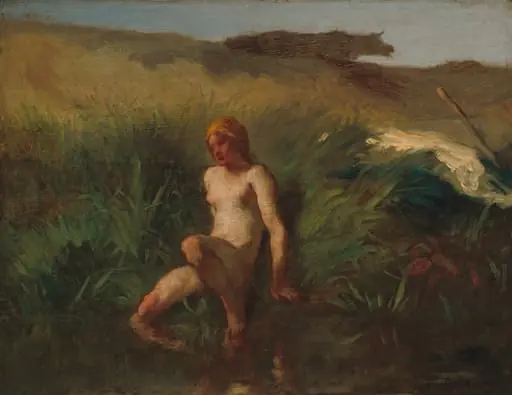
Jean-François Millet's 1863 painting depicts a young peasant girl, identified as a goose herder, pausing during her duties to bathe in a forest stream. The composition shows the teenager seated on the riverbank in profile, entirely nude except for a sky-blue headscarf binding her reddish hair. She tests the water temperature with one heel while her discarded clothing, wooden clogs, and herding staff rest near a tree in the background. A flock of geese occupies the watercourse, which winds into the dense undergrowth, emphasizing the rural setting.
The work functions as an idyll, merging the genre of the nude with scenes of agrarian life. By portraying the figure in a moment of private repose amidst her labor, the painting highlights the intersection of human vulnerability and the natural world. The specific inclusion of the geese and herding tools grounds the sensual depiction in the reality of the subject's occupation as a guardian of the flock.
Technique & Style
The Goose Girl is an oil painting on canvas, executed in 1863 with a horizontal format. Millet undertook extensive preparatory studies before completing the work, which is rendered in a naturalistic idiom that emphasizes the figure’s volume and the tranquil rural setting. The support is a plain woven canvas, and the paint is applied in smooth, blended strokes that model the young goose‑herd’s flesh, the blue‑sky scarf, and the surrounding foliage.
Stylistically, the picture belongs to Millet’s idyllic nude genre, presenting a seated, barefoot peasant girl assessing the water’s temperature while her discarded garments, sabots and staff lie nearby.
History & Provenance
The Goose Girl was painted by Jean-François Millet in 1863.
The work was sold by Millet to the Parisian art dealer Ennemond Blanc in 1865. It later entered the collection of Henry Walters, who acquired it in 1905. Upon Walters’ death, the painting was bequeathed to the Walters Art Museum in Baltimore in 1931, where it has remained in the museum’s holdings.
The painting is held by the Walters Art Museum in Baltimore, Maryland, where it has resided since 1931. The work was acquired by the collector Henry Walters in 1905 and subsequently bequeathed to the museum upon his death to form the core of its private collection. While the sources confirm its long-term location at the Walters Art Museum, they do not provide a specific inventory or accession number for the piece.
The exhibition history is not detailed in the provided texts, which only note the work's transfer from the artist to the dealer Ennemond Blanc in 1865, and later to Henry Walters.
Overview
Jean-François Millet completed The Goose Girl in 1863, an oil painting that exemplifies the Realism movement's focus on unidealized rural subjects. The work depicts a solitary figure within a tranquil landscape, accompanied by geese. This piece is part of the collection at the Walters Art Museum.
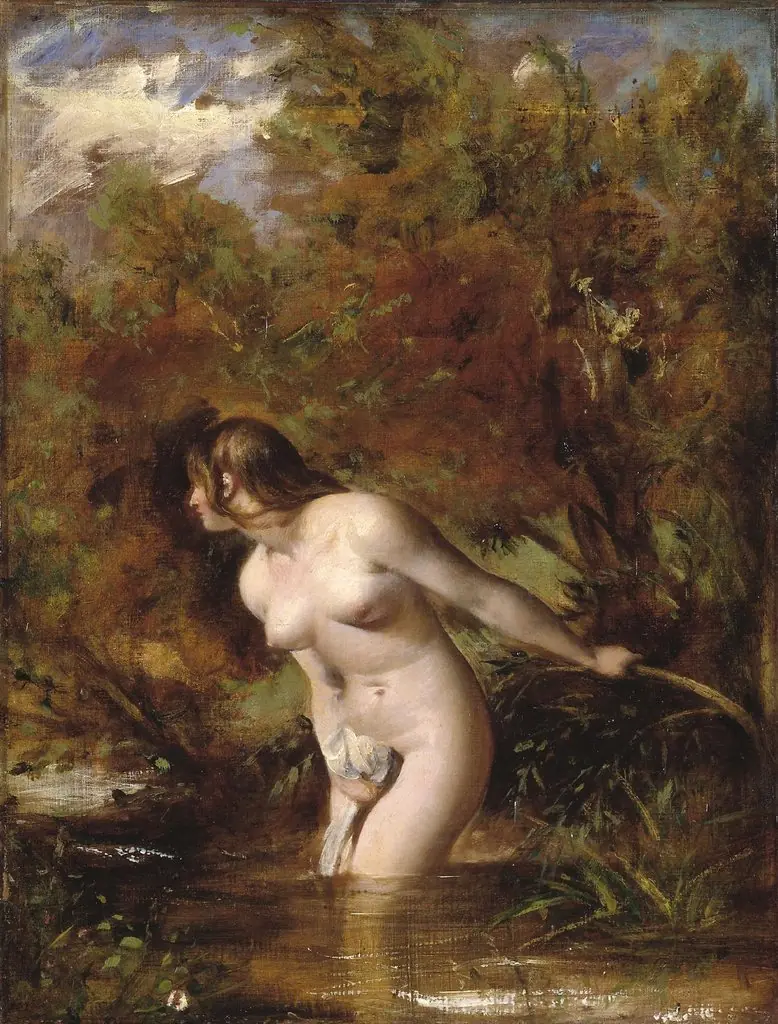
Own this work as a print
Artist & collection
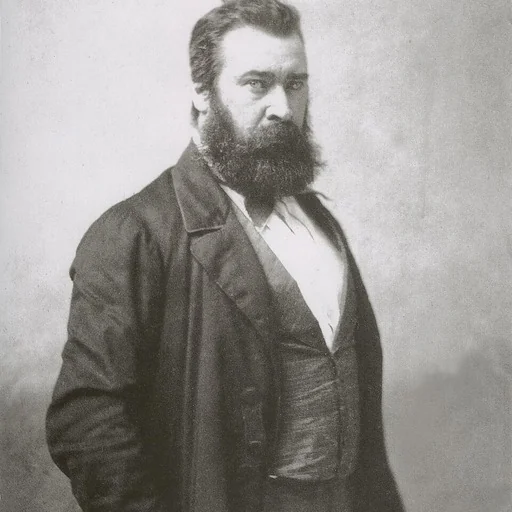
Artist
Jean-François Millet (French pronunciation:; 4 October 1814 – 20 January 1875) was a French painter and one of the founders of the Barbizon school in rural France.