Artwork
The Walk to Work
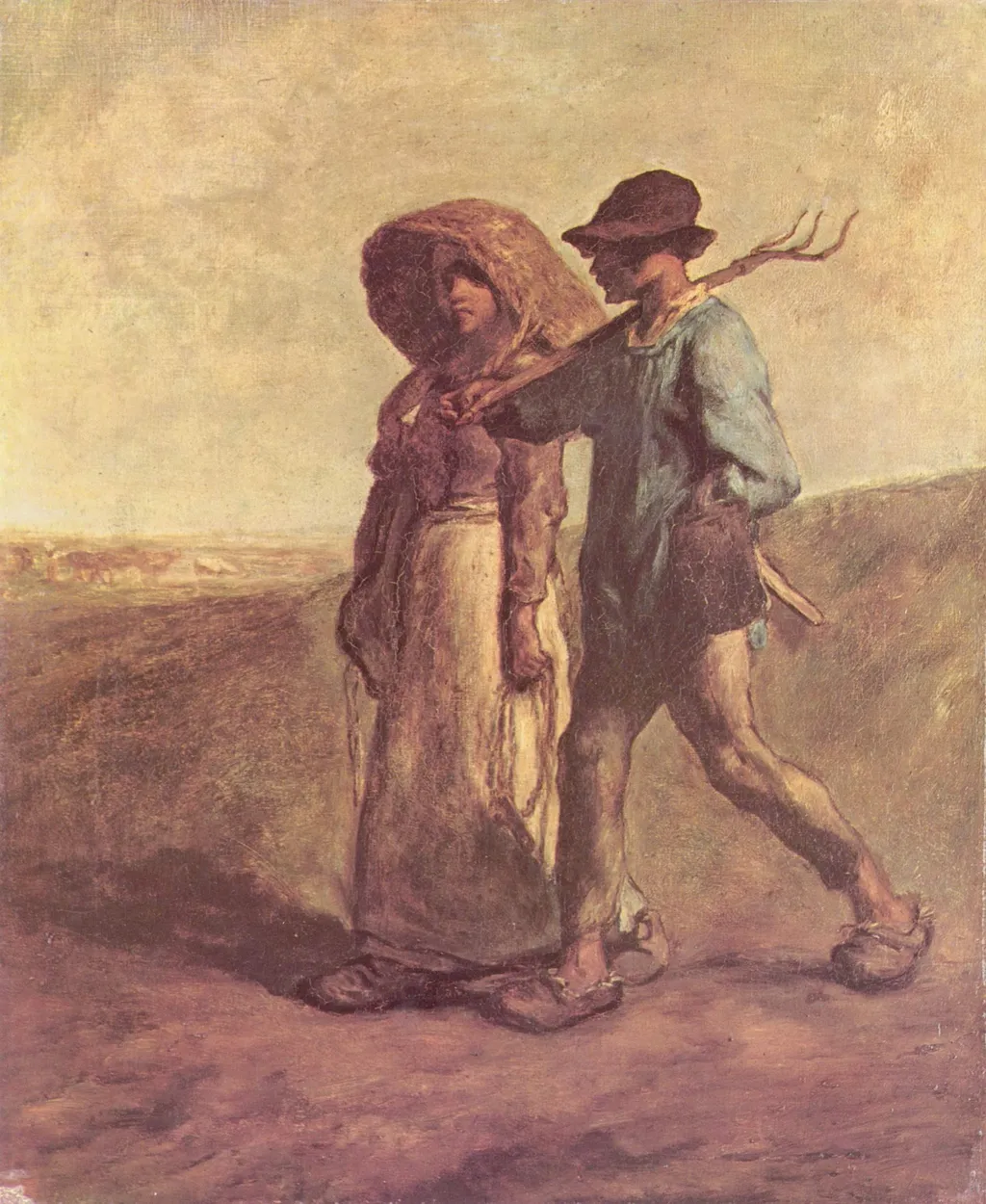
The Walk to Work is an oil painting by the Realist artist Jean François Millet. It dates from 1850 and is held in the collection of the Kelvingrove Art Gallery and Museum.
About this work
Overview
The Walk to Work, also known as Going to Work, is an oil on canvas painting by the French artist Jean-François Millet, dated to circa 1850-1851.
The Walk to Work, also known as Going to Work, is an oil on canvas painting by the French artist Jean-François Millet, dated to circa 1850-1851. Measuring 56 by 46 centimetres, the work depicts a peasant couple walking across a barren field, presumably en route to their labour. The painting is held in the collection of the Kelvingrove Art Gallery and Museum in Glasgow, Scotland, where it entered in 1905 through the bequest of James Donald. As a characteristic example of Millet's genre scenes of rural life, the painting exemplifies the artist's sustained focus on the dignity of agricultural labour during the mid-nineteenth century.
Subject & Meaning
The painting presents two figures moving in unison across a desolate landscape from left to right. The woman, positioned on the left, wears a long skirt, fitted bodice, and a large shawl draped over her head and shoulders. The man beside her is dressed in a loose blue shirt, dark shorts, stockings, and a hat, carrying a pitchfork balanced across his shoulder with a pouch at his waist. Both figures wear heavy shoes suited to rough terrain. The iconography of their attire and implements identifies them as agricultural workers, while their paired movement suggests a shared domestic and economic partnership. The sparse setting, an open field stretching to a low horizon with only faint distant structures, underscores the isolation and repetitive nature of rural labour. The overcast sky and muted earth tones reinforce a mood of quiet endurance rather than pastoral idealisation. The absence of other figures or narrative incident directs attention to the couple themselves, elevating an ordinary moment of daily routine into a subject worthy of artistic contemplation.
Technique & Style
Millet executed the work in oil on canvas, employing a palette dominated by muted earth tones, browns, and dull blues. The brushwork is visible and somewhat rough, producing a matte, unpolished finish that avoids academic smoothness. Light falls evenly across the scene, casting soft shadows beneath the figures that anchor them to the bare, packed earth of the foreground. The handling of paint reinforces the humble materiality of the subjects and their environment, aligning with Millet's broader realist approach to depicting peasant life. The composition is notably spare, with the two figures occupying the centre against an expansive, almost empty landscape. This formal restraint focuses the viewer's attention on the physical presence of the walkers and the rhythm of their movement. The relatively modest scale of 56 by 46 centimetres suggests an intimate, rather than monumental, treatment of the theme.
History & Provenance
The painting was created between 1850 and 1851, a period when Millet was increasingly devoted to scenes of peasant life in and around Barbizon. The work was bequeathed to the Kelvingrove Art Gallery and Museum by James Donald in 1905, and it bears the accession number 1111. The French Wikipedia source specifies the completion as between 1850 and 1851, while Art UK gives a slightly broader dating of circa 1850-1851. The painting is listed on Art UK under the title Going to Work, reflecting the variant nomenclature by which it has been known. Its presence in a Scottish public collection indicates the international reach of Millet's reputation by the early twentieth century, when collectors and institutions beyond France actively sought his works.
Context
The Walk to Work belongs to Millet's sustained engagement with genre scenes depicting the lives of French rural labourers, a focus that occupied much of his career from the late 1840s onward. Painted shortly after the revolutionary upheavals of 1848, the work participates in a broader mid-century realist tendency to grant artistic dignity to working-class subjects without resorting to sentimental or overtly political rhetoric. The painting's treatment of a couple rather than an individual worker distinguishes it from some of Millet's more famous solitary figures, suggesting an interest in the shared burdens and mutual dependence of rural domestic life. Critical reception of such works has often oscillated between readings of social critique and celebrations of timeless rural virtue. Scholarship on Millet has increasingly examined how his peasant subjects negotiate between documentary observation and constructed idealisation. The work's place in art history rests on its exemplification of Millet's ability to transform mundane routine into resonant visual poetry through formal restraint and empathetic attention.
Legacy
As a work held in a major public collection, The Walk to Work continues to contribute to Millet's established reputation as the preeminent painter of nineteenth-century French peasant life. Its acquisition by bequest in 1905 reflects the enduring appeal of his art to collectors and museum benefactors in Britain. The painting's availability through Art UK under a Creative Commons licence has extended its accessibility for educational and non-commercial purposes, though with restrictions on modification. The work's cultural afterlife is intertwined with the broader legacy of Millet's imagery in popular and artistic consciousness, from his influence on Vincent van Gogh and other post-impressionists to his frequent reproduction and adaptation in prints and photographs. While less famous than iconic works such as The Gleaners or The Angelus, The Walk to Work sustains Millet's central artistic project: the elevation of peasant labour to the status of serious artistic subject matter.
Own this work as a print
Artist & collection
Artist
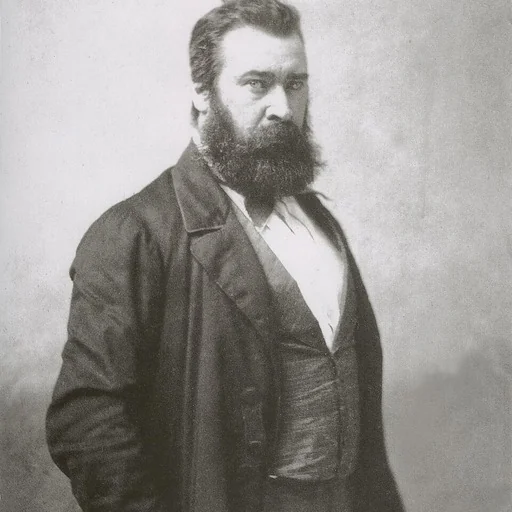
Jean-François Millet (French pronunciation:; 4 October 1814 – 20 January 1875) was a French painter and one of the founders of the Barbizon school in rural France.