Artwork
The Sower
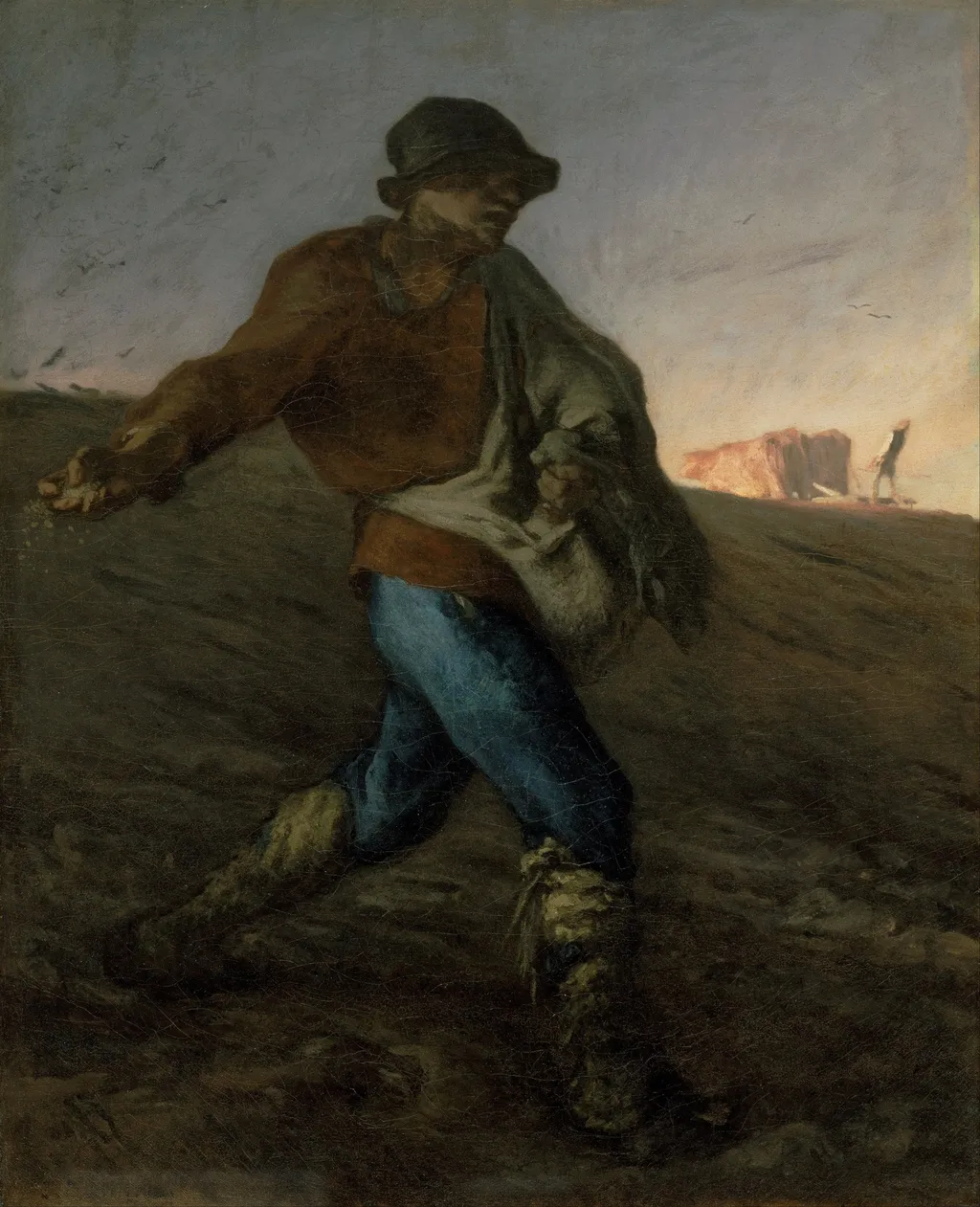
The Sower is an oil painting by the Realist artist Jean François Millet. It dates from 1850 and is held in the collection of the Museum of Fine Arts Boston.
About this work
Overview
The Sower is an oil-on-canvas painting by the French artist Jean-François Millet, dated 1850.
The Sower is an oil-on-canvas painting by the French artist Jean-François Millet, dated 1850. Measuring 101.6 by 82.6 centimetres, the work depicts a peasant sowing seeds in a field at dawn and is now held in the collection of the Museum of Fine Arts, Boston, which acquired it in 1917. It is widely regarded as one of Millet's most significant and influential compositions, representing a pivotal moment in nineteenth-century French art where the labouring rural body was elevated to monumental scale with unflinching social realism.
Subject & Meaning
The painting shows a single male sower striding forward across dark soil, his right arm extended in a broad gesture scattering seed. He wears a wide-brimmed hat, rust-brown jacket, white shirt, and vivid blue trousers, with straw or hay wrapped around his heavy shoes for warmth. A bag of seed hangs across his torso. The scene is set at dawn, indicated by the sun rising at the upper right, with a pale sky gradating from warm orange-pink near the horizon to cooler grey above. To the left, crows scavenger the sown ground; to the right, distant forms suggest a cart and the faint silhouette of another figure, while a man harrows with oxen. This imagery carries layered significance: the sower evokes biblical parable, yet Millet strips away pastoral idealisation to present an unvarnished image of preindustrial agricultural toil. The crows introduce a note of threat and impermanence, while the monumental scale of the figure transforms humble labour into something almost heroic, if also potentially menacing to contemporary bourgeois viewers.
Technique & Style
Executed in oil on canvas, The Sower displays the matte, earthy finish characteristic of Millet's Barbizon-period work. The palette is dominated by subdued browns, ochres, and greys, with the blue trousers providing the single vivid chromatic accent. Light falls from the right, illuminating the figure's shoulder and the distant horizon while casting the foreground in shadow, creating a dramatic tonal contrast that emphasises the sower's silhouette. The paint surface shows fine craquelure throughout. Brushwork is visible but controlled in the clothing, with looser handling in the landscape, suggesting a deliberate hierarchy of attention that focuses viewer engagement on the labouring body. The low horizon and slight off-centre placement of the figure amplify his dominance of the pictorial space, while the elongated, sinewy proportions lend him an almost giant-like presence. Art historian Anthea Callen has noted that Millet intentionally elongated the sower's proportions to create this effect, reinforced by the low viewpoint.
History & Provenance
Millet moved to Barbizon in 1849, joining the group of artists who would become known as the School of Barbizon. The Sower was the first major painting he produced there. In the same year, he painted a nearly identical second version now held at the Yamanashi Prefectural Art Museum in Kofu, which he exhibited at the Paris Salon of 1850. The Boston version entered the collection of the Museum of Fine Arts in 1917, where it remains today. The Salon exhibition of the Kofu version attracted significant attention and divided critical opinion: Clément de Ris praised it as 'an energetic study full of movement,' while Théophile Gautier derisively described it as 'trowel scrapings.' This polarised reception reflected the painting's challenge to established conventions of the Paris art establishment, where large-scale depiction of simple agricultural workers was both novel and controversial.
Context
The Sower emerged from Millet's personal background as a farmer's son and his deliberate focus on the dignity and seriousness of rural labour. While his paintings have sometimes been perceived as sentimental, they were considered radical in their day for their social realism. The work must be understood within the broader context of the Barbizon School's rejection of Romantic dramatic landscape in favour of subdued, realistic observation of nature and peasant life. Millet's treatment of agricultural subjects was repeatedly questioned for its 'ugly' motifs by conservative critics and the Parisian bourgeoisie, who found the unidealised presentation of working-class bodies unsettling. The painting also belongs to a sustained artistic engagement with the sower theme: Millet had first treated the subject in 1847-1848 in a version now at the National Museum of Wales, where the horizon is higher, the sower less monumental, and more space given to landscape. After the Boston and Kofu versions, he returned to the motif at least three more times, including an oil version after 1850 at the Carnegie Museum of Art in Pittsburgh, and two pastel versions at the Clark Art Institute in Williamstown (circa 1850) and the Walters Art Museum in Baltimore (circa 1865).
Legacy
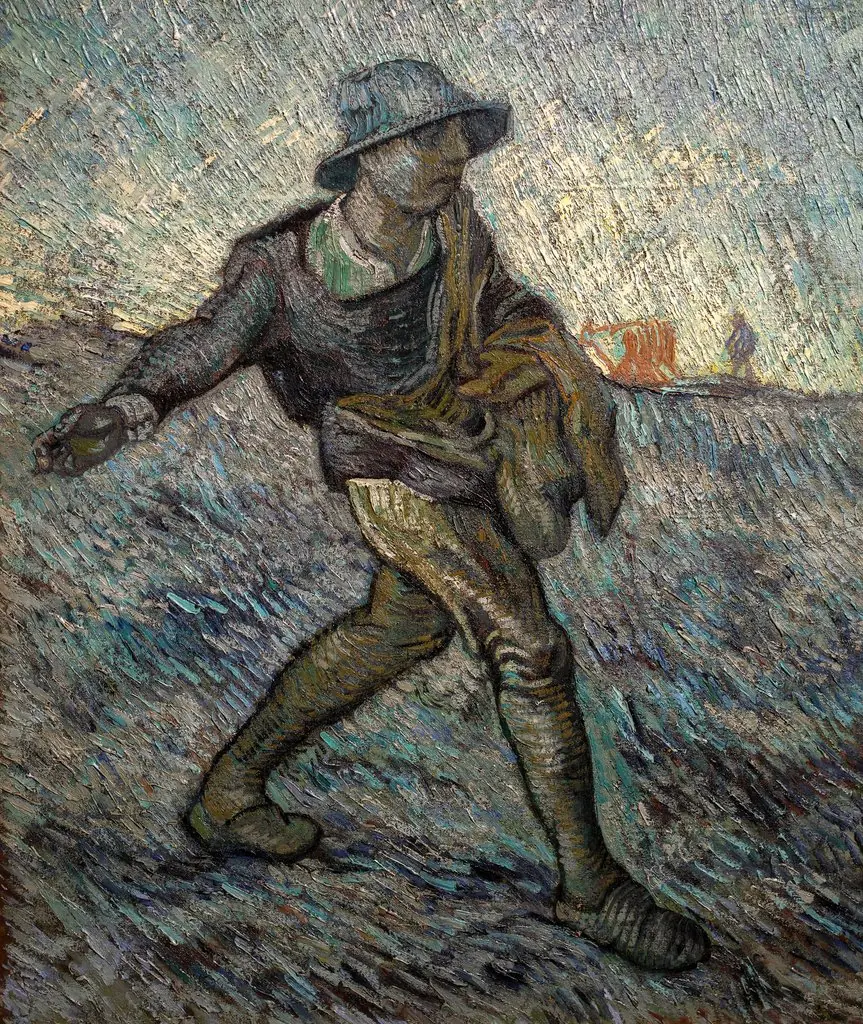
The Sower occupies a central place in the history of nineteenth-century art as a touchstone for the dignified, large-scale representation of rural labour. Its influence extended most famously to Vincent van Gogh, who found in Millet's agricultural landscapes and farm workers a profound source of inspiration. Van Gogh copied The Sower in several of his own paintings, transforming the image through his characteristic brighter palette while maintaining the essential structure of Millet's composition. This transmission from Millet to Van Gogh illustrates the work's afterlife as a generative model for subsequent generations of artists seeking to invest peasant subjects with formal power and emotional weight. The painting's reputation has endured as a defining statement of social realism in French art, even as critical interpretations have shifted from seeing it as merely sentimental to recognising its genuinely radical challenge to academic conventions and class-bound aesthetic hierarchies.
Own this work as a print
Artist & collection
Artist
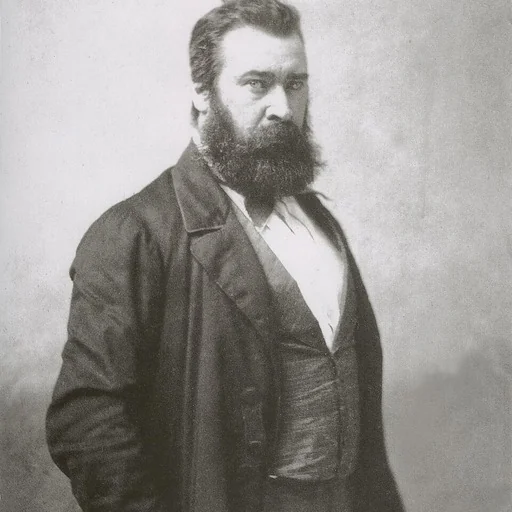
Jean-François Millet (French pronunciation:; 4 October 1814 – 20 January 1875) was a French painter and one of the founders of the Barbizon school in rural France.