Artwork
Saint Jerome
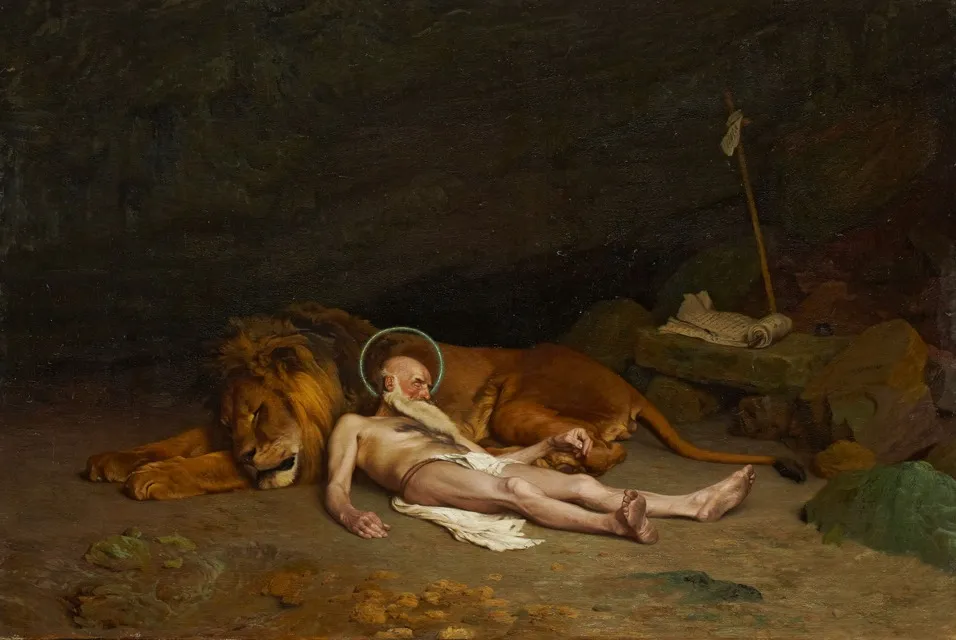
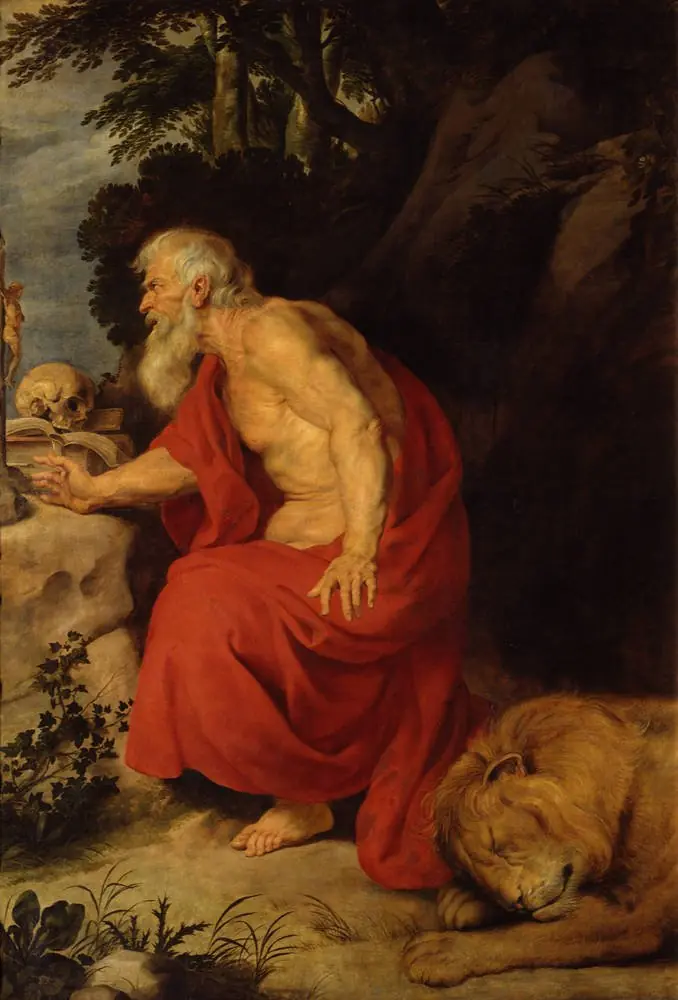
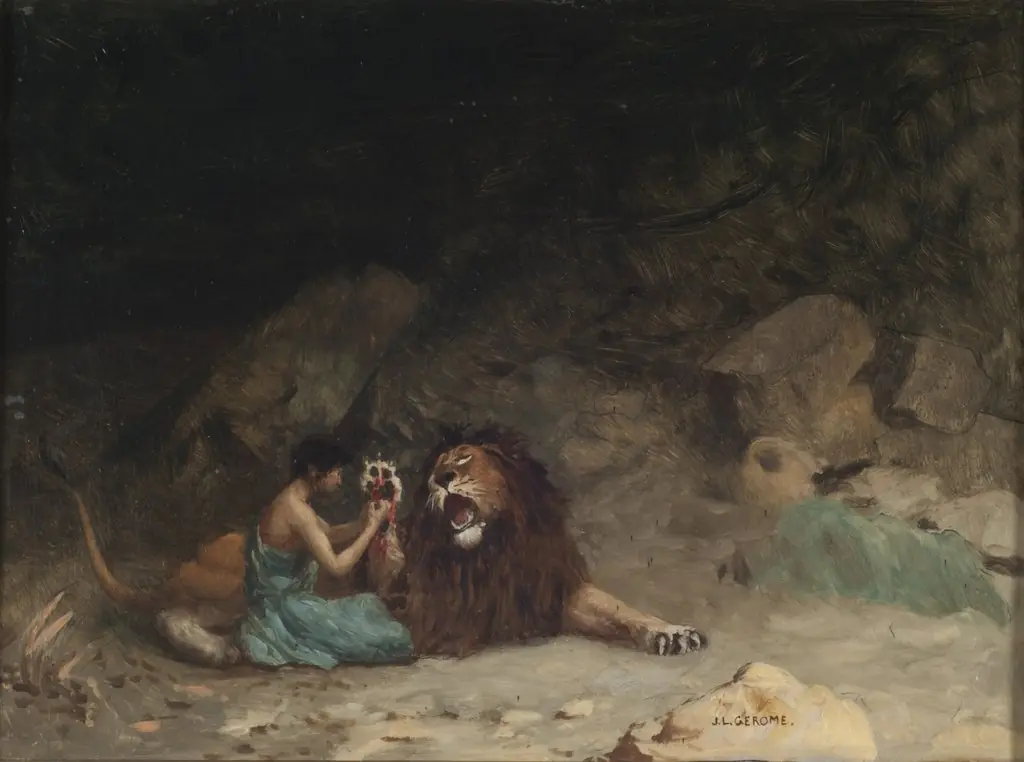
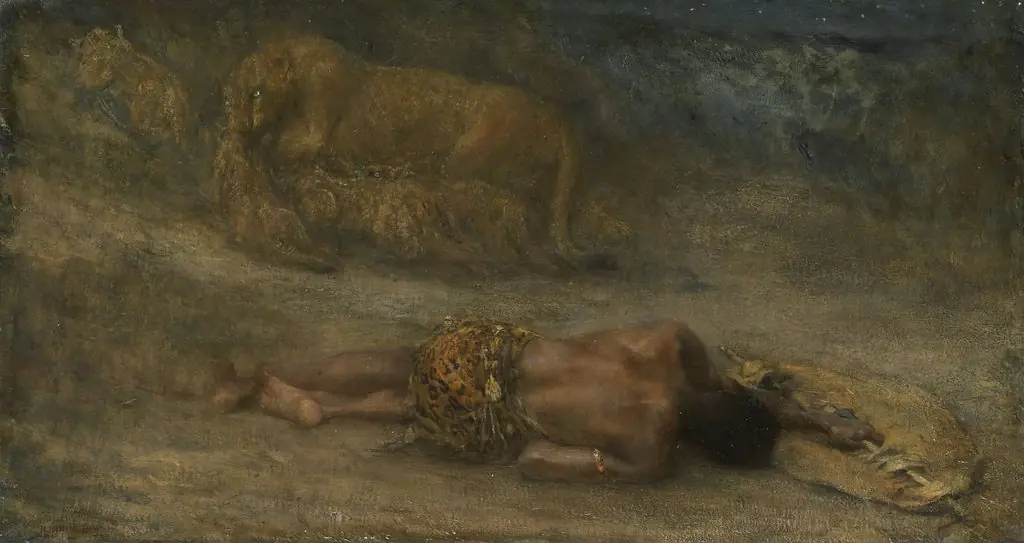
Saint Jerome is an oil painting by the Academic Art artist Jean Léon Gérôme. It dates from 1874 and is held in the collection of the Städel Museum.
About this work
Overview
The painting resides in the Städel Museum in Frankfurt, where it is noted for its precise rendering and atmospheric lighting.
Painted in 1874 by Jean-Léon Gérôme, this oil work portrays Saint Jerome in a moment of quiet repose. The figure lies partially nude, draped with a white cloth, surrounded by two lions. Set against a dim, rocky backdrop with sparse vegetation, the scene emphasizes stillness amid wildness.
The painting resides in the Städel Museum in Frankfurt, where it is noted for its precise rendering and atmospheric lighting.
Subject & Meaning
Saint Jerome, one of the Church Fathers, is traditionally linked to the legend of removing a thorn from a lion’s paw, earning the animal’s loyalty. Here, the saint is shown not in scholarly labor but in slumber, flanked by the creatures he once tamed. The halo signifies sanctity, while the lions’ calm presence suggests harmony between humanity and nature under divine grace, reflecting themes of peace through faith.
Technique & Style
Gérôme employs chiaroscuro to isolate the saint’s form against a deep, shadowy background, heightening the drama of the scene. The smooth, polished surface and meticulous detail in the fur, skin, and fabric reflect his academic training. The lions are rendered with anatomical precision, their relaxed postures contrasting with their wild nature. The composition directs focus to the central figure through controlled light and stillness.
History & Provenance
Completed in 1874, the painting entered the collection of the Städel Museum in Frankfurt, where it remains today. Its acquisition likely followed the artist’s rising reputation in Europe during the late 19th century. Gérôme’s works were frequently exhibited in salons, and this piece reflects his interest in combining historical subjects with naturalistic detail, appealing to both scholarly and public audiences of the time.
Context
In the 1870s, academic painting in France emphasized historical and religious themes executed with technical rigor. Gérôme, a leading figure in this movement, often blended classical ideals with exotic or biblical subjects. This depiction of Jerome diverges from traditional scenes of writing or penance, instead offering a symbolic vision of tranquility, a response to contemporary interests in spiritual serenity amid modernity’s upheavals.
Legacy
Though not among Gérôme’s most widely reproduced works, this painting exemplifies his ability to merge narrative symbolism with precise realism. It contributes to the broader 19th-century fascination with reimagining religious figures in intimate, humanized moments. Its quiet power and technical control continue to inform discussions on how academic art engaged with spirituality beyond dogma.
Artist & collection

Artist
Jean-Léon Gérôme was a French painter and sculptor in the style now known as academicism.