Artwork
Song of the Waters
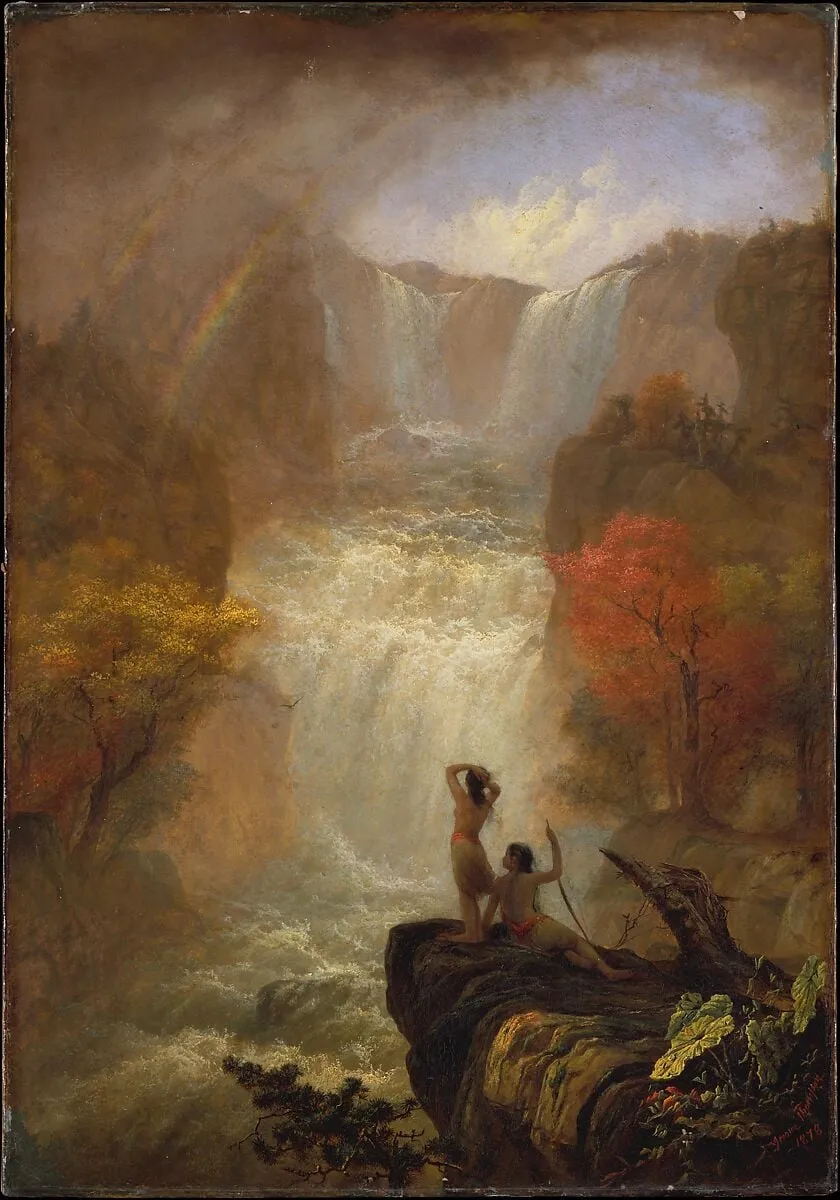
Song of the Waters is an oil painting by the American Impressionist artist Jerome Thompson. It dates from 1870 and is held in the collection of the Metropolitan Museum of Art. Jerome B.
About this work
Subject & Meaning
The rainbow functions as a conventional emblem of hope and transcendence, while the cascading water and surrounding forest evoke the sublime and the untamed.
The painting centers on a lone woman standing at the brink of a waterfall, where a rainbow arcs across the sky. The composition juxtaposes the woman’s contemplative presence with the dynamic force of falling water, suggesting a dialogue between human stillness and natural power. The rainbow functions as a conventional emblem of hope and transcendence, while the cascading water and surrounding forest evoke the sublime and the untamed.
Together, these elements frame a meditation on the harmony and tension between human experience and the natural world, a theme resonant with nineteenth-century American landscape traditions.
Technique & Style
Executed in 1870, Song of the Waters is painted in oil on a prepared canvas support measuring 101.6 cm in height and 76.2 cm in width. The handling is smooth and blended in the depiction of atmospheric effects, particularly in the graduated tones of the waterfall and surrounding mist. The composition balances naturalistic detail, the foliage and rock textures, with a softened focus on the central rainbow and distant trees.
The palette relies on muted earth tones punctuated by the rainbow’s spectral hues, creating a luminous contrast within the landscape. Stylistically, the work aligns with mid-19th-century American landscape painting, emphasizing scenic grandeur and tranquil mood.
History & Provenance
Song of the Waters is an 1870 oil‑on‑canvas landscape by Jerome B. Thompson. The painting, measuring 101.6 cm × 76.2 cm, portrays a rainbow, tree, waterfall and a woman. It is classified as part of The American Wing and is held in the Metropolitan Museum of Art, where it remains on public view.
The work was created in the same year it is dated, and its material composition of oil paint on canvas is documented in the museum’s collection records. No earlier ownership or commission details are recorded in the available sources.
Song of the Waters is held by the Metropolitan Museum of Art, where it is classified within The American Wing. The painting, executed in oil on canvas in 1870, measures 101.6 by 76.2 centimeters and is catalogued in the museum's collection. No specific accession number, acquisition date, or prior exhibition history is documented in the available sources.
Context
Jerome B. Thompson's Song of the Waters (1870) is recorded as an oil on canvas landscape that belongs to The American Wing's genre of American scenery. The painting portrays a rainbow arching over a waterfall, a tree, and a solitary woman, a composition noted in both the artist's catalogue entry and the Metropolitan Museum of Art's collection database. Its dimensions (101.6 cm × 76.2 cm) and material specifications confirm its status as a large‑scale canvas work.
As a piece held in a major encyclopedic museum, the work exemplifies 19th‑century American landscape painting and contributes to scholarly narratives about the intersection of naturalist observation and romantic idealism in the period.
Overview
Jerome B. Thompson's Song of the Waters, an oil on canvas created around 1870, presents a tranquil landscape. The artwork features a secluded waterfall, an arching rainbow, and a solitary woman in a white dress, seated on mossy rocks. This piece is housed within The American Wing, reflecting its significance in the context of American art.
Artist & collection

Artist
Jerome Thompson painted American scenes in the 1800s, often showing farm life and fruit still lifes.

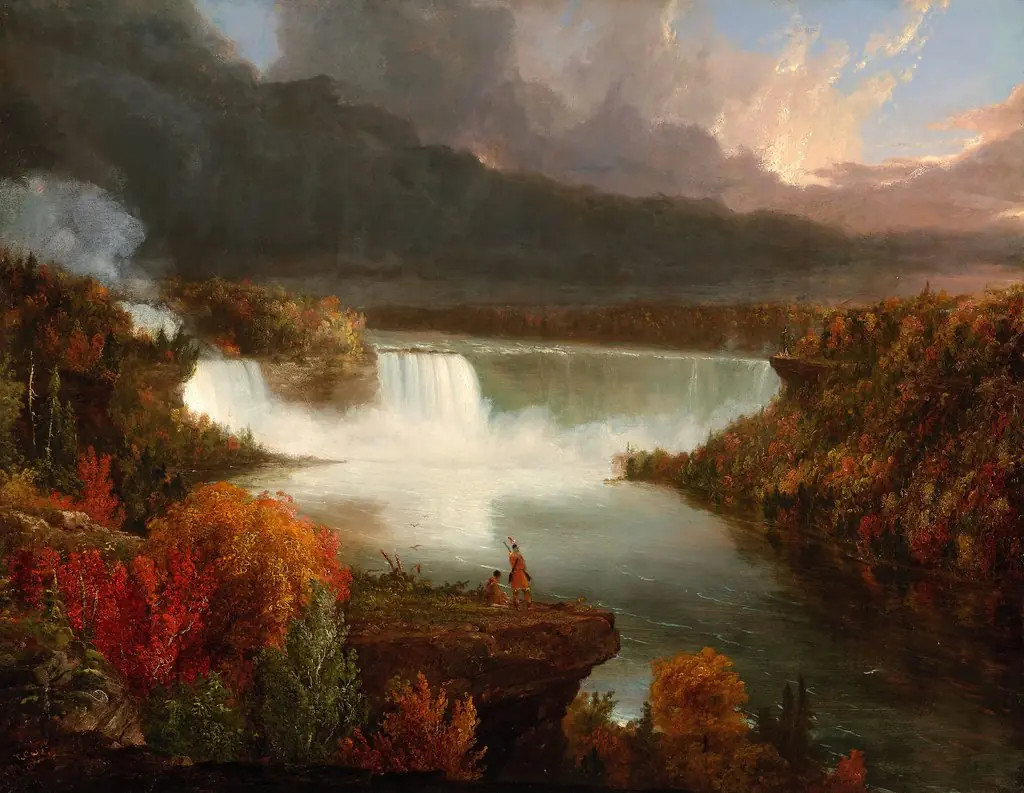
- Distant View of Niagara Falls
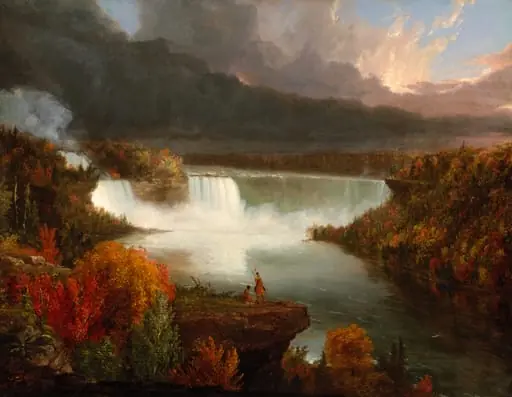 Distant View of Niagara Falls
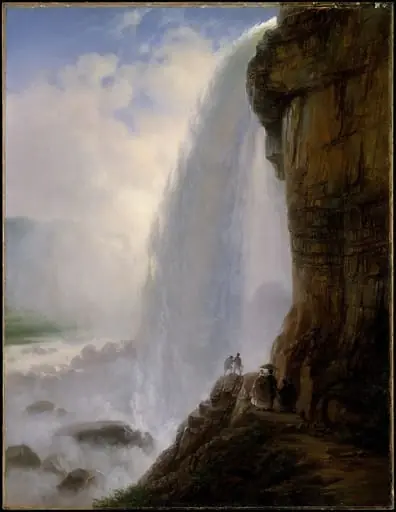 Underneath Niagara Falls
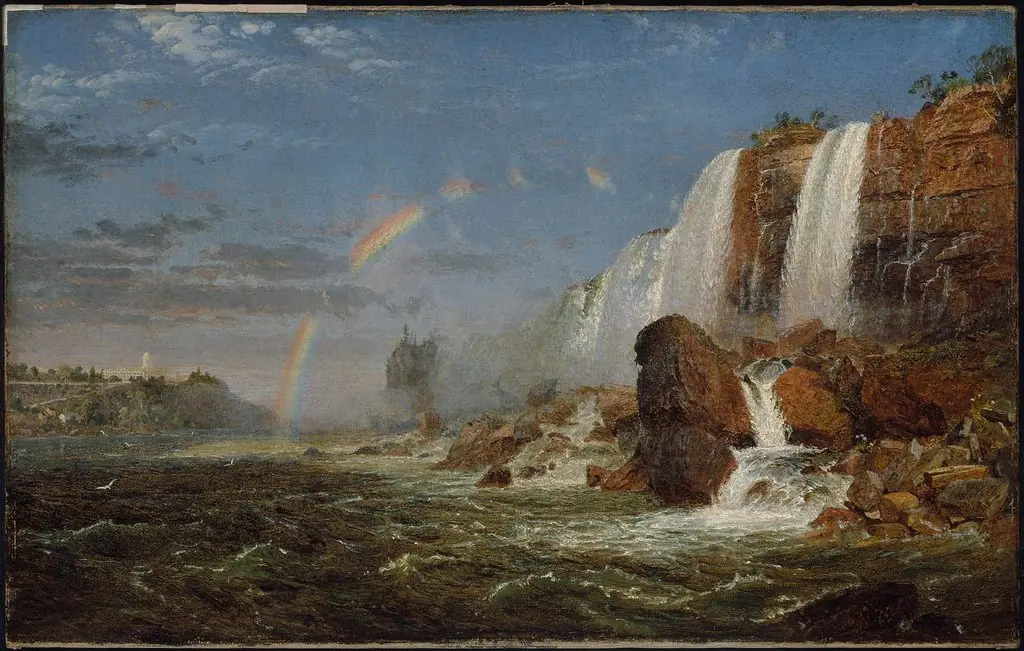 Niagara Falls from the Foot of Goat Island
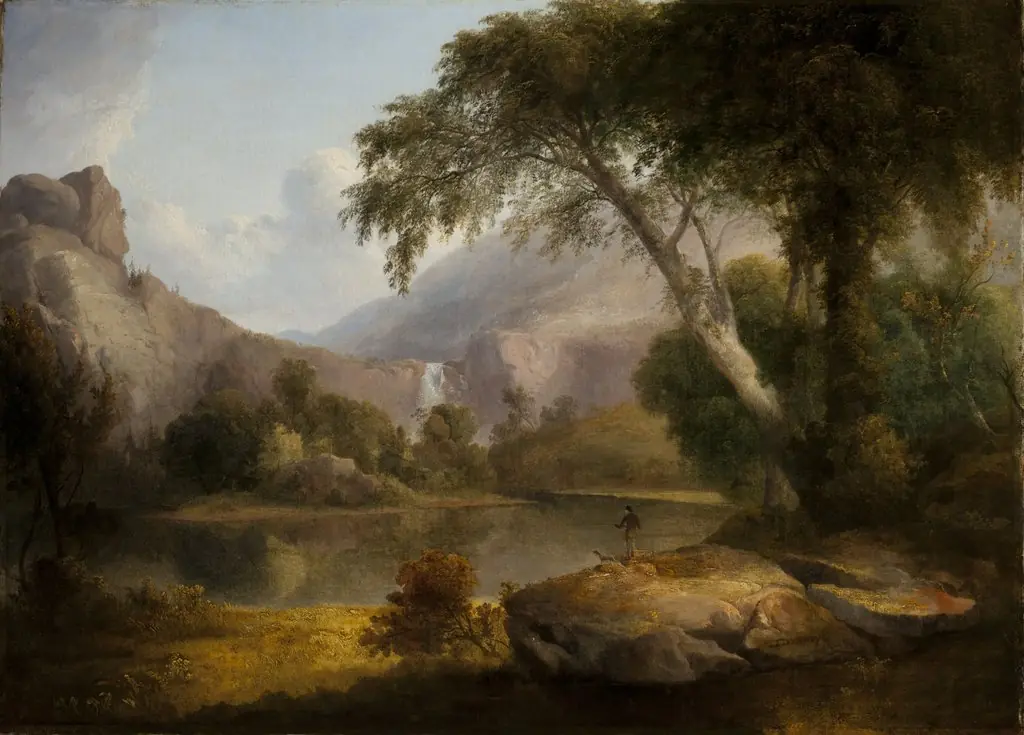 White Mountains, New Hampshire
 Lakes and Mountains
 Der Traunfall bei Gmunden
 The Voringsfoss Waterfall, Norway
 The Voyage of Life: Manhood
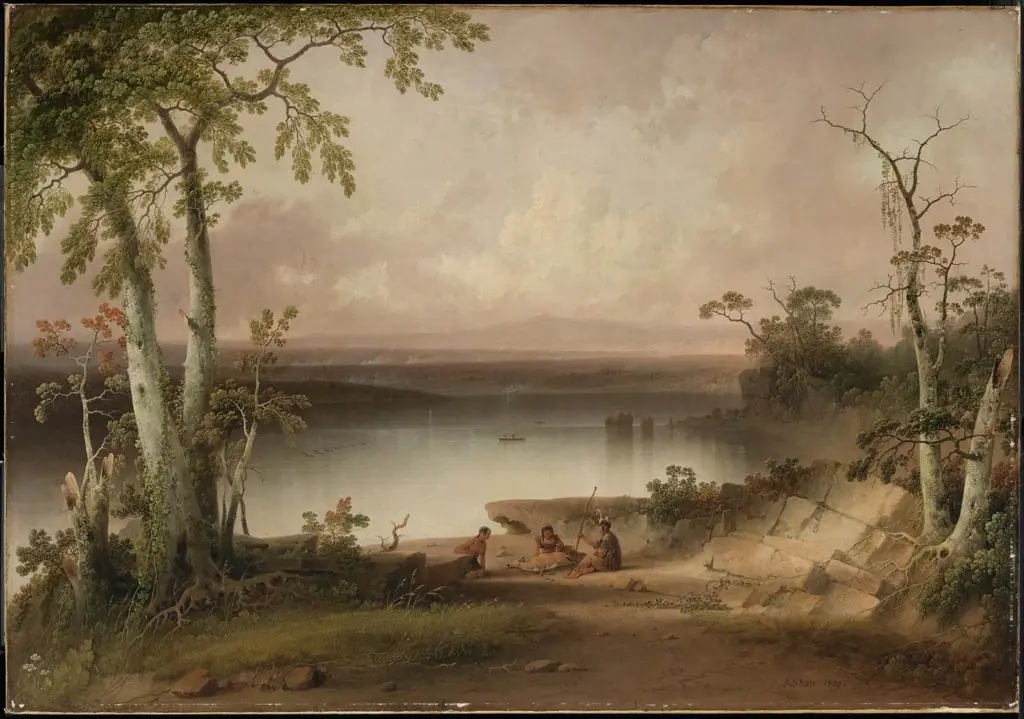 On the Susquehanna
 River between Rocks
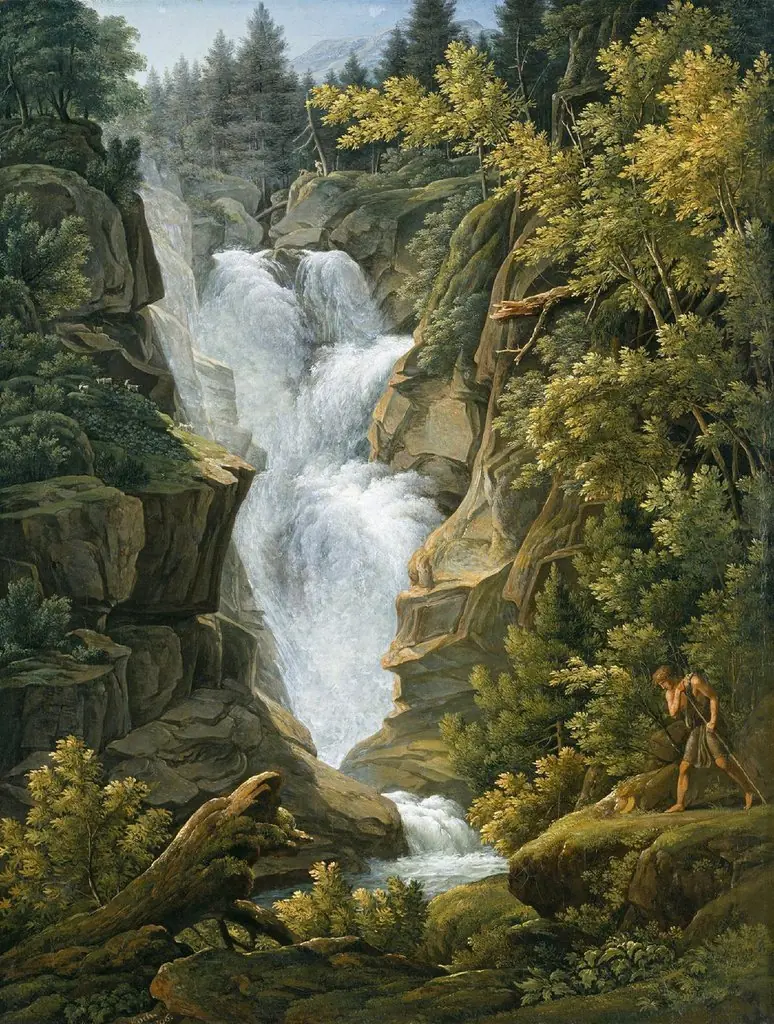 Waterfall in the Bern Highlands